

In today’s interconnected world, social networking platforms have emerged as powerful tools for communication, activism, and social change. From facilitating rescue operations during crises to mobilizing mass movements for justice, platforms like Twitter and Facebook have often been celebrated as champions of free speech and democracy. Yet, recent events have revealed the darker side of these platforms, forcing us to grapple with the tension between freedom of expression and the responsibility to prevent harm.
The Promise of Social Media
The potential of social media to act as a lifeline during times of tragedy is undeniable. In the aftermath of the Mumbai blasts, during the uprisings in Egypt and Libya, and in countless other moments of crisis, platforms enabled real-time communication and coordination. Survivors shared their locations, vital updates, and reassurances to loved ones, helping mitigate confusion and chaos. Boundaries dissolved as people around the globe came together in solidarity, fueling movements for justice and democracy.

The Arab Spring stands as perhaps the most profound testament to social media’s power. A single hashtag could galvanize millions, connecting voices across the globe and amplifying democratic aspirations that might otherwise have been silenced. In Tahrir Square, Cairo, Twitter and Facebook became more than platforms—they became catalysts for history.
The Perils of Social Media
Yet, the same tools that empower can also destabilize. The London riots revealed the dangerous flip side of social networking. Platforms once praised for fostering revolutions became channels for lawlessness. Anonymity and immediacy allowed rioters to coordinate looting and violence, escalating protests for justice into chaos. The very hashtags that once symbolized collective strength transformed into instruments of fear and destruction.
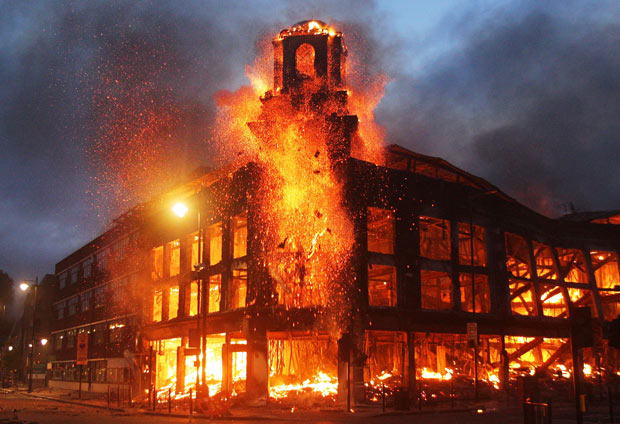
This duality highlights a central dilemma: freedom of expression is vital to any democratic society, but unchecked hate speech, misinformation, and incitement to violence threaten to unravel the social fabric. Social media is neither inherently virtuous nor inherently destructive—it is a mirror reflecting the intent of those who wield it.
So on the one hand we have the boon of being able to connect with the world with the click of a tab and on the other we had the ticking bomb that could disrupt lives with one easily published post. Just as Facebook gave direction to the support for a revolution in Egypt — it gave Justice for Mark Duggan a path too. The path was one of violent riots and uncontrollable looting. The same social commentators who patted Facebook on the back and spoke about the shining good of the social networking mediums — now raged about the evil that it had come to be. It was no longer the shining badge on the collar. On one hand, people use Twitter to circulate information in seconds, the same hashtags become instruction sites for terror.
Freedom and Responsibility
Shrikrishna Venkatesh Puntambekar eloquently articulated the need for a balance between freedom and virtue in a 1947 UNESCO report:
Human freedoms require as counterparts, human virtues or controls. To think in terms of freedoms without corresponding virtues would lead to a lopsided view of life and a stagnation or even a deterioration of personality, and also to chaos and conflict in society. This two-sidedness of human life, its freedoms and virtues or controls, its assurances and possessions must be understood and established in any scheme for the welfare of man, society and humanity. Alone, the right to life, liberty and property or pursuit of happiness is not sufficient; neither, alone, is the assurance of liberty, equality and fraternity. Human freedoms and virtues must be more definite and more comprehensive if they are to help the physical, mental and spiritual development of man and humanity.
This timeless wisdom resonates even more in the digital era. Social networking platforms, while revolutionary, are tools that mirror the intentions of their users. Their capacity to promote empathy, dialogue, and progress is matched by their potential to propagate division and harm.
Navigating the Digital Frontier
As we confront the challenges of this digital frontier, the responsibility for shaping healthier online spaces cannot rest on a single entity. Governments, industry leaders, civil society, and individual users all share the burden. Thoughtful regulation is needed—not to stifle free speech, but to curb extremism and misuse. Platforms must invest in ethical frameworks and safeguards, while individuals must cultivate digital literacy and accountability in their interactions.
The promise of social media remains immense. It can connect, empower, and uplift humanity. But its perils are equally real, capable of inciting division and unrest. The choice lies not in abandoning these tools, but in using them wisely.
The future of social networking will be defined not just by algorithms or technology, but by the virtues we bring to our digital lives. Only through vigilance, collective action, and ethical stewardship can we ensure that these platforms remain instruments of progress—championing connection, compassion, and justice over chaos and conflict.
