
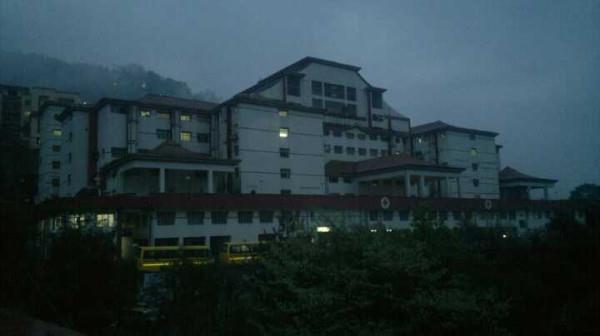
Last night marked a significant milestone in my journey towards becoming a doctor – my first night duty at the hospital’s Emergency Room (ER). As I reflect on the whirlwind of experiences from that night, I can’t help but feel a mixture of nerves, excitement, and gratitude for the opportunity to learn and grow.
It all started with a spontaneous decision to accompany Dhananjay sir, a seasoned doctor at the hospital, on his night duty. Little did I know that this decision would lead to a series of unforgettable moments and lessons.
Suddenly something struck my mind, and I asked him whether I could join him on his night duty as the next day was our holiday. I didn’t expect that, but he accepted my proposal wholeheartedly and even promised to teach things. There was still time for the duty. We had to report after 9 at night.
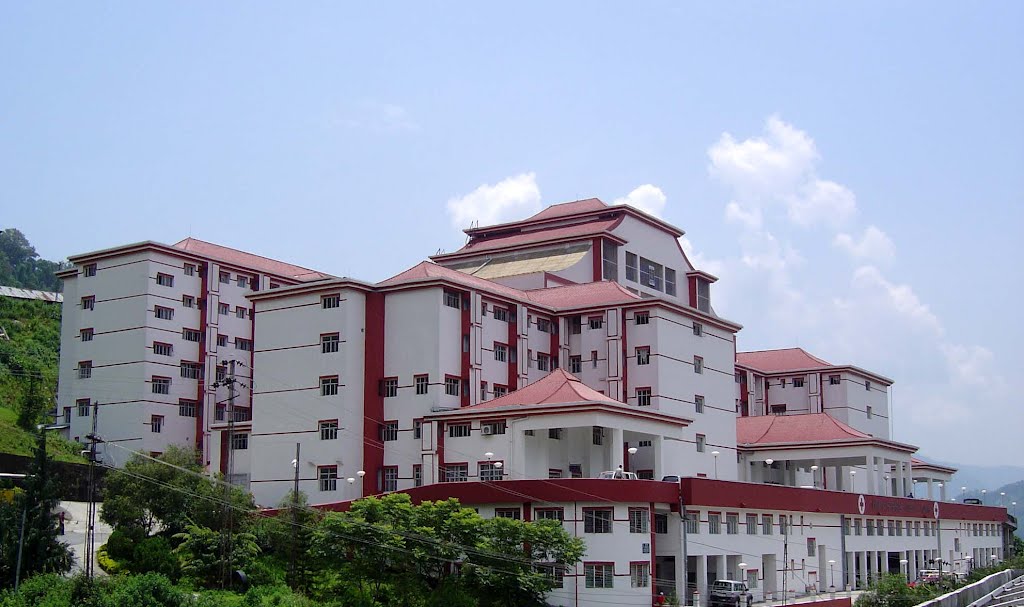
As a medical student, I had always been fascinated by the idea of working in a hospital. I had heard stories from my seniors about the long hours, the pressure, and the challenges that came with the job. But nothing could have prepared me for my first night-duty experience.
We went to have dinner and then we headed towards the Emergency Room (ER). I was nervous but excited at the same time. I had no idea what to expect, but I was ready to learn and help in any way I could.
Entering the ER, I was met with curious glances from the staff, surprised to see a third-semester medical student volunteering for night duty. Yet, their scepticism quickly turned into acceptance as I expressed my eagerness to learn and assist in any way possible.
I spent most of my time shadowing the senior doctors, observing their interactions with patients and learning from their experiences. It was fascinating to see how they handled different situations with ease and confidence.
MY FIRST LIVE CASES
Babita Madam, a Junior Resident, asked me to take the BP of a patient who was already in the ER. I took the sphygmomanometer and was about to leave when she asked about the stethoscope. I showed her my pocket, and she said that I am a medico, and I should be wearing it on my neck as if it were my jewellery. I noted her advice and keep it always wear it on my neck.
Then I went for the patient. As she was my 1st real-life patient, I was quite tense. Anyhow I took her BP and reported to ma’am. She asked me what the problem was. I said it was my first real-life experience with a patient and it’s not a lab subject. Then we spoke for some time as she relieved my nervousness. She explained that it happens when with every new student. I was feeling quite better then. I felt lucky to have such seniors.
Dhananjay sir came and called me as we had to catheterize a patient. I was quite happy as he said that I would do it and he would just guide me. We went to the patient. He was quite old and a regular patient of catheterization. He was a patient of chronic kidney disease for a long time. He was admitted that night with the problem of not being able to pass urine since the catheter was removed in the morning. He had been on a catheter for a long period but still no relief. Dhananjay sir guided me throughout the process as I catheterized the patient. Wow, I did my first procedure!
From taking my first real-life patient’s blood pressure to assisting in catheterization under Dhananjay sir’s guidance, each task was a milestone in itself. The camaraderie among the staff, their willingness to teach, and the support they offered made the experience less daunting and more enriching.
After some time, another patient came to the ER. He was completely drunk and had no idea what had happened to him except the pain. He was brought there by his employers. They said he came running from uphill with bleeding and was shouting for his master. It was a medico-legal case. So, we took him into the minor Operation Theater (OT) in the ER. There we saw his wound. He got a cut with kukri, a type of knife used by Gurkhas and Nepalis. The cut was so bad that even his bone got fractured. Then we put a tile to immobilize the hand and further treatment was to be done by the Orthopedic department after getting an X-ray done. Then we shifted him to the general ward. After this case, we sat for some time. My seniors were discussing the infrastructure of the hospital.
The night unfolded with a series of cases that tested both my medical knowledge and emotional resilience. From treating a drunken man with a severe laceration to witnessing the urgency of a neurosurgery case, each moment underscored the gravity of the medical profession.
FIRST NEUROSURGERY CASE
The highlight of the night came with the first neurosurgery performed in Sikkim, a historic moment that I was privileged to witness. Despite the challenges of inadequate equipment and time constraints, the dedication of the medical team was unwavering, reaffirming my commitment to this noble profession.
After some time, a patient was brought who fell backwards got a head injury and was semi-conscious. He was having tremendous pain. Earlier today a neurosurgeon joined our college. So, he was called urgently to the ER. The patient was taken for a CT scan. After the radiography, we came to know that he had a lot of internal bleeding and clots on the right side of the brain. He also had his mid-line deviated and haemorrhoids on the left side. When we checked his pupils, we found that his right pupil was dilated very much and the left one was normal.
The neurosurgeon said the patient needs to be operated soon. The doctors convinced the patient party and took their consent. It was to be the first neurosurgery in Sikkim since there was no neurosurgeon in Sikkim before him. All such cases were referred to Siliguri before. I was excited to be able to witness the first neurosurgery in Sikkim. I was feeling privileged to be a part of history!
It was a humbling experience to see firsthand how much dedication and skill it takes to be a doctor. The pressure was intense, but the doctors remained calm and focused, never losing sight of their goal – to save lives.
The surgeon asked to shave the head of the patient and place him on a catheter. So, Dhananjay sir and I started shaving his head. We could not find the required instruments, so we did it with the scalpel and thread cutting scissors, to save time also. Time is very precious at this moment. With the help of the sisters at the ER, we shaved his head and then put the catheter in. The patient was too restless due to the pain. Then he was taken to the Operation Theater [OT]. The instruments required for the operations were not complete there and our new neurosurgeon was disturbed because of that. Then he instructed for the instruments to be arranged ASAP.
The Medical Officer called the Army Hospital for the required equipment. He said that they would arrange and provide in 45 minutes. We started the process for life support of the patient like ventilation and other things. Then surgeon sir started telling us about the situation of the patient. In fact, he was then taking our class right there in the OT. That time there were three assistants – one surgery PG student, one junior resident, one surgery assistant professor, one intern, one anaesthetist and one 3rd semester student, that is me, in that single room. And the surgeon started to give us a lecture on this type of case.
The instruments arrived a bit later than expected. Then he started the operation and showed the ways of opening the skull and incisions on the scalp. As he started the operation, he came to know that all the equipment he got was really of poor quality and unused for a long time. Thus, he started getting angry and scolded everybody there.
ANOTHER PATIENT ARRIVES…
After some time, there was a call from the ER for help since there was another patient. So, Nitin sir, PG student from surgery and I went down to see the case. There was this patient with lots of stab injuries over the chest and face. The patient was brought by the police and reported that he was stabbed by his own brother by a broken beer bottle, from which they two were drinking before the fight started. Then we took his X-ray and made him sleep somehow. There was nothing serious about him. He had deep injuries but not deep enough to pierce the pleura.
As fatigue set in and the night drew to a close, I returned to the hostel exhausted yet exhilarated. The invaluable lessons learned and the sense of fulfilment gained from helping those in need far outweighed any physical tiredness.
My first night duty in the hospital was not just a test of my medical skills but also a journey of self-discovery and growth. It reinforced my passion for medicine and instilled in me a deeper appreciation for the sacrifices made by healthcare professionals every day.
As I look forward to many more nights in the ER, I carry with me the lessons learned and the memories forged, knowing that each experience will shape me into the compassionate and skilled doctor I aspire to be.
