

The air hung thick with humidity — the kind that wraps itself around you as you step out during the final whispers of the monsoon. The sky was heavy, the earth damp, and everything seemed suspended in a moist stillness as we made our way toward Triveni Sangam.
It is a name I have heard since childhood, whispered in stories, recited in temple chants, woven into myths. Yet no retelling — however poetic — prepares you for the moment you finally stand at this sacred meeting point.
Because Triveni Sangam is not merely a geographic junction. It is a spiritual heartbeat, a place where the tangible and the mythical flow together, shaping the beliefs of millions.
The Meaning of Sangam — More Than a Confluence
“Sangam,” a word simple in form yet profound in essence, means confluence in Sanskrit. Here in Prayagraj, the mighty Ganga and the serene Yamuna merge gracefully. Beneath them is believed to flow the Saraswati, the ancient and invisible river of wisdom.
Her presence is unseen but always felt — a silent undercurrent of centuries-old faith. The waters here are more than currents; they are carriers of prayers, hope, memory, and myth. For countless pilgrims, a dip at this confluence isn’t just ritualistic purification; it is a return to spiritual origins.
A City Written in the Language of Mythology
Prayagraj, once known as Allahabad, is a city where mythology and history embrace seamlessly. According to legend, Lord Brahma performed a sacred yajna here, giving the city its name — Prayaga, the foremost among pilgrimage sites. The Mahabharata, Ramayana, and Rig Veda celebrate its sanctity, weaving stories of gods, sages, and seekers who once graced these riverbanks.
A verse from the Mahabharata came alive in my mind as I stood watching the swirling waters:
प्रयागः सर्वतीर्थेभ्यः प्रभवत्यधिकं विभो ॥
श्रवणात् तस्य तीर्थस्य नामसंकीर्तनादपि ।
मृत्तिकालम्भनाद्वापि नरः पापात् प्रमुच्यते ॥
(Mahabharata 3.83.75)
English translation:
O King, Prayag is the holiest of all pilgrimage places. Simply hearing of its greatness, chanting its name, or even touching its sacred soil liberates a person from sin.
Reading the verse is one thing. Standing in the place it describes is quite another. It felt as if the ancient text had stepped out of its pages and wrapped itself around me with the same quiet majesty as the rivers themselves.
Performing Shraaddha: A Ritual of Memory & Gratitude
We had come to Prayagraj for a purpose — to perform Shraaddha, the ritual offering made in honour of ancestors, in memory of Jagrata’s mother.
The monsoon had arrived with a fierce momentum. The rivers were swollen and restless, their banks muddy and slick. Amidst the rising waters, we found shelter where Dada and Bapi could perform the rites.
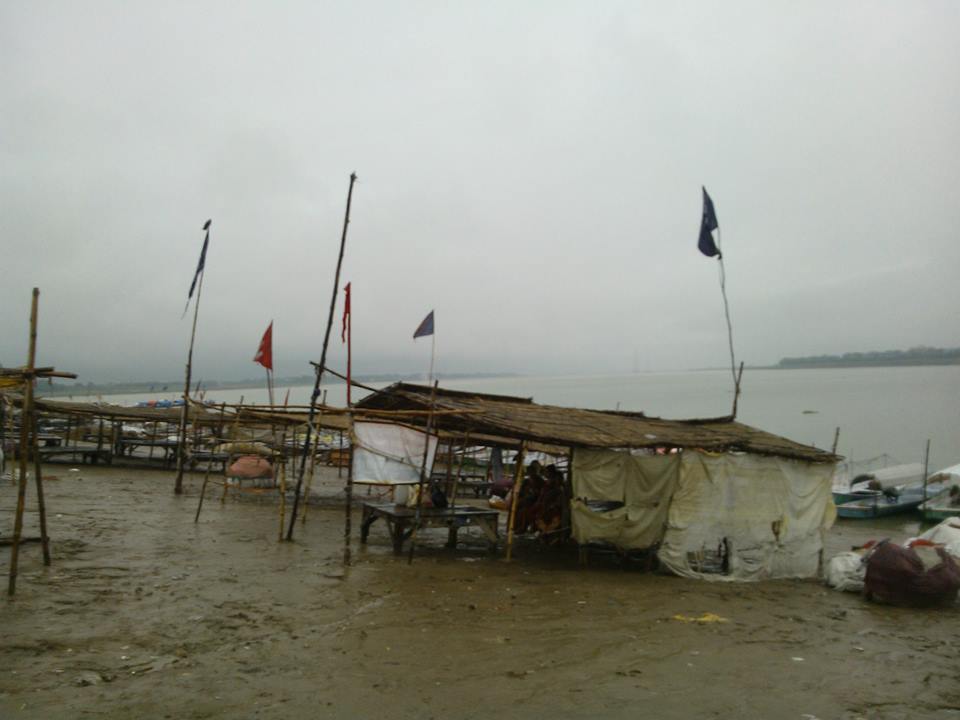
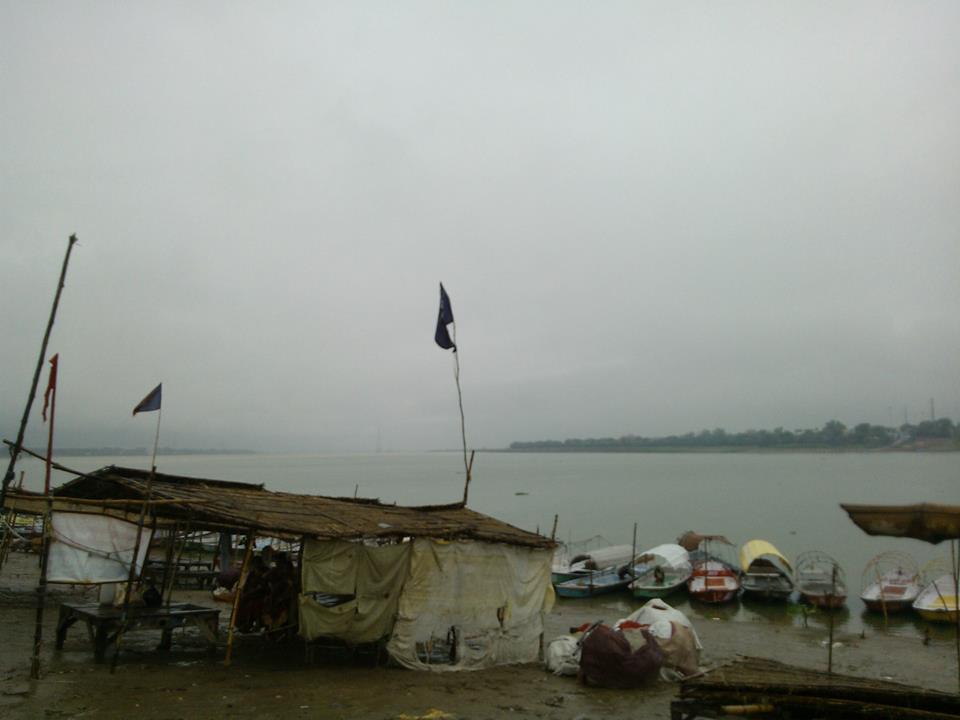
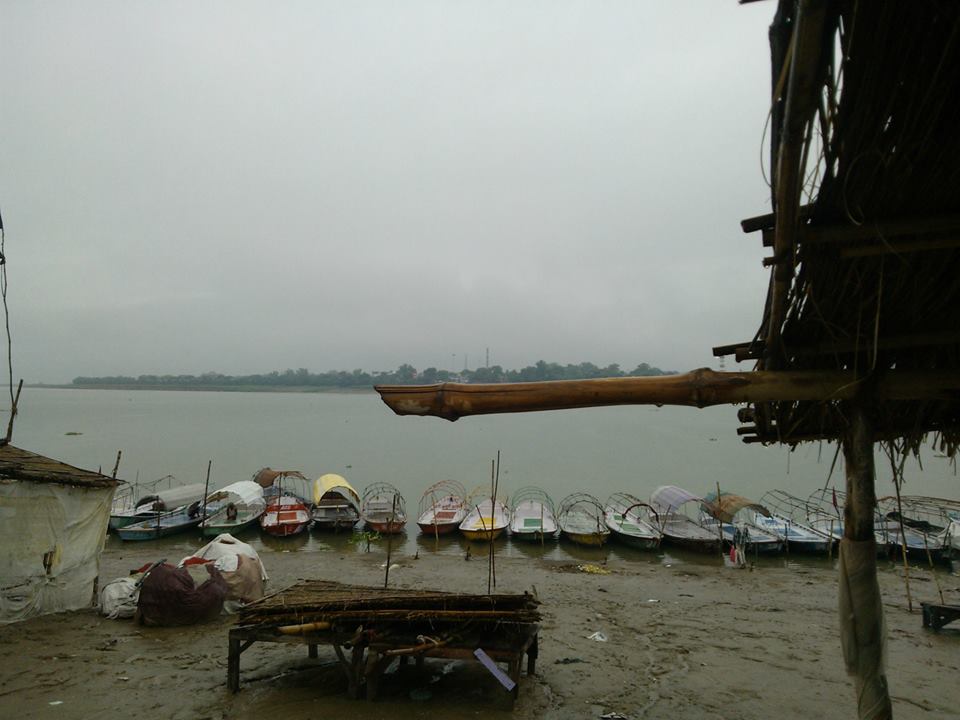

Shraaddha is deeply personal — not merely a ritual, but a bridge between generations. As the priest chanted the mantras and the river echoed them softly, a sense of intimate connection descended on us. It felt as though the past reached out, touched the present, and then gently receded into eternity.
Into the Heart of the Sangam
After the rituals, we boarded a small boat, its wooden planks creaking under the weight of tradition and history. Our destination was the heart of the Sangam, where the three rivers converge. The Ganga flowed in vibrant blue-green, the Yamuna a calm greyish-green, each with a distinct identity, yet destined to meet. And beneath them, the Saraswati flowed invisibly, but her presence was felt — a river of wisdom, silent and eternal.

I have visited this place thrice, and each time, the experience feels renewed. The dip in the Sangam is not merely physical immersion; it is an emotional cleansing. The coolness of the water, the interplay of currents, the gentle pull of the oars — everything creates a moment of absolute stillness in the mind.

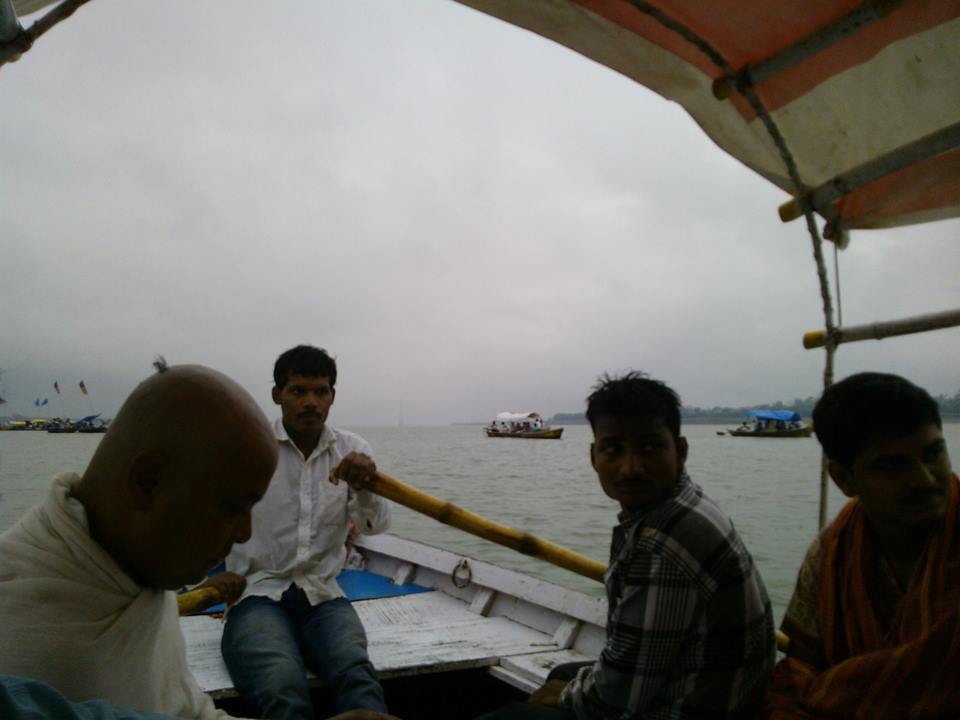

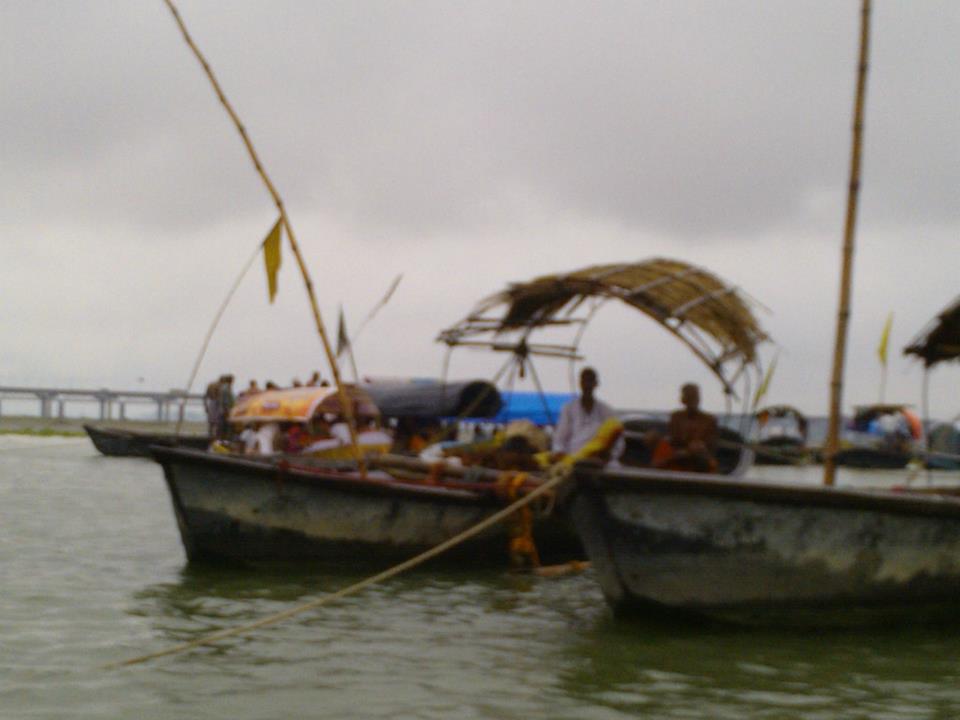
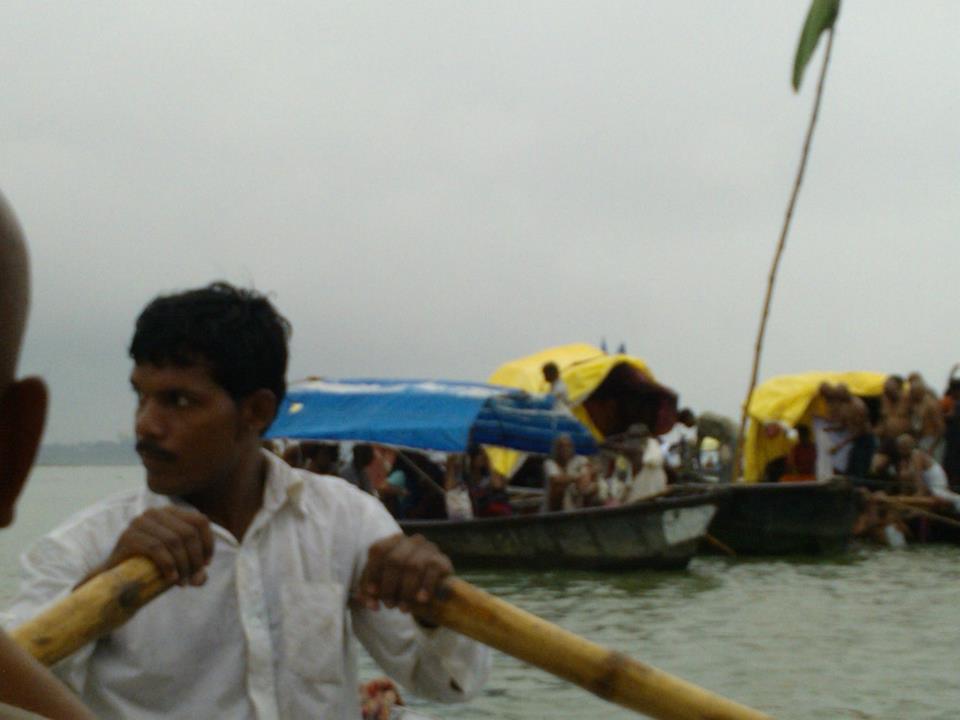
In that confluence, it feels as if time pauses, and for a few breaths, you are part of something ageless and vast.
A Natural and Spiritual Wonder
Even beyond its religious significance, the Triveni Sangam is a scene of astonishing natural beauty. The distinct colors of the rivers remain visible as they flow together, creating patterns on the surface as if nature were painting her own abstract masterpiece.
Every twelve years, this serene confluence transforms into the pulsating centre of the Kumbh Mela, the largest gathering of humanity on the planet. I remember watching the tides of pilgrims, each carrying their own stories, hopes, and karmic burdens — all drawn by the magnetic power of faith.
Yet beyond the grandeur of such events, the Sangam has its quiet side too. Sunrise and sunset here are unforgettable — the sky drenched in gold and orange, the waters shimmering like molten light. A simple boat ride or a peaceful stroll along the riverbank can feel healing.
Where Rivers Become Metaphors for Life
Triveni Sangam is more than a destination. It is an experience. A metaphor for life itself — where different streams of identity, memory, joy, and sorrow converge to shape who we are.
The rivers remind us that flow is the only constant. Tradition reminds us that memory is sacred. Ritual reminds us that life is connected across time.
As we left the riverbank, soaked in monsoon air and emotion, I realised this journey was never just about a ritual. It was about embracing the eternal rhythms of existence, honouring those who shaped us, and recognising that — like these rivers — our stories too continue to flow, long after we move on.
