

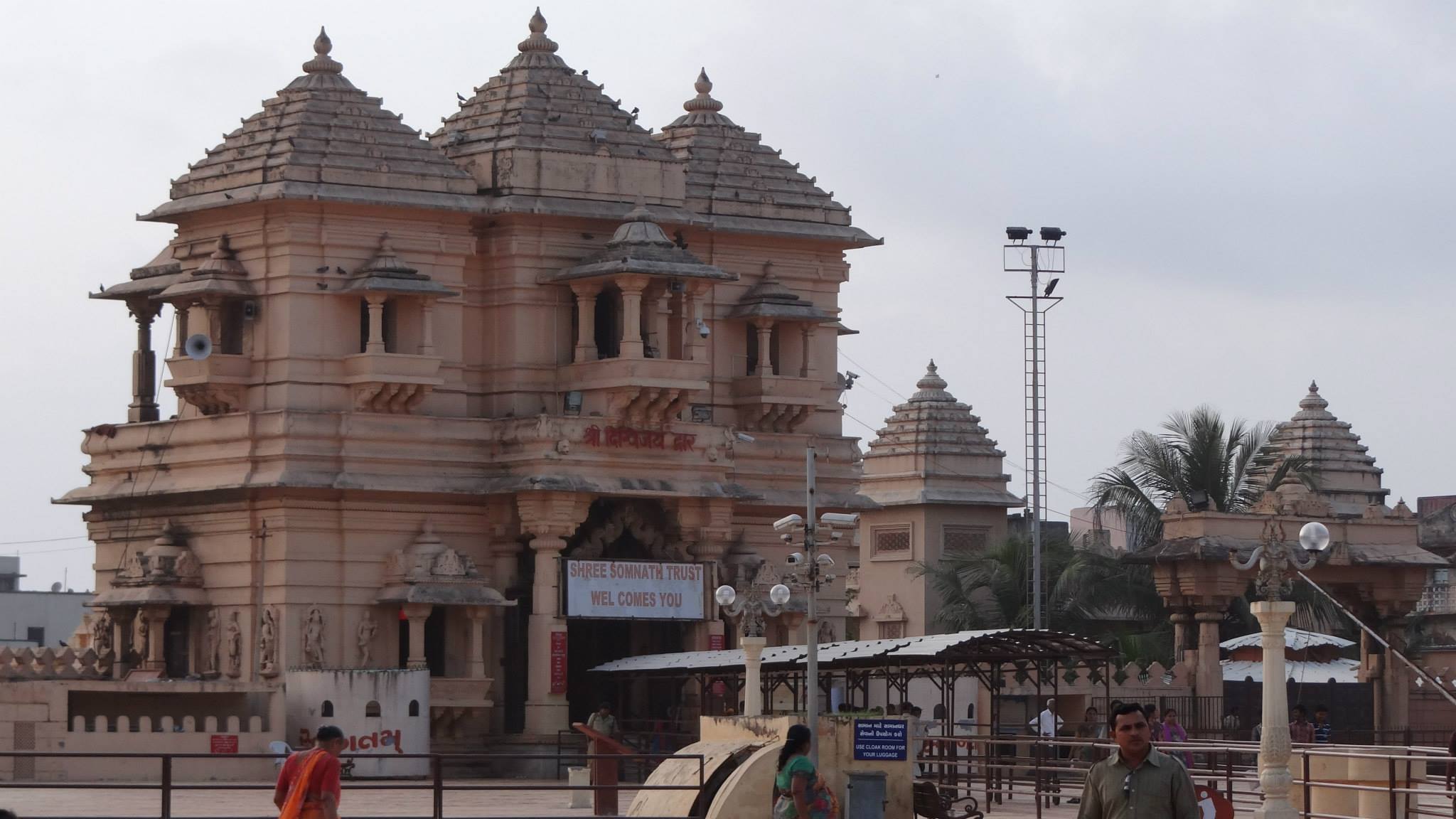
Yesterday afternoon, after a journey filled with anticipation, the majestic silhouette of Somnath Dham finally graced our horizon. A wave of exhilaration washed over us as we checked into our hotel, our long-awaited pilgrimage finally coming to fruition. After a quick and satisfying lunch, there was no holding back – our hearts were set on our first darshan of the revered Somnath Temple. As we stepped into its sacred precincts, a profound sense of peace descended, the ancient stones seeming to hum with centuries of devotion. The aura of the temple was truly mesmerizing, a tangible connection to something ancient and divine.

A Serendipitous Detour to Chorwad: Tracing Footsteps of an Icon
Our journey to Somnath wasn’t without its unexpected little adventures. En route, as the afternoon sun beat down, we made an impromptu stop in a quaint little village for some much-needed cold drinks. The small shop we stumbled upon was run by a warm and welcoming lady. As we chatted, she casually mentioned that the name of her village was Chorwad. The name sparked a flicker of recognition. Intrigued, we inquired further and were fascinated to learn that this unassuming village was the birthplace of the legendary industrialist, Dhirubhai Ambani.
Chorwad, she explained, is a coastal village nestled in Gujarat, a mere 30 kilometers from our ultimate destination, Somnath. We discovered that Chorwad Beach once housed the opulent royal palace of the Nawab of Junagadh, though sadly, it now stands in ruins. While we decided against a detour to the beach itself, the serendipitous discovery of this village, steeped in the history of a modern-day icon, added an unexpected layer of intrigue to our pilgrimage. It was a reminder that even the most spiritual journeys are often peppered with fascinating glimpses into the tapestry of human life.
Immersed in the History and Spirituality of Somnath
Somnath, also reverently known as Patan-Somnath or Somnath-Patan, is a land where history and spirituality intertwine seamlessly. It is, of course, most famous for housing the magnificent Somnath Temple, one of the twelve holiest jyotirlingas of Lord Shiva. The sheer weight of its significance is palpable, its stories echoing through ancient texts like the Shreemad Bhagavat, Skandpuran, Shivpuran, and even the Rig-Veda.
As we walked through the town, we couldn’t help but feel connected to the epic tales woven around this sacred land. The Mahabharata speaks of Somnath as the somber stage for the internecine massacre of the Yadava clan and the subsequent passing of Lord Krishna himself. It was humbling to realize we were walking on ground so deeply etched in mythology and history.
Recent excavations, we learned, have even unearthed settlements dating back to around 1500 BCE, further underscoring the ancient roots of this sacred place.
Unraveling the Rich Tapestry of Legends
The legends surrounding the Somnath Temple are as numerous as they are captivating, each adding another layer to its mystical allure. The most poignant is the belief that Lord Krishna was struck by a hunter’s arrow in this very vicinity. The temple itself has a remarkable history of resilience, having been built and rebuilt countless times over the ages, rising from the ashes of desecration by various invaders. The legends speak of its initial construction in gold during Satyayug, followed by silver in Tretayug, copper in Dwaparyug, and finally, stone in Kaliyug – each reconstruction a testament to unwavering devotion.

The very essence of the Somnath Temple lies in its Jyotirlinga, believed to be an endless pillar of light that Lord Shiva manifested to assert his supremacy over Brahma and Vishnu. The Shiv Mahapuran narrates the fascinating tale of their debate over creation, leading to Shiva’s divine intervention and the emergence of the jyotirlingas.
Another captivating legend revolves around the Moon God, Chandra. Cursed by his father-in-law, Daksha Prajapati, for showing preferential treatment to only one of his twenty-seven wives, Chandra sought solace and redemption at Prabhas Teerth, where he worshipped Lord Shiva. Pleased with his devotion, Lord Shiva partially relieved him of the curse, resulting in the cyclical waxing and waning of the moon. The Chandra Kund, a water body near the temple, is believed to possess curative properties for leprosy and tuberculosis, its legend deeply intertwined with Chandra’s tale of curse and redemption.
Adding another layer of wonder, an inscription in Sanskrit on the Baan-Stambh, an arrow-pillar on the sea-protection wall, proclaims that Somnath Temple stands at a unique geographical point. It is widely believed that a straight, uninterrupted sea journey from this point would lead directly to the South Pole, without encountering any landmass in between. This geographical significance only amplifies the temple’s mystique.

Knowing the temple’s tumultuous past, having been repeatedly desecrated and vandalized by Muslim invaders yet always rising again on the same sacred site, filled us with a sense of awe and respect for the unwavering faith of the devotees. The modern temple, painstakingly rebuilt over five years from 1947 to 1951 and inaugurated by the then President of India, Dr. Rajendra Prasad, stands as a powerful symbol of this enduring spirit.

As we prepared to enter the temple, we respectfully deposited our cameras and mobile phones at the locker room, eager to immerse ourselves fully in the spiritual experience, free from the distractions of the modern world.



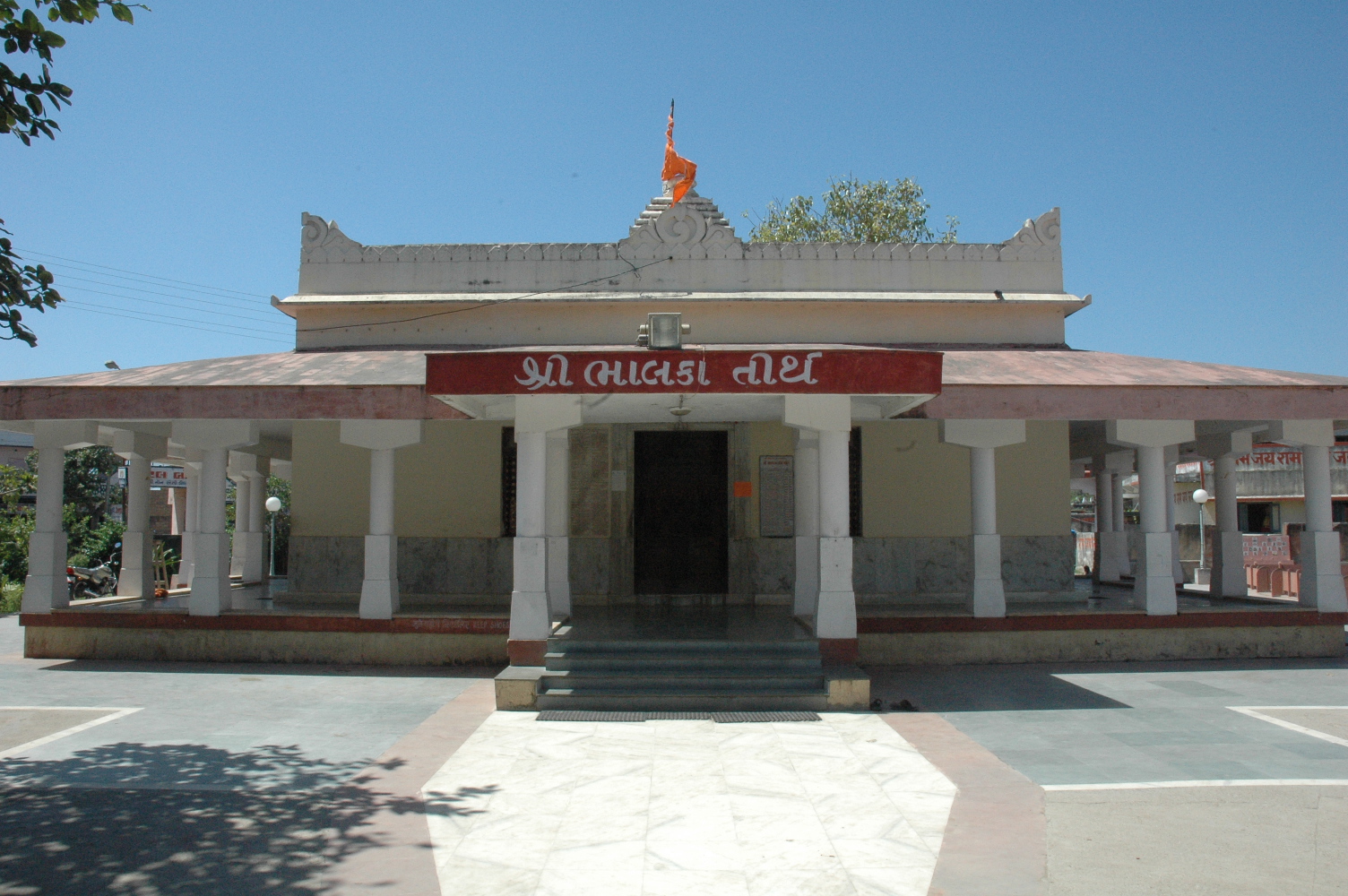
Seeking Blessings at Bhalka Tirth and the Sacred Triveni Ghat
Our exploration of Somnath extended beyond the main temple. We journeyed to Bhalka Tirth, a serene spot marked by a Krishna temple. This is the poignant location where Lord Krishna is believed to have been mistakenly struck by a hunter’s arrow, bringing his earthly sojourn to an end. Standing there, we offered our prayers, a sense of profound connection to the divine and the epics washing over us.
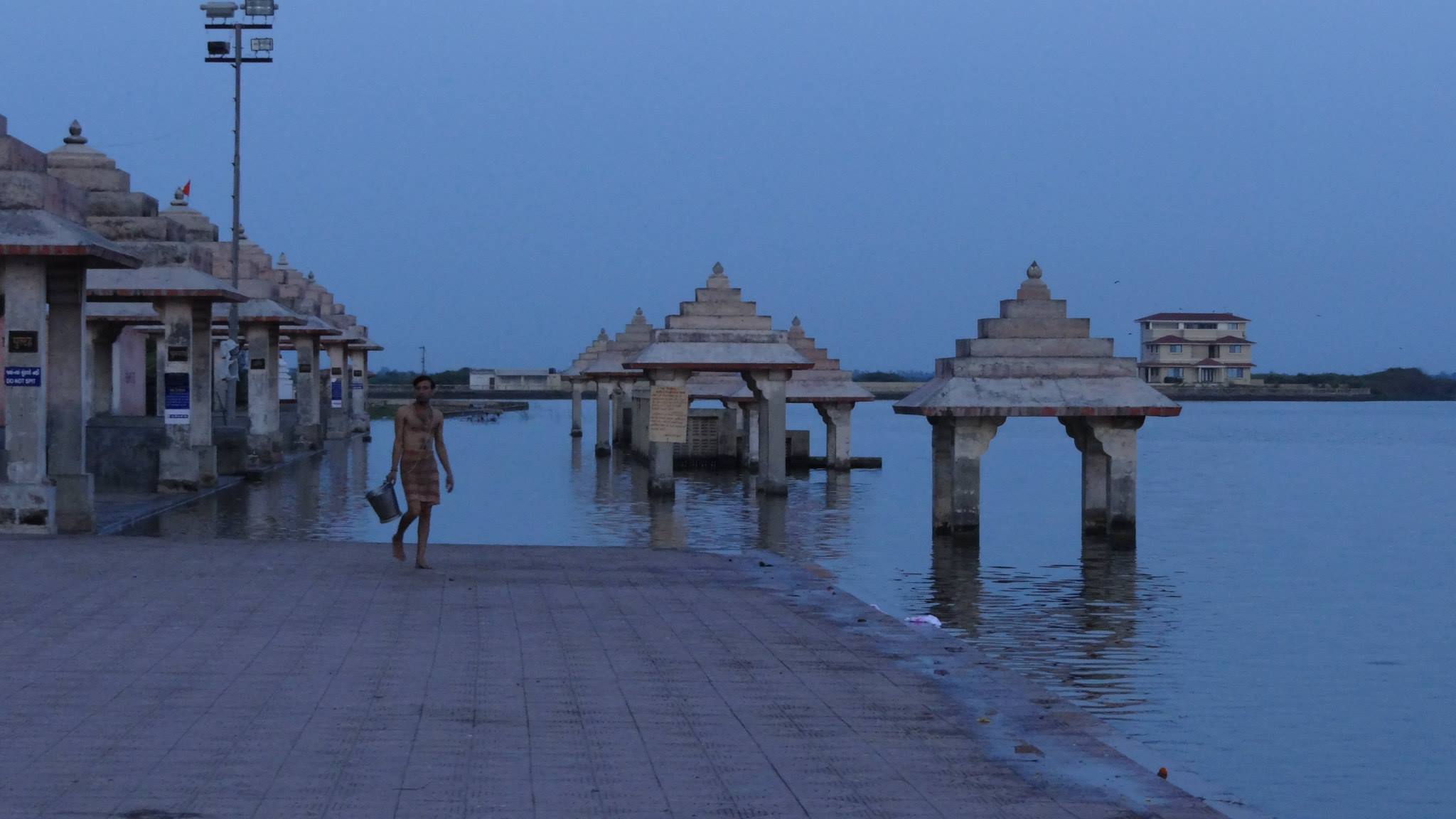
Next, we made our way to the renowned Triveni Ghat, the sacred confluence of the Kapila, Hiran, and the mythical Saraswati rivers. Known as Triveni Sangam, this revered spot is where the Moon God, Chandra, is said to have bathed to regain his lost lustre. The ghat symbolizes the various stages of human life and is believed to be a place where one can be cleansed of curses and diseases. It was during the auspicious period of Pitripaksh, a time dedicated to honoring ancestors, that I found myself at Triveni Ghat.

With a heart full of reverence, I performed tarpana, a ritual offering to my ancestors, finding immense solace in this act of remembrance at such a sacred confluence.


Returning to the Divine Embrace of Somnath Temple
As dusk began to paint the sky in hues of orange and purple, we returned to the Somnath Temple to witness the evening aarti at 7 PM. The temple, now bathed in a warm, golden light, exuded an even more ethereal aura. The air vibrated with the melodious sounds of hymns and the collective prayers of the devotees. Joining the aarti, surrounded by hundreds of fellow pilgrims, we felt a profound sense of unity and an overwhelming wave of peace. The rhythmic chanting, the fragrant incense, and the flickering lamps created an atmosphere of pure devotion, a moment etched deeply in our hearts.
A Quiet Evening of Reflection
Post aarti, we found a peaceful spot on the temple lawns, the gentle sea breeze carrying whispers of the waves. We sat in comfortable silence, reflecting on the day’s spiritual journey and the rich tapestry of history and legends we had encountered. The sheer magnitude of Somnath’s significance, its resilience through centuries, and the unwavering faith it inspires left us humbled and deeply moved. As the night deepened, we made our way back to the hotel, our hearts overflowing with gratitude and a profound sense of spiritual enrichment.
Our pilgrimage to Somnath Dham was far more than just a visit to a holy site. It was a transformative journey through time, a deep dive into captivating legends, and an intimate encounter with unwavering faith. We left with memories that will forever hold a special place in our hearts, feeling immensely blessed and spiritually rejuvenated by the divine embrace of Somnath.
ॐ नमः शिवाय| Om Namah Shivaya!
