
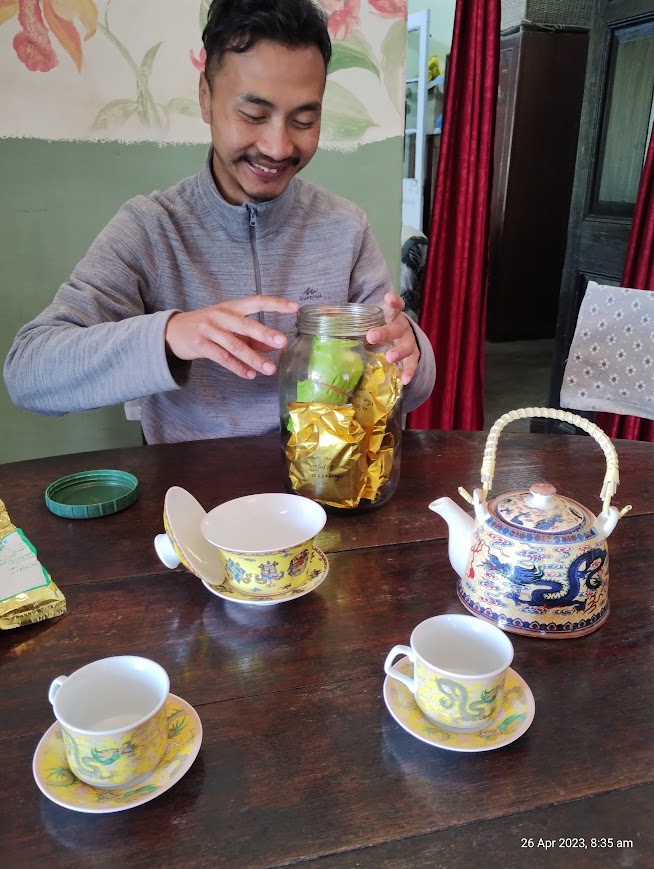
Nestled in the tranquil embrace of the Darjeeling hills, our 2023 sojourn at the charming Rose Villa Heritage Homestay in Takdah gifted us an experience that has subtly yet profoundly reshaped how I perceive a simple cup of tea. Gyalchen Lama, the homestay’s gentle and welcoming owner, didn’t just offer us a beverage; he unveiled an ancient art, a quiet ritual of tea brewing that transcended the mundane act of dunking a tea bag. It was akin to a meditative practice, a form of hushed reverence that, as the fragrant steam curled upwards, revealed a certain magic.
We had arrived in Takdah seeking respite from the everyday, little knowing that a simple invitation – “Would you like to have tea?” – would lead us down a path of profound discovery: the art of brewing tea in the Chinese tradition.
The Sacred Embrace of Tea
For centuries, tea has held a hallowed place within Chinese society, far beyond its role as a mere drink. It’s a thread woven into the fabric of their culture, a symbol of connection – to nature, to history, to the quietude of the present moment. In China, preparing and sharing tea is often seen as a pathway to inner peace and spiritual clarity, a way to harmonise one’s energy with the natural flow of the universe.
This profound connection between tea and spirituality is beautifully expressed in the concept of Cha Dao — the “Way of Tea.” Much like the Way of the Sword or Way of Calligraphy, Cha Dao emphasises the meditative, almost sacred nature of tea preparation. To brew tea properly is not merely to create a beverage but to honour the tea leaves, the water, the tools, and the moment itself.
The First Glimpse of the Tea Ceremony
Seated around a wooden table, Gyalchen Lama meticulously arranged the tools of his craft: an exquisitely detailed teapot, a graceful Gaiwan (a lidded bowl), and several petite, delicate teacups. The air in the room held a gentle warmth, the kind that encourages you to unwind, to release the day’s burdens, and simply be present. Yet, it wasn’t just the room’s temperature that enveloped us; it was the palpable aura of calm that radiated from the unfolding process.
The Ritual Unveiled
His first gesture was to pour steaming hot water over the teapot and cups. This wasn’t a mere cleansing; it felt like a gentle awakening, preparing each vessel for the essence of the tea to come. As the water swirled and danced within the porcelain, there was a distinct sense of reverence, a prelude to the main act. It was as if everything – everything-the cups, the pot, the leaves, the water itself–was being gently roused from slumber.
The teapot, or Gaiwan, was then lovingly rinsed with hot water, a symbolic cleansing of not just the vessel but perhaps also of the spirit embarking on this ritual. The cups followed suit, each receiving a swirl of hot water before it was respectfully discarded. This act, beyond its practical purpose of warming the cups, felt like a demonstration of deep respect for the tea and the ceremony about to unfold.
Then came the tea leaves, carefully placed into the teapot. These weren’t just any tea leaves. As he opened the small pouch, the fragrance that filled the air was rich and earthy. He explained that these leaves had been handpicked with care, harvested from a tea garden, and were chosen for their quality and the subtle, complex flavour they would impart. The first step was crucial, he told us—the right amount of leaves must be used, not too much, not too little, just enough to honour the tea.
Next, the water was poured, but not in the rushed, careless manner we’re used to. He poured slowly, letting the water flow gently over the leaves, almost as if he was coaxing them to reveal their true character. His words were soft, explaining how the water’s temperature should be just right, a complement to the leaves, and how the act of pouring should be imbued with a deep connection to both the tea and the present moment.
The First Steep: A Moment of Awakening
The first infusion, he explained, was not meant for drinking. It was the “awakening” brew, a crucial step to help the compressed leaves unfurl and release their full aromatic potential. As we watched the dry, curled leaves slowly expand and dance in the hot water, a sense of anticipation filled the air – akin to witnessing a flower slowly blossom, graceful and unhurried.
He invited us to take a moment to observe—not just the leaves but the entire process. Judhajit and I watched in silence as he poured out the first brew and explained how this was a moment of cleansing. The leaves were waking up, getting ready for the real magic to unfold in the next infusions.
Subsequent Infusions: A Dance of Patience & Mindfulness
With each subsequent pour, the tea transformed, revealing layers of complexity and nuance. The second infusion felt like a deep, contented sigh – rich, smooth, and perfectly balanced. A noticeable shift in flavour occurred with each steep, drawing us deeper into the rhythm of the ritual. It was as if the tea was slowly unveiling its secrets, layer by delicate layer, mirroring our own gradual shedding of mental clutter.
As he poured, we learned that patience was key. The tea didn’t rush to release its flavours—it waited, calmly, allowing the water and the leaves to interact in their own time. The resulting brew was a delicate harmony of subtle sweetness and a gentle, lingering bitterness – a flavour profile we had never encountered in our hurried sips of everyday tea. The aroma, too, was intoxicating, a fragrant blend of the leaves and the warm, moist air. It wasn’t just the scent of the tea itself but the entire sensory experience – the delicate steam rising from the cups, the soft clinking of the teapot lid, the gentle rustling of the leaves within the pot.
This process of repeated infusions, where the flavour of the tea deepens with each brew, felt almost like a metaphor for life itself. Each sip was like a reflection, a moment of insight into something bigger, deeper. It wasn’t just about the flavour, but about the act of being present in the moment, of letting the tea guide us into a state of mindfulness.
Meditation in a Teacup
The very act of brewing and drinking tea in this traditional manner is inherently meditative. The focused attention on the small, deliberate movements – the swirling of water, the precise pouring, the careful timing – encourages a stillness of mind, a gentle release from the clamour of distractions. As you watch the tea steep, you find yourself drawn into the gentle rhythm of the process, almost like a moving meditation.
Each steeping cycle offers a moment for quiet contemplation, a brief pause in the relentless pace of modern life. The delicate aroma of the tea, the comforting warmth of the steam against your face, and the tactile pleasure of holding a small, delicate teacup all work in concert to draw the drinker deeper into the present moment, a gentle reminder of balance, simplicity, and the beauty of now.
A Truly Magical Experience
At some point during the ritual, I realised that the experience had transcended the mere act of drinking tea. It had become something akin to magic. The way the humble leaves had transformed the clear water into a fragrant, flavourful elixir, the subtle evolution of taste with each infusion – it felt like a form of quiet alchemy. What had begun as a simple request for tea had blossomed into a profound journey – a journey into the heart of Chinese tea culture, a journey into mindfulness, and ultimately, a gentle journey inward.
When the tea was finally ready to be savoured, each sip felt like a small but significant celebration of the present moment. It was a gentle reminder that the most beautiful experiences are often found in the simplest of acts, steeped in patience, care, and a deep sense of reverence.
The Symbolism & Philosophy Within the Brew
The Chinese tea ceremony embodies more than just a way of brewing tea — it is a window into Chinese philosophy. From the careful attention to detail to the meditative practice of observing the leaves unfurl, each action reflects principles of balance, patience, and simplicity.
The idea of Wu Wei — effortless action — is present throughout the tea process. The tea does not struggle to release its flavour; it simply unfolds naturally with the right care. Similarly, life flows best when one is attuned to its rhythms, not forcing outcomes but allowing things to develop at their own pace.
The Enduring Spirit of the Tea Ceremony
By the time our stay in Takdah drew to a close, we had gained something far more valuable than just the knowledge of how to brew tea. We had learned the art of connection–first with the tea itself, then with each other in that shared moment, and most importantly, with the quiet beauty of the present. In the world of the Chinese tea tradition, every steep, every pour, and every sip serves as a gentle reminder of the deep and interconnected web we share with nature, with time, and with one another.
As we sat there, savouring the last fragrant drops of tea, Gyalchen Lama offered a gentle smile and said, “Tea, like life, reveals its beauty slowly, one moment at a time.” And in that simple yet profound statement, we understood. Tea wasn’t just a drink; it was a pathway to reconnect with what truly matters. It was, indeed, magic, brewed in a delicate teacup.

Wow. Reading this made me feel nostalgic as I remembered the experience.
It was wonderful.
I liked it and would love to relive it sometime.
LikeLiked by 1 person
There’s something special about those moments that stay with us, and it’s always great to reminisce about them. Here’s hoping you get to relive that experience again someday—it sounds like it was truly unforgettable!
LikeLike
Ah, the Chinese tradition of brewing tea… it’s so much more than just pouring hot water over leaves. I find it fascinating how deeply ingrained tea culture is in Chinese history and society. From the delicate porcelain teaware to the precise water temperature and steeping times, every detail seems to carry significance. It’s a testament to their artistry and their understanding of nature’s gifts.
LikeLiked by 1 person
Absolutely! The Chinese tea tradition is like an art form that blends history, philosophy, and nature. Every step, from the selection of leaves to the serving ritual, reflects a deep reverence for balance and harmony. It’s fascinating how the act of brewing tea becomes a meditative experience, where every detail is carefully calibrated to draw out the perfect flavors. It’s not just about drinking tea; it’s about savoring the moment and connecting with something much larger than us.
LikeLike
My friend, you are a gifted writer, embarked on a rejuvenating journey to Rose Villa Heritage Homestay in Takdah, nestled in the picturesque hills of Darjeeling. Seeking solace from your busy schedule, and spent quality time with your family and discovered the ancient art of Chinese tea-making from the homestay owner.
You have explained the concept of Wu. Wei beautifully
This seamless process reflects the harmony of Wu Wei, where the tea’s potential is realized through subtle, intuitive actions, rather than forced effort.
Kudos to you my friend for capturing this enchanting experience in your writing. Your words have the power to transport readers to a world of tranquility, reminding us to appreciate the simple yet profound moments in life.🙏🏽🙏🏽
LikeLiked by 1 person
Thank you so much for your kind words, my dear friend! Your thoughtful reflection on the writing means a lot to me. Thank you for always encouraging and supporting me in my journey! 🙏🏽
LikeLike