

Intro
Udaipur is known as the City of Lakes, but beyond its waters lies an older, quieter guardian — the Aravalli hills. On our first ride out of the city, the Hunter carried us into their folds, where broken roads, forgotten parks, and a thousand-year-old tree became part of our story.
Into the Hills
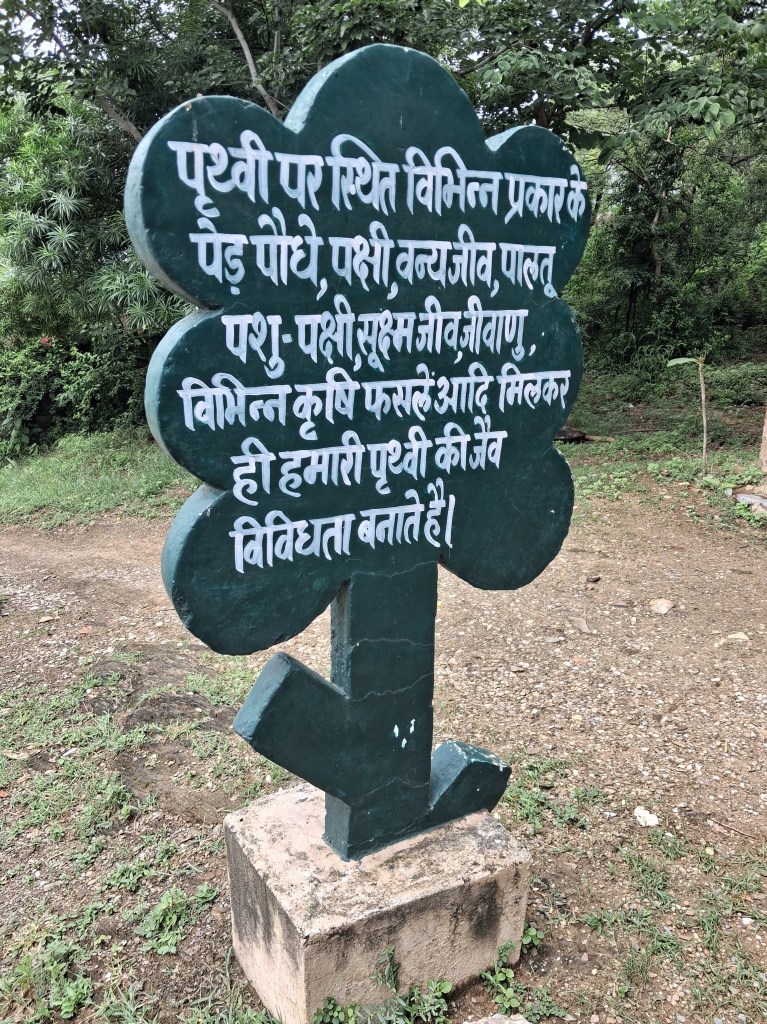
The road from Udaipur wound steadily into the Aravalli hills, one of the oldest mountain ranges in the world, their ridges softened by the monsoon mist. Sixteen kilometers from the city lay our first destination—Mewar Biodiversity Park, a relatively new reserve established in 2016 to safeguard this fragile ecosystem. Spread across more than 1,600 hectares, the park was created not just as a tourist stop but as a living effort to protect the Aravallis, home to leopards, jackals, hyenas, porcupines, and over 260 species of birds.
The ride to Mewar Biodiversity Park turned out to be more of an adventure than we had expected. From the highway, the park lay quite a distance into the interior, and at one point we even took a wrong turn. The roads were badly broken, more like a trail of potholes and gravel than a proper road, and I couldn’t help but think—if it’s India, then bad roads are a given. With a sigh, we turned back, trusting Google Maps despite my growing doubts. My wife, ever confident, reminded me with a grin that on a two-wheeler there was no need to worry: “We can always turn around, no matter how narrow the road.”
The Park That Time Forgot
Soon, the small shrine of Neelkanth Ji appeared by the roadside. We promised to stop for darshan on our way back and pressed ahead. After a few more bends, an old weathered stone arch came into view, the words Mewar Biodiversity Park fading but still visible across its face. The sight filled me with a strange peace—we were finally here.

At the entrance stood a simple barricade and a ticket counter. We bought our tickets and rode in. The road inside was rough gravel, shaded by thick forest. It felt refreshing to be driving through nature, away from the city.
Our first stop was a Peacock Path, though it was closed and overgrown with weeds—as if not even peacocks had ventured that way in a long time.
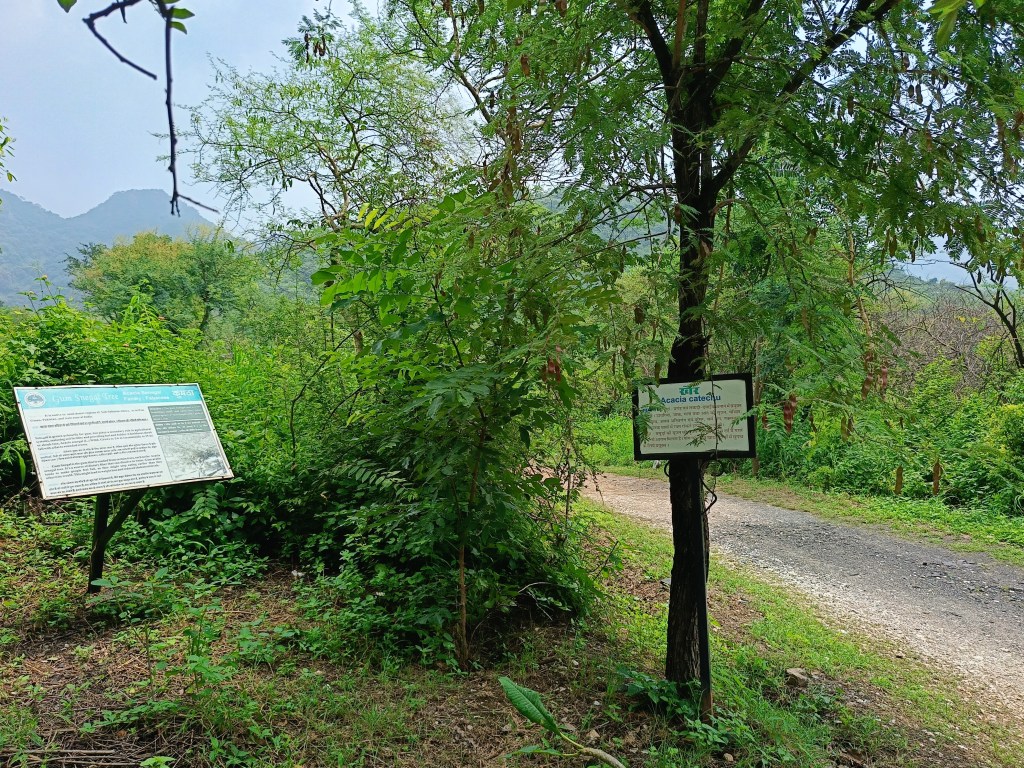
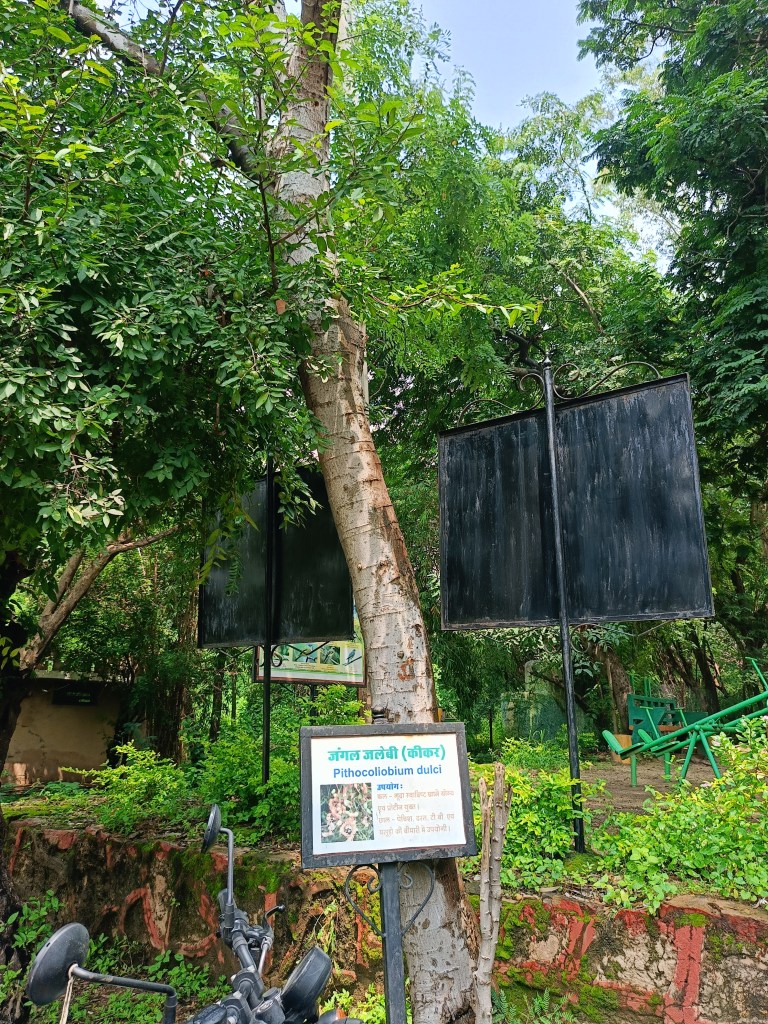
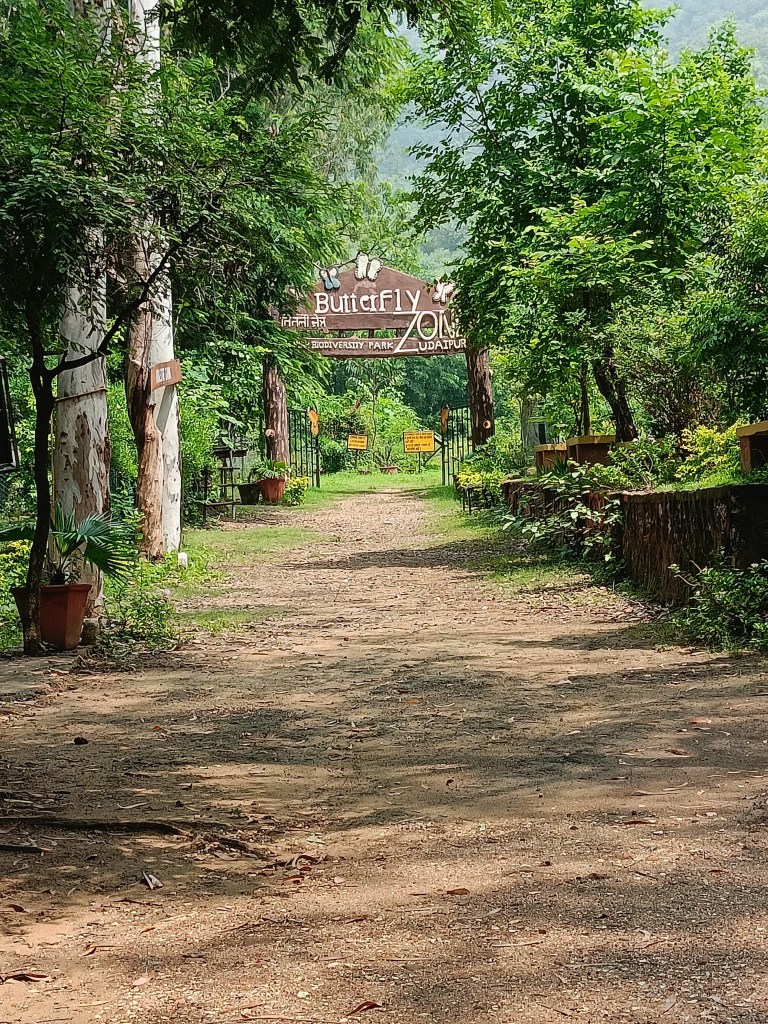
Deeper inside, we came across a small parking area, where a few rides and attractions for children stood abandoned. The place had the air of a park once planned with care but slowly forgotten. We decided to visit the Butterfly Park first. Sadly, it was in a state of neglect—the pathways weedy, the boards faded, the enclosures worn out. A few butterflies fluttered about, their colors briefly lifting the mood, but that was the only redeeming sight in an otherwise tired corner.
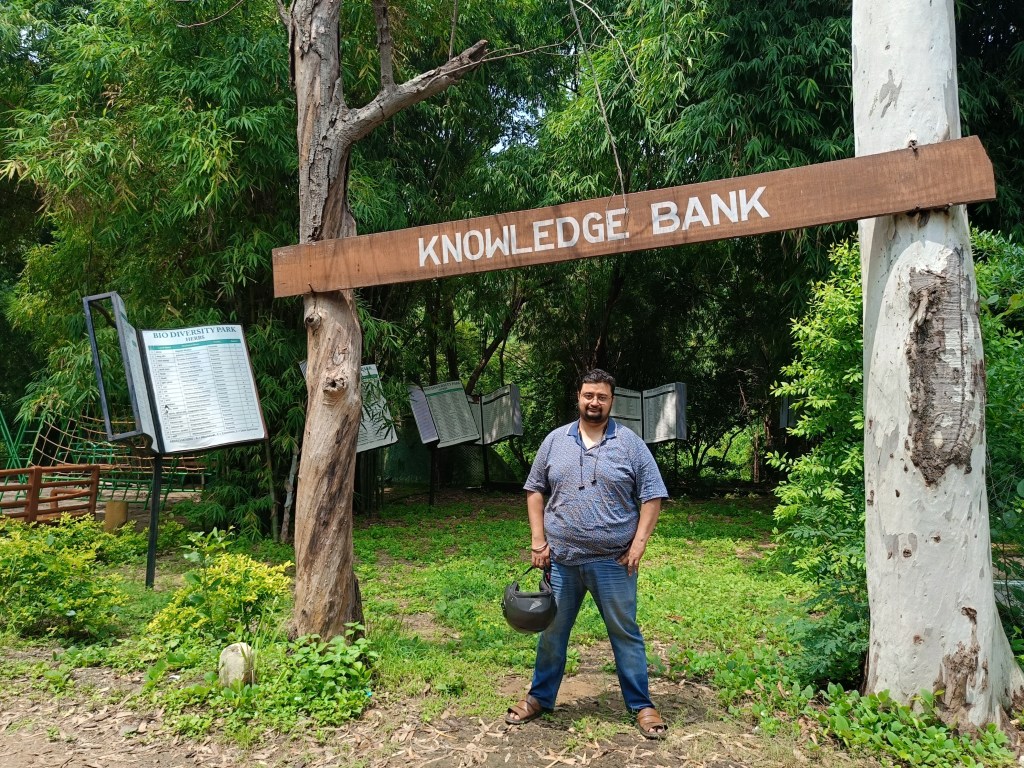
The Tree Older Than Memory
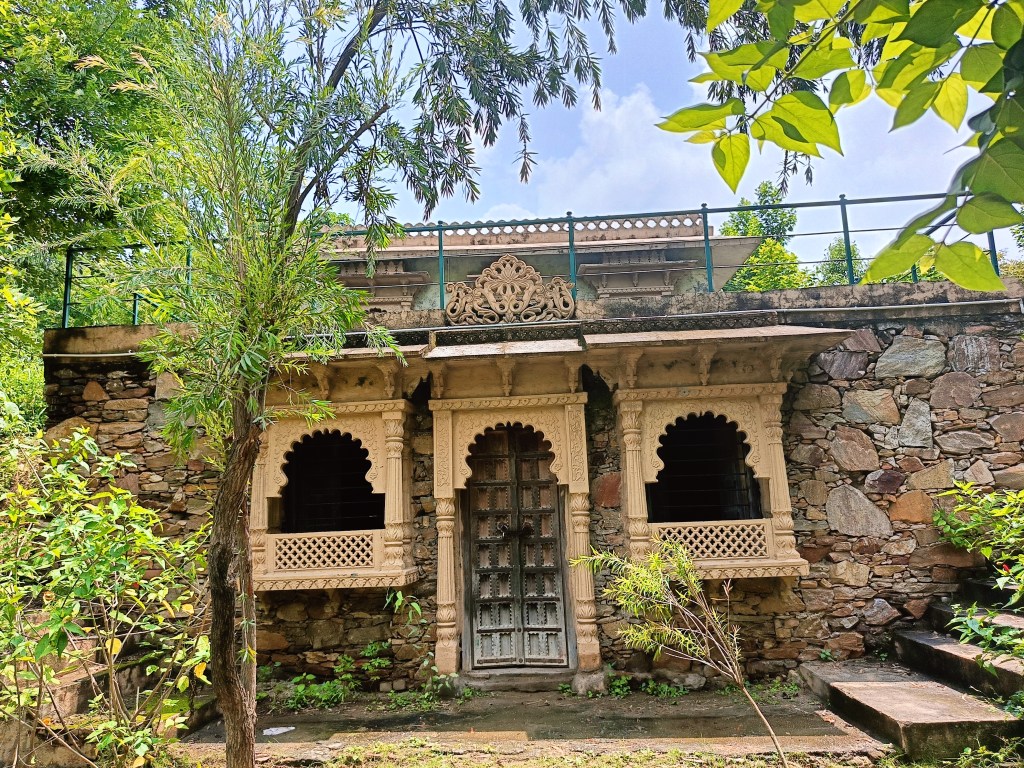
From there, we made our way towards the Panther Path. Before reaching it, a small haveli-style building came into view, clearly intended as an office or interpretation center. Its architecture carried the charm of Rajasthan, but like much else, it looked poorly maintained.
And then, we found it—the legendary thousand-year-old ficus tree. Towering and vast, its roots like writhing sculptures, it radiated an ancient presence, as though it had stood guard over these forests for centuries. We stood in awe, until a rustle in the undergrowth caught my wife’s attention. She froze. Convinced it was the chatter of monkeys, she clutched my hand, her fear instantly outweighing her curiosity. Without waiting for further persuasion, she pulled me firmly back towards the parking lot. “The tour has ended,” she declared, and I couldn’t help but laugh at her certainty.
A Pause for Prayer
We exited the park, and true to our promise, stopped at Neelkanth Ji Temple on our way out. The small Shiva shrine, set against the hills, felt serene—our brief prayers a grounding pause before we set off once again, this time towards Eklingji.
Outro / Teaser
The forests had given us ancient roots and quiet prayers, but the day was far from over. Ahead lay Eklingji and Nagda, where history, devotion, and rain would shape the rhythm of our journey.

A beautiful travelogue! You’ve captured both the rugged charm and the forgotten melancholy of Mewar Biodiversity Park so vividly—the thousand-year-old ficus stands out as the true timeless guardian of the Aravallis.
LikeLiked by 1 person
Thank you, Dad.
LikeLiked by 1 person