
The following morning, we returned to the Mahabodhi Temple for darshan. A serene stillness enveloped the complex, the kind that gently quietens the mind. We stood in silent anticipation until the Lama received our offerings and reverently placed them around the Buddha’s idol. The ritual was brief, almost understated, yet profoundly moving — a moment that felt less like an act and more like a blessing bestowed.
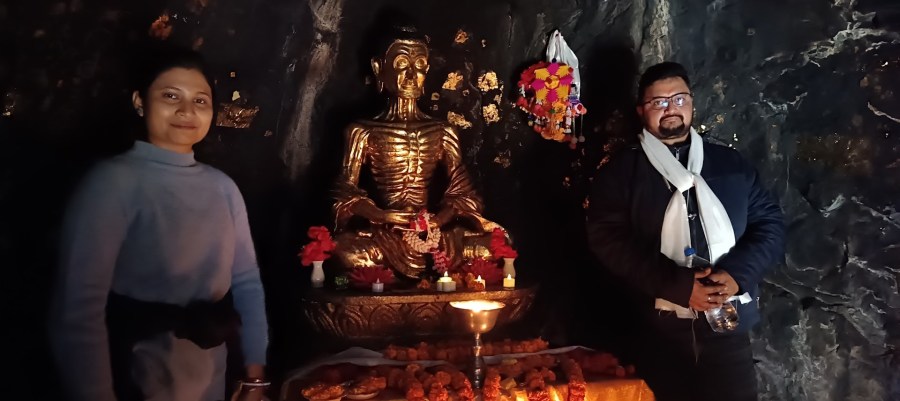
Soon after, our guide led us beyond the temple precincts to the heritage sites intimately linked with Siddhartha’s spiritual quest. Our first halt was the Dungeshwari Caves, nestled amid rugged hills, where Siddhartha is believed to have spent years in intense meditation and ascetic practice — a pivotal phase in the journey that would ultimately lead him to enlightenment.
The Dungeshwari Caves lie cradled in the rugged hills a short drive from Bodh Gaya. It was here that Siddhartha Gautama is believed to have subjected himself to extreme ascetic practices, pushing the limits of physical endurance in his relentless search for truth. The narrow caves, dark and austere, seem to absorb silence itself, compelling visitors to lower their voices and their gaze.
Standing within those stone chambers, one cannot help but sense the intensity of that period — a phase marked by deprivation, introspection, and ultimately, realisation.
After leaving the solemn Dungeshwari Caves, our guide led us to the gentle banks of the Niranjana River. It was here, according to tradition, that Siddhartha broke his long fast when Sujata, a local villager, offered him a bowl of milk-rice — a simple act of compassion that marked the turning point from extreme asceticism to the Middle Path.
Standing by the river, one can almost sense the quiet gratitude that must have filled the air that day, a moment of human kindness that helped shape a philosophy followed by millions.
From the riverbank, we made our way back toward the heart of Bodh Gaya, stopping at small shrines and meditation spots that dot the landscape. Each place seemed to tell a story — of seekers, sages, and pilgrims who, over centuries, have walked the same paths in search of understanding.
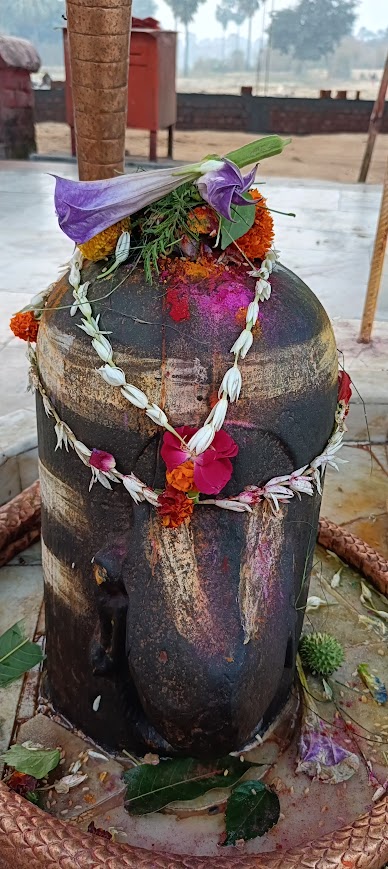
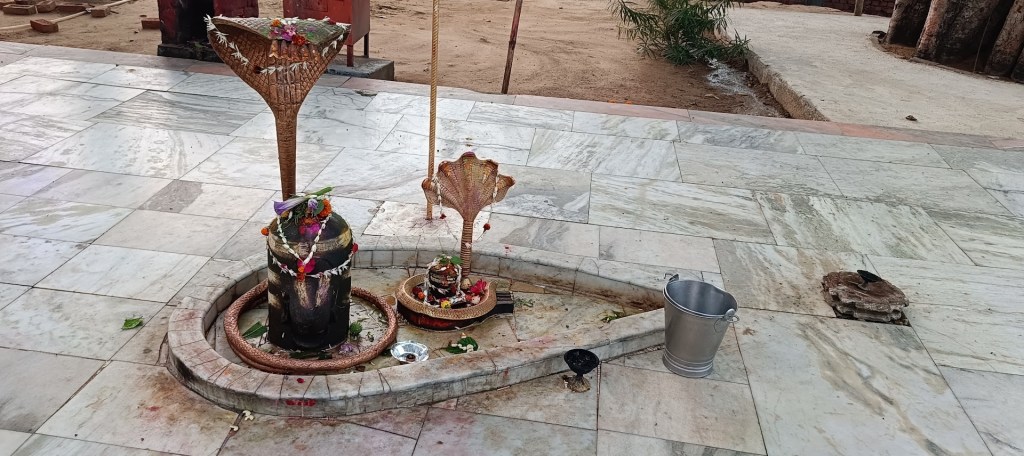
We visited the Jharkhandi Mahadev Temple, home to a naturally emerged Shivling surrounded by local legends. The place felt humble yet powerful, grounded in quiet devotion rather than grandeur. The blend of natural beauty, history, and devotion creates an atmosphere that is both peaceful and humbling, inviting introspection even from the most casual visitor.

Soon, time began slipping away. The crowded streets, narrow lanes, and a few untimely breakdowns turned our return into a tense dash toward the station — yet somehow, we arrived just in time, breathless but quietly triumphant.
As the train carried us back toward Ranchi, I found myself reflecting on the journey. What had begun as a plan thwarted by circumstance had transformed into something far deeper: a pilgrimage of resilience, companionship, and quiet introspection. Even amidst my fragile health, I felt a profound gratitude for our choice to continue — not merely to travel, but to grow together through every challenge and moment of wonder.
In the end, this trip was never a mere replacement for what we had lost. It became something far richer: a journey steeped in faith, learning, compassion, and shared strength — a reminder that the most meaningful experiences often arise from perseverance, presence, and the bonds we nurture along the way.

I spent a couple of months in Bodhgaya – a beautiful place and a fantastic atmosphere! I’m glad you enjoyed your trip there.
LikeLiked by 1 person
Thank you Mick
LikeLiked by 1 person
A stunning piece of writing. You’ve captured the essence of Bodh Gaya perfectly, focusing not just on the destination, but on the profound transformations it sparks within. Thank you for letting me walk alongside you through your words.
LikeLiked by 1 person
Thank you baba
LikeLiked by 1 person
Reading your words feels like a shared pilgrimage—a gentle reminder that our greatest strength is found in the silence we share with the world.
LikeLiked by 1 person
Thank you mam
LikeLike
Happy 2026 🥂
LikeLiked by 1 person
Happy 2026!
LikeLike
Profound journey of self realisation and strength
LikeLiked by 1 person