
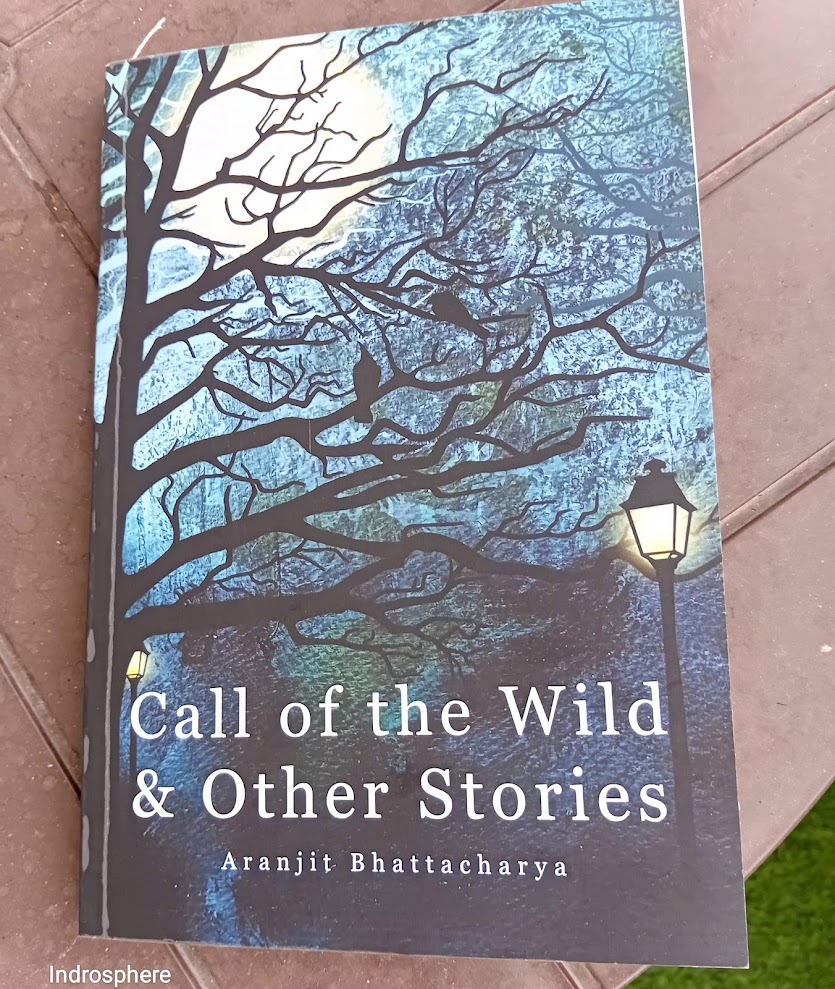
There are moments in life that arrive quietly, almost stealthily, and then linger long after they have passed — like the aftertaste of a deeply fragrant tea, or the echo of a distant train horn on a winter evening. My recent encounter with my schoolmate Aranjit Bhattacharya and his book Call of the Wild & Other Stories belongs to that realm of experience — part literature, part memory, part nostalgia, and part unspoken magic.
Our school years feel now like a sepia-toned photograph tucked away in an old wooden drawer — edges frayed, faces softened by time, yet unmistakably alive. In those corridors of our youth, we could not have imagined where life would take us. We scattered like leaves in the wind, carried by careers, families, cities, and destinies of our own making. Yet some threads of connection never truly break; they merely stretch across time.
Long before the book found its way into print, Aranjit sent me his stories — raw, intimate, and brimming with an eerie beauty. I remember reading his pdf manuscript with a quiet anticipation, like stepping into a dimly lit room where a single lamp flickers. Each story pulled me in gradually, wrapping me in its atmosphere. They were not tales meant to shock or startle, but narratives that seeped under the skin — subtle, haunting, and deeply evocative.
As I turned the pages, I felt myself drifting back into the dimly lit alleys of my younger days — verandas bathed in pale moonlight, staircases that sighed with every footstep, and those late-night walks past silent graveyards where shadows seemed to breathe. The air was thick with half-heard whispers and childhood legends, and with that eerie shiver that creeps along your spine when you sense a presence just beyond sight. Through his narratives, Aranjit delicately traced that trembling threshold between the familiar and the uncanny, where reality wavers, hesitates, and gently dissolves into mystery.
When he asked me to write the Preface, I felt both honoured and humbled. How does one introduce a world that is at once familiar and unsettling? I found myself writing not just about his stories, but about memory itself — how the past clings to us like a gentle shadow, how imagination refuses to be tamed, and how certain narratives echo across lifetimes.
Then came the meeting at Delhi Airport — a moment that remains vividly etched in my memory. In the swirl of arriving and departing passengers, the metallic crackle of announcements overhead, and the ceaseless tide of unfamiliar faces, there he was, waiting once again. Just as he had done so many times before, whenever my journey brought me to Delhi — a familiar presence amid the transience of travel.
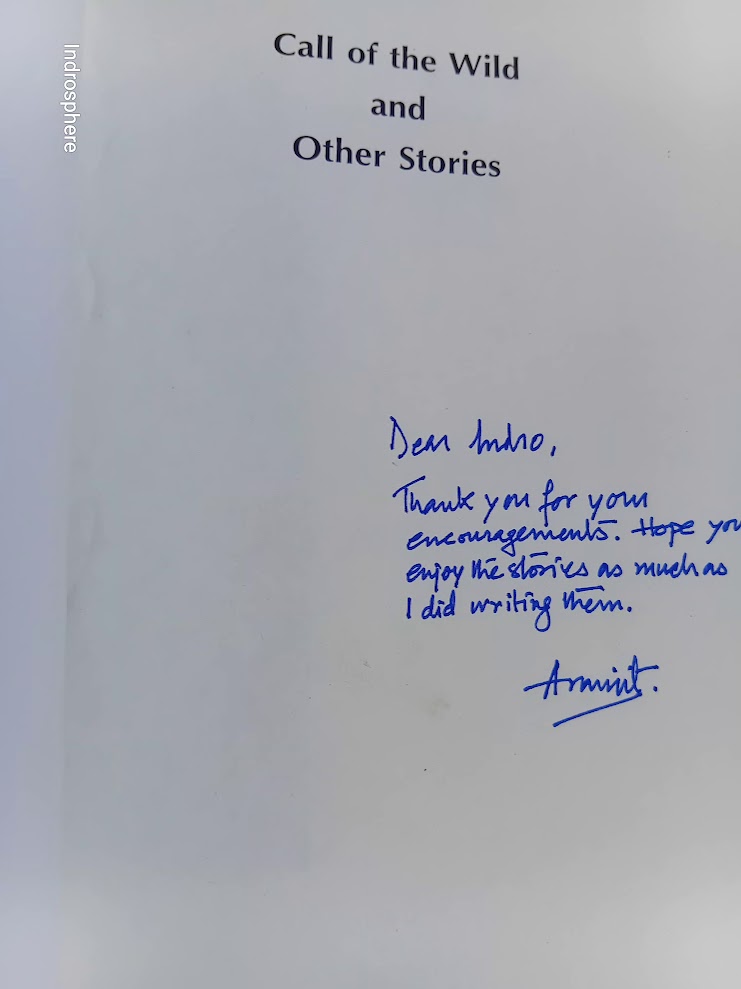
In that bustling, impersonal space, he placed a signed copy of Call of the Wild & Other Stories into my hands. It was not merely a book; it felt like a parcel of shared history, bound together by ink, memory, and years that had slipped silently between us. For a moment, the airport faded away, and we were two old classmates standing somewhere between past and present.
The stories themselves continue to linger in my mind. The title, Call of the Wild, resonates beyond its literal meaning. It feels like a reminder that beneath our polished, civilised lives runs a deeper current — of instinct, mystery, and the untamed wilderness within us. Aranjit’s other stories walk that same thin line between the seen and unseen, between belief and doubt, between comfort and unease.
What makes his writing so compelling is its restraint. There are no grand theatrics, no exaggerated horrors — only a quiet tension that builds like a distant storm on the horizon. You sense that something is about to shift, and when it does, it leaves you altered in some small, indefinable way.
Now, as I look at that signed copy resting on my bookshelf, it feels less like an object and more like a living presence — a bridge between who we were and who we have become. It reminds me that stories, like friendships, have a life of their own.
Through this book, Aranjit has not only given readers a journey into the strange and the mysterious; he has also gifted me a return to a shared past, softened by nostalgia yet sharpened by reflection.
And so, to my readers of Indrosphere, I offer this invitation: open this book slowly, let its mood wash over you, and allow yourself to wander where the stories lead. You may find, as I did, that the wild is not only out there — it is also within.
Some stories call to you softly. Some friendships call you back across time. This book did both for me.

Sounds interesting. As is your introduction to the book.
LikeLiked by 1 person
Thanks, sir. The book is available on Amazon.
LikeLike