Exploring Udayagiri & Khandagiri Caves: A Journey Through Ancient India

The Udayagiri Khandagiri Caves of Odisha, dating to the 2nd century BC, are a complex of 33 caves carved from sandstone hills by Jain monks. Known for intricate carvings, these caves were historical dwelling places, meditation chambers, and religious centers. The premises bear an entry charge, housing several remarkable features like inscriptions, rock-cut sculptures, and Jain structures. They offer a deep dive into an ancient era, with the caves' creations reminiscent of famous structures like Ajanta and Ellora.

Itkhori: Where Faiths Converge & Time Stands Still

Itkhori in Chatra district of Jharkhand state of India is situated at around 150 km from Ranchi, the capital of Jharkhand, at the confluence of two rivers named ‘Mahane' and 'Baksa'. Bhadrakali temple complex is a symbol of religious tolerance for centuries. It is a wonderful place with abundance of historic reminiscences and archaeological remnants demonstrating a breath-taking saga of religious tolerance and cultural unity.

Rakhigarhi’s Intimate Burial: A Glimpse into Ancient Relationships

Archaeologists in Haryana, India, have discovered the remains of a young couple buried in an embrace dating back 4,500 years. The find offers insights into ancient relationships and ceremonies, and challenges our understanding of love and marriage in the Harappan Civilization. It suggests a deep appreciation for romantic bonds, raising questions about the origins of marital love. The discovery offers a poignant reminder of the enduring human experience of love and loss.

Ajanta Caves: Masterpieces of Ancient Indian Art

During a pilgrimage to Shirdi with my mother, we took a detour to the Ajanta Caves, rather than Ellora, due to the rains. The stunning rock-cut caves, dating back to the second century BCE, showcased viharas, stupas, and prayer halls with exquisite paintings and sculptures. These ancient marvels, depicting Buddhist traditions and narratives, offered a glimpse into the rich cultural legacy of ancient India, reflecting exquisite craftsmanship and vibrant artistry.

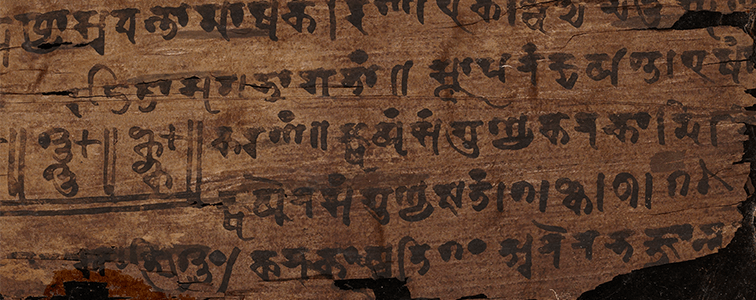
The Bakhshali manuscript

Discovering the Bakhshali Manuscript: Ancient India’s Mathematical Genius

The Bakhshali Manuscript, discovered in 1881 in Pakistan, dates back to the 3rd or 4th century CE, showcasing advanced ancient Indian mathematics. It introduced the decimal place value system and zero as a placeholder, revolutionizing math. The manuscript highlights ancient India's scientific and philosophical traditions, influencing global scholarship and mathematical practices.

The Ancient Art of Vedic Chanting: A Cultural Legacy

The Vedas, ancient sacred texts foundational to Hindu philosophy, culture, and spirituality, have been preserved through an unbroken oral tradition for over 5,000 years. Vedic chanting serves as a spiritual practice that aligns mind and body, promoting wellness through stress reduction, improved focus, and community unity. Recognized by UNESCO, this rich tradition faces modern challenges but continues to attract global interest for its profound benefits and spiritual significance.