Ziggurats: Bridging Heaven & Earth in Ancient Mesopotamia

The Great Ziggurat of Ur, located in present-day Iraq, is a well-preserved relic of Mesopotamian civilization. Built around 2100 BCE, it honored the moon god Nanna and served as an administrative and religious center. The ziggurat's terraced levels and grand staircase show celestial significance, and it was later partly restored. Rediscovered in 1850, it is now a UNESCO World Heritage Site and an important symbol of Iraq's ancient heritage.

Shaduppum: Forgotten City That Whispered Civilization

The ancient city of Shaduppum, now modern-day Tell Harmal in Iraq, was a significant center during the Bronze Age and Early Iron Age. Known for its rich history, intricate urban layout, and its importance in bureaucracy, commerce, and culture, Shaduppum hosted numerous temples and was a hub for Babylonia's treasury and accounting. Its most notable discoveries include clay tablets inscribed with laws, mathematical equations, and remarkable texts such as The Epic of Gilgamesh, all of which provide valuable insights into the Mesopotamian civilization.

From Clay to Creation: Ninmakh’s Enduring Presence in Babylon

Among Babylon’s broken bricks and drifting sands, Ninmakh still lingers. Mother of gods and humans, she shaped life from clay and water, blessing birth, healing wounds, and anchoring civilisation itself. Her temple rose again and again, each layer preserving memory. Today, amid ruins and silence, her story whispers of creation, loss, and the enduring feminine sacred within the ancient heart of Mesopotamia forever.

Stepping Back in Time: Lost in the Labyrinth of Erbil Citadel

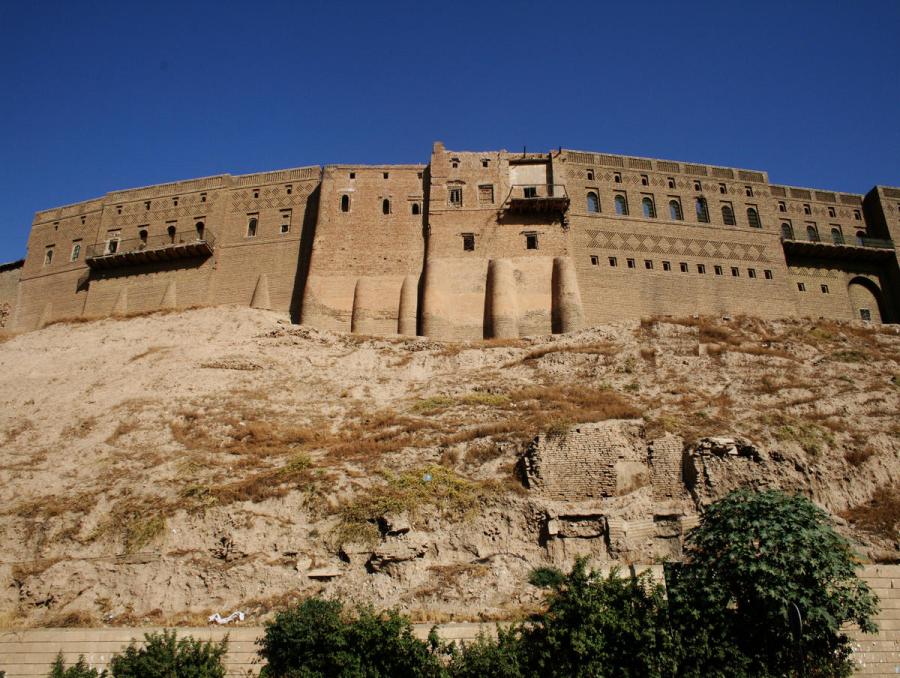
Settled more than 6,000 years ago, Erbil Citadel is thought to be one of the longest continuously inhabited sites in the world. The Citadel, which rises some 30 meters above the plain, is surrounded by a lower town that developed in the modern city of Erbil. The Erbil Citadel, locally called Qelat, is a tell or occupied mound, and the historical city centre of Erbil. Over the millennia, the Erbil Citadel has taken shape, each generation building new structures on top of those of the previous generation.

Walking Through Time: My Journey to Ancient Babylon

Babylon, one of the most influential cities of ancient Mesopotamia, has a history that spans almost two millennia. From its initial foundation as a small Akkadian town in the third millennium BC to its rise as the capital of the Babylonian Empire under Hammurabi's rule, the city has had periods of grandeur and decline. Notable for its significant landmarks like the Hanging Gardens, one of the Seven Wonders of the Ancient World, Babylon also housed notable figures such as Hammurabi, famous for his code of laws. Its ruins are now in Iraq, open to visitors who want to explore its rich heritage.

The Warka Vase: A Story in Stone

The Warka Vase, an artifact from 3200 BCE discovered in modern-day Iraq, is revered for its intricate carvings depicting ancient Sumerian mythology. Crafted as a tribute to the goddess Inanna, the vase was found in the temple complex of Uruk, showing the civilization's beliefs and culture. The vase was stolen in 2003, amidst the American invasion, but returned following an amnesty program.

The House of Heaven: Inanna’s Temple & the Architecture of Divine Power

Inanna, a prominent Mesopotamian goddess, symbolized love, fertility, and war, governing both divine and earthly realms. Her myths illustrate themes of death and rebirth, showcasing her significance in agriculture. Temples dedicated to her served as spiritual and economic centers, influencing later cultures as Ishtar. Her worship declined with the rise of monotheism.

The Winged Genie of Assyria: A Glimpse into the Mystical Guardians of Mesopotamia

The Winged Genie of Assyria, dating back to the 9th century BCE, is an ancient art sculpture symbolizing protection and fertility, often used in Assyrian religious practices. Displayed prominently in royal palaces, the Winged Genie was considered a benevolent spirit that could bring fortune and protection. The Genie was also part of a stone relief in King Sargon II's palace symbolizing purification and fertility. Today, the Winged Genie remains a significant representation of ancient Assyrian art.

The National Museum of Iraq: A Journey Through Time

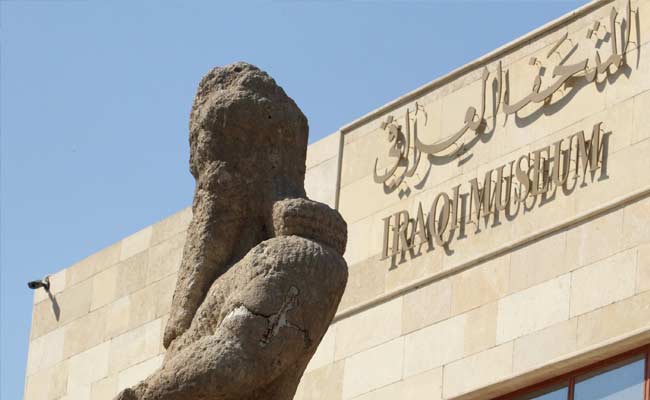
As Nowruz approached, friends and I explored the National Museum of Iraq in Baghdad, a vital custodian of Mesopotamian history. Despite the tragic looting in 2003, the museum houses a rich collection, including the Lady of Warka and artifacts from diverse ancient cultures. Its resilience serves as a beacon of hope and connection to Iraq’s past, urging visitors to appreciate and support its heritage.