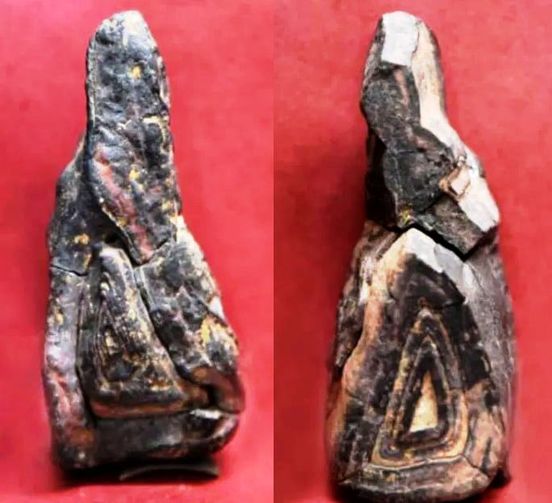
Ritual & Reverence: Unveiling the Prehistoric Goddess of Baghor

Hidden in the rugged hills of Sidhi, Madhya Pradesh, the prehistoric shrine of Baghor shelters a triangular stone believed to be over 11,000 years old—perhaps the earliest symbol of the Mother Goddess in India. Discovered by archaeologists in the 1970s, it continues to be worshipped today, bridging prehistory and faith in a timeless ode to the divine feminine.
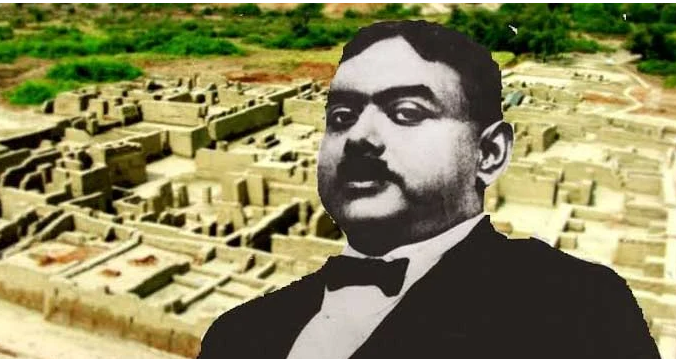
Discovering Mohenjo-Daro: The Legacy of Rakhal Das Banerji

Rakhal Das Banerji was a significant Indian archaeologist who made important contributions to the understanding of ancient civilizations, particularly the Indus Valley Civilization. He is renowned for discovering Mohenjo-Daro, one of the oldest and best-preserved urban settlements, pushing back the civilization's date by 2000 years. Despite his monumental work, Banerji didn't receive adequate recognition during his lifetime, with modern Indian scholars now working to restore his legacy.

Dining with the Ancients: Unearthing a 5,000-Year-Old Tavern in Lagash

Archaeologists have uncovered a 5,000-year-old tavern in Lagash, Iraq, shedding light on ancient Sumerian society. The remains featured an open-air dining area, industrial-sized oven, and ancient refrigerator, offering insights into the lifestyle of the middle class. This discovery challenges previous notions, indicating the existence of an ancient middle class. Detailed analysis of samples is expected to reveal more about the tavern's patrons and ancient city social structure.

Between Stones & Stars: A Journey to Pakri Barwadih’s Megalithic Marvels

The Pakri Barwadih megalithic site in Jharkhand, India, reveals the advanced astronomical knowledge of ancient civilizations. Dating back over 3,000 years, these monumental stones were used as observatories and calendars, marking seasonal festivals. Despite its significance, the site faces threats from urbanization and neglect. Preservation efforts are crucial to maintain this cultural heritage, which offers insights into human history and wisdom. Protecting Pakri Barwadih ensures future generations can appreciate this archaeological treasure.

Echoes in Stone: A Journey to the Isko Caves of Jharkhand

The Isko Caves in Jharkhand, India, are a significant archeological site and a testament to the country's prehistoric art and culture. Situated in a forest, the caves contain rock paintings from the Meso-Chalcolithic period (9000-5000 BCE). Local tribes, upholding the tradition of rock painting, connect the present day to the past via rituals performed at these caves. These caves, discovered in 1991, require proper maintenance and protection to conserve this important heritage site.

A Journey Through Time: Uncovering the Soul of Chandraketugarh

Chandraketugarh, an ancient archaeological site in West Bengal, was once a bustling trade hub dating back to the 3rd century BCE. Named after King Chandraketu, the city flourished till the 12th century CE. Boasting artifacts and structures from various civilizations, it showcases a blend of indigenous Indian culture and influences from Greece, Persia, and Southeast Asia. Chandraketugarh, also possibly the ancient capital of Vanga and the kingdom of Gangaridai, remains a mystery due to inadequate research and awareness. The West Bengal state government established a museum in 2017 to protect its artifacts.

Ziggurats: Bridging Heaven & Earth in Ancient Mesopotamia

The Great Ziggurat of Ur, located in present-day Iraq, is a well-preserved relic of Mesopotamian civilization. Built around 2100 BCE, it honored the moon god Nanna and served as an administrative and religious center. The ziggurat's terraced levels and grand staircase show celestial significance, and it was later partly restored. Rediscovered in 1850, it is now a UNESCO World Heritage Site and an important symbol of Iraq's ancient heritage.

Ninmakh: The Divine Mother of Sumerian Mythology

In the ancient land of Mesopotamia, lies the tale of Ninmakh, a revered goddess of healing and creation. As the consort of Enki, she played a pivotal role in shaping gods and humans. Her temple, a sanctuary in Babylon, witnessed rituals and prayers for fertility and healing. Despite the ravages of time, her legacy endures, embodying humanity's quest for meaning. The ruins of her temple stand as a testament to her enduring spirit and the rich Babylonian civilization.

Walking Through Time: My Journey to Ancient Babylon

Babylon, one of the most influential cities of ancient Mesopotamia, has a history that spans almost two millennia. From its initial foundation as a small Akkadian town in the third millennium BC to its rise as the capital of the Babylonian Empire under Hammurabi's rule, the city has had periods of grandeur and decline. Notable for its significant landmarks like the Hanging Gardens, one of the Seven Wonders of the Ancient World, Babylon also housed notable figures such as Hammurabi, famous for his code of laws. Its ruins are now in Iraq, open to visitors who want to explore its rich heritage.