Walking Through Time: My Journey to Ancient Babylon

Babylon, one of the most influential cities of ancient Mesopotamia, has a history that spans almost two millennia. From its initial foundation as a small Akkadian town in the third millennium BC to its rise as the capital of the Babylonian Empire under Hammurabi's rule, the city has had periods of grandeur and decline. Notable for its significant landmarks like the Hanging Gardens, one of the Seven Wonders of the Ancient World, Babylon also housed notable figures such as Hammurabi, famous for his code of laws. Its ruins are now in Iraq, open to visitors who want to explore its rich heritage.

The Warka Vase: A Story in Stone

The Warka Vase, an artifact from 3200 BCE discovered in modern-day Iraq, is revered for its intricate carvings depicting ancient Sumerian mythology. Crafted as a tribute to the goddess Inanna, the vase was found in the temple complex of Uruk, showing the civilization's beliefs and culture. The vase was stolen in 2003, amidst the American invasion, but returned following an amnesty program.

The House of Heaven: Inanna’s Temple & the Architecture of Divine Power

Inanna, a prominent Mesopotamian goddess, symbolized love, fertility, and war, governing both divine and earthly realms. Her myths illustrate themes of death and rebirth, showcasing her significance in agriculture. Temples dedicated to her served as spiritual and economic centers, influencing later cultures as Ishtar. Her worship declined with the rise of monotheism.

The Winged Genie of Assyria: A Glimpse into the Mystical Guardians of Mesopotamia

The Winged Genie of Assyria, dating back to the 9th century BCE, is an ancient art sculpture symbolizing protection and fertility, often used in Assyrian religious practices. Displayed prominently in royal palaces, the Winged Genie was considered a benevolent spirit that could bring fortune and protection. The Genie was also part of a stone relief in King Sargon II's palace symbolizing purification and fertility. Today, the Winged Genie remains a significant representation of ancient Assyrian art.

Cosmos at Doha Airport: A Journey Through Art, Stars, & Stories

Cosmos is a stunning artwork by the renowned French artist Jean-Michel Othoniel, located at the Hamad International Airport in Doha, Qatar. The artwork consists of a large metal sphere covered with gold leaf, resembling a giant astrolabe. The sphere is suspended from the ceiling and rotates slowly, creating a dazzling effect of light and movement. Cosmos is inspired by an ancient Islamic astrolabe from the Museum of Islamic Art in Qatar, which is the oldest surviving one in the world. The astrolabe was a device used by astronomers and navigators to measure the position of celestial bodies. Cosmos symbolizes the journey of travelers around the world and their connection to the stars.

Luxury & Art: A Layover at Hamad International Airport

During a six-hour layover at Doha's Hamad International Airport, the author discovered an immersive experience filled with art and comfort. The airport features modern amenities, including art installations that reflect Qatar’s culture. Notable artworks, such as KAWS' "Small Lie" and Urs Fischer's "Lamp Bear," create a whimsical environment. The experience transcends typical airport visits, making it a memorable cultural journey for travelers.

Ajanta Caves: Masterpieces of Ancient Indian Art

During a pilgrimage to Shirdi with my mother, we took a detour to the Ajanta Caves, rather than Ellora, due to the rains. The stunning rock-cut caves, dating back to the second century BCE, showcased viharas, stupas, and prayer halls with exquisite paintings and sculptures. These ancient marvels, depicting Buddhist traditions and narratives, offered a glimpse into the rich cultural legacy of ancient India, reflecting exquisite craftsmanship and vibrant artistry.

The National Museum of Iraq: A Journey Through Time

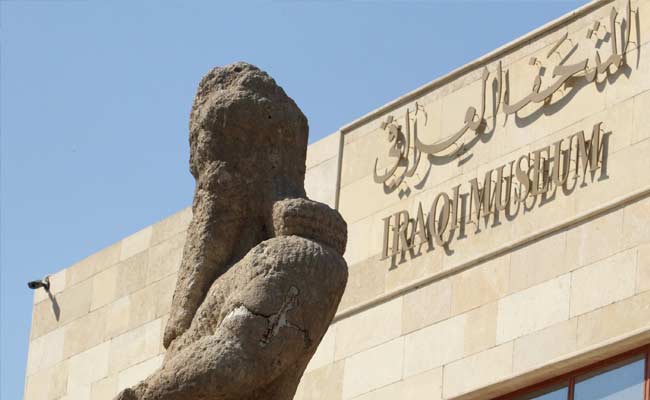
As Nowruz approached, friends and I explored the National Museum of Iraq in Baghdad, a vital custodian of Mesopotamian history. Despite the tragic looting in 2003, the museum houses a rich collection, including the Lady of Warka and artifacts from diverse ancient cultures. Its resilience serves as a beacon of hope and connection to Iraq’s past, urging visitors to appreciate and support its heritage.

Scheherazade’s Baghdad: Where Stories Whisper Through Time

In Baghdad, the enduring tale of Scheherazade exemplifies love, courage, and storytelling's transformative power. Through captivating narratives, she enchants King Shahryar, illustrating survival via imagination. The One Thousand and One Nights, a cultural tapestry dating back to the ninth century, highlights storytelling's universal connection across diverse civilizations, celebrating resilience and creativity.