Govardhan Puja: A Celebration of Earth, Faith, & Sustainability

Govardhan Puja is an annual Indian festival celebrated after Diwali, honoring Lord Krishna's protection of Vrindavan. It highlights the significance of cow dung as a sacred material in rituals, symbolizing purity and sustainability. The festival emphasizes gratitude, community, and ecological consciousness, linking spiritual values with respect for nature and traditional practices.

Whispers of Taal: A Monsoon Memory from Bengal to Ranchi

The late monsoon in Bengal brings the seasonal appearance of Taal, or sugar palm, in local markets. This unique fruit is a delicacy in Bengal, used to make various dishes like Taler Bora, a Janmashtami special. The preparation of Taler Bora is linked to tradition, and its cultural significance extends beyond just being a snack. Taler Bora is a must-try for anyone seeking to explore the culinary treasures of Bengali kitchens.

Ujjain: A Journey Through History & Spirituality

Ujjain is a significant spiritual and cultural hub in India, famous for its over 100 Hindu temples. Notably, it houses the Mahakaleshwar temple, displaying one of the 12 Jyotirlingas. Ujjain's rich heritage in art, literature, and astronomy is evident in its many museums and monuments. Once the residence of emperor Ashoka and other renowned scholars, it is a main pilgrimage destination for Hindus and hosts Kumbh Mela every 12 years. The city is embedded with astonishing legends and was considered as one of the four primary educational centers of ancient India.

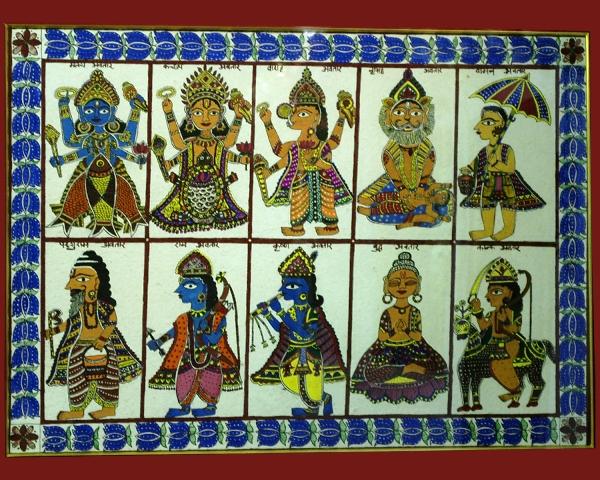
Dashavatara

Dashavatara & Evolution: Ancient Wisdom Meets Modern Science

Srinivasan, also known as Vasu, grapples with the clash between his hectic life as a genetic scientist and his mother's traditional influence. A conversation with his mother reveals parallels between Dashavatara, the ten incarnations of Lord Vishnu, and Charles Darwin's theory of evolution. This intersection of ancient mythology and modern science offers a profound synthesis, illuminating timeless truths about human development and the natural world.

Annakoot: A Feast for the Divine & the Devotees

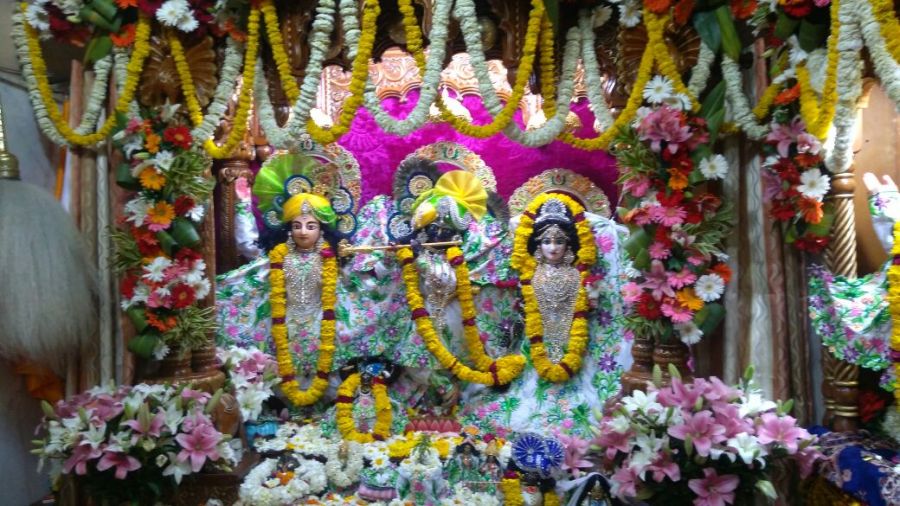
Every year, after Diwali, the Gaudiya Math in Prayagraj celebrates Annakoot, or the “Mountain of Food,” on October 24. This tradition, originating from a childhood episode of Lord Krishna, honors his protection of the cowherd community from Indra's fury. Devotees prepare Chhappan Bhog, a feast of fifty-six offerings, which is presented to Krishna. Annakoot embodies gratitude, community spirit, and divine connection, celebrating abundance and harmony.

Discovering the Magic of Madhavpur

There is a serene beach at Madhavpur on the road to Somnath from Dwarka. It lies on the seashore, close to Porbandar. Madhavpur isn’t much well-known. However it is a very important pilgrimage for Hindu Vaishnavas. ccording to folklore, Lord Krishna kidnapped princess Rukmini (Rukmini haran) and eloped with her to prevent an unwanted marriage at her request and saved her from evil Shishupala. Lord Krishna married princess Rukmini at this village while returning to Dwaraka. She is the first and the most prominent queen of Krishna.

Dwarka Calling: A Pilgrimage Woven with Faith and Unexpected Showers

The pilgrimage to Dwarka, a sacred city on the western coast of Gujarat, is steeped in religious and historical significance. Home to the revered Dwarkadhish Temple and Bet Dwarka Island, the journey encompasses spiritual immersion and exploration of ancient artifacts. Despite the rain, the pilgrimage remains a deeply enriching and unforgettable experience, culminating in reflection and strengthened faith.