Nalhateshwari: Where the Goddess Breathes

The Nalateshwari Temple is situated in the Nalhati town of Birbhum district in West Bengal. The town Nalhati is named after Nalateshwari temple, one of the 51 Sakti Peethas. It is around 25 km from Tarapith. The Shakti Pitha (Sanskrit: शक्ति पीठ) are significant shrines and pilgrimage destinations in Shaktism, the goddess-focused Hindu tradition. This temple is believed to be erected at the spot where the ‘Nala’, (Vocal chord with part of the tracheae), the throat of Goddess Sati (Sakti) had fallen. In Bengali, the larynx is known as 'Nala'. This is the source from which the deity is known as Maa Nalateswari and the place is also named Nalhati, for the shrine.

Arjuna’s Arrows: A Fusion of Mythology & Algebra

"Arjuna's Arrows," a popular Indian mythological tale, incorporates algebraic equations in warfare strategy. The protagonist, Arjuna, uses mathematical equations to dictate the characteristics and effective use of his multiplying arrows. The narrative exemplifies the practical application of mathematics, emphasizing that it's not merely an abstract concept restricted to textbooks, with a unique blend of historical mathematician Bhaskaracharya and his algebraic principles. However, the algebra used in Arjuna's arrows remains fictional and symbolic, representing the immense potential of mathematics in shaping our world.

The Hidden Sanctuary of Jadugora: A Journey to the Rankini Temple

The Rankini Temple in Jadugora, Jharkhand, is a sacred Hindu temple venerating Rankini Devi, with a rich history and tranquil atmosphere. Located near the Hata-Jadugora State Highway, it stands as a significant blend of historical and spiritual heritage. It is a must-visit for those seeking spiritual solace and unique cultural experiences in Jharkhand.

From Clay to Creation: Ninmakh’s Enduring Presence in Babylon

Among Babylon’s broken bricks and drifting sands, Ninmakh still lingers. Mother of gods and humans, she shaped life from clay and water, blessing birth, healing wounds, and anchoring civilisation itself. Her temple rose again and again, each layer preserving memory. Today, amid ruins and silence, her story whispers of creation, loss, and the enduring feminine sacred within the ancient heart of Mesopotamia forever.

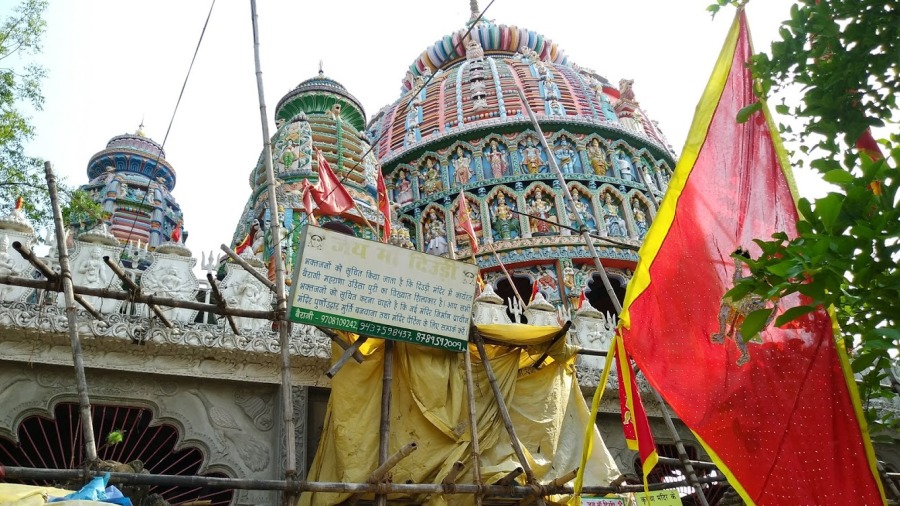
Deori Mandir, Ranchi-Tata Highway (NH33), Jharkhand, India

Deori Mandir: Sixteen Arms of Faith, Folklore, & Divinity

The Deori Mandir, nestled on the Jamshedpur-Ranchi Highway, is home to the revered sixteen-armed Maa Deori, a manifestation of Goddess Durga. The temple's unique portrayal defies convention and exudes martial prowess and divine grace. Legends trace its origins to the Mahabharata era, with narratives of Emperor Ashoka and divine intervention during the Kalinga War. The sanctity of the temple resonates through ancient craftsmanship and spiritual symbiosis, attracting pilgrims seeking solace and reverence.

Ujjain: A Journey Through History & Spirituality

Ujjain is a significant spiritual and cultural hub in India, famous for its over 100 Hindu temples. Notably, it houses the Mahakaleshwar temple, displaying one of the 12 Jyotirlingas. Ujjain's rich heritage in art, literature, and astronomy is evident in its many museums and monuments. Once the residence of emperor Ashoka and other renowned scholars, it is a main pilgrimage destination for Hindus and hosts Kumbh Mela every 12 years. The city is embedded with astonishing legends and was considered as one of the four primary educational centers of ancient India.

Newroz Piroz Be: The Eternal Flame of Renewal

Nowruz, meaning "New Day" in Persian, is an ancient festival with its origins dating back thousands of years, rooted in Zoroastrianism. It marks the beginning of the Persian New Year and the arrival of spring. The exact origin of Nowruz is not definitively known, but it is believed to have been celebrated for over 3,000 years in the regions of modern-day Iran, Central Asia, and parts of the Middle East.

The Creation Myths of the Kolarian Tribes: Echoes of Origins from Eastern India

In eastern India, Indigenous Kolarian tribes, particularly the Santhals and Mundas, retain rich cosmogonical myths that reflect their connections to nature and creation. These narratives emphasize resilience and community, highlighting a continuum of existence through rituals, festivals, and oral traditions, preserving their cultural heritage in a modern world.