Celebrating Satyajit Ray: Aranyer Din Ratri at Cannes 2025

The Cannes premiere of Satyajit Ray’s 1970 classic, Aranyer Din Ratri, showcased its newly restored 4K version, captivating audiences and celebrating Indian cinema. The meticulous restoration involved collaborations from esteemed organizations and filmmakers, enhancing the film’s emotional depth. Set against the stunning backdrop of Betla National Park, themes of self-discovery and human connection are skillfully portrayed. This event emphasized the significance of preserving cinematic heritage, inviting new generations to experience Ray's timeless artistry.

AI in Clinical Medicine

AI in Clinical Medicine: Transforming Healthcare for the Future

Artificial Intelligence is transforming clinical medicine by enhancing diagnosis, treatment personalization, and efficiency. Key applications include predictive diagnostics, robotic surgeries, and virtual health assistants, improving access and reducing costs. However, challenges like data privacy, ethical concerns, and integration issues must be addressed to fully realize AI's potential in healthcare.

Silent Sentinels of Semaphore: Forgotten Towers of East India

Long before telegraph wires crisscrossed India, messages once leapt across the sky — tower to tower — through an ingenious system of wooden arms and coded light. Scattered across Bengal, Bihar, and Jharkhand, the forgotten semaphore towers tell a fascinating story of early communication, colonial ingenuity, and human ambition to bridge distance through vision and precision.

Digital Healthcare Platforms for Healthcare Improvement

Digital healthcare platforms are online services that provide access to health information, diagnosis, treatment, and care delivery. They can include websites, apps, telemedicine, wearable devices, and electronic health records. Digital healthcare platforms have the potential to improve national healthcare by enhancing the efficiency, quality, accessibility, and affordability of health services. The digital healthcare platforms need to be designed and implemented with care and caution, taking into account the needs and preferences of users, providers, and policymakers. They also need to be evaluated and monitored for their effectiveness and impact on national healthcare.

The Importance of Accurate Medical Record-Keeping

Medical records are crucial documents detailing a patient's history, clinical findings, and treatment. They are vital for treatment correctness and form the backbone of patient care management. However, proper record-keeping in India is still developing, complicating patient care. Maintaining accurate records serves several purposes, including patient monitoring, medical research, legal and insurance cases, and medical education. Paper records have drawbacks, while electronic health records offer enhanced security, efficiency, and accuracy, supporting better patient care and healthcare improvement.

The Marvel of July’s Supermoon: A Celestial Spectacle

The July 2022 full Moon, known as the supermoon, was the largest and brightest of the year, appearing 14% larger and 30% brighter at its perigee. This celestial event holds cultural significance for various traditions, coinciding with Guru Purnima for Hindus, Buddhists, and Jains. Different cultures historically named the July full Moon based on seasonal activities. The supermoon serves as a reminder of the beauty and complexity of the cosmos and its cultural and historical significance.

Transforming Healthcare: Embracing Digital Solutions

The future of healthcare is shifting towards a proactive model, leveraging digital technologies to empower individuals and improve healthcare outcomes. Digital healthcare encompasses telemedicine, mHealth apps, EHRs, wearable devices, and more. Innovations in AI, big data, and blockchain are driving significant changes, while ethical and interoperability challenges need to be addressed. Embracing digital health can lead to a more efficient and equitable healthcare system.

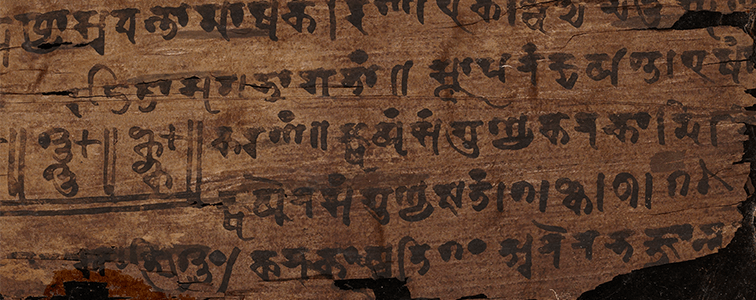
The Bakhshali manuscript

Discovering the Bakhshali Manuscript: Ancient India’s Mathematical Genius

The Bakhshali Manuscript, discovered in 1881 in Pakistan, dates back to the 3rd or 4th century CE, showcasing advanced ancient Indian mathematics. It introduced the decimal place value system and zero as a placeholder, revolutionizing math. The manuscript highlights ancient India's scientific and philosophical traditions, influencing global scholarship and mathematical practices.

Is the Zodiac Wrong? Unveiling the Truth About Ophiuchus

The traditional zodiac faces a cosmic twist as NASA's latest calculations reveal a 13th zodiac sign, Ophiuchus, challenging age-old perceptions. Despite its absence in mainstream astrological discourse, Ophiuchus has quietly observed the dance of celestial bodies, its significance subtly acknowledged by sidereal and Vedic astrologers. This revelation questions astrology's foundations as ancient Babylonians divided the zodiac into 12 equal parts, disregarding the varying constellation sizes and shapes. NASA emphasizes the distinction between astronomy's empirical observation and astrology's subjective interpretation.