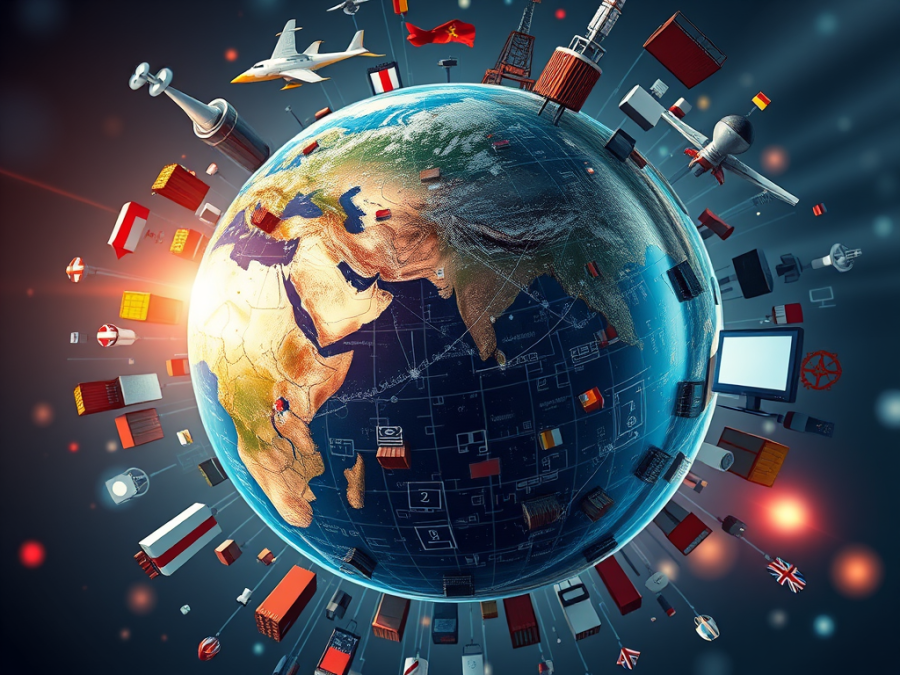
Globalisation: Balancing Sovereignty & Opportunity

Globalisation interlinks economies and cultures worldwide, fostering growth and collaboration while challenging national sovereignty. This complex relationship presents opportunities like job creation and cultural exchange, but also raises concerns about diminished autonomy due to multinational corporations and international agreements. Balancing the benefits of globalisation with safeguarding national interests requires strong institutions, strategic engagement, and the preservation of cultural identities amidst powerful global influences.
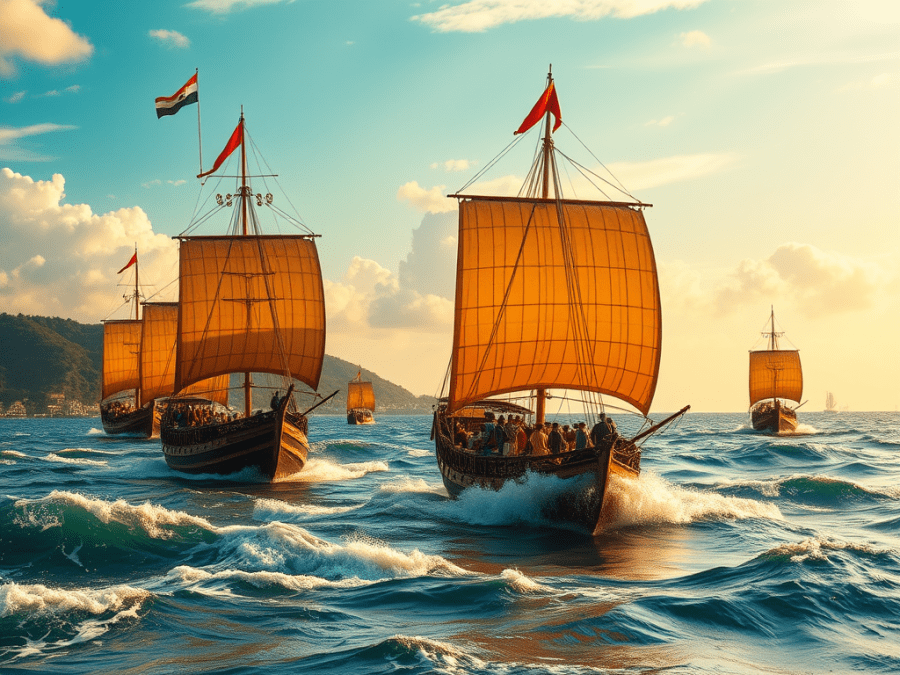
India & the Sea: An Enduring Bond Etched in Waves & Wind

India's National Maritime Day, observed on April 5, honors the historic voyage of the SS Loyalty in 1919, symbolizing India's maritime legacy. It highlights the nation's ancient seafaring traditions, trade routes, and cultural exchanges that shaped its civilization. The Indian Ocean served as a conduit for commerce and cultural dialogue, with influences reaching Southeast Asia, reflecting a history of collaboration, adaptability, and shared heritage that continues to inspire today.

Lessons from the Silk Road: Trade & Innovation

The Silk Road, a vast trade network spanning from East Asia to Europe, played a transformative role in shaping ancient commerce and settlements. Beyond facilitating the exchange of luxury goods, it fostered cultural, technological, and economic interactions that laid the foundation for global trade. Its principles of specialization, collaboration, and innovation continue to influence modern supply chains, underscoring the enduring importance of interconnected trade in driving economic growth and sustaining complex settlements worldwide.

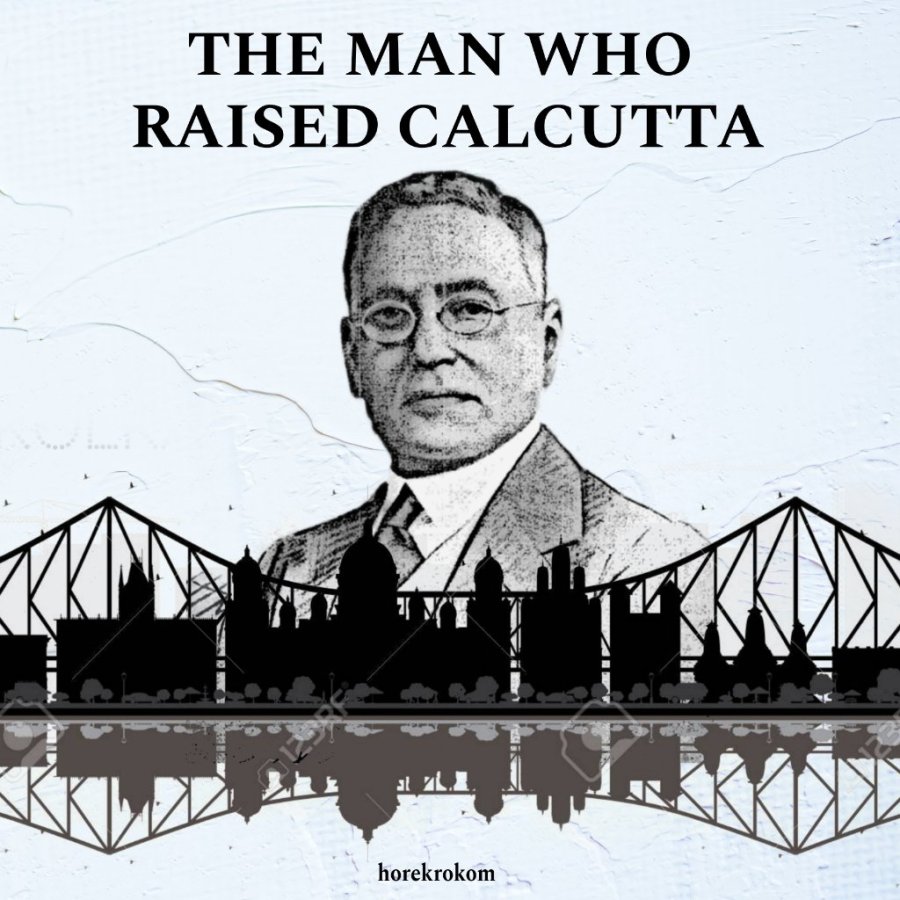
Sir RN Mookerjee: Kolkata’s Architectural Pioneer

Sir Rajendra Nath Mookerjee, born in the 19th century, was a visionary architect and engineer whose contributions transformed Kolkata’s skyline. He co-founded Martin & Company, leading to landmark projects like the Howrah Bridge and Victoria Memorial. Mookerjee also co-founded IISCO, integral to India's steel industry. Despite his significant achievements in engineering, sports, and academia, he remains largely unacknowledged in history, highlighting the need for his legacy to be celebrated.

Digital Healthcare Platforms for Healthcare Improvement

Digital healthcare platforms are online services that provide access to health information, diagnosis, treatment, and care delivery. They can include websites, apps, telemedicine, wearable devices, and electronic health records. Digital healthcare platforms have the potential to improve national healthcare by enhancing the efficiency, quality, accessibility, and affordability of health services. The digital healthcare platforms need to be designed and implemented with care and caution, taking into account the needs and preferences of users, providers, and policymakers. They also need to be evaluated and monitored for their effectiveness and impact on national healthcare.

The Oldest Customer Complaint: Lessons from Ancient Business

The oldest customer complaint known was discovered on a clay tablet from 1750 BCE, found in the ancient city of Ur, current southern Iraq. The complaint was made by a man named Nanni to the merchant Ea-nasir, about the poor-quality copper bought. Nanni also claimed he was mistreated and mentioned fraudulent practices by Ea-nasir. This tablet, housed currently in the British Museum, offers insight into customer service expectations and the importance of good business practices in ancient times.