

India is a country of diverse cultures and traditions, and Lucknow is one such city that boasts of its rich history and heritage. The city is home to several architectural marvels, and one such masterpiece is the Bara Imambara.
Built-in 1784 by Nawab Asaf-ud-Daula, the Bara Imambara is an imposing monument that reflects the Mughal style of architecture. The monument is also known as Asfi Mosque or Bhul Bhulaiya due to its unique design and layout.
My uncle stays in Lucknow. This winter, my grandparents were staying with him there. They were asking to see us, so my mom and I went to Lucknow from Ranchi during my winter vacation. One afternoon, we went for some local sightseeing in Lucknow. We went to Bada Imambara.
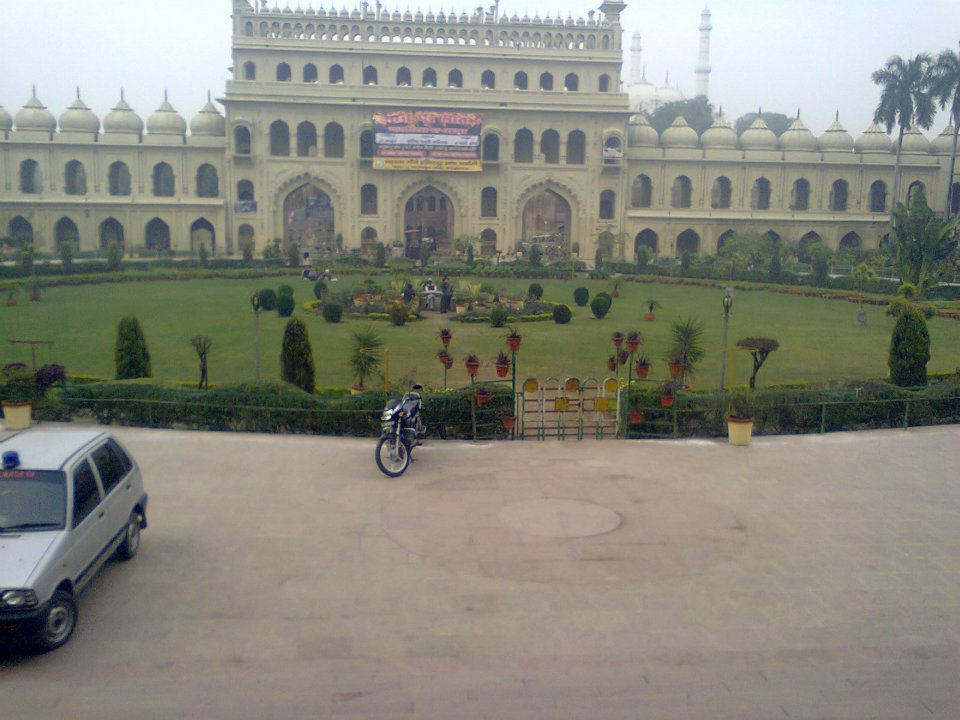
The Bara Imambara is a complex structure that comprises the main building, a mosque, a stepwell, and several courtyards. The main building is built on a raised platform and is supported by 260 pillars. The roof of the building is made of wood and is said to be one of the largest in Asia without any external support.
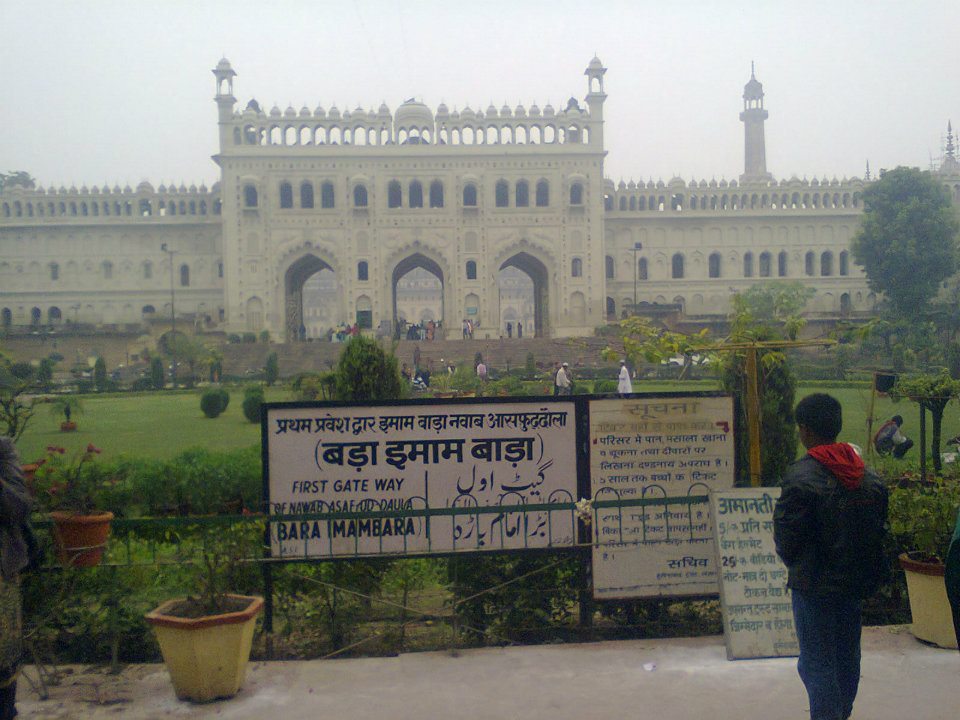
Ground floor has three hall whose styles have been copied by three different cultures – Chinese hall, Persian hall and Indian hall. The roof of the Indian hall is in the shape of a half pumpkin.
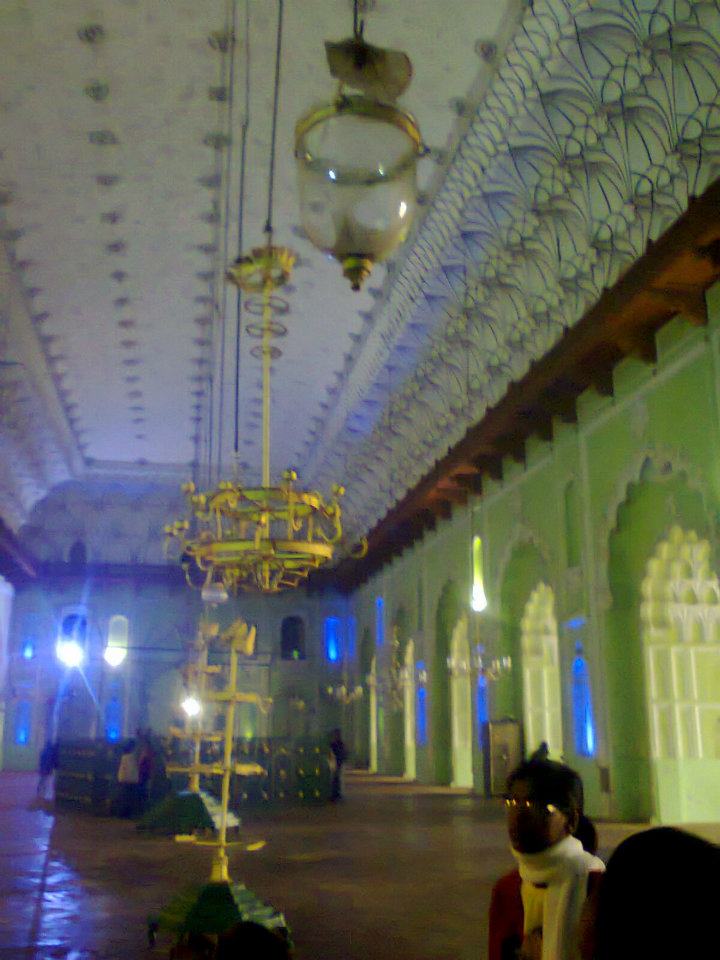
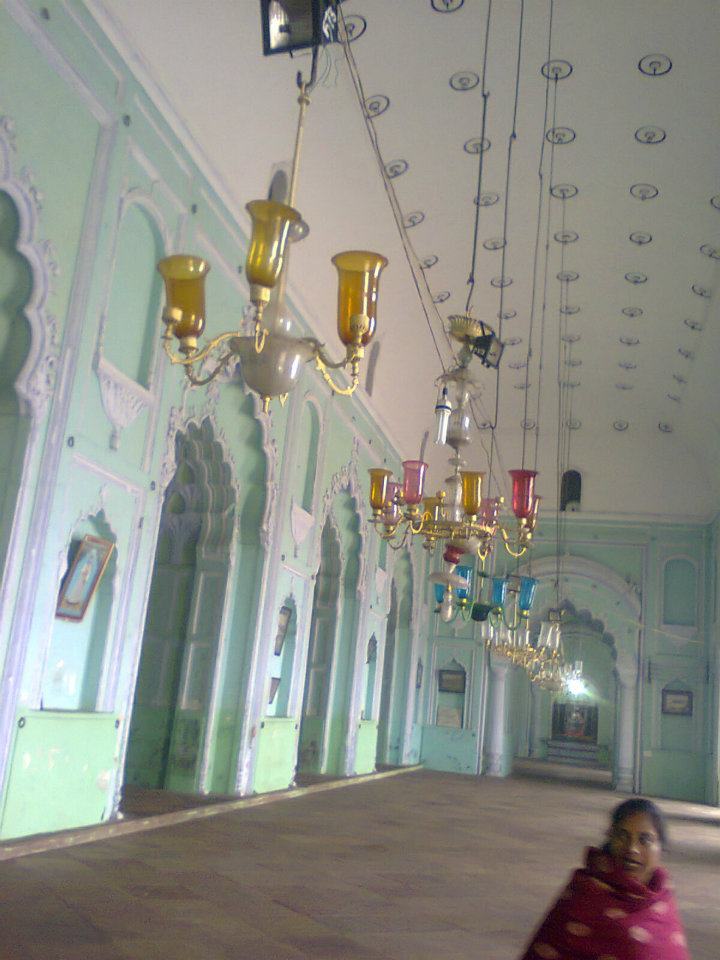
The most wondrous part of the construction is that every pillar is of same width and height and at a same distance. The Imam bargah is kept in the Persian hall.
One of the most interesting features of the Bara Imambara is the Bhul Bhulaiya, a labyrinth of corridors and passages that lead to the rooftop. The Bhul Bhulaiya is said to have been designed to confuse intruders and protect the monument from any attacks. It is said that there are more than 1000 ways to reach the terrace, but only one way to come back. It is also a marvel of architecture, as it supports the weight of the massive structure without any pillars or beams.
The construction of the building makes it the maze. That is because of the gates. At every 10 to 15 feet there are four gates one leads to the right path rest three wrong. Thus, this makes things difficult. On the third floor there are big walls which are hollow in side. thus, when someone whispers near the walls it can be heard about a distance of 10-20 feet even, proving the old Hindi saying “Dheere bolo deewaraon ke bhi kaan hote hai”.
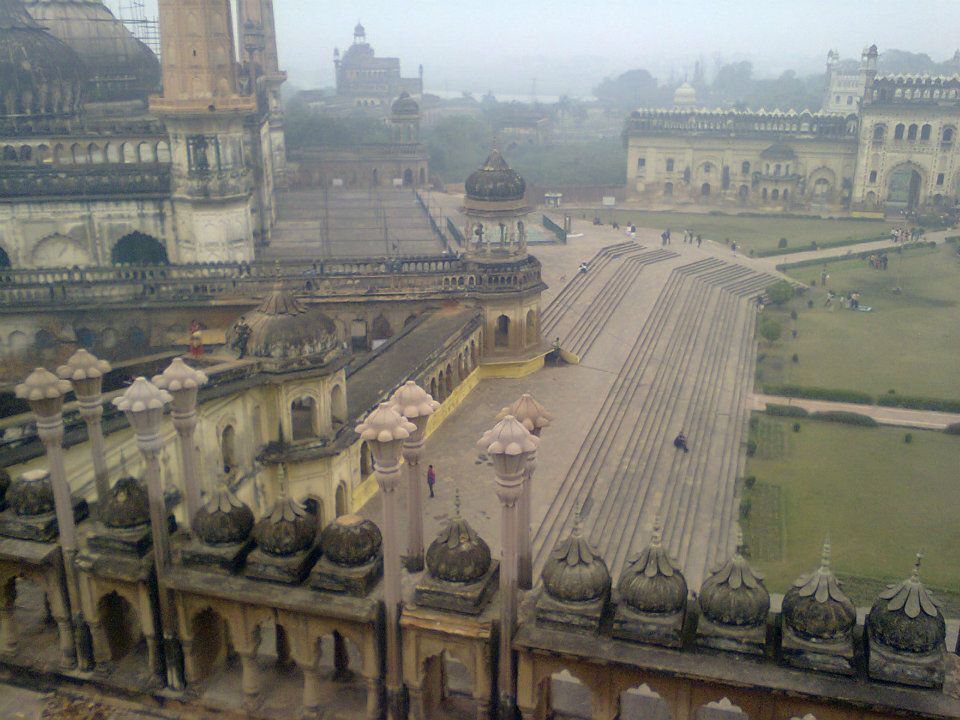
On the fourth floor is the roof come terrace from where a beautiful view of Lucknow is visible, and also the roman gate, clock tower, Chota Imam Bara, Lucknow Jama Masjid and may others.
Apart from its architectural beauty, the Bara Imambara also has a fascinating history. It was built during a time of famine, and Nawab Asaf-ud-Daula employed thousands of workers to build the monument. The workers were paid in food grains, which were stored in a warehouse inside the complex. The warehouse was later opened during a famine, and the food grains were distributed among the people.
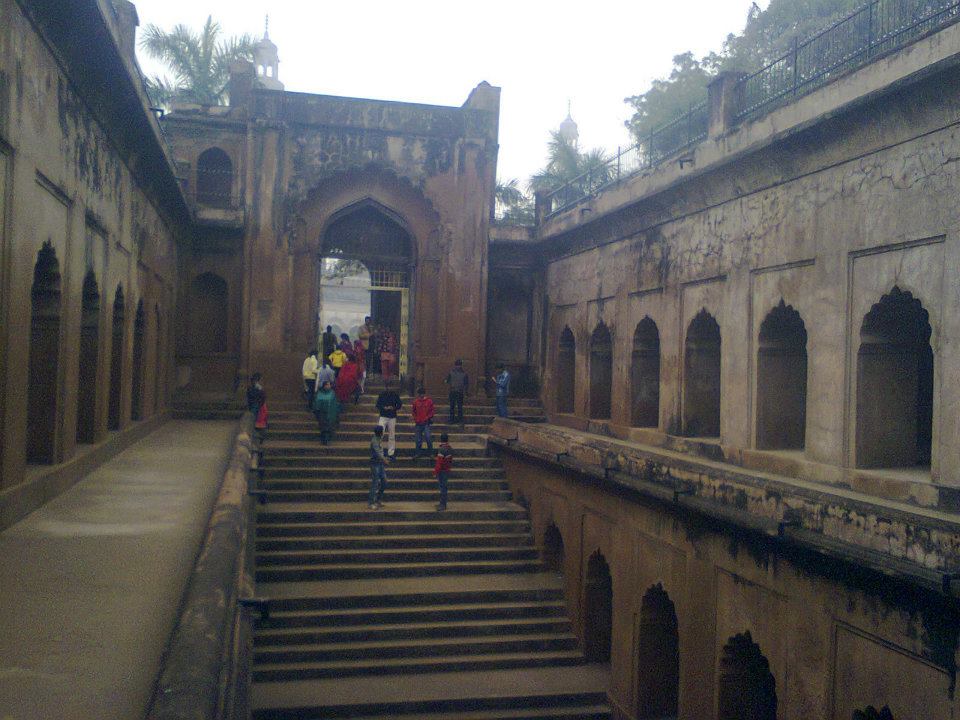
The third highlight of Bada Imambara is the Baoli, which is a stepwell that lies below the ground level. The Baoli was used as a water reservoir and a secret escape route for the Nawab and his family. The Baoli has a mysterious aura, as it is said to be connected to the river Gomti by a tunnel. The water level of the Baoli never changes, even during droughts or floods.
There is also a monument just beside it called Baula kuan, where Nawab’s wazir Mewalal jumped into with treasure and its key to protect it from the British army.
Another fascinating feature of Bada Imambara is the Asfi mosque, which is located on the western side of the complex. It is one of the largest mosques in India, and it has a beautiful dome and minarets. The mosque also has a unique acoustic system, where a whisper from one corner can be heard clearly at the opposite corner. This was used by the Nawab to communicate with his advisors and generals during times of war. The mosque can accommodate up to 20,000 people at a time and is still used for prayers and religious ceremonies.
Today, the Bara Imambara is one of the most popular tourist attractions in Lucknow, attracting visitors from all over the world. It is a testament to the rich cultural heritage of India and a must-visit for anyone interested in history and architecture.

Pingback: The Majestic Bada Imambara : Unveiling The Splendor A Historic Journey In Lucknow - Https://nutancharcha.org/the-majestic-bada-imambara/ Https://nutancharcha.org/wp-content/uploads/2024/03/The-Majestic-Bada-Imambara-Unveiling-the-Splendor-A-Historic-Journ