

Nestled high in the majestic Himalayas, Baba Mandir stands as a monument not of stone alone, but of faith, patriotism, and the eternal spirit of a soldier. On a crisp Monday morning, March 17, 2014, my wife Jagrata, our son Judhajit, and I set out from Gangtok toward this revered shrine — a journey that promised both breathtaking vistas and a profound connection to a story of devotion that transcends life itself.
The Ascent to Faith
As we ascended from Gangtok, the terrain began to change dramatically. The winding mountain road coiled through clouds and cliffs, each bend opening into panoramic views of snow-clad peaks piercing the blue sky. Valleys rolled below us like emerald carpets, and every gust of wind carried the mingled fragrance of pine and frost.
At an altitude of 13,123 feet, the air was thin but charged with anticipation. We were not merely heading to a temple — we were approaching a legend, one that lives in the hearts of soldiers and civilians alike.
The Legend of Baba Harbhajan Singh
Baba Mandir is dedicated to Sepoy Harbhajan Singh of the 23rd Punjab Regiment, who lost his life in 1968 near the Nathu La Pass while escorting a convoy. Yet, his presence never left the mountains.
According to legend, his spirit continued to patrol the Indo-China border, warning his comrades of dangers ahead and protecting them from harm. Soldiers stationed in this remote frontier speak of his appearances — sometimes in dreams, sometimes as fleeting visions of a uniformed figure on horseback. Some reports suggest Chinese soldiers have also claimed to have seen a lone figure on patrol at night.
They revere him not as a fallen soldier, but as “The Hero of Nathula”, a guardian whose watch never ends. Even the Chinese People’s Liberation Army (PLA) is reported to show respect for him. This is often demonstrated during flag meetings between Indian and Chinese officials at the Nathu La pass, where the Chinese military reportedly sets aside a chair to honour him.

This mutual respect for the legend of Baba Harbhajan Singh highlights the unique and powerful role that faith and folklore play in the lives of soldiers on both sides of the remote, high-altitude border.
At the Shrine
The approach to Baba Mandir is marked by a colourful gateway fluttering with prayer flags, each one carrying silent prayers skyward. Maintained by the Indian Army, the shrine itself is humble yet powerful in its simplicity.


Inside, a life-size statue of Baba Harbhajan Singh stands in full uniform, boots polished and cap gleaming — as though ready for inspection. The walls are covered with photographs, letters, and notes from soldiers who attribute their safety, healing, and morale to Baba’s unseen guidance.
Every object in the sanctum carries ritual significance. His bed is made daily, his uniform neatly pressed, and his boots shined. His salary continues to be sent to his family in Punjab. Each year on 11 September, when his “annual leave” is due, a jeep carries his belongings to New Jalpaiguri Railway Station, where an empty berth is reserved for him on the train to his hometown, Kuka village in Kapurthala district. Three soldiers accompany the journey, ensuring Baba’s passage home — a military tradition that continues to this day, upheld with unshakable reverence.

Faith, Ritual, & Healing
For devotees, Baba’s powers extend beyond protection. Many believe that drinking the blessed water kept at his shrine can cure ailments within 21 days. Offerings of slippers are made by those seeking relief from foot problems, a symbolic gesture rooted in deep faith.


Such practices may defy logic, but in these mist-covered heights, faith itself becomes the most tangible truth. To stand there, surrounded by mountain silence and the echo of military discipline, is to feel an inexplicable calm — a blend of awe and gratitude.
Moments in the Mist
After offering our prayers, we sat near the canteen run by Army personnel, savouring hot coffee and cupcakes — a simple yet divine treat against the biting chill. At that altitude, even a sip of warmth felt like a blessing.

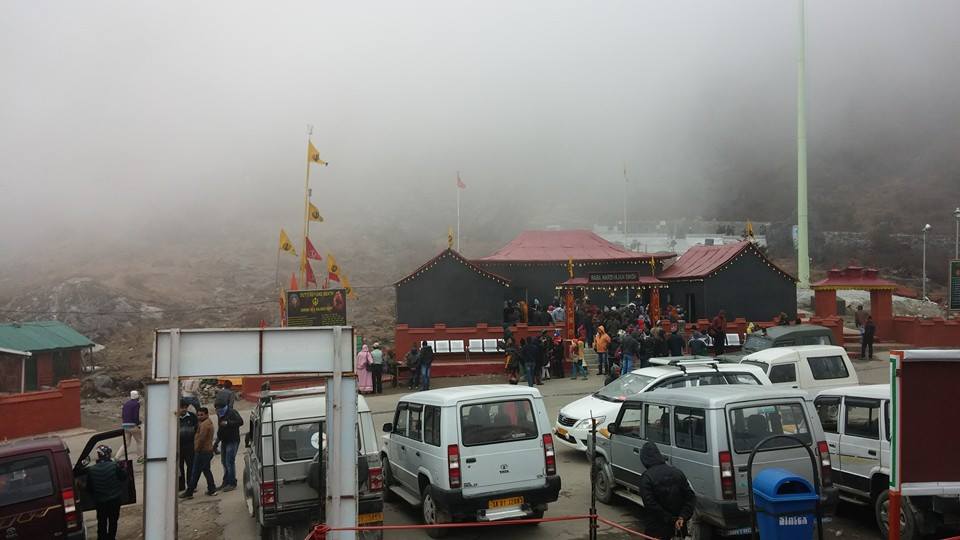
Soon, a heavy fog rolled in, swallowing the landscape in a soft white haze. Visibility dropped to mere meters as we began our descent. The treacherous drive through the mist, guided only by faint headlight beams, was both nerve-wracking and oddly peaceful. It felt as though the mountain itself was wrapping us in a shroud of quiet reflection — a reminder of how fragile, and yet resilient, human journeys can be.
Return to Gangtok: Ganesh Tok
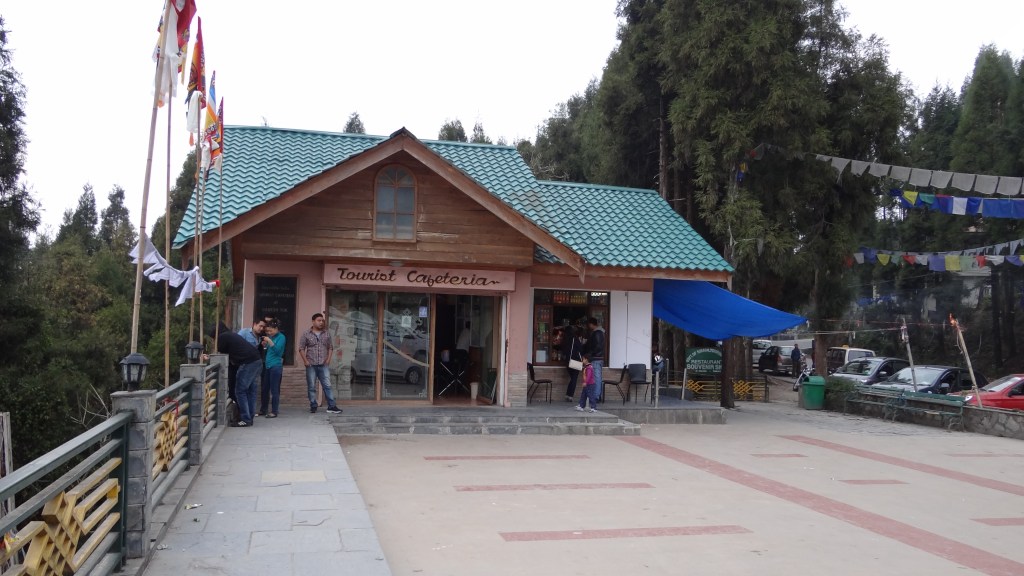
On our way back, we stopped at Ganesh Tok, two serene hilltop temples overlooking Gangtok. Both offered sweeping views of the valley below, veiled in mist and prayer.

At Ganesh Tok, we lingered over another cup of coffee and some local snacks at the cosy hilltop café. The warmth of the drink and the soft hum of devotional music created the perfect closure to our spiritual day.
A Shrine Beyond Time
Baba Mandir is more than a temple — it is a story of duty beyond death, of devotion that binds the living and the departed, of how faith finds its own way to endure.
Here, amidst the biting cold and whispering winds, patriotism and spirituality converge. Soldiers and civilians alike come not merely to pray, but to draw strength from a man who continues to serve his nation — from the other side of mortality.
As we descended toward Gangtok, I looked back one last time at the shrouded hills. Somewhere among those folds of mist, the spirit of Baba Harbhajan Singh still stands guard — a silent sentinel of the Himalayas, watching over those who climb, serve, and believe.
If You Go
- Altitude: 13,123 ft (4,000 m)
- Distance from Gangtok: Approx. 52 km
- Best Time to Visit: April to June, and October to December
- Permit: Required for all visitors; can be arranged through hotels or local travel agencies in Gangtok
- Nearby Attractions: Tsomgo Lake (12 km), Nathu La Pass (18 km), Hanuman Tok, Ganesh Tok
Baba Mandir is not just a destination — it is an emotion that lingers, long after you’ve descended from the clouds. For anyone journeying through Sikkim, this shrine offers not only a breathtaking view but also a humbling reminder of courage, devotion, and the unseen bond between man and mountain.

Captain Baba Harbhajan Singh was an Indian army soldier. People have come to believe his spirit protects every soldier in the inhospitable high-altitude terrain of the Eastern Himalayas. As with most saints, the Baba is believed to grant favours to those who revere and worship him. He is said to be protecting the country even after death.
LikeLiked by 1 person