
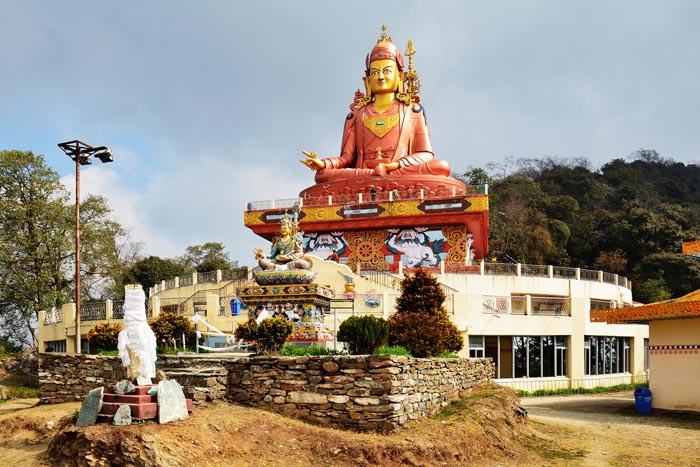
Nestled near the serene town of Namchi, whose name aptly means “Sky High” in Sikkimese, Samdruptse Hill beckons travellers with its mystical allure and panoramic grandeur. Situated at a lofty altitude of 1,675 meters (5,500 feet) above sea level, Namchi is the perfect gateway to the majestic Samdruptse Hill, which towers even higher at 2,134 meters (7,000 feet). This iconic hill, merely 5 kilometres from Namchi, is crowned by an awe-inspiring statue of Guru Padmasambhava, the patron saint of Sikkim, who has been revered for over 1,200 years.
The very name Samdruptse, meaning “wish-fulfilling hill” in the Bhutia language, hints at the spiritual significance of this place. Local lore adds an intriguing layer, suggesting that the hill is a dormant volcano, its slumbering depths calmed by centuries of prayers and offerings.
Guru Padmasambhava is said to have transmitted Buddhism to Tibet, Bhutan and neighbouring countries in the 8th century CE. He is better known as Guru Rinpoche (precious Guru) in these lands. He introduced the people of Tibet to the practice of Tantric Buddhism.
A Beacon of Faith
Guru Padmasambhava, known as Guru Rinpoche (Precious Guru) in Tibet, Bhutan, and neighbouring regions, is credited with transmitting Buddhism to these lands in the 8th century CE. He introduced the profound practice of Tantric Buddhism, leaving an indelible mark on the spiritual landscape.
The 45-metre-high statue of Guru Rinpoche, painted in shimmering copper, pink, and bronze, stands as a testament to his enduring legacy. Perched on the forested ridge of Samdruptse, the statue commands a breathtaking view, visible from miles around, including parts of Sikkim and Darjeeling. This engineering marvel, the tallest statue of Guru Padmasambhava in the world, took seven years to construct, with its foundation stone laid by the Dalai Lama in 1997.
A Journey Through History
Padmasambhava’s life is a tapestry of mystic tales and profound teachings. Born into a Brahmin family in Northwest India, he is said to have appeared as an eight-year-old child on a lotus blossom in Lake Dhanakosha, in the kingdom of Oḍḍiyāna (modern-day Swat Valley, Pakistan). Recognized for his divine nature, he was chosen by the local king to inherit the throne but chose a path of spiritual pursuit instead, spreading Buddhism across northern India.

The statue’s golden hue and the copper shades of Guru Padmasambhava’s robes lend it a divine aura, perfectly blending with the lush surroundings. Sikkim, at the crossroads of India and Tibet, was consecrated as a sanctuary for Buddha’s teachings by Padmasambhava, who blessed it with vajra wisdom, embodying the essence of the second Buddha.

The Sacred Path
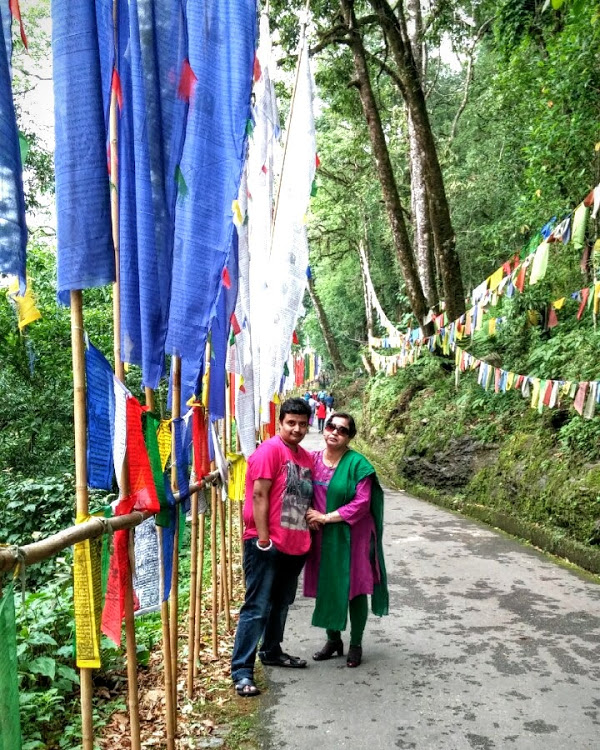
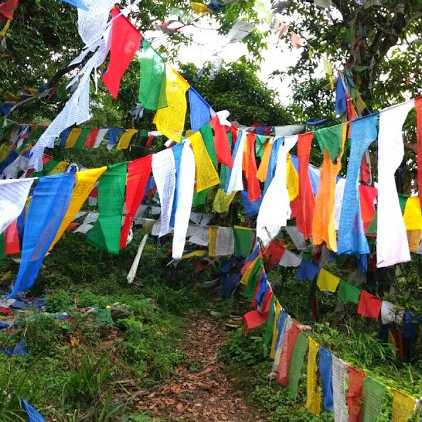
As we approached Samdruptse Hill, the path was adorned with colourful flags fluttering in the wind, bearing Buddhist hymns. The air was filled with the soothing sounds of chants, emanating from strategically placed speakers along the pathway.

The Samdruptse Monastery, one of the most sacred in Sikkim, stands near the statue. Its architecture is a harmonious blend of Sikkimese, Tibetan, and modern elements. Unlike the older monasteries, Samdruptse Monastery boasts contemporary designs while preserving the rich heritage through historic sculptures, statues, artefacts, and paintings that tell captivating stories of the past. A permanent photo exhibition within the complex showcases Sikkim’s cultural, natural, and artistic history, offering a glimpse into the region’s vibrant legacy.

Traditions and Tranquility
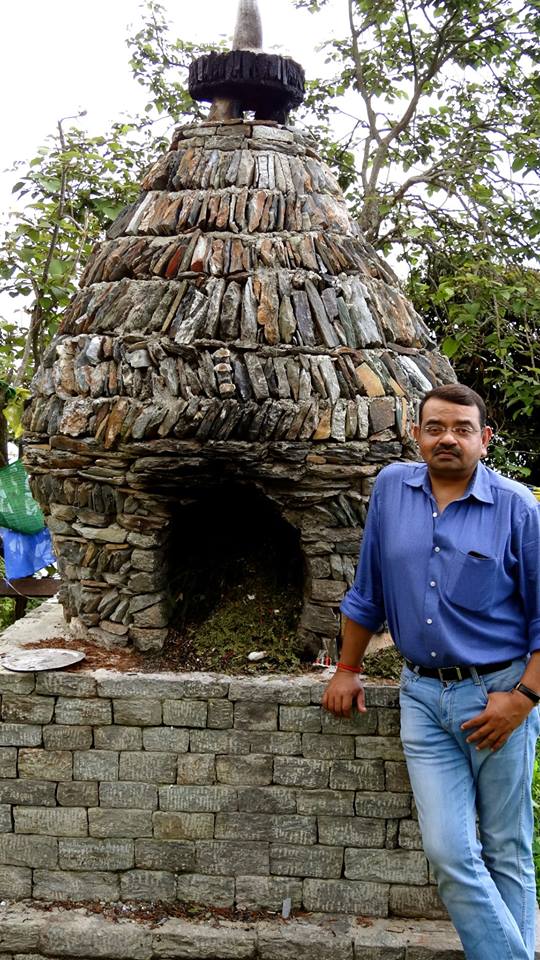
On a hillock behind the statue, Buddhists place their prayer flags and build cairns, stacking stones as symbols of good luck. These cairns, once used as landmarks and messages in unoccupied lands, are now seen as harbingers of fortune for travellers. Local myths suggest that Buddhist monks have long climbed this hill to offer prayers, seeking to keep the dormant volcano calm.


Our journey concluded with a warm cup of tea at a cozy restaurant near the temple complex gate, and a moment of reflection before we set off to explore Char Dham.


Samdruptse Hill, with its spiritual ambience and historical richness, had left an indelible mark on our hearts, a true testament to the sacred beauty of Sikkim.

You guys must have been there long time ago because तुम सब बच्चे लग रहे हो फोटो में 😜😁
LikeLiked by 1 person
Check the date. It was 2015!
LikeLiked by 1 person
Yeah, saw it after posting 😂😄
LikeLiked by 1 person
👍🤣
LikeLike