

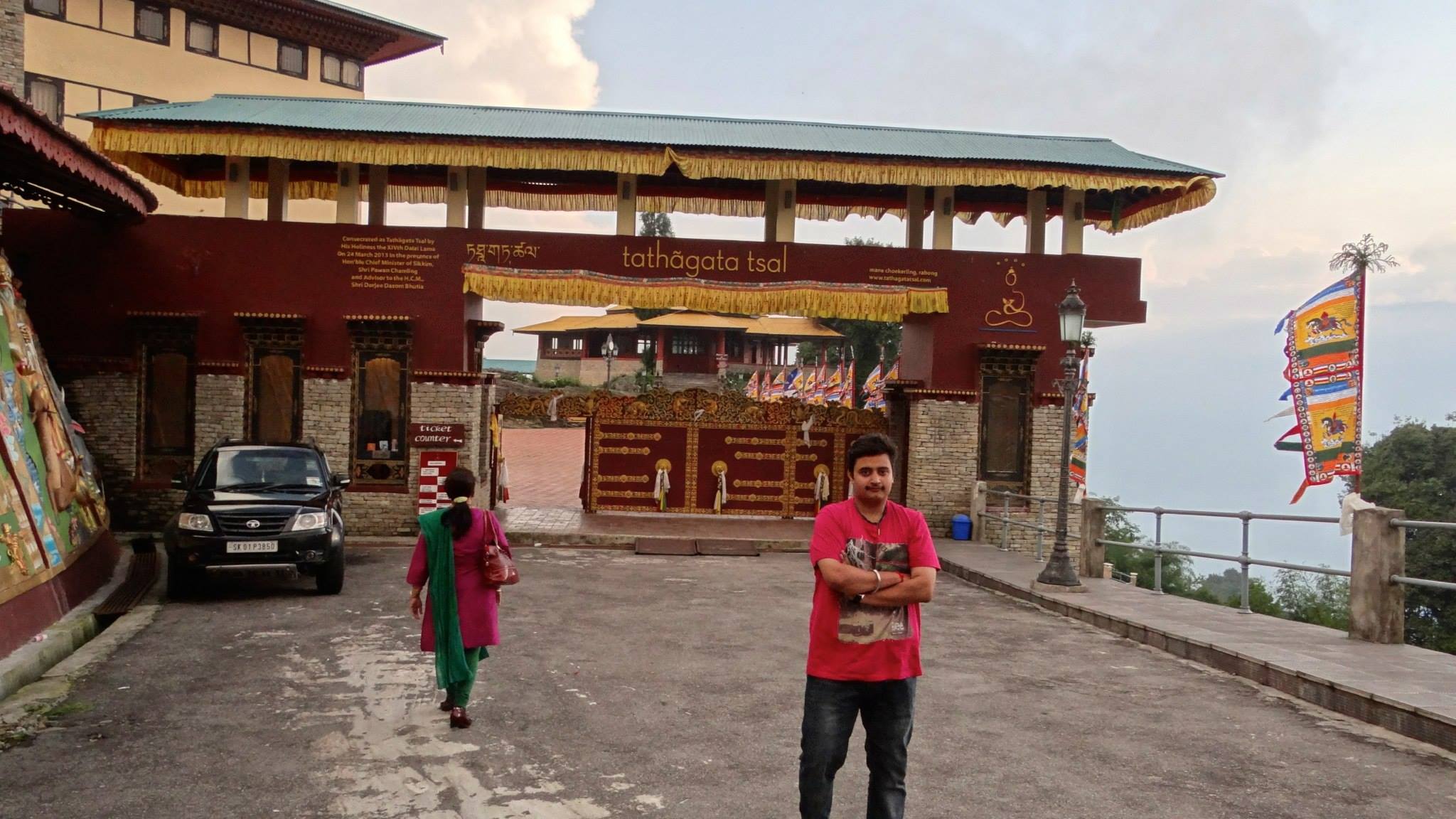
Nestled in the tranquil environs of South Sikkim, India, the Buddha Park of Ravangla, also known as Tathagata Tsal, is a sanctuary of peace and spiritual reverence. This serene destination, located near the quaint town of Rabong (Ravangla), stands as a testament to the profound teachings and legacy of Lord Buddha.
The Significance of Tathagata
The name “Tathagata” is derived from the ancient languages of Sanskrit and Pali, referring to Lord Buddha. It encapsulates the concept of transcendence, often interpreted as “one who has thus gone” (tathā-gata) or “one who has thus come” (tathā-āgata). This term signifies that the Tathagata exists beyond the ephemeral cycles of life and death, symbolizing eternal peace and enlightenment.
Lord Buddha frequently referred to himself as the Tathagata in the Pali Canon, underscoring his transcendence beyond human conditions and the cycle of suffering. This choice of reference highlights the profound nature of his teachings, delivered by one who has surpassed worldly limitations.
The Magnificent Statue of Lord Buddha
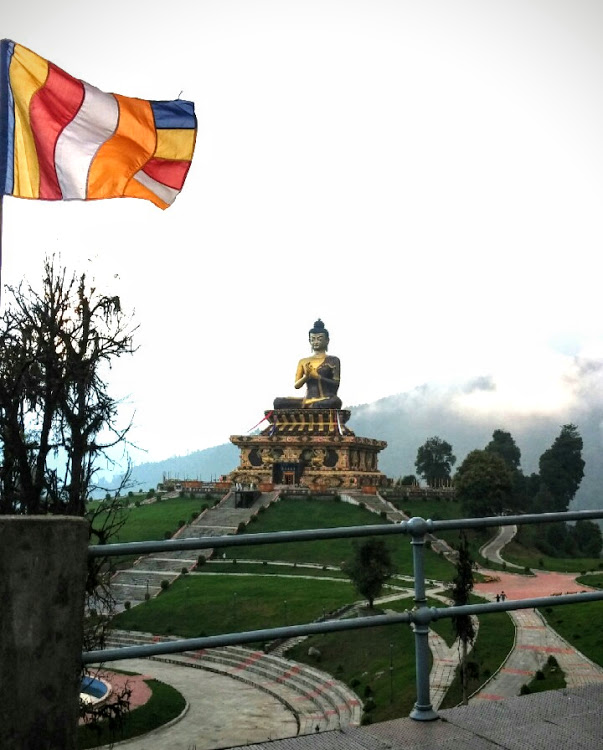
Constructed between 2006 and 2013, the Buddha Park features a towering 128-foot-high statue of the Buddha, crafted from hammered copper. This awe-inspiring statue serves as the park’s focal point, majestically dominating the landscape. The location of Tathagata Tsal within the religious complex of the centuries-old Rabong Gompa (Monastery) adds to its spiritual significance. Nearby, the Ralang Monastery further enriches the spiritual tapestry of the area.
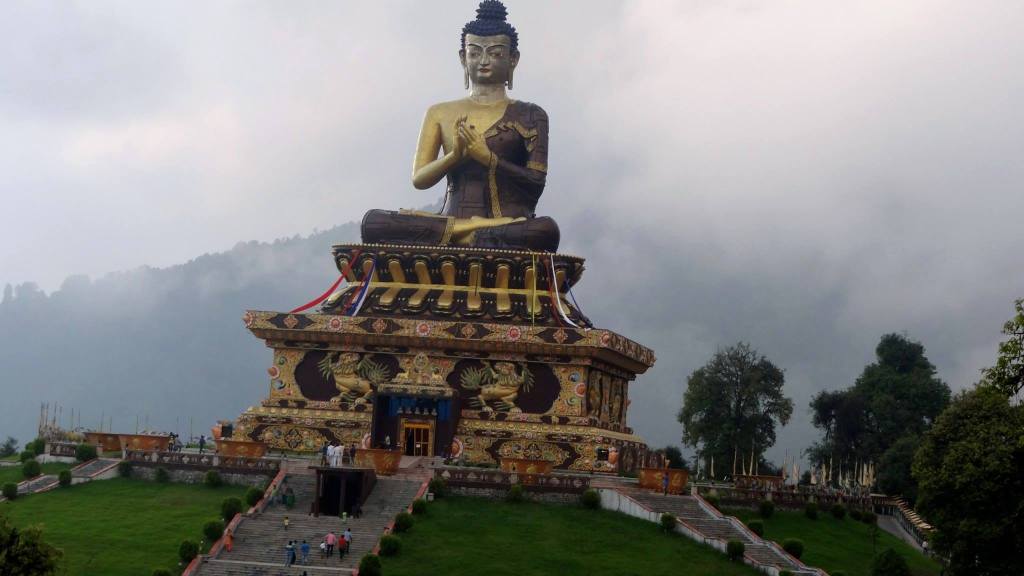
In a momentous event, His Holiness the Dalai Lama consecrated the colossal Buddha statue, which he had previously named Tathagata Tsal. The statue commemorates the 2,550th birth anniversary of Gautama Buddha. As visitors enter the park, they are greeted by a grand gate adorned with reliefs depicting the Jataka tales—stories of Buddha’s previous lives.
The Artistic Reliefs
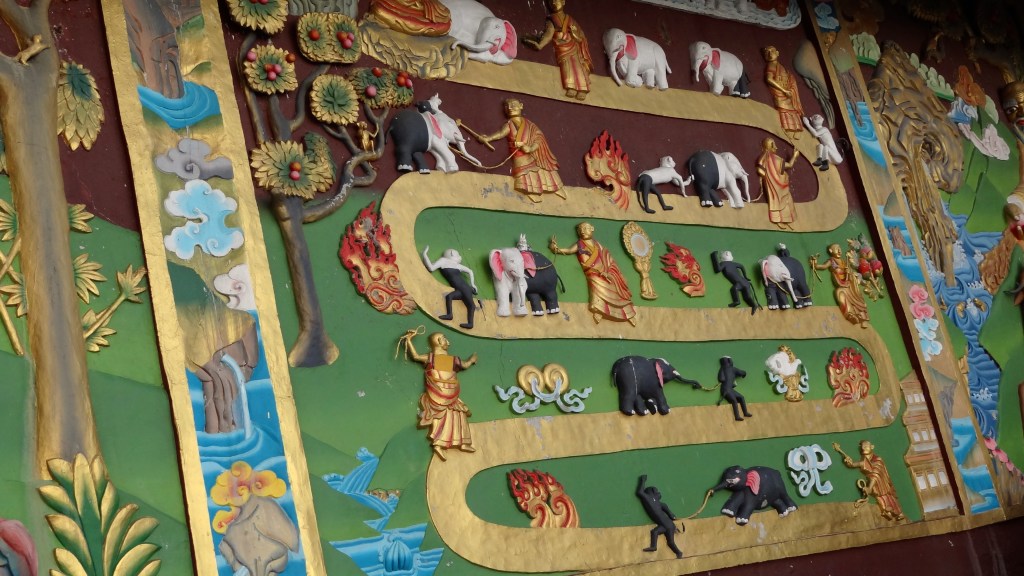
The park is adorned with intricate relief sculptures, a technique where sculpted elements remain attached to a solid background, creating a raised impression. The term “relief” originates from the Latin verb “relevo,” meaning to raise. These artistic reliefs narrate the Jataka tales, offering a visual journey into the previous lives of Gautama Buddha and enriching the visitor’s experience with profound stories of wisdom and compassion.
A Visit to Remember
Arriving just before the park closed at 5:30 p.m., we were fortunate to be among the last visitors of the day. The main temple, located beneath the imposing Buddha statue, boasts a spacious hall with walls adorned with images depicting the life of Lord Buddha. Although the museum within the temple was closing, the glimpse we caught promised a wealth of knowledge and history.
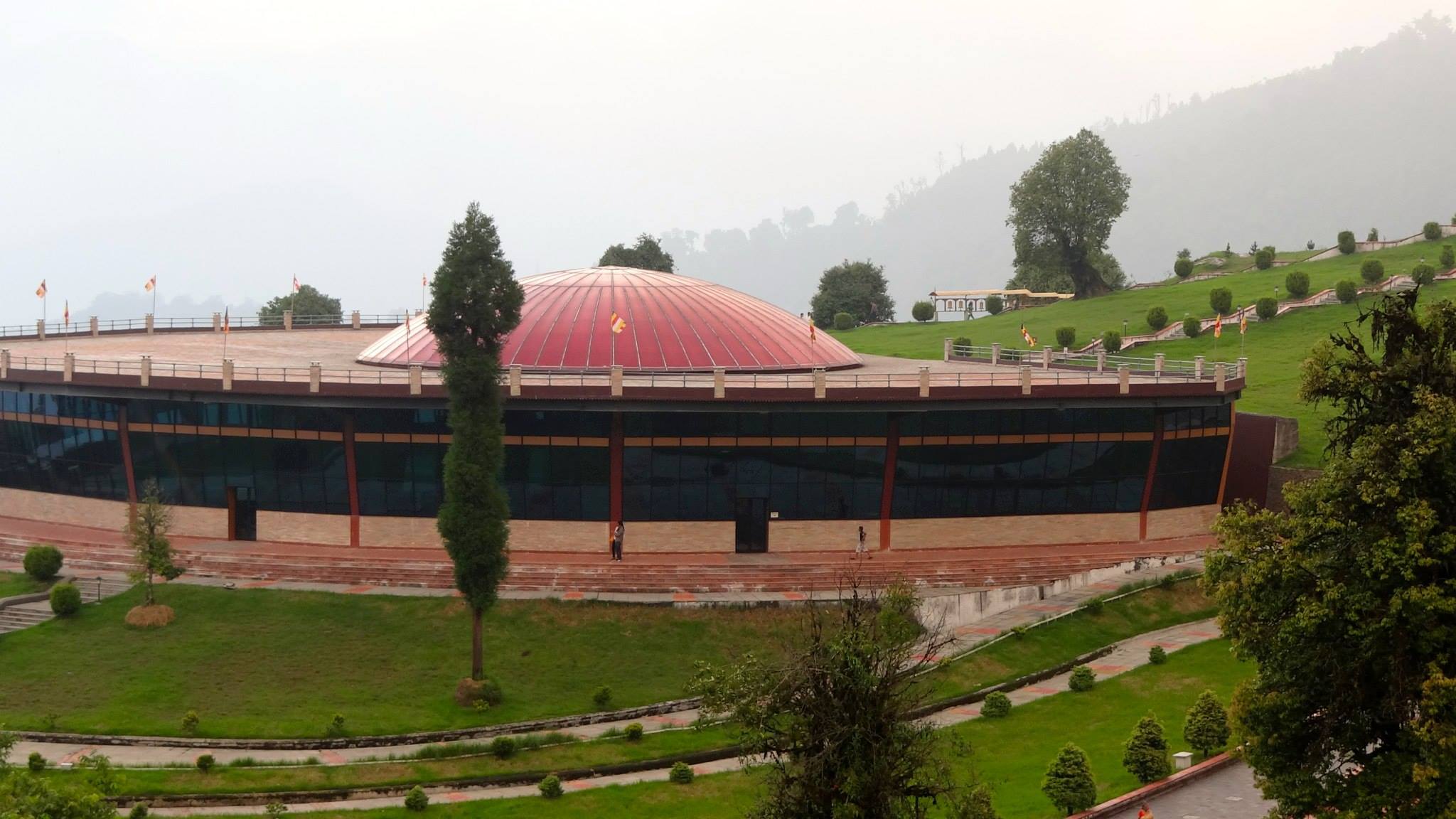
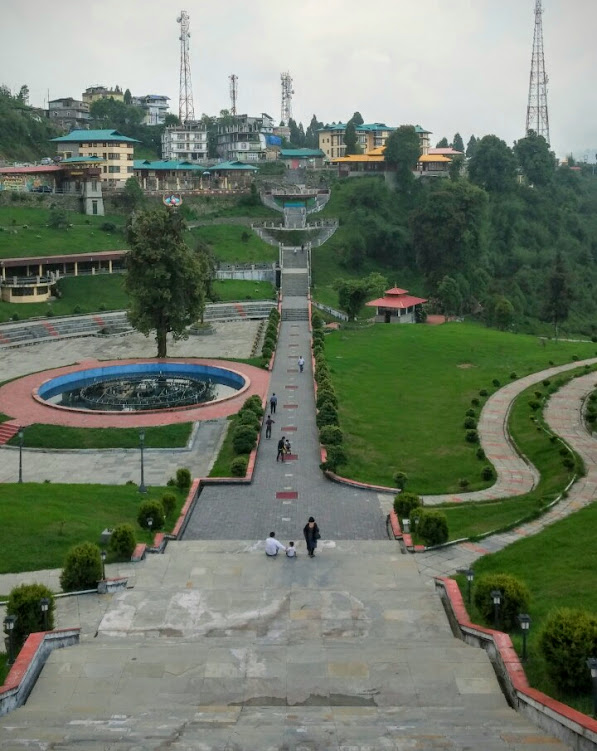
Descending a large number of steps to the park and then ascending to the temple felt like a spiritual journey in itself. The effort was rewarded with breathtaking views of the park and the surrounding landscape, seen from the base of the magnificent Buddha statue.
Return Journey
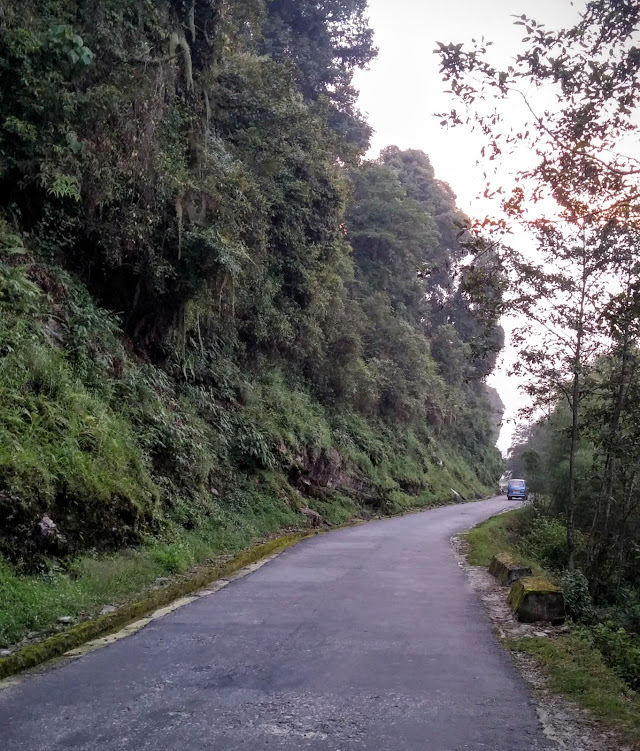
After exploring the park, we indulged in local delicacies like “jhal muri” and hot tea from nearby street vendors. These simple yet delightful refreshments added a touch of local flavour to our visit. The return journey to Gangtok was equally enchanting, with the road winding through lush green landscapes, leaving us with lasting memories of the serene and beautiful surroundings.
A Sanctuary of Peace
Tathagata Tsal is more than just a tourist destination; it is a haven for those seeking spiritual solace and a respite from the chaos of daily life. The serene ambience, breathtaking views, and opportunities for meditation make it a must-visit for anyone looking to connect with their inner self.
The Buddha Park of Ravangla offers not just a visual feast but a journey into the heart of Buddhist teachings and the promise of peace and enlightenment.
