
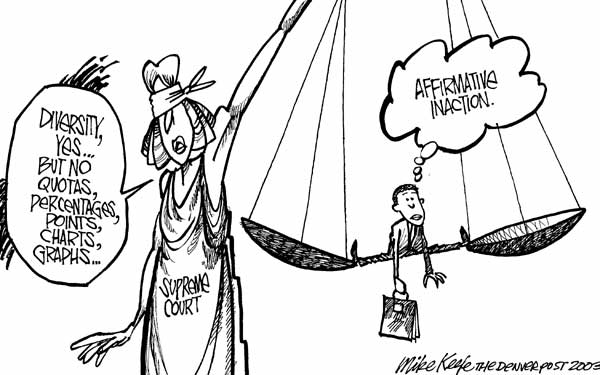
Affirmative action—conceived as a mechanism to level the playing field for historically marginalised communities—has ignited passionate debates across the world. In India, this discourse often crystallises around one word: reservation. Introduced as a bold attempt to correct deep-rooted social injustices, the Indian reservation system reserves a certain percentage of seats in education, public sector employment, and even legislative bodies for disadvantaged communities.
While the intentions are noble, the policy continues to raise profound legal, ethical, and economic questions. Is it achieving the equity it promised? Or is it inadvertently creating new fissures in society?
The Origins: Redressing Centuries of Injustice
Post-independence India introduced the reservation system to address the deep-seated inequalities fostered by the caste system. The policy primarily benefits Scheduled Castes (SC), Scheduled Tribes (ST), and Other Backward Classes (OBC), with varying reservation percentages across states and institutions. The primary goal was to provide access to education and employment opportunities to communities historically excluded from these domains.
The initial plan was for reservations to be a temporary corrective measure, to be reassessed every decade. Over the years, however, what began as a social remedy has become a politically sensitive and deeply entrenched element of Indian democracy.
Why Reservation Still Matters
Proponents of the reservation policy argue that without affirmative action, India’s deeply embedded structural inequalities would persist unabated. Social mobility remains elusive for many, and caste-based discrimination—though illegal—is far from eradicated.
From this perspective, the reservation is not a handout; it is a means to level the playing field. It offers individuals from historically oppressed backgrounds a real shot at educational and professional opportunities that would otherwise remain out of reach. For millions, reservations have transformed lives, enabling first-generation learners to become doctors, engineers, civil servants, and educators.
In rural India, especially, the policy has provided visibility, voice, and dignity to communities long relegated to the margins.
The Other Side: Merit, Resentment, & Perpetuation of Caste
Yet, reservations are not without criticism. Opponents argue that instead of dismantling caste, the policy has institutionalised it, making caste identity a prerequisite for opportunity. The unintended consequence: reverse discrimination.
The charge is often levelled that meritocracy suffers—that talented individuals from non-reserved categories, particularly economically disadvantaged ones, are unfairly deprived of opportunities. This perception has led to growing resentment among certain segments of society, fuelling demands for economic criteria-based reservations.
Another frequent concern is that benefits are not evenly distributed within the reserved categories. The so-called “creamy layer” among OBCs and similar elite sub-groups within SCs and STs often corner the lion’s share of opportunities, while those at the very bottom remain untouched by the intended benefits.
The Complexity of Caste & the Constitutional Dilemma
The Indian Constitution prohibits discrimination on the grounds of caste. Yet, affirmative action is an exception carved out to achieve substantive equality. This contradiction has fueled philosophical and judicial debates for decades: Can a policy designed to eliminate caste simultaneously continue to rely on caste-based identification?
Moreover, caste in India intersects with region, religion, and class, creating a matrix far more complex than policy frameworks can capture. As a result, simple metrics often fail to reflect the layered nature of disadvantage.
Effectiveness: A Mixed Report Card
Has the reservation system worked?
In many ways, yes. Representation of SCs, STs, and OBCs in government institutions, academia, and civil services has significantly improved since the 1950s. In a country of over a billion people, even small percentages mean the upliftment of millions.
Yet, challenges remain. Critics argue that periodic reviews of eligibility are lacking, leading to inefficiencies. Political parties, too, have often used quotas as vote-bank tools rather than instruments of genuine reform. The clamour for reservation from newer communities, such as the Patidars, Marathas, and Jats, suggests that economic insecurity is increasingly replacing social stigma as the key axis of marginalisation—something the current caste-based framework does not fully address.
Towards a More Balanced Model
To address these multifaceted challenges, India needs to reimagine affirmative action for the 21st century. A few principles might guide this shift:
- Strengthening Primary Education: Ultimately, real equality begins not with college admissions or government jobs, but with robust and equitable early education. Ensuring quality schooling across social strata can drastically reduce the need for reservations later on.
- Holistic Support Beyond Reservation: Supplement reservations with scholarships, skill development programs, mentorship, and career counselling—especially in rural and underdeveloped areas.
- Economic Criteria as an Additional Filter: Introduce income and asset-based exclusions to prevent the benefits from being monopolised by the privileged within disadvantaged groups.
- Regular Audits and Sunset Clauses: Evaluate the impact of reservations every decade, as originally envisioned, to ensure they are helping the right people and adapting to changing social realities.
Conclusion: Walking the Tightrope of Justice
The debate over reservation is not merely about numbers or quotas—it is about the soul of Indian democracy. It is about reconciling the twin ideals of social justice and individual merit, inclusion and excellence, past wrongs and future dreams.
Affirmative action in India has been a necessary—and largely beneficial—experiment in correcting historical imbalance. But it cannot remain static. Like all policies in a living democracy, it must evolve, responding to new challenges with empathy, data, and courage.
India’s ultimate success will not be in whether it ends reservations, but in whether it creates a society where no one needs them anymore.
This blog post aims to foster dialogue, not division. Constructive feedback and diverse perspectives are welcome because in a country as pluralistic as ours, every voice matters in shaping a more inclusive future.

The current Patel stir is completely uncalled for, it is more political than socioeconomic.
Caste based reservation does not uplift the downtrodden but helps the political parties that thrive on vote bank politics.
For the future of this country, this caste based reservation policy has to go, replace it only on financial criterion.
LikeLiked by 1 person
Patels are not alone, Jats & Marathas are all asking for reservation since some time. This agitation should not spread, otherwise the future is going to be chaotic again. We don’t want to see the “Mandal days” again. Unfortunately, the politicians are getting involved and it’s going to get murkier.
LikeLiked by 1 person
Caste is bane of Indian social milieu & which cant be wished away. You can observe that in offices, marriages, families & relations. Reservation has distorted it further. Patidar agitation in Gujrat is another example of chaotic future.
LikeLiked by 1 person
Yeah. India indeed is on take off stage & alas collectively we are missing opportunity.
LikeLiked by 1 person
Caste as a criteria for reservation is more divisive than beneficial. Financial status can still be a better indicator ..but then again people will come up with ways to fudge that as well.
LikeLiked by 1 person
Yes agreed, unscrupulous people will find some ingenious ways to take the benefits of reservation even if it’s done on economical conditions. We need to remove caste-based re-allocation of benefit if we truly desire a caste-less India. Economic divide is more crystallized and is a proven source of deprivation. Also, we have a set system to identify people falling in Below Poverty Line (BPL) category and let’s start with them. With the progress in digitization of data of coverage of Aadhaar cards, chances to fudge the divide will get slimmer. Of course, no system is fool-proof and dishonesty cannot be ruled out.
LikeLiked by 1 person
Below BPL would be a reasonable group to start with. The data may also be available – schemes such as MNREGA are implemented based on population and employment data.
LikeLiked by 1 person
Well written. Any policy must be reviewed, changed and implemented according to the evolving situation. One cannot go on giving reservation just for vote bank politics. And each and every political party has done this to their advantage. That is wrong.
LikeLiked by 1 person
Thanks, Atish.
LikeLike
Situation is disgusting. All for vote bank. If any political party takes the existing policy for review, there will be strong public protest by beneficiaries as well as by other political parties. In education sector it is Government’s duty to educate everyone under Right to education Act 2009. Build up the structure in a way so that the needy gets education and skill free of cost. No preferential treatment for reserved categories is required. In case of Govt jobs, it is a miniscule percentage as against total number of jobs generated in the country. Public should understand this and should not allow political parties to exploit from vote bank politics. Merit should take precedence both in education and job. Private sector has the ability to create more job opportunities. A better educational and skill development system can generate more self employed persons and private sector jobs.
LikeLiked by 1 person
Thank you for sharing your views. You’re right that political misuse of reservation policies has often hindered meaningful reform. Education should be universally accessible under the RTE Act, and a robust public education and skill development system can reduce the need for quotas. Since government jobs form a small share of total employment, public awareness is crucial to prevent vote-bank exploitation. While merit must be prioritized, we also need targeted support for the economically disadvantaged across all communities. A balanced, transparent, and outcome-driven approach can help build a more inclusive and merit-based society.
LikeLike