
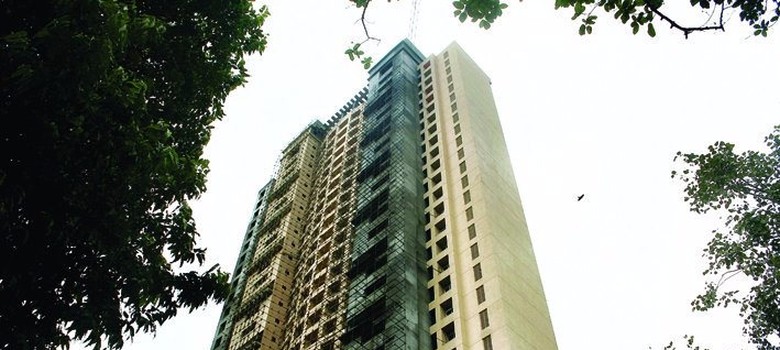
The recent order by the Bombay High Court regarding the 31-storey Adarsh apartments in Mumbai has sent ripples of satisfaction across the nation. Finally, a significant step has been taken to address the blatant corruption that stained this housing society from its very inception. The court’s directive for demolition and the call for criminal proceedings against implicated politicians and bureaucrats resonate deeply with a public weary of the insidious nature of power misuse. The sheer scale of the Adarsh scam, involving a prime piece of real estate and the manipulation of regulations, demanded a decisive response, and the High Court has seemingly delivered just that.
There is an undeniable sense of righteous indignation that accompanies this verdict. To witness such a towering structure, built on a foundation of alleged illegality and corruption, face the prospect of being reduced to dust feels like a symbolic victory against the pervasive culture of graft. The message is loud and clear: those who abuse their positions for personal gain will eventually be held accountable. The potential criminal proceedings against those who facilitated this “misuse” of power further underscore this commitment to justice.
However, as the dust settles on this landmark judgment, a crucial question arises: is demolition the only, or indeed the most effective, way to achieve true justice and serve the greater good? While the impulse to tear down this monument to corruption is understandable, a deeper consideration of the ramifications and potential alternatives warrants exploration.
Let’s not forget the sheer physical reality of the Adarsh building. It stands as a testament to a significant investment of resources – countless bags of cement, tonnes of steel, and the labour of numerous individuals. To simply bulldoze this structure would be an act of immense economic waste. In a nation striving for sustainable development and efficient resource utilisation, such a drastic measure demands careful scrutiny. Beyond the economic implications, the environmental cost of demolition is also significant. The process would generate a substantial amount of dust and debris, adding to the already precarious pollution levels in a bustling metropolis like Mumbai. The disruption to the surrounding neighbourhood during such a large-scale operation would also be considerable.
While the desire to punish the corrupt is paramount, we must ask: Is the building itself culpable? It stands as an inanimate object, a consequence of the alleged malfeasance, not the perpetrator. To destroy it feels akin to punishing the instrument rather than the hand that wielded it.
This brings us to a potential alternative, one that could serve a dual purpose: delivering a blow to the corrupt while simultaneously benefiting a deserving segment of society. The suggestion of the Union Ministry of Defence taking over the Adarsh building and allocating the flats to war widows, for whom some of the land was originally intended, presents a compelling case for pragmatic justice.
Imagine the symbolism of such an act. To wrest this edifice from the hands of those who allegedly manipulated the system and repurpose it to house the families of brave soldiers who made the ultimate sacrifice for the nation would be a powerful statement. It would transform a symbol of corruption into a beacon of hope and gratitude. These war widows, who have endured immense personal loss in service of the country, deserve our unwavering support and care. Providing them with dignified housing in a prime location would be a tangible expression of our collective appreciation.
Furthermore, this approach establishes a sensible and potentially precedent-setting principle. Instead of resorting to the destructive act of demolition for illegally constructed properties, the state could explore avenues for their confiscation and repurposing for the public good. This would not only prevent immense economic and environmental waste but also send a clear message that illegal gains will be seized and utilised for the benefit of society.
The analogy to the Bofors guns is pertinent. Despite the cloud of corruption that surrounded their procurement, these artillery systems proved invaluable during the Kargil War. We did not discard them due to the scandal; we recognised their strategic importance and utilised them effectively. Similarly, the Adarsh building, despite its tainted origins, possesses inherent utility.
The satisfaction derived from witnessing the corrupt face legal repercussions would be amplified by the sight of war widows moving into these very apartments. It would be a form of poetic justice, where the fruits of alleged corruption are transformed into a source of comfort and security for those who have borne the brunt of defending the nation. The corrupt individuals would be forced to witness their ill-gotten gains being used to uplift a segment of society they likely disregarded in their pursuit of personal enrichment.
In conclusion, while the Bombay High Court’s verdict is a welcome step in the fight against corruption, we must consider the broader implications of the demolition order. A more pragmatic and socially beneficial approach lies in confiscating the Adarsh building and allocating it to war widows. This would not only serve as a powerful tribute to our fallen heroes and their families but also establish a precedent for dealing with illegal constructions in a manner that prioritises societal benefit over sheer destruction. Let us strive for a justice that is not only punitive but also purposeful, turning a symbol of shame into an emblem of gratitude and resilience.

Absolutely, it is a national waste to destroy a building that is built at a mammoth cost, there is no use pulling it down and bringing it into a rubble and the scam tainted politicians will holy hide beneath the rubble. If they need to be brought to book, then the complex has to be used in a manner that will be remembered by all! A very nice post!
LikeLiked by 1 person
Very true. Thanks Sunita.
LikeLike
A very good suggestion. I wonder why such logical solutions do not occur to the ministers and bureaucrats in the first place.
LikeLiked by 1 person
Thanks Somali 🙂
LikeLike
What a mess…a chaotic decision so to say…
LikeLiked by 1 person
Should be demolished to show that the corruption does not work. Those who conceived the idea to make benefit out of it & those who passed the bills etc & those who allotted these flats should be put behind the bars.
LikeLiked by 1 person
Yes sir, all the scamsters must be punished severely and put behind the bars at the earliest.
The building was conceived to provide shelter to the Kargil war widows. Why the widows of brave heroes who sacrificed their lives for the nation be denied the shelter?
This is my argument that the building should be taken over by the Union Ministry of Defence and set up a panel to allot these flats to war widows. Many war widows are still awaiting support and assistance. Bringing down the building will not justify the original plan to provide shelter to war widows.
By taking over the edifice from these corrupt people involved here and punishing them through court will be an apt demonstration that corruption doesn’t work and simultaneously the noble social/national cause will be served.
LikeLike
Indrajit, I cent percent endorse your views. Absolutely correct. Pull down the structure and you have bunch of land sharks eagerly awaiting to grab it and erect yet another illegal behemoth for commercial gains.
LikeLiked by 1 person
Thanks Bhaisaab! 🙂
LikeLike
I understand that there is some serious violation of environmental guidelines and thus the building did not receive environmental clearance. The moot question is if the violation is of serious nature, can there be a ground for allowing the violation as it is regardless of the fact that the flats are allotted to kins of martyrs.
LikeLiked by 1 person
The Bombay High Court ordered demolition of the 31-storey scam-tainted Adarsh apartments in the heart of Mumbai and sought criminal proceedings against politicians and bureaucrats for “misuse” of powers, holding that the tower was illegally constructed.
As per CAG Report: “The episode of Adarsh Co-operative Housing Society reveals how a group of select officials, placed in key posts, could subvert rules and regulations in order to grab prime government land – a public property – for personal benefit.”
The building may not be demolished just because it was illegally constructed, perhaps it should be confiscated from the illegal and corrupt owners and put it into a proper use for social good. The corrupt people must be punished severely ASAP.
Yes Biswajit, there are allegations of environmental violations from MoEF. Unless it’s needed to be demolished under “green” laws, in my opinion, the building, to the permitted extent, should be put to use for the social benefit instead of just demolishing it.
LikeLike
Dialogue between two friends but has lot of material and makes sense after all the two brilliant gems who quitted since good sense prevailed upon them. God bless.
LikeLiked by 1 person
Thanks Renu. 🙂
LikeLike
I support your view. Why waste such a building and such resources? Why not use it for the welfare of deserving people?
Why don’t you start a campaign for this at change.org?
LikeLiked by 1 person
Thanks Tomichan. I express my views and opinion in my blog without any intention to inititate a campaign or activism. Your suggestion is appreciated.
LikeLike
Such a sensible thought. I am not into politics, but really hate bureaucrats taking their work for granted and not doing anything worthwhile for citizens.
If we indeed have to spread a lesson, punish the guilty. Alas, that hardly happens!
LikeLiked by 1 person
Thanks Alok. Yes, the guilty politicians and bureaucrats must be punished and their ill-gotten properties should be confiscated. But the legal process is so long and time consuming that these corrupt people take the advantage.
LikeLiked by 1 person
Pretty bad state of affairs in India!
LikeLiked by 1 person
Let’s be optimistic that things would change for better. 🙂
LikeLike
We have seen many cases of corruption being caught and suitable rectification measures taken, including punishment for guilty. That gives us hope. What you suggest is a great idea but it is quite possible that options like letting the building stand were considered and there were other compelling reasons to order demolition.
LikeLiked by 1 person
Yes, you’re right. Other reasons might have been considered. As a common citizen, we get information through media and they mention only corruption as the primary issue.
LikeLiked by 1 person
Such simple ideas are way beyond comprehension of our bosses.
LikeLiked by 1 person
Thank you for your thought! 🙂
LikeLiked by 1 person