
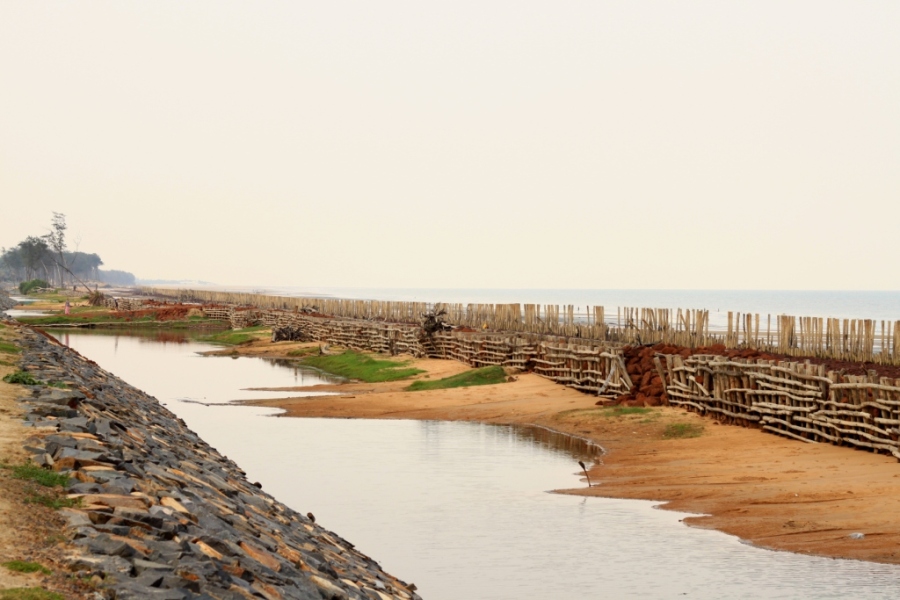
Sometimes, all you need is the sea breeze, the lull of waves, and a break from the chaos of city life. “Let’s escape!” — that was the spontaneous declaration echoing through our family group chat one evening. Kolkata’s relentless hum of traffic and routine had begun to weigh on us. We craved the rhythm of the sea — that soothing, timeless lullaby of waves meeting the shore.
“Chandpur,” announced Mashimoni with her characteristic authority, “It’s the newest beach near Kolkata — a hidden gem!” And just like that, the plan was sealed. Our family adventure was about to begin — a little late, as usual, but full of excitement and anticipation.
The Journey Begins
Imagine a bright autumn morning — the sky a brilliant blue canvas, brushed with drifting white clouds. Our car stood ready, bags packed, hearts light. Chandpur, nestled between Tajpur and Shankarpur, just about 170 kilometers from Kolkata, promised everything we were looking for: peace, seclusion, and the sea.
Thanks to Mashimoni’s foresight, we had pre-booked rooms at Hotel Moon — the only air-conditioned accommodation in the area. In offbeat destinations like this, you never really know what to expect until you arrive!

We rolled out of Kolkata around 11 a.m. — not exactly an early start, but the weather more than made up for it.

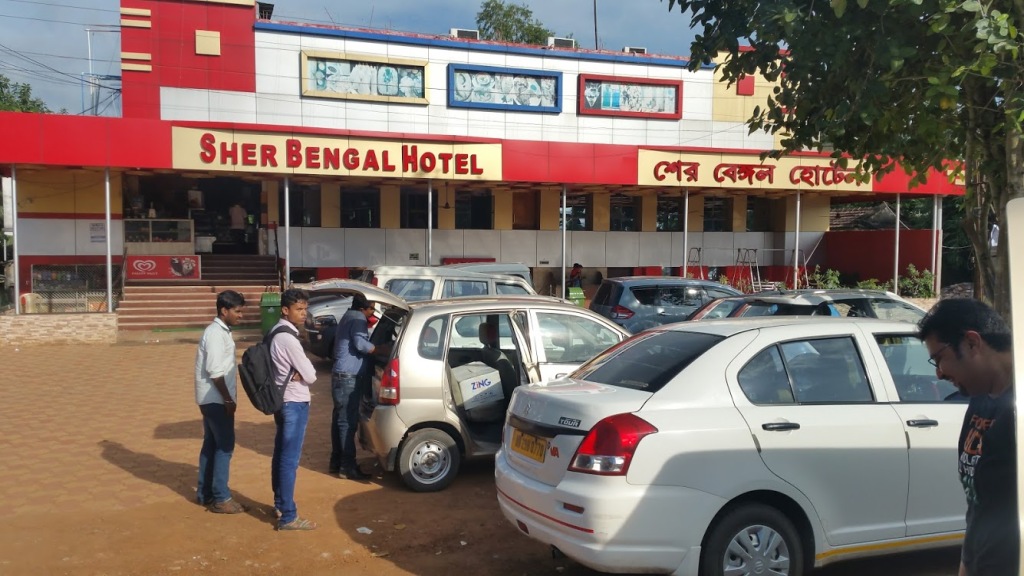
The drive was smooth up to Balsai. On the way, we stopped for lunch at a modest roadside motel — Sher Bengal Hotel. A simple Bengali meal, a few laughs, and we were back on the road again.
From Balsai, a narrow village road veered toward Tajpur. The final leg was bumpy — the kind of rural road that tests both your patience and your car’s suspension. But as the trees grew denser and the salty scent of the sea began to fill the air, all discomfort melted away.
Checking In: Hotel Moon
We reached Chandpur just as twilight began to color the horizon in shades of orange and purple. Hotel Moon, our stay for the night, stood quietly at the edge of the sea. The property was small but neat, with a lovely rooftop terrace overlooking the waves — the perfect perch to watch the sea breathe.
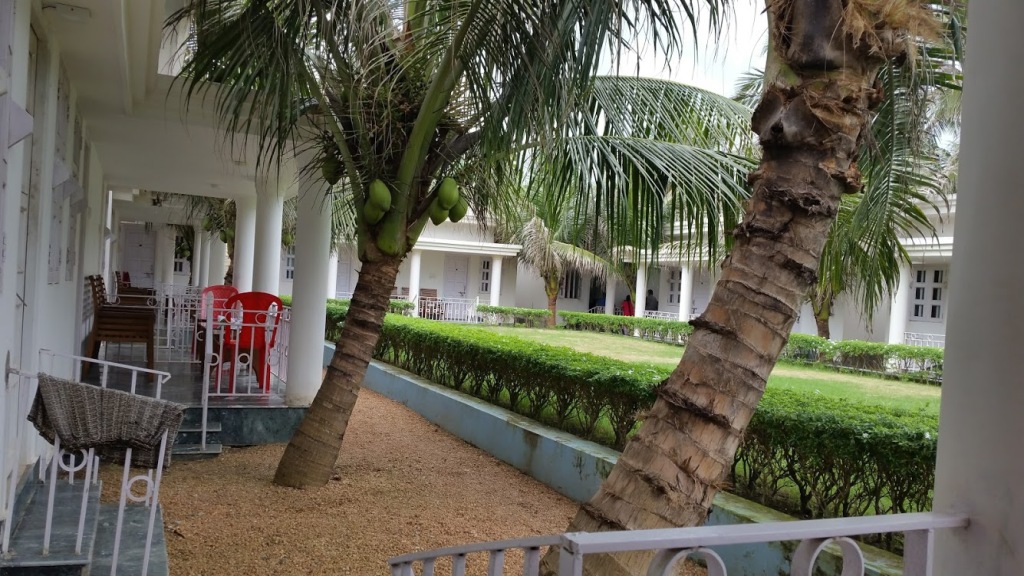
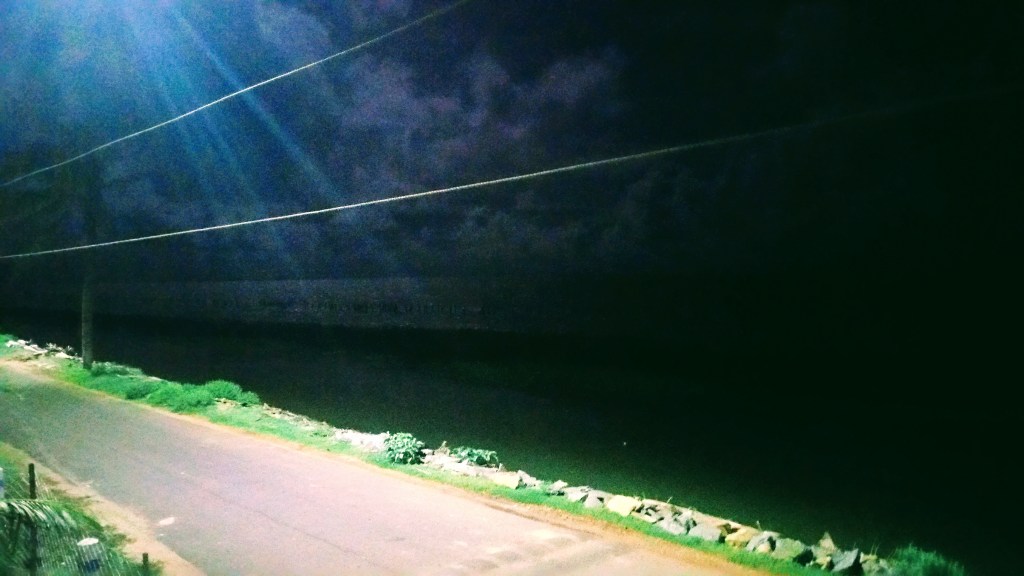
As the evening breeze kissed our faces, we sat on the rooftop sipping hot tea and munching on crispy onion pakoras. The vast expanse of the Bay of Bengal stretched before us, fading into the twilight. There was a strange, serene romance in that moment — the salty wind, the rhythmic roar of waves, and the sense of being suspended between time and tide.
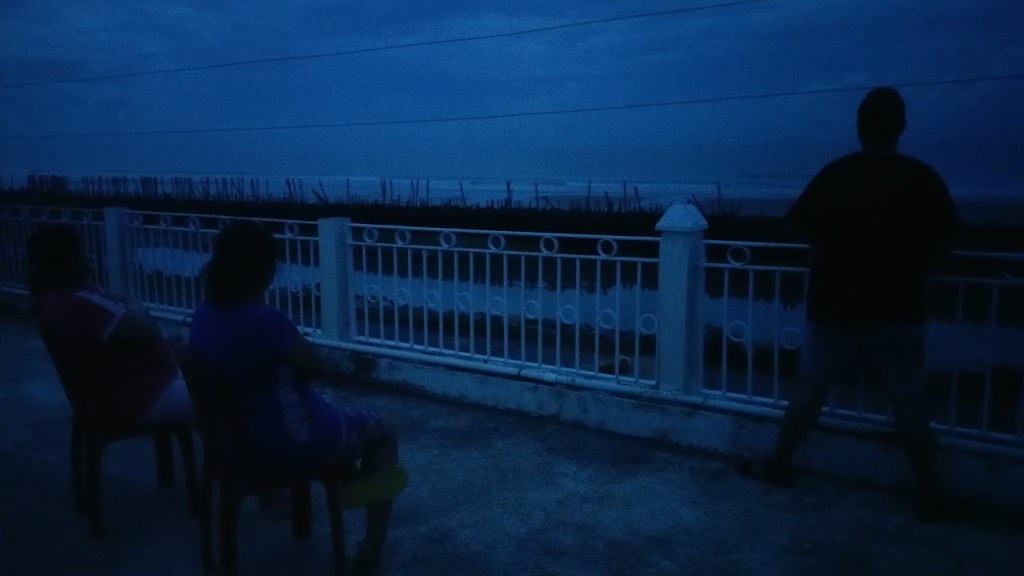
We had just missed the full moon, locals told us. “On Purnima nights,” one of them said, “the whole sea turns to silver.” Even without it, the shimmering waters under a starlit sky were pure magic.
Morning in Chandpur
The next morning, we woke up at 5 a.m., eager to catch the sunrise from the rooftop. But nature had its own plans. Dark clouds gathered, and soon the sound of rain replaced the call of seabirds. The sea turned moody and mysterious, and we found ourselves watching it from behind rain-splattered windows — teacups in hand.
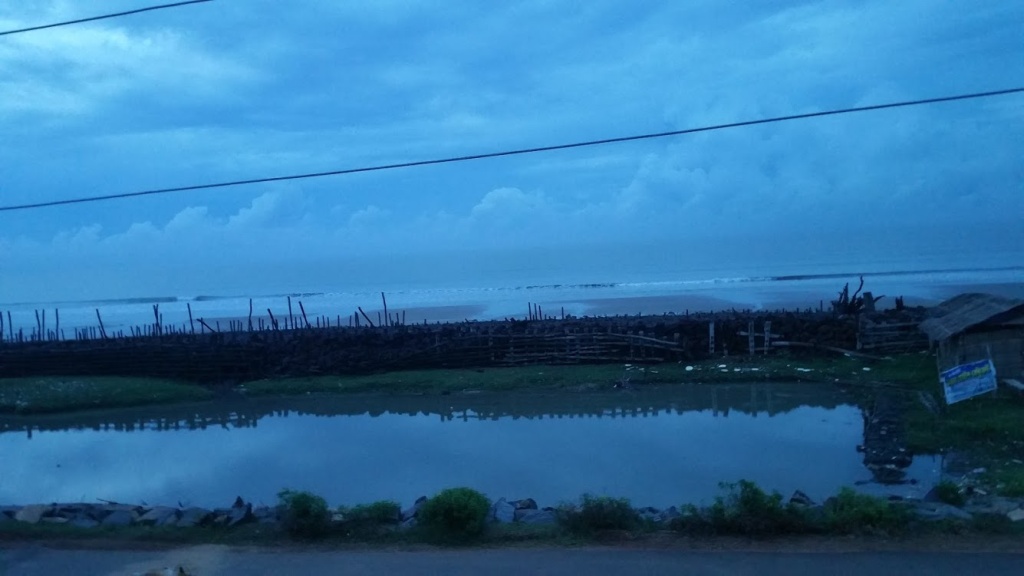
There’s a quiet beauty in such moments too — the sound of distant thunder rolling across the horizon, the wet scent of earth mingling with salt air, and the endless sea whispering secrets to the shore.
The Eroding Shoreline
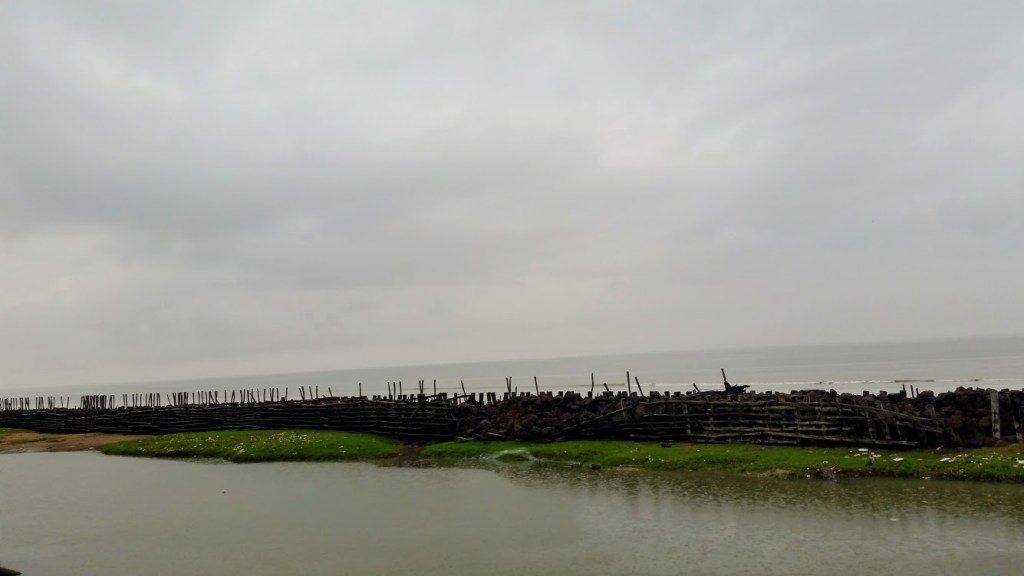
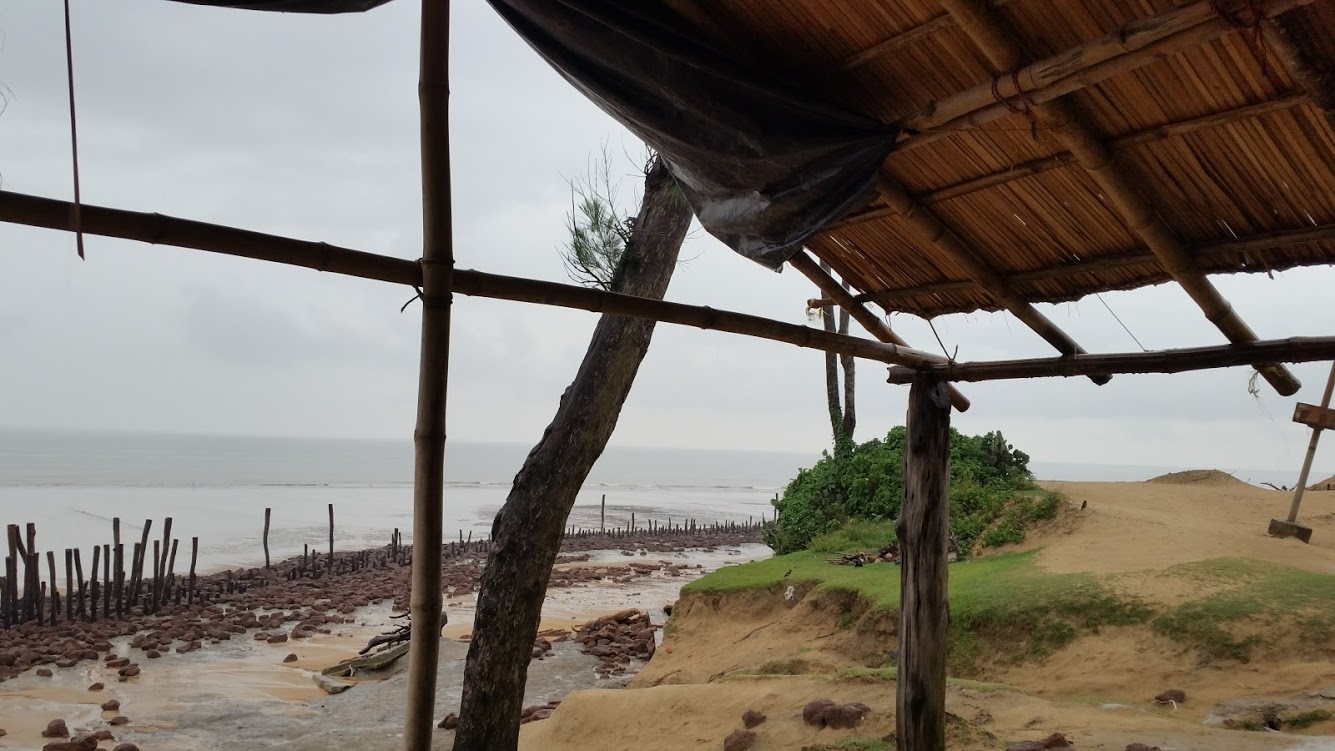
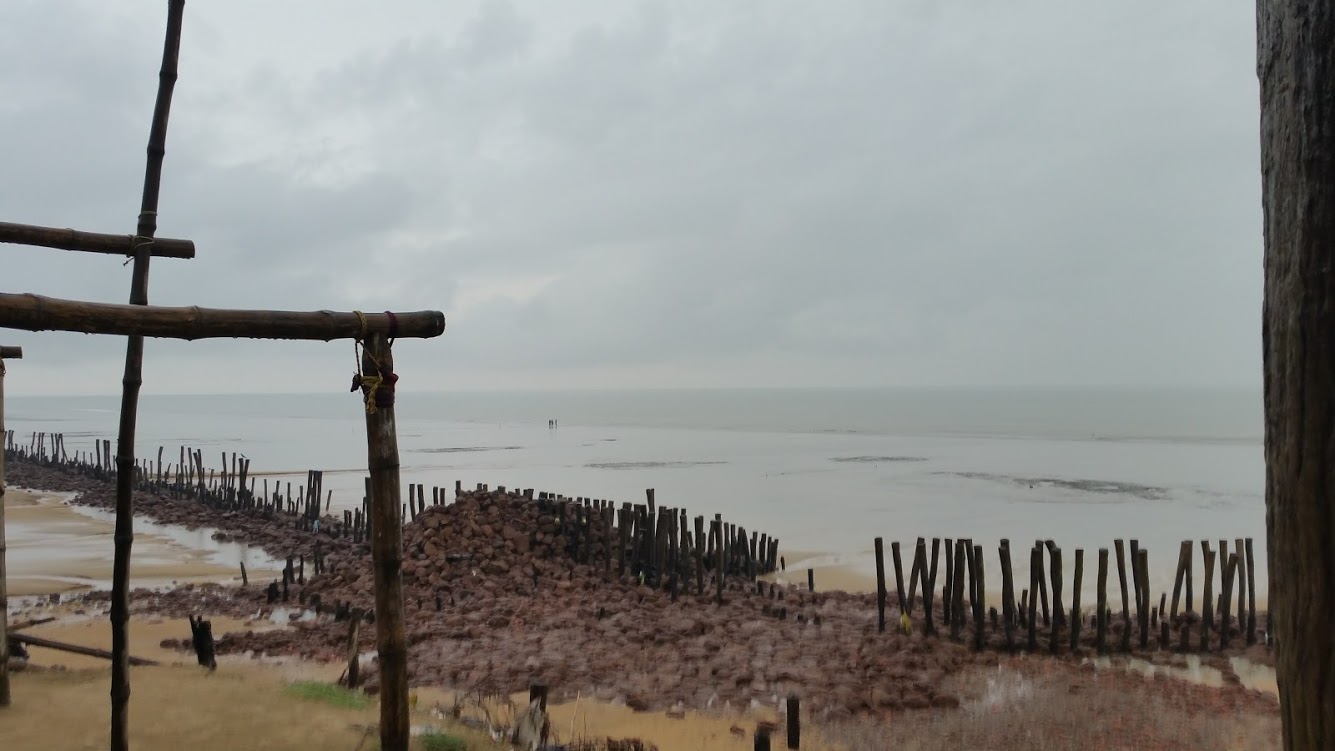
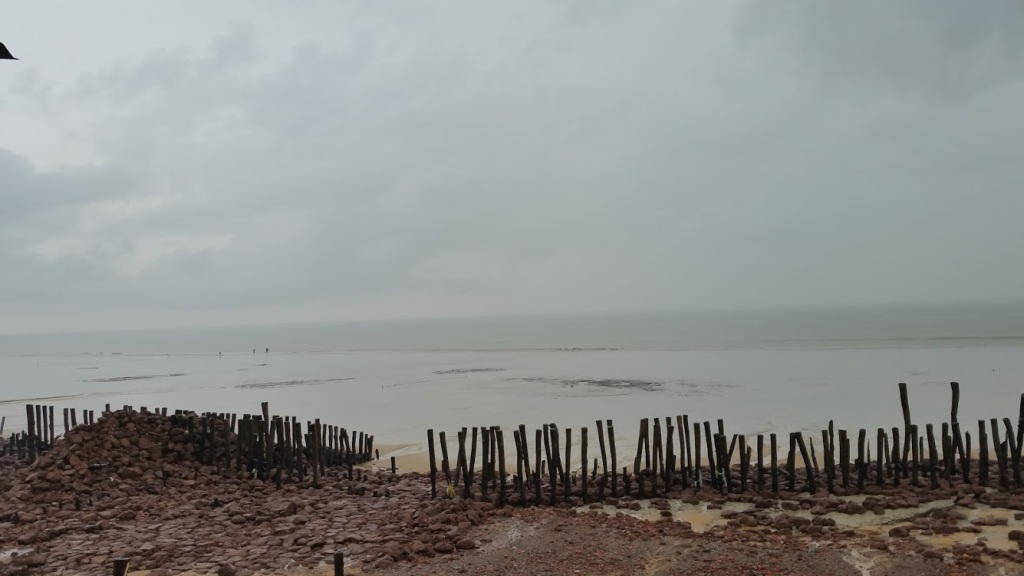
Unlike Digha, Chandpur bears visible scars from coastal erosion. The shoreline has been reshaped by the sea’s changing moods. To protect it, large stonewalls and offshore breakwaters have been built to absorb the impact of waves and slow the erosion.
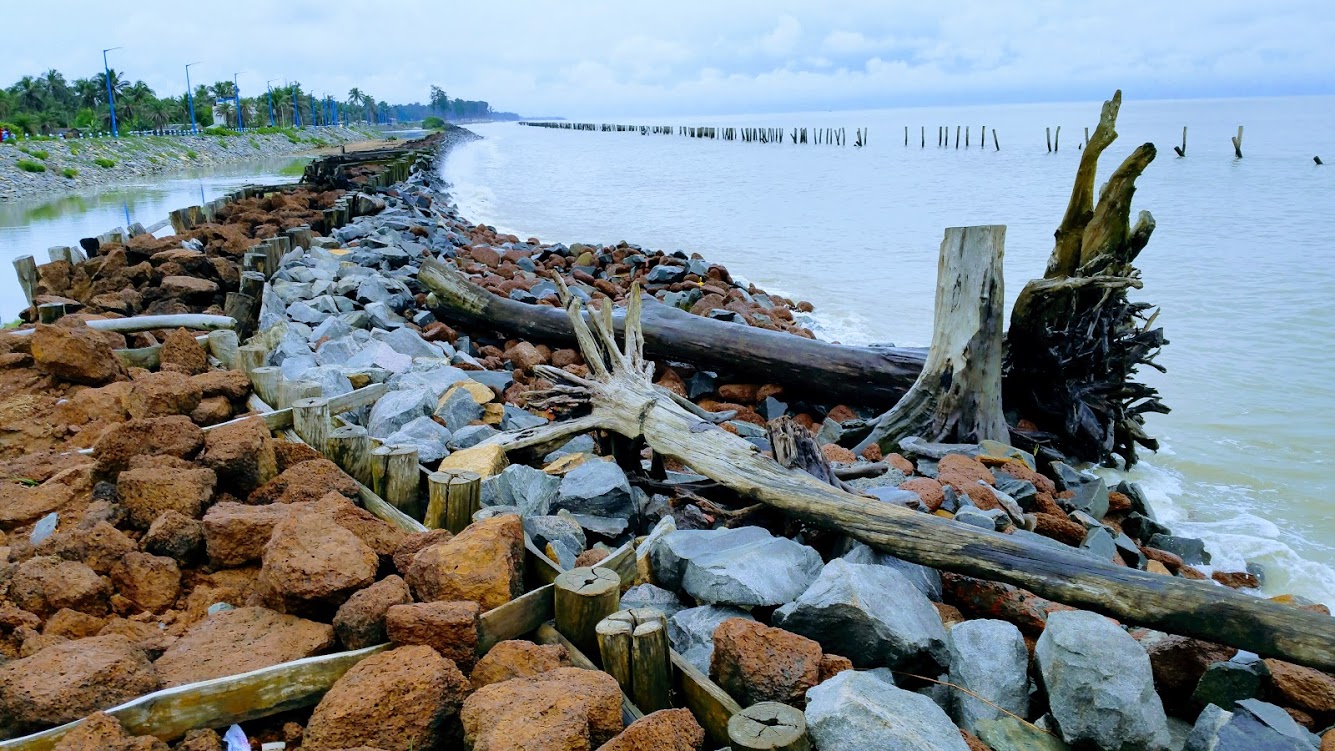
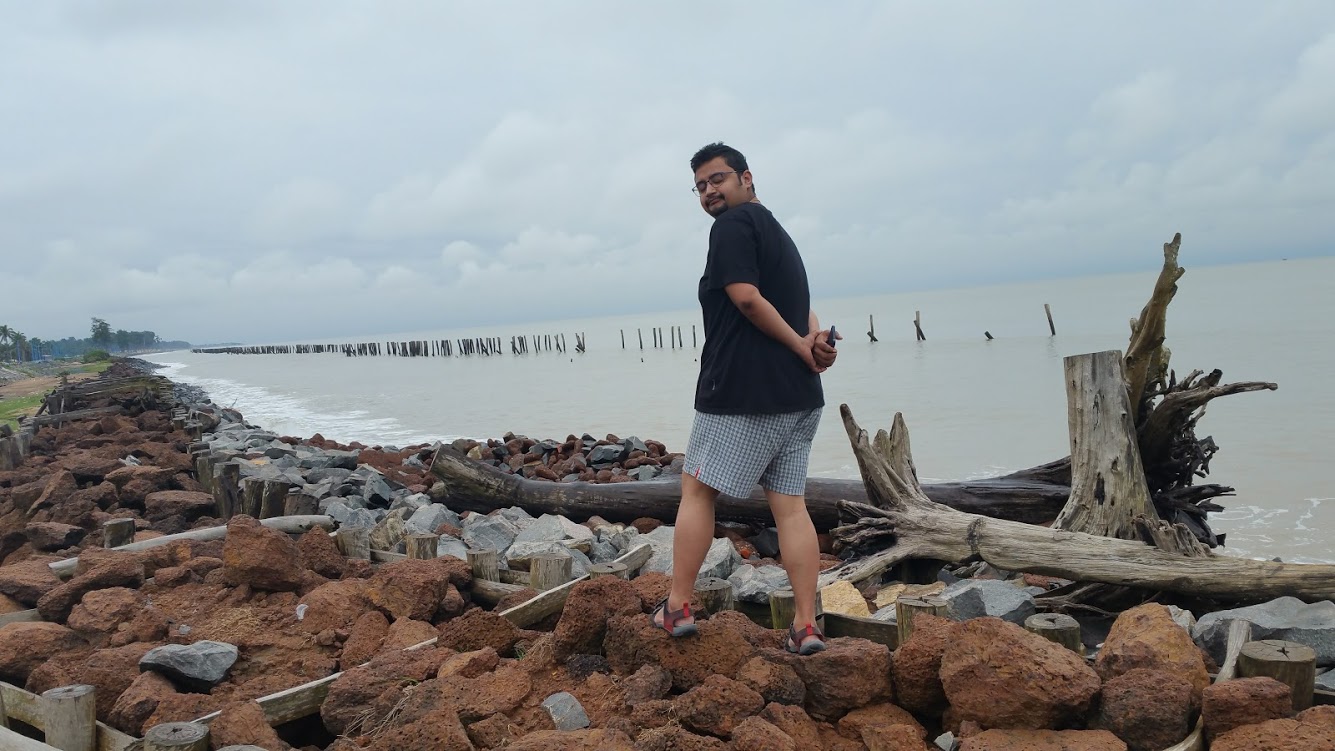
Walking along the boulders, we felt the sea lapping at our feet, cool and insistent. Accessing the beach was tricky — the descent uneven, scattered with sal trunks used for reinforcement. During high tide, the sea comes right up to the walls, but when the tide recedes, a wide, empty stretch of sand reveals itself — raw, untouched, and beautiful.
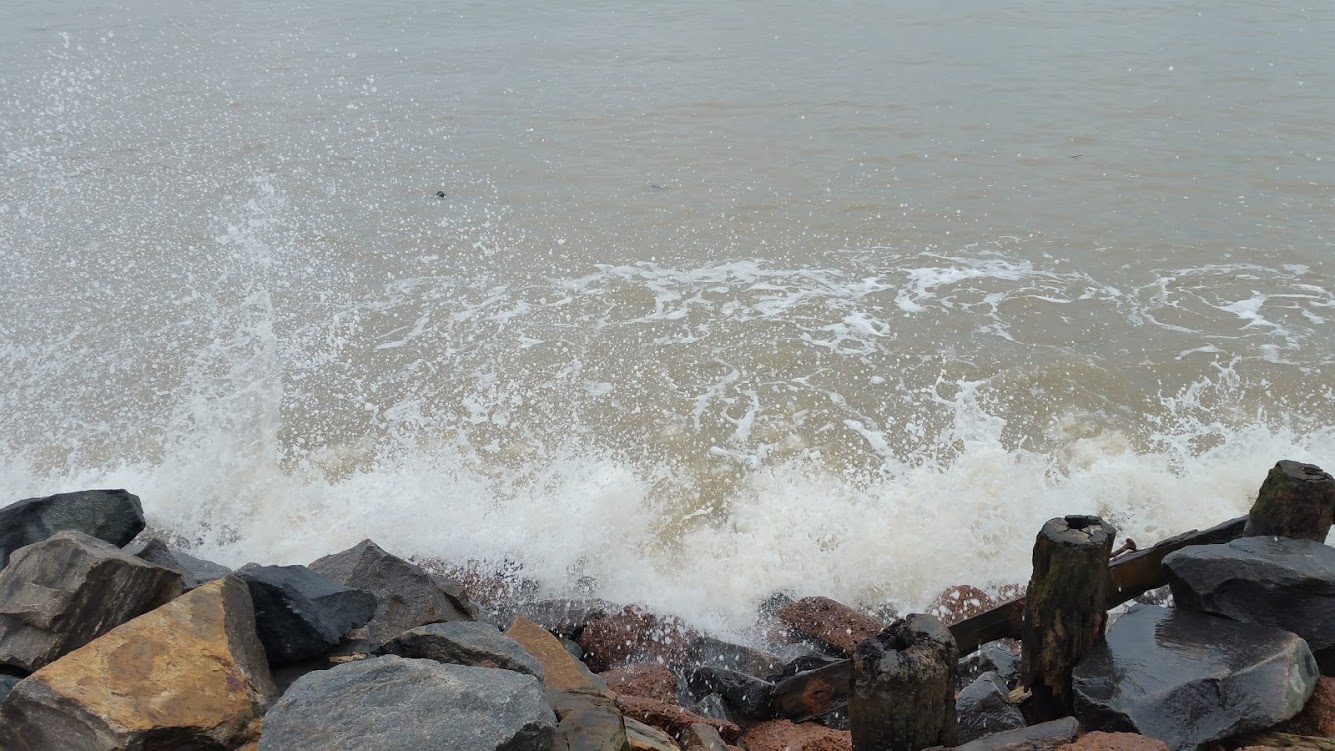
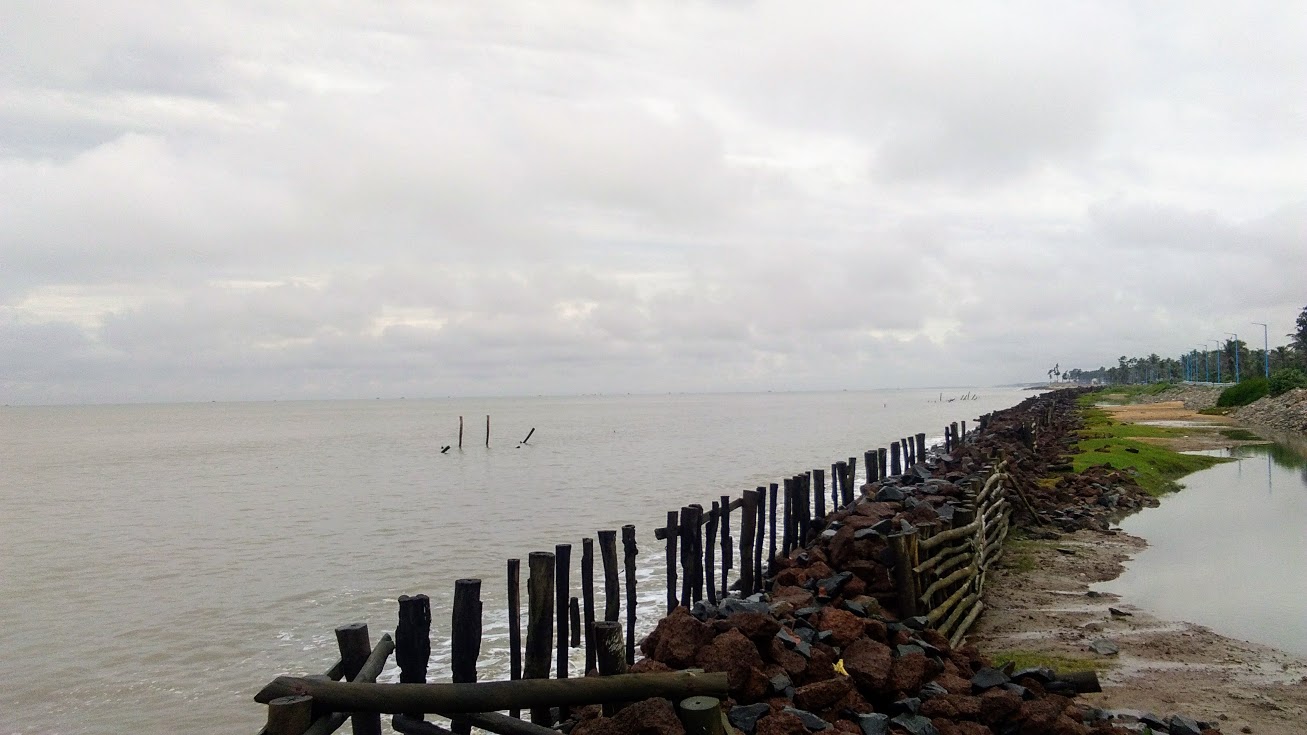
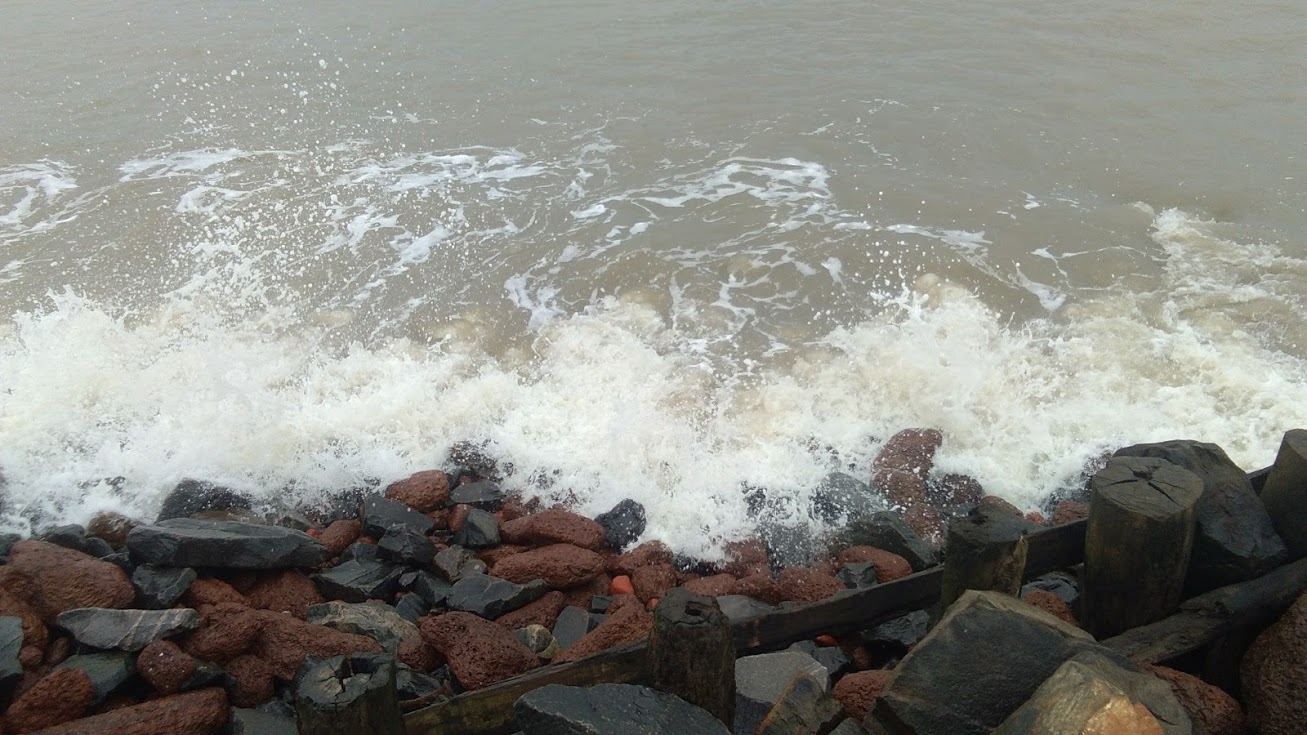
We spotted an embankment trail running parallel to the coast, leading towards Shankarpur and Digha. Locals spoke of how, year by year, the sea had crept inland, swallowing bits of land and memory alike.

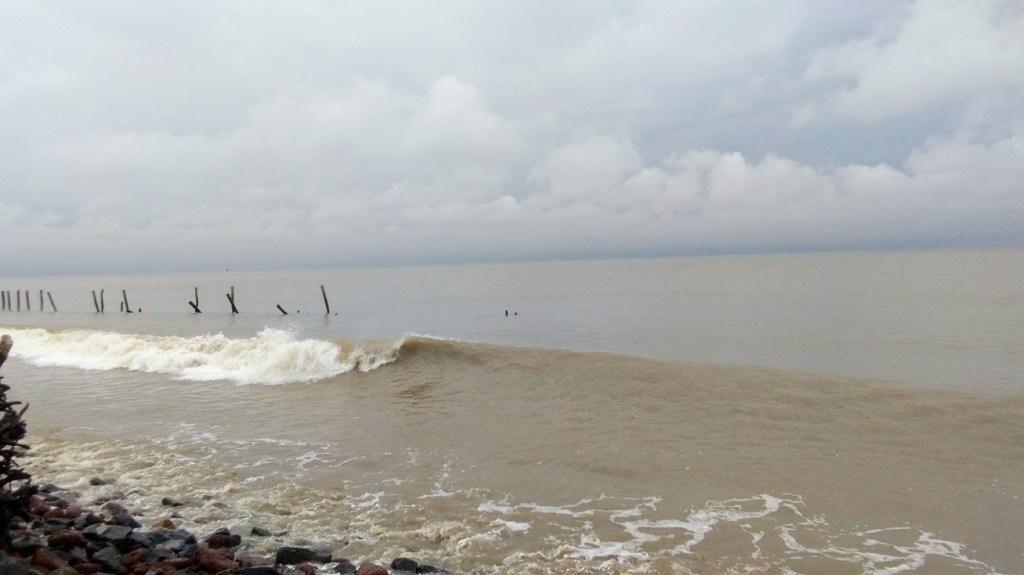

The coastal area is vulnerable to coastal erosion due to unbridled and rampant human interventions. The rate of erosion has been found to be about 15-20 meters per year in some parts between Digha and Mandarmani. Damages are caused by the inundation of coastal areas due to periodic storm and tidal surges, seasonal high-velocity winds, storms, and cyclones.
Sipping Tea, Listening to Tales
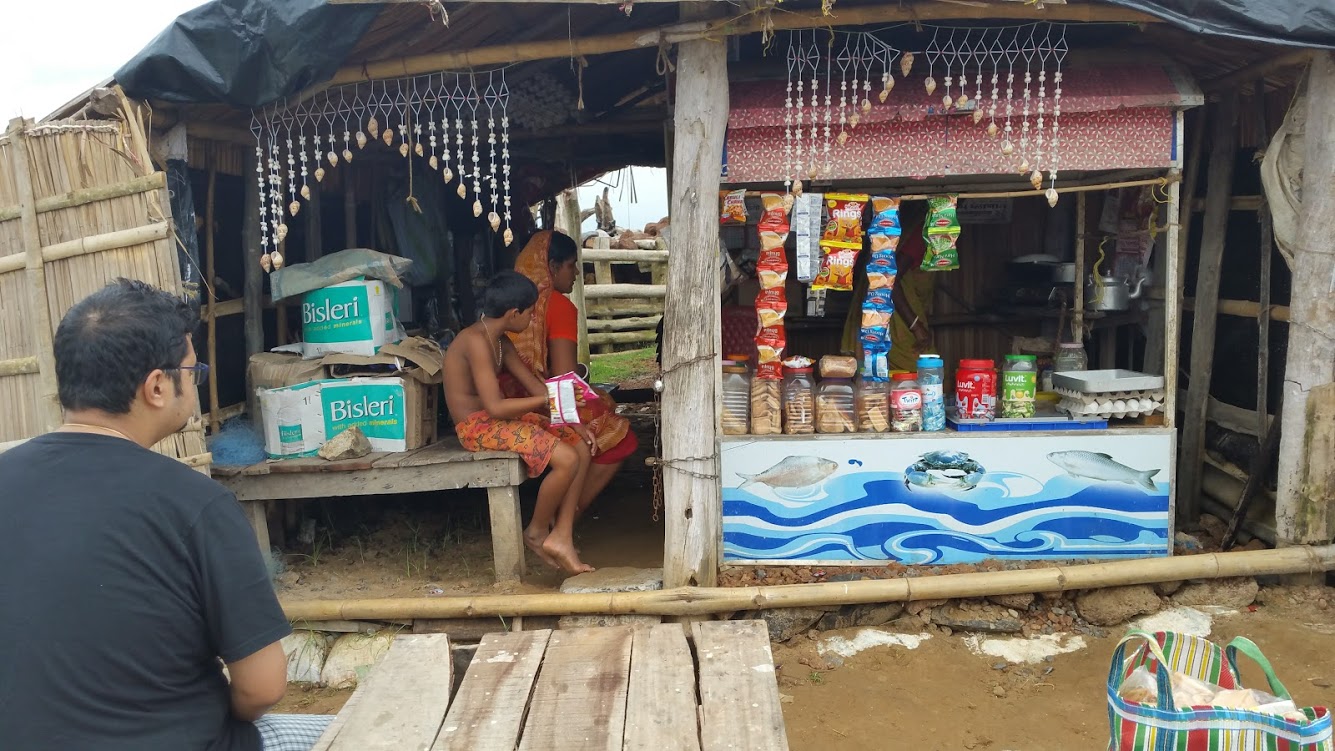
Just across our hotel stood a tiny beach shack — a thatched-roof retreat run by a friendly family. It quickly became our favorite spot. Over cups of steaming tea and plates of omelet-bread, Judhajit and I listened to stories about the sea’s slow retreat and the lives tethered to its whims.
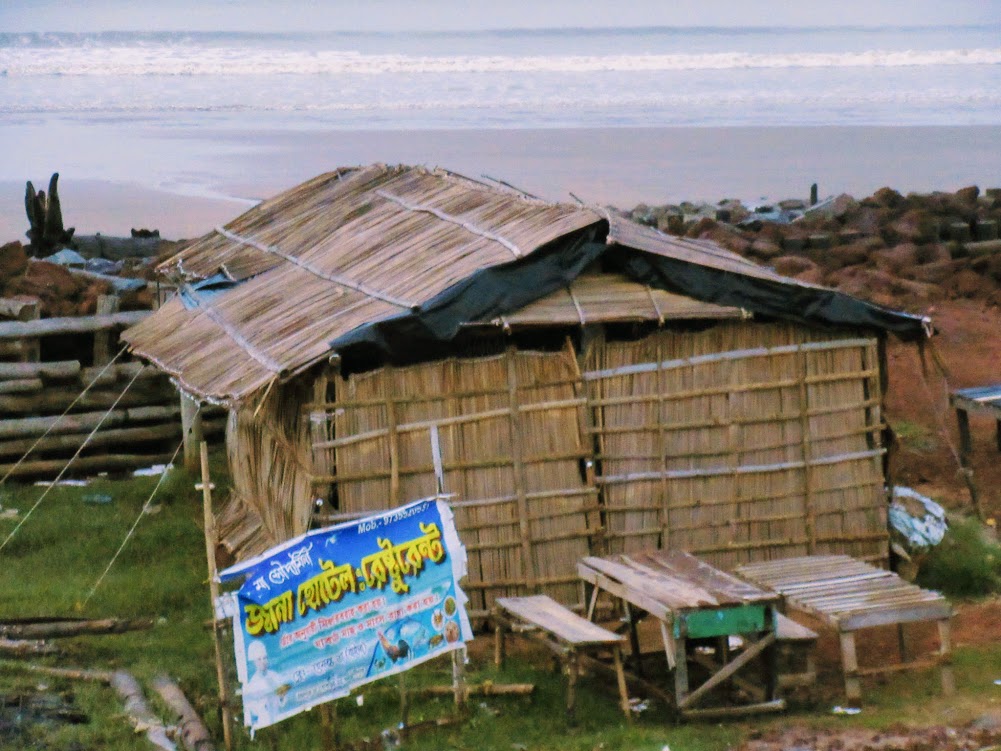
The owners spoke with quiet pride about their home, yet their eyes betrayed worry about the disappearing coastline. In their voices, we heard both love and loss — a reminder of nature’s unrelenting power.
A Literary Connection: Bankim at Chandpur
Few know that Bankim Chandra Chattopadhyay, the great Bengali novelist and the composer of Vande Mataram, once frequented this very coastline. During his tenure as a Deputy Magistrate, he often rode on horseback to the Chandpur Inspection Bungalow — a colonial-era rest house that, as locals claim, now lies buried about three kilometres inside the sea.
It’s haunting to imagine that a piece of history — a place once alive with conversation and literature — now lies submerged, claimed by the waves.
Lunch at Tajpur – A Feast to Remember
By noon, our appetites led us to Tajpur, a short drive away. The beach there buzzed with life — families, fishermen, and food stalls — a sharp contrast to Chandpur’s solitude.
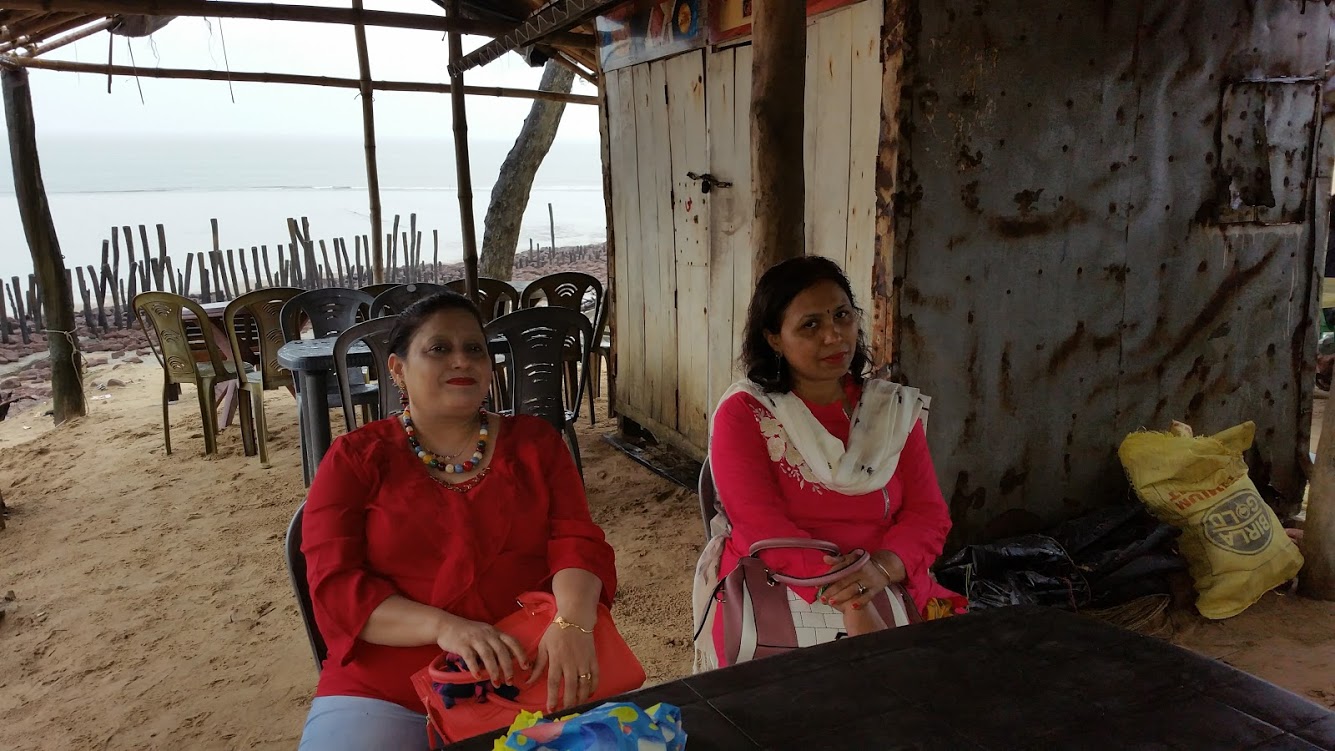
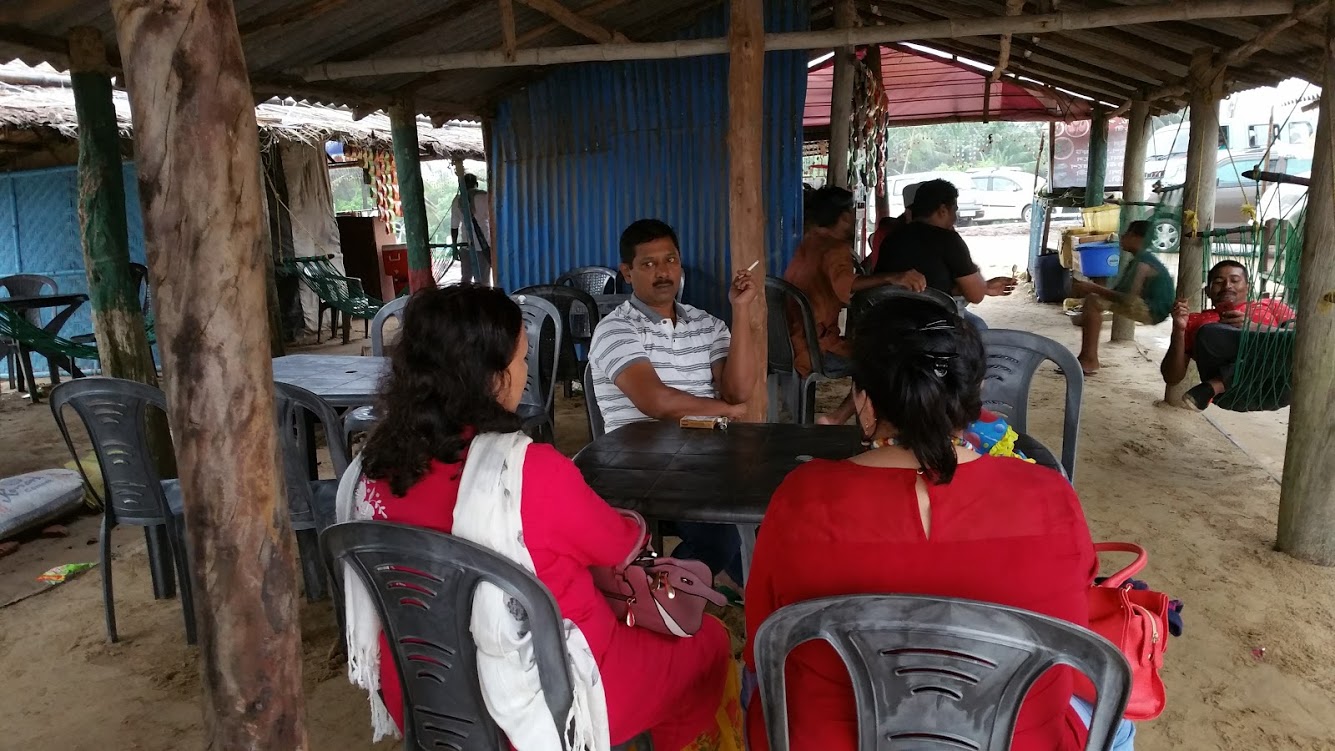
We settled at Maa Basuli, a rustic seaside shack known for its seafood. The owner asked us to pick our fish — and we chose Pomfret, Ilish, Bhola Bhetki, and a few local crabs. Soon, the aroma of fresh spices filled the air. Plates of rice, dal, and masala crab arrived, accompanied by the best rainy-day companion — chilled beer.
The food? Absolutely divine. The crab was a revelation — spicy, buttery, finger-licking good. As rain pattered softly on the thatched roof, we savored every bite, watching kids play on hammocks and the waves roll in and out.




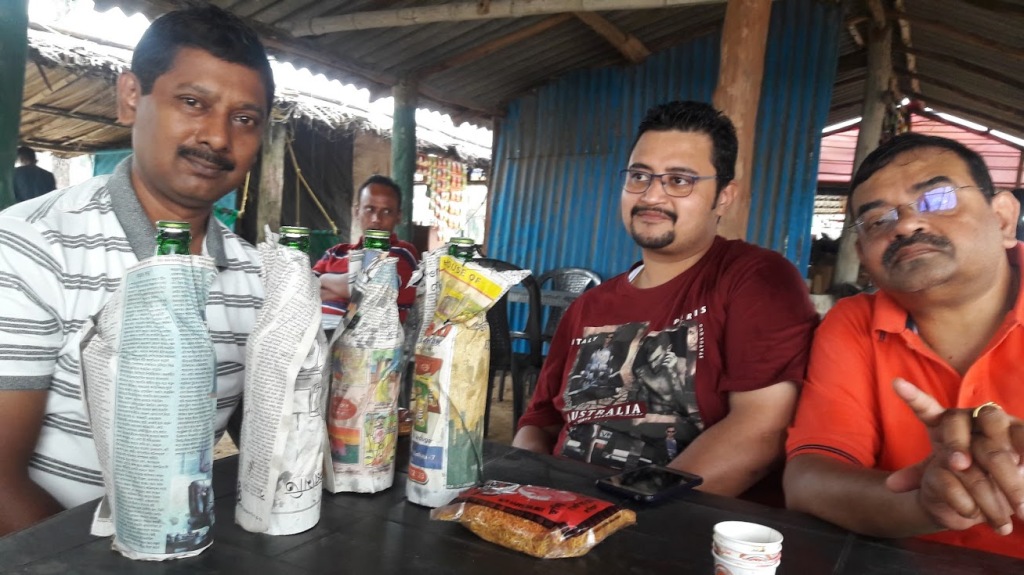

Before we left, we posed for a photo with the children who had served us — bright-eyed, cheerful, and full of dreams. A simple moment, but one that lingered long after we returned home.

Reflections from the Shore
Chandpur, in the end, wasn’t about postcard-perfect sunsets or resort luxuries. It was about something deeper — serenity, simplicity, and connection.
It’s a place where the sea meets silence, where time slows down, and where the air carries the scent of both nostalgia and salt. You come here not to do, but to be — to sip tea under open skies, walk barefoot on hidden sands, and rediscover the quiet rhythm of your own thoughts.
So, if ever the city’s chaos feels too heavy and your heart longs for the sea’s song — drive down to Chandpur. Let the wind tousle your hair, the waves wash your worries, and the horizon remind you that peace often hides in the most unexpected corners of the map.
As we drove back that evening, the taste of crab still on our tongues and the sound of the sea echoing in our minds, we knew — we’d return someday. Some places don’t just exist on maps. They find a home in your heart.

Now this is a new place that I have heard…Digha..Mandarmoni…all sounds common.
LikeLiked by 2 people
Yes and these places are quite crowded too, especially during tourist seasons.
LikeLiked by 2 people
I’m sure it must be. Bengalis love to travel.
LikeLiked by 2 people
True. 😀 😀
LikeLiked by 2 people
As usual your travelogues are exceptionally enticing. Dunno when I will be in that part of the world but I have pinned the place in my memory.
LikeLiked by 2 people
Thanks Aranjit.
LikeLiked by 1 person
Nice account of your trip to Chandpur beach. The property looks nice, though the inspection bungalow being engulfed by the sea sounds a bit eerie.
LikeLiked by 2 people
Thanks Somali.
The coastal tract near Digha is being eroded by seawater, resulting in the lowering of the beach and recession of the bank. The rate of erosion has been found to be about 17 meters per year in some parts. The fate of the inspection bungalow highlights the urgency for conservation of the coastline.
LikeLiked by 1 person
Nice post. Heard about this place, though I have never been there.
LikeLiked by 2 people
Thanks 😀
LikeLiked by 2 people
beautiful place thanks for sharing
LikeLiked by 2 people
👍
LikeLiked by 1 person
I have heard about it and the pictures are baiting to visit 🙂 🙂 lovely .. Darun khoob darun
LikeLiked by 2 people
Thanks. May be your visit to serene Chandpur give us some lovely poems from Nivedita.
LikeLiked by 2 people
All God’s wish .. I don’t know about poetry but yes Jhal muri is something I will bring along ..
LikeLiked by 2 people
Yes, there is nothing like the humble spicy, tangy, crispy, & crunchy Jhalmuri. It has now gone global! You may also read: https://indroyc.com/2012/08/19/delicious-jhal-muri/
LikeLiked by 2 people
Yesss Nothing can beat it .. only thing I miss in Delhi
LikeLiked by 2 people
Oh Yes! We love this place along with Tajpur 😀 Actually, as you did, we generally have our lunch at Tajpur beach shacks. Their “kNakra’r jhal” and Deshi murgir mangsho” taste heavenly… 😀 Glad you enjoyed the trip… 🙂 Nice pictures as well…
LikeLiked by 1 person
Thanks Maniparna. 🙂
LikeLike
Beautiful pictures and great travelogue 🙂
LikeLiked by 1 person
Thanks Sumi.
LikeLiked by 1 person
Pingback: Chandrapur a Calm beach Destination-Awesome Construction – स्थापत्य – Construction simplified!