

It was a crisp morning as our cab wound its way through the verdant hills of Sikkim, headed towards a place that held a special significance for Buddhists. My wife, Jagrata and my son, Judhajit, were brimming with excitement, their eyes wide with curiosity as the majestic peaks of the Himalayas revealed themselves. This was a long-awaited journey, a visit to Rumtek Monastery, a spiritual haven that I had visited over two decades ago with my wife and some three decades ago with my mother.
As we approached the monastery, nestled at an altitude of about 1,550 meters (5,100 feet) and located 24 kilometres from Gangtok, the memory of my first visit came rushing back. The path to Rumtek was lined with fluttering prayer flags, their vibrant colours dancing in the wind, each whispering a prayer to the heavens.

Revisiting a Sacred Landmark
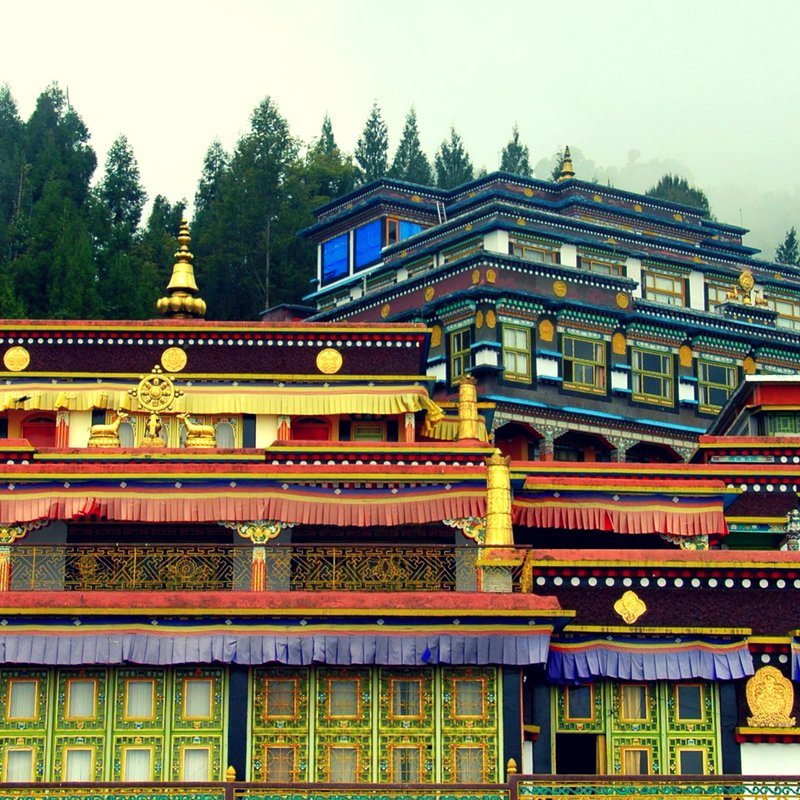
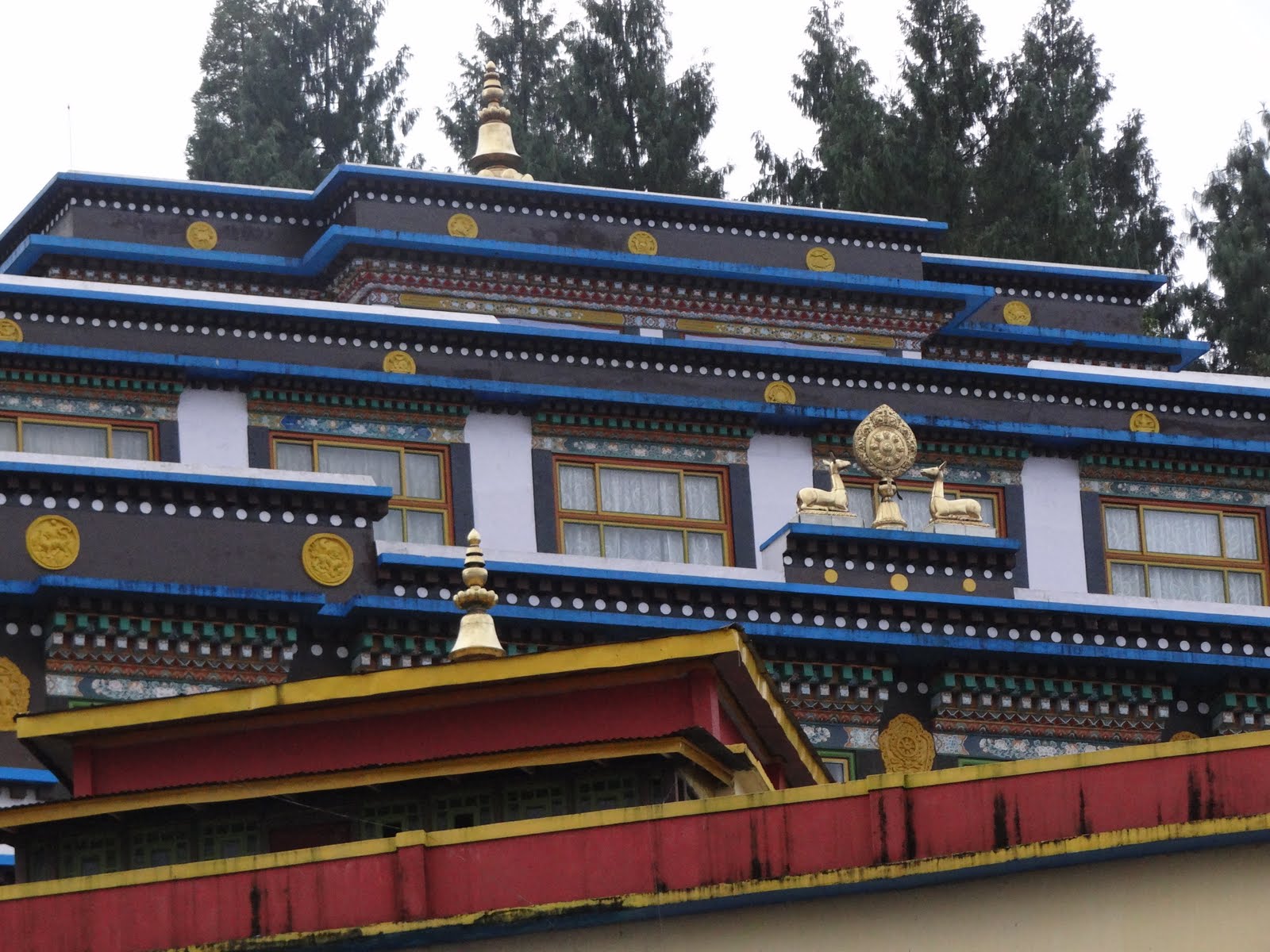
Stepping through the ornate entrance, we were greeted by the sight of the grand monastery, a stunning example of traditional Tibetan architecture. The main prayer hall, or Tsulakhang, stood proudly with its golden roof and intricate carvings. This three-story structure, surrounded by lush gardens, was a sight to behold, offering breathtaking views of the surrounding mountains.
I shared with Jagrata and Judhajit the rich history of Rumtek Monastery. Built in the 16th century by the 9th Karmapa, Wangchuk Dorje, the monastery had witnessed centuries of upheaval. It was destroyed during the Nepalese invasion in the 18th century and lay in ruins until the mid-20th century when it was lovingly rebuilt by the 16th Karmapa, Rangjung Rigpe Dorje. Today, it stands as the seat of the Karmapa, the head of the Karma Kagyu school of Tibetan Buddhism, attracting visitors from all over the world.
The Rumtek monastery, a replica of the Tsurphu monastery of Kham region of Tibet belongs to the Kagyu lineage. Tsurphu monastery is the main seat of the Kagyu lineage established in 1187 by the 1st Karmapa Dusum Khyenpa (1110-1193). Rumtek is the largest monastery in the Eastern Himalayas. It was built by the 9th Karmapa Wangchuk Dorje during the reign of the fourth Chogyal in 1740 in the East District.
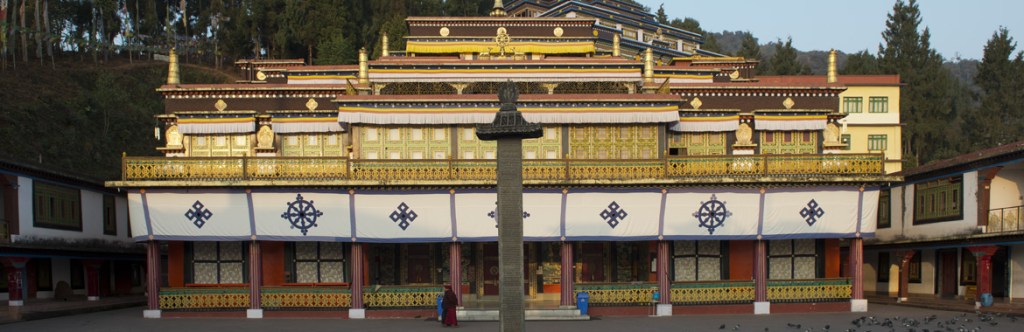
The monastery is also home to a large collection of religious artefacts, including thangkas (religious paintings), statues, and other sacred objects. The most significant of these is the Golden Stupa, which contains the relics of the 16th Karmapa.
Immersed in Spirituality and History
As we explored the monastery, we were drawn to the main temple, a four-story structure adorned with a golden sculpture, the ghanzira. This unique feature, a combination of five distinct shapes, represents the five Tathagata (Buddha) families: Amitabha, Vairochana, Amoghasiddhi, Akshobya, and Ratnasambhava. The vibrant murals at the entrance, depicting the Four Heavenly Kings and even a Hindu deity, Lord Ganesha, highlighted the inclusive vision of the 16th Karmapa.
Inside the main shrine hall, the air was thick with reverence. The hall stood on strong red pillars, with long, round silk banners and ancient thangkas suspended from them. The walls were adorned with paintings of the Kagyu lineage, the Eight Great Bodhisattvas, and the Sixteen Arhats, each telling a story of devotion and enlightenment. My children were particularly fascinated by the 1001 miniature golden images of Lord Buddha, their small faces reflecting the grandeur of Buddhist art and spirituality.

We spent time in the Dharma Chakra Centre, the spiritual heart of Rumtek. This centre is not only a place of worship but also a community hub for monks performing rituals and practising the Karma Kagyu lineage. The impressive library and special rooms for high-ranking incarnate Lamas provided a deeper insight into the monastic life.
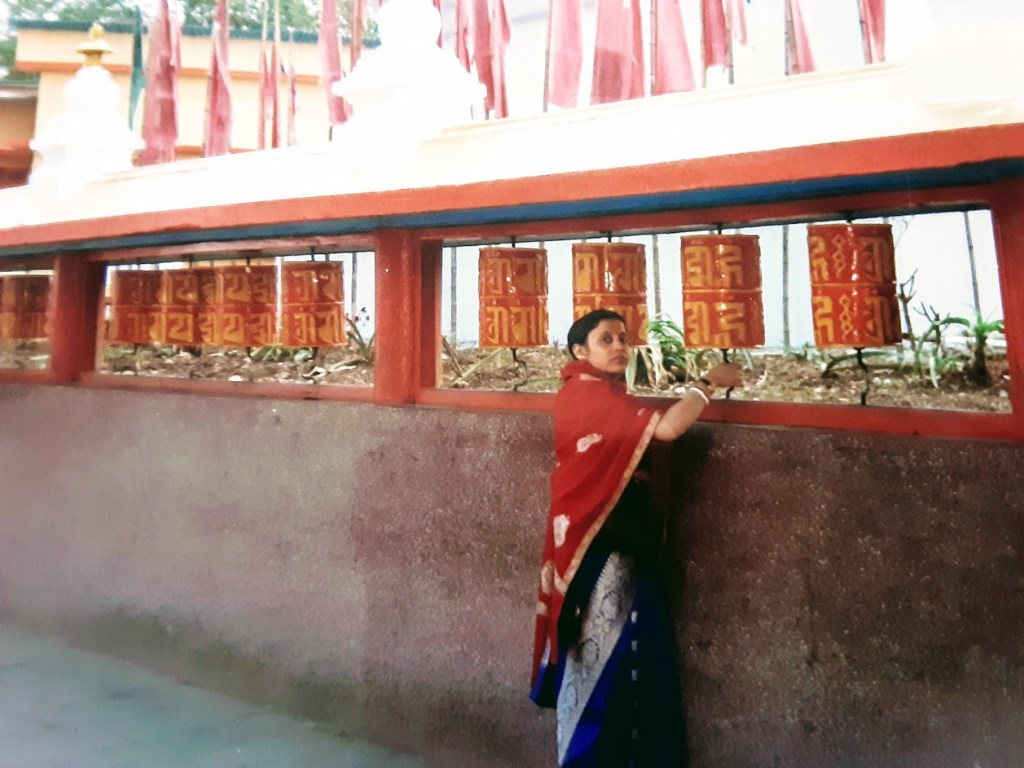
The highlight of our visit was the Golden Stupa, containing the relics of the 16th Karmapa. Standing before this sacred monument, I whispered a silent prayer of gratitude. This visit was a reminder of the timeless spiritual bond that transcends generations and the enduring legacy of Rumtek Monastery.
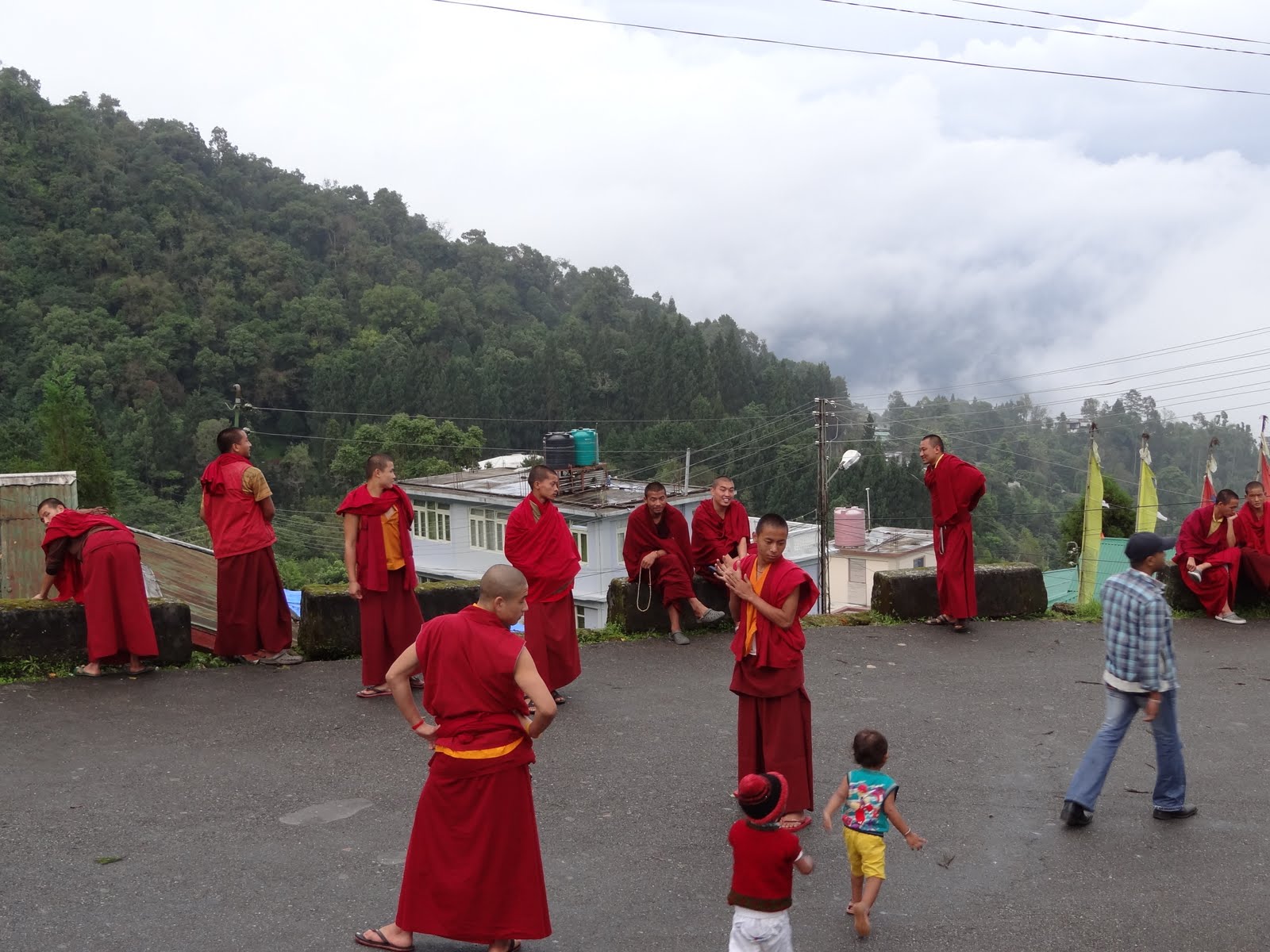

As we left Rumtek, the sun dipping behind the mountains, I knew that this visit had planted seeds of spirituality in my son Judhajit, with his inquisitive mind and open heart, had embraced the rich culture and history of this sacred place. Our visit to Rumtek Monastery was more than just a journey; it was a reconnection with the heritage, and a promise to carry forward the light of wisdom and compassion.

I have only visited Buddhist monastery only once in my life. I’m yet to explore the ones in Ladakh, HP and north east
LikeLiked by 1 person
I like their colourful buildings and disciplined lifestyle of the monks … even the child monks.
LikeLiked by 1 person
Colours in their buildings is a prominent feature. 😃
LikeLiked by 1 person
This is the most beautiful monastery that I have seen. I was surprised at how the little monks were moving around barefoot at ease wearing their orange robe in the month of December when I was shivering in my coat and woollens.
LikeLiked by 1 person
Though I’ve visited the monastery, I didn’t know so much about it! The pictures are beautiful…. 🙂
LikeLiked by 1 person
Thanks Maniparna.
LikeLiked by 1 person
Very nice info about the monestery. Grt to know about that. I visited it a couple of years ago. But, didn’t know so much things about it.
LikeLiked by 1 person
They have their own style of Architecture, Culture, Living and Dharma
Thanks for the share
🎶💞
Shiva
LikeLiked by 1 person
Yes, quite true. Thanks.
LikeLike
I had such an awesome time spending time in your blog today reading posts. A great way for me to end the day.
LikeLiked by 1 person
Thanks a lot! I feel honoured.
LikeLike