

I recently had the privilege of attending a National Seminar on Hemorrhagic and Ischemic Stroke at Sikkim Manipal Institute of Medical Sciences (SMIMS) in Gangtok, Sikkim. As a freshly minted MBBS intern, this was not just an event but a gateway into the intricate world of neurology and stroke management.

The seminar, organized by Dr. Gorkhi Medhi and featuring esteemed speakers like Dr. Sharath K.G.G., provided a comprehensive overview of strokes—both hemorrhagic and ischemic. Starting with the basics, Dr. Sharath’s introductory speech illuminated the critical aspects of stroke, emphasizing the urgent need for timely intervention to minimize neurological damage.

The day unfolded with insightful sessions detailing advancements in stroke management. I was particularly intrigued by the transition from traditional neurosurgical approaches to minimally invasive techniques pioneered by interventional radiologists. The use of catheterization and CT-guided procedures in the cath lab showcased significant advancements, promising faster recovery times and reduced patient discomfort.

Over a sumptuous lunch, conversations veered towards the crucial issue of public awareness. It became evident that early recognition of stroke symptoms—through initiatives like the FAST (Face, Arms, Speech, Time) method—could drastically improve patient outcomes. As discussed, timely medical intervention within the critical first few hours can mitigate long-term disabilities.
Patients who arrive at the emergency room within 3 hours of their first symptoms often have less disability 3 months after a stroke than those who received delayed care.
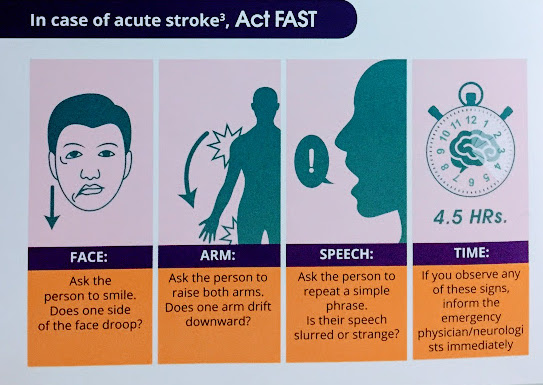
There is an effective way that non-medical associated people should follow for any High-risk patients (as listed below) — commonly called: F.A.S.T. The FAST was developed in the UK in 1998 by a group of stroke physicians, ambulance personnel, and an emergency room physician.
- Face – To check for any drooping of the face
- Arms – To check for any weakness in arms
- Speech– To check for any slurring of speech
- Time – If any/all symptoms are present in the patient then its time to call emergency
High-risk patients: Patients with
- Old age
- Hypertension
- Diabetes
- Hyperlipidemia, or high cholesterol
- Long-standing unattended Deep Vein Thrombosis
- History of Embolism
- History of Loss of consciousness
- History of previous occurrences
- History of atherosclerosis
The seminar concluded with a resounding call to action: to educate communities about stroke symptoms and preventive measures. Despite its severity, stroke is often misunderstood and under-recognized. Initiatives like FAST underscore the importance of swift action in saving lives.
As I reflect on this enriching experience, I am motivated to spread awareness in my community and among my peers. The knowledge gained at SMIMS will undoubtedly shape my approach as a healthcare professional, reinforcing the importance of continual learning and proactive patient care.
In closing, I urge everyone to familiarize themselves with stroke symptoms and to act swiftly when they occur. Together, we can make a significant impact in combating this medical emergency. Let’s think FAST and act FAST—for every minute counts in the fight against stroke.
Stay informed, stay vigilant, and let’s prioritize brain health for a healthier future.

That’s great! Congratulations! Like the slogan: Think FAST, act fast.
LikeLiked by 1 person
Congratulations ❤️
LikeLiked by 1 person
Thank u Mam
LikeLiked by 1 person
Very informative. Sharing on Twitter.
LikeLiked by 2 people
Thank u mam. The word needs to be spread. Really appreciated.
LikeLiked by 2 people
Thank you for sharing this informative post to create awareness about stroke.
LikeLiked by 2 people