

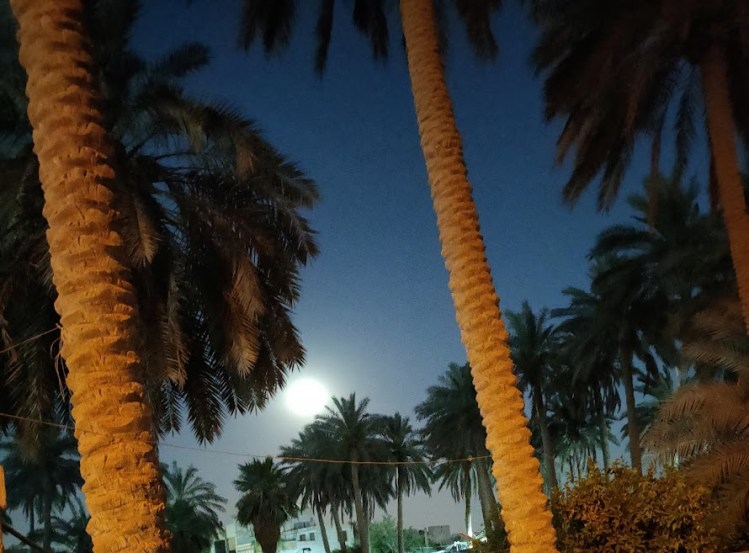
July’s full Moon of 2022 is a celestial event that has captured the imagination of skywatchers around the world. Known as the biggest and brightest supermoon of the year, the 13 July full Moon was an extraordinary sight. While the difference might not have been discernible to the naked eye, knowing that the Moon was the closest, biggest, and brightest it would be all year added an extra layer of wonder to the experience.
The Mechanics Behind the Supermoon
The Moon’s orbit around Earth is elliptical, not a perfect circle. This means that the distance between the Earth and the Moon varies throughout the month. On average, the Moon lies about 382,900 kilometres from Earth. However, this distance fluctuates as the Moon reaches its apogee (the farthest point) and perigee (the closest point). The shape of the Moon’s orbit changes over time due to the gravitational influences of the Sun and other planets.
A supermoon occurs when a full Moon coincides with its perigee, resulting in a Moon that appears larger and brighter in the sky. During the 13 July supermoon, the Moon appeared up to 14% larger and 30% brighter compared to its appearance at apogee. This significant increase in brightness and size, though subtle to the naked eye, makes the supermoon a fascinating astronomical event.
Cultural Significance of the July Full Moon
For many cultures and traditions around the world, the July full Moon holds special significance. This year’s supermoon coincided with Guru Purnima, a festival celebrated by Hindus, Buddhists, and Jains. Guru Purnima is a time for honouring spiritual teachers and clearing the mind. In the yogic tradition, it marks the occasion when Shiva became the first Guru, transmitting the knowledge of Yoga to the Saptarishis. Hindus also honour the sage Vyasa, a symbol of the Guru-Shishya tradition.
Historical and Traditional Names
Different cultures have historically given the July full Moon various names, often based on seasonal activities and natural events:
- Buck Moon: Named by the Algonquin tribes, this name references the time when buck deer grow new antlers covered in velvety fur.
- Thunder Moon: Also from the Algonquin tribes, this name comes from the frequent thunderstorms of early summer.
- Hay Moon: In Europe, this name reflects the haymaking season in June and July.
- Mead Moon: Another European name, associated with the traditional time of fermenting honey into mead.
- Asalha Puja: For Theravada Buddhists, this full Moon marks Dharma Day, celebrating the Buddha’s first sermon.
- Waso Moon: In the Burmese lunisolar calendar, this full Moon signifies the start of Vassa, a three-month Buddhist retreat.
Other names from various Native American tribes highlight the bounty of nature during this time:
- Feather Moulting Moon (Cree)
- Salmon Moon (Tlingit)
- Berry Moon (Anishinaabe)
- Moon When the Chokecherries are Ripe (Dakota)
- Month of the Ripe Corn Moon (Cherokee)
- Raspberry Moon (Algonquin, Ojibwe)
A Moment to Reflect and Appreciate
While the scientific explanations of the supermoon are fascinating, the cultural and historical significance adds depth to our appreciation of this celestial event. Whether you are a seasoned astronomer or a casual skywatcher, the July supermoon serves as a reminder of the beauty and complexity of the cosmos. As you gaze at the night sky, think of the generations before us who looked up at the same Moon, drawing inspiration, meaning, and wonder from its presence.

Interesting as always.
LikeLiked by 1 person
Thanks, sir.
LikeLike
Interesting info, Indrajit.
LikeLiked by 1 person
Thanks, Nilanjana.
LikeLike
I missed the Guru Purnimar Chand this year as the clouds shrouded the skies sans any water droplets.
LikeLiked by 1 person
You normally share the full Moon pics. I didn’t see it this time. Baghdad is a better place to watch the moon during this time unless there is no dust. 🙂
LikeLike