

It began, as most good stories do, with a detour. We—Judhajit, Tania, and I—had just wrapped up a dusty, soul-stirring visit to the Isko caves, still buzzing from the prehistoric rock art that seemed to whisper across millennia. Our plan was simple: head back, grab some chai, maybe argue about the symbolism of stick figures. But fate, in the form of Mr. Subhashis Das (affectionately known as the stoneman of Jharkhand), had other ideas.
“Go to Pakri Barwadih,” he said, eyes gleaming like someone who’d just decoded the universe using shadows and granite. “It’s not far. Just past Barkagaon.” Mr. Das discovered this site almost 25 years ago. The site features massive stones, or megaliths, which are over 3,000 years old. They are precisely aligned with the sun and hills, and served as ancient calendars, observatories, and markers of celestial events.
We almost missed it. The signage had vanished—likely claimed by miscreants or swallowed by bureaucracy. But Google Maps, local wisdom, and a stubborn refusal to turn back led us to a quiet patch of land near the NTPC Power Plant. And there, nestled in the folds of Jharkhand’s rugged terrain, we found it: Pakri Barwadih, a megalithic site that doesn’t just mark time—it makes you forget it.
Stones That Tell Time
At first glance, Pakri Barwadih looks like a scattered congregation of giant stones, as if ancient giants had paused mid-game and never returned. But look closer, and you’ll see precision. Intent. A cosmic choreography.
These stones—menhirs, to be precise—aren’t just relics. They’re instruments. Calendars. Observatories. Dating back at least 3000 years, they align with the sun and surrounding hills in ways that would make modern astronomers nod in respect. One stone points to Makar Sankranti in January. Another nods toward Chhath Puja in November. It’s as if the ancients decided to carve their Google Calendar into the Earth.
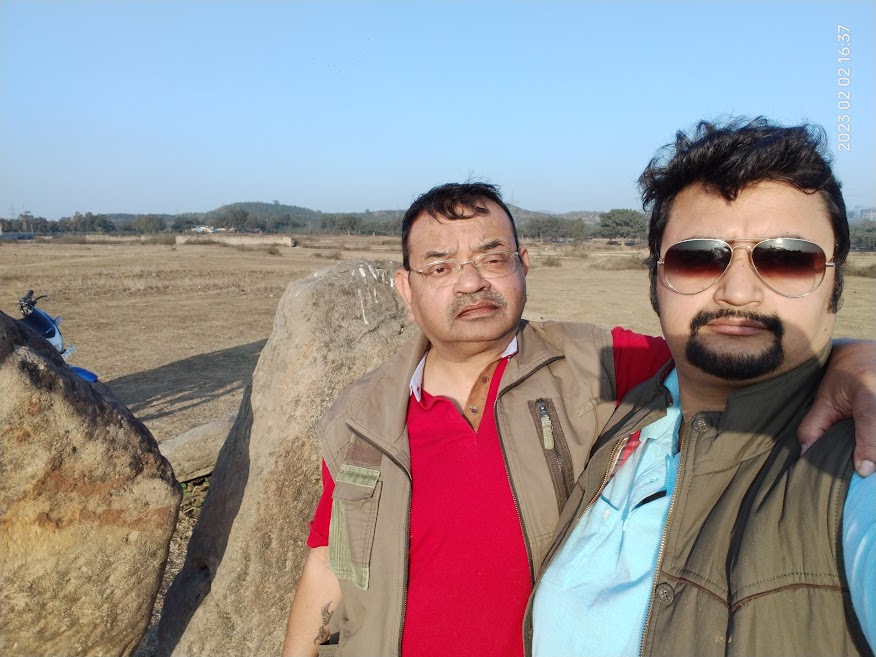
And then there’s the equinox phenomenon.
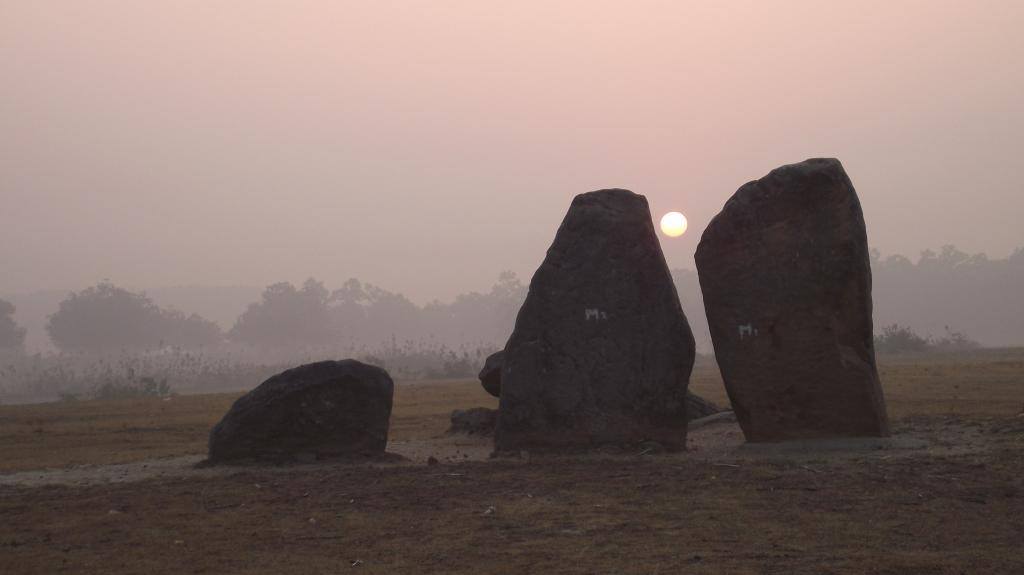
Every year, on March 21st and September 23rd, the sun rises precisely between two towering menhirs. For thirty golden minutes, the landscape glows with a kind of reverence. Villagers gather. Researchers squint through lenses. Tourists gasp. And the stones, silent and stoic, do what they’ve done for centuries—bear witness.
Mahapashan & the Mother Hills
The Mahapashan—literally, “great stone”—is the crown jewel of the site. Legend has it that ancient people carved these stones from the “Mother Hills,” shaping them for worship, cosmology, funeral rites, and celestial tracking. While most of the world moved on from megalithic culture, Jharkhand and parts of the Northeast quietly held on.
These stones have been used, reused, and occasionally misused. Some have been eroded, vandalized, quarried, or repurposed. One particularly heartbreaking tale involves menhirs being carted off to serve as drain covers. Yes, drain covers. The irony is almost poetic—monuments that once tracked the stars now channel sewage.
A Living Observatory
Pakri Barwadih isn’t just a historical site—it’s a living observatory. A small stone placed west of a larger menhir acts as a pointer in a north-south alignment, perfectly framing the mid-winter sunrise through a crevice. It’s the kind of alignment that would make Stonehenge blush.

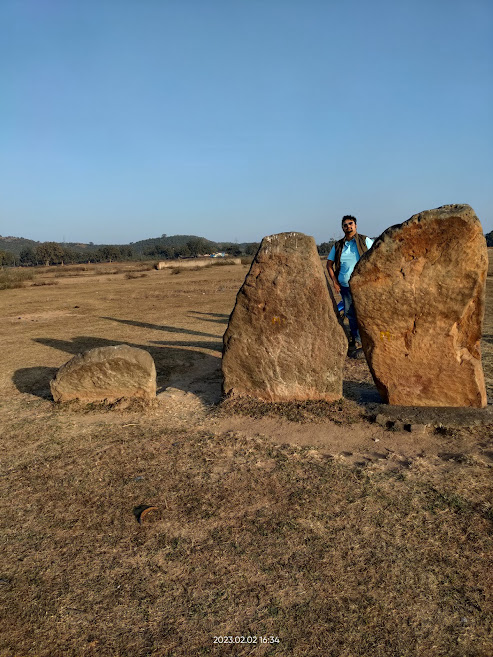


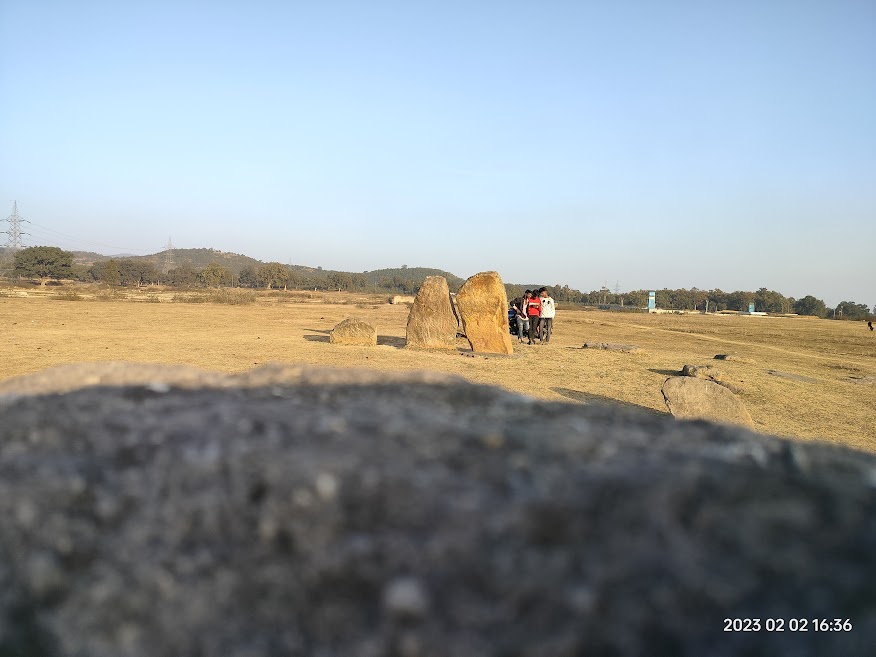
And yet, unlike Stonehenge, Pakri Barwadih remains largely unknown. No ticket booths. No guided tours. Just a few curious souls and the occasional researcher trying to decode the celestial language of stone.

The Encroachment Problem
Here’s the part where the story turns somber.
Coal mining and urbanization are creeping in. Vandalism is a constant threat. The site, despite its grandeur, is vulnerable—both to ignorance and to indifference. Without intervention, Pakri Barwadih risks becoming just another footnote in a forgotten textbook.
Globally, megalithic sites face similar challenges. From Europe to Asia, these ancient structures are being eroded by time and repurposed by practicality. The contrast with places like Stonehenge is stark. There, preservation is a priority. Here, it’s a plea.
Why It Matters
Pakri Barwadih is more than a collection of stones. It’s a testament to human curiosity, ingenuity, and reverence for the cosmos. It’s a reminder that long before telescopes and satellites, people looked up, wondered, and carved their questions into rock.
Preserving this site isn’t just about archaeology—it’s about identity. It’s about honoring the wisdom of those who came before us and ensuring that future generations can stand between those menhirs and feel the sun rise through history.
Final Thoughts from the Field
As we stood there, watching the sun inch its way between two ancient stones, I couldn’t help but feel a quiet awe. Not just at the alignment, but at the alignment of moments—of being exactly where we were meant to be, guided by a stoneman’s whisper and a missing signboard.
Pakri Barwadih doesn’t shout. It hums. It waits. And if you listen closely, it tells you everything you need to know about time, space, and the stubborn brilliance of human beings.
So here’s to the stones. May they stand tall, shine bright, and never be mistaken for drain covers again.
This blog post has been updated from my earlier visit to Pakri Barwadih on February 2nd, 2023, bringing to light the need for protection and awareness of such remarkable sites. Let us all join in the effort to preserve our ancient heritage!

Very interesting post with wonderful pictures. Thanks
LikeLiked by 1 person
Thanks Sunil.
LikeLike
Amazing post. This is really an eye opener. As an ex military guy, we do a lot of map reading and cartography during our service and this is something I had never heard of before, probably one of the most ancient ways one could actually find the true east. With magnetic compasses or lode stones, finding true north is equally a challenge.
I have bookmarked this post. It is time to point the bearings eastward… 🙂
LikeLiked by 2 people
Thanks Rajat. Our ancient knowledge keeps amazing us always.
LikeLiked by 1 person
Very true.. I had few such incidences I came across during my posting in Uttarakhand.. It was a truly amazing experience.
LikeLiked by 1 person
Sir I also have deep respect for our monuments and strongly think that there is an urgent need to preserve protect and restore them…how can common ppl like us accomplish this….eg. u being a banker is pursuing ur passion by what means ???…how to create awareness among ppl?…
LikeLiked by 1 person
Thanks, Uday. Heritage awareness is an important component of conservation. One of the basic causes for damage of heritage is due to lack of awareness to the public at large and non-involvement of people in the process of conservation as well. Reaching out to as many people we can is probably a thing that we should undertake in preserving our cultural heritage. We need to create awareness among the general public towards the importance of safeguarding heritage assets by whatever means at our disposal. Increased participation of citizens is needed for the protection of cultural heritage.
I believe that creating awareness and promotion of the cultural heritage is necessary to make the general public understands the pressing need for conservation of cultural heritage. Let’s join in creating awareness and reaching out to the people.
LikeLike
That’s something new for me. I never knew or heard about these ancient stones. Protection of structures is a big issue in India because people have no understanding of its importance. We have already discussed this in comments on one of my post. Thanks for the share.
LikeLiked by 1 person
It’s even a news to me. I’ve visited Hazaribagh but nobody ever told me about these sun-aligned megaliths! It’s almost a coincidence that just half an hour ago I read another blog post which focussed on “Astro-tourism”. The name is self-explanatory and according to that post, it’s gaining popularity thick and fast. It’s a pity that while we have such amazing spots in our country, they are getting eroded or ruined due to lack of proper maintenance.
I’m bookmarking this post too.
LikeLiked by 1 person
Yes, it’s a pity that such sites in India are not getting any governmental support and are being allowed to be destroyed, vandalised. I recently read of another such site, a 7,000-year-old megalithic site that served as an astronomical observatory has been found in Muduma village in Telangana. The stones have been placed there in the shape of Ursa Minor (Saptarshi Mandal) constellation. Such sites should be protected and publicised. We can have a good share of astro-tourism, as you mentioned, in India.
LikeLiked by 1 person
Yes. All we need is proper maintenance…
LikeLiked by 1 person
What an informative and enlightening post! I consider myself as widely travelled but what a shame that I had no idea of these ancient megaliths! Thanks for sharing these treasures Indra and those images are superb!
LikeLiked by 1 person
Thanks Balroop.
LikeLike
Stonehenge is so famous, but I wonder how many people know about the megaliths of Hazaribagh. I did not know before I read this post. Thank you for sharing such interesting information about these fascinating megaliths. These surely deserve to be protected against vandalism and promoted as well.
LikeLiked by 1 person
Thanks Somali. It’s a pity that we are not told and taught of our own history and heritage.
LikeLiked by 1 person
This was an eye-opener. I vaguely remember having read about these megaliths, but kudos to you for this beautiful article.
Will have to visit this place.
LikeLiked by 1 person
There is so much of tribal history and heritage spread over Jharkhand. The government should showcase them and monetise them by creating tourist sites and use the money in development of the tribal heritage.
LikeLiked by 1 person
Very much, I agree it is a vastly underdeveloped state in terms of tourism.
If you like , we can join hands in visiting places and showcasing Jharkhand and Bihar, especially the offbeat destinations. I have done a few, want to do more.
LikeLiked by 1 person
Thank you Indrajit Roychoudhury for this wonderful blog!
LikeLiked by 1 person
It’s an honor to get the acknowledgement from the very person who is trying to bring the attention of the society and the world towards this megalith heritage of Jharkhand. I salute you.
LikeLike
very good information
i like archaeological sites in jharkhand
LikeLiked by 1 person
Thanks, Udesh.
LikeLike
Very much informative. I know another place which is unknown to every one.
LikeLiked by 1 person
Thanks, sir.
LikeLike
Thanks, Manas. Please share the details.
LikeLike
झारखंड टूरिज्म एरिया सरकार को इस पर ध्यान देना चाहिए और अच्छे से देखभाल करके पूरे टूरिज्म एरिया को बढ़ावा देना चाहिए ताकि लोग झारखंड के बारे में ज्यादा जानकारी लोगों को मिले डॉक्टर राय चौधरी सर जी को धन्यवाद🙏🙏
LikeLiked by 1 person
👍🙏
LikeLike
Interesting!
LikeLiked by 1 person
Thanks, sir.
LikeLike
It’s sad they’re not protected in India. They certainly need it.
LikeLiked by 1 person
Yes, you’re right. Public apathy and government inaction are making these heritage things of memory only.
LikeLiked by 1 person
Is there any improvement in sight?
LikeLiked by 1 person
Nothing. No signage, no boards to explain the site to visitors. Only some 100 people flock to this site on equinoxes and solstices to see the sunrise.
LikeLiked by 1 person
That really is a shame. Maybe it needs some grassroots pressure from those that care. I don’t know whether that might have some effect?
LikeLiked by 1 person
It’s sad. Let’s hope that something positive will happen in the future.
LikeLiked by 1 person
Wonderful narration with information galore… It’s an eye opener to fact that our country is full of exciting stories still to be told… You are doing an excellent job in this issue through your blog… Keep it up bro…
LikeLiked by 1 person
Thanks, Aro. I feel sad seeing such wonderful heritages getting spoiled due to the government inaction and public apathy. I have seen similar ignorance and inaction in Iraq also. Europe is way ahead in maintaining and projecting their heritages.
LikeLike
True
LikeLiked by 1 person
A real heritage site!
LikeLiked by 1 person
Thanks, Shivaji.
LikeLike
Absolutely amazing!
LikeLiked by 1 person
Thanks, Ashok.
LikeLike
It is not just a travelogue—it’s a lyrical excavation of time, memory, and cosmic wonder. With remarkable clarity and poetic depth, you guides the reader through a forgotten corner of Jharkhand where stones do more than sit—they speak, align, and remember.
The journey begins with a detour, as all great adventures do, and quickly transforms into a spiritual and intellectual pilgrimage. From the prehistoric whispers of Isko caves to the celestial geometry of Pakri Barwadih, your captures the essence of exploration: curiosity, reverence, and the thrill of discovery. Your encounter with Mr. Subhashis Das, the “stoneman of Jharkhand,” adds a mythical layer to the narrative—like meeting a guardian of ancient truths.
What stands out most is your ability to translate archaeological precision into emotional resonance. You don’t just describe menhirs; you animates them. These 3,000-year-old stones, aligned with solstices and festivals, become instruments of time—primitive yet profound. Your metaphor of a “Google Calendar carved into Earth” is both witty and illuminating, bridging the ancient with the modern in a way that feels seamless.
The commentary on the Mahapashan and the “Mother Hills” is especially moving. You balances legend with fact, and reverence with critique—highlighting the tragedy of cultural neglect where sacred stones are reduced to drain covers. It’s a quiet protest wrapped in eloquence
Your writing is rich with insight, but never preachy. The final reflection—watching the sun rise between two stones—is cinematic, spiritual, and deeply human. It’s a moment that transcends tourism and touches something eternal
In short, this blog is a masterclass in storytelling, historical awareness, and poetic observation. Your don’t just know your subject—you feels it, and makes the reader feel it too. Me should be proud to know someone who can turn stones into stars and silence into song. 🙏🏽
LikeLiked by 1 person
Wow, I’m truly touched by your words. 🙏 It feels wonderful to know that the stones, the skies, and the stories spoke to you the way they spoke to me. I just tried to share what I felt in that moment, and your response makes the journey feel even more alive. Thank you for walking with me between the stones and stars.
LikeLike