
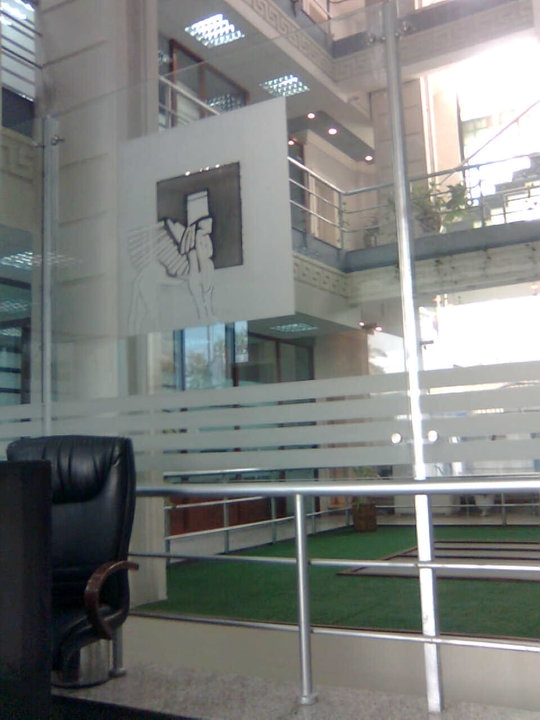
The core banking system is an essential component of the modern banking industry. It serves as the central nervous system of a bank, facilitating various financial transactions and enabling seamless operations. In Iraq, the development and adoption of core banking systems have played a crucial role in transforming the country’s banking sector.
The journey of core banking systems in Iraq dates back to the 2000s when the country was undergoing significant political and economic changes. Following the fall of the Saddam Hussein regime, Iraq embarked on a path of rebuilding and modernization. The banking sector, which was severely affected by years of conflict and economic sanctions, was in dire need of an overhaul.
In 2003, the Trade Bank of Iraq (TBI) was founded as an autonomous state-owned organization with the primary objective of supporting Iraq’s local and global trade. This became imperative following the conclusion of the United Nations Oil-for-Food program, which had previously supplied humanitarian aid and construction materials. The Central Bank of Iraq granted TBI the authorization to engage in all banking operations in 2004. From that point onward, TBI has been instrumental in reviving Iraq’s economy and business sector, establishing crucial financial foundations and contributing to the restoration of economic growth.
In the period between 2005 and 2006, TBI embarked on the process of digitalizing its trade finance operations. This initiative was supported by a fundamental core banking system primarily employed for managing and continuously updating the bank’s General Ledger. This system was exclusively in use at the Head Office. Meanwhile, the branches utilized an in-house developed system that was primarily suited for handling cash and teller transactions. At the close of each day, the General Ledger account balances were transferred to the core banking system. It’s noteworthy that until December 31, 2006, the Chief Financial Officer (CFO) maintained the accounts in an Excel file on his official laptop.
Following my joining the bank in August 2007, we initiated the development of a robust backend system designed to handle the daily banking transactions and maintain account and financial record updates. Mr. Mazin Al-Khudairi, Mr. Ali Uzri, and I began the process of outlining the functional requirements for the core banking system that encompassed functions such as deposit management, trade finance, payment processing, loan and credit operations, and included interfaces for integration with general ledger systems and reporting tools.
The initial phase of selection of a vendor of international repute willing to work with an Iraqi organization and implement core banking systems in Iraq faced numerous challenges. The infrastructure was inadequate, and there was a lack of skilled professionals with expertise in banking technology.
TBI hired banking and technology experts, along with a project manager from India, to help with the bank’s digital transformation process. The bank chose London-based Misys to provide its core banking product Equation after a thorough bidding process, including reference checks in Bahrain and Lebanon.
Iraq was classified as a war zone and no international airlines operated there. Jupiter Airlines, a chartered company, used to operate flights to and from Iraq on wet lease planes. Misys couldn’t send their consultants and experts to Iraq for implementation. So, we decided to implement the project offshore.
Initially, Misys coordinated with one of their Indian associates to conduct a product overview and business analysis in Bangalore, India. Misys had an established office and development centre in Bangalore. In May-June 2008, the chosen team members accompanied us to Bangalore for this endeavour. TBI arranged for a month-long stay at a hotel for this purpose. However, we encountered another challenge as the proficiency in the English language among our Iraqi colleagues was generally quite low, with only a few exceptions.
So, after our unsuccessful one-month session, we had to abandon our original plan and search for other options. Misys proposed Dubai (UAE) as an alternative since they have an office in the Middle East located there. However, we discovered that the UAE government was then restricting visits from Iraqi nationals. As a result, we decided to go with Beirut in Lebanon instead. The good news is that Iraqi citizens are able to obtain a visa upon arrival at the airport. The Misys partner who will implement the project has generously agreed to sponsor and arrange visas for us Indians.
The project started again in Beirut. We had a short training session in Beirut in October 2008. Since then, the project has been ongoing in Beirut. We have been doing business analysis, building, system integration tests, regression tests, and user acceptance tests. We rented rooms for the project at the Regus office in downtown Beirut.
Due to a lack of infrastructure and expertise, the implementation was done in Beirut. The system was then deployed on a server and shipped to Baghdad, where it was placed in the bank’s data centre.
In the meantime, another team worked in Baghdad to clean the data for moving to the new core banking system. It was the first time the bank employees were introduced to this, so we needed to provide extensive training. We trained some employees who did a great job in teaching their colleagues, who would be using the system in all the branches.
Following several data migration tests and the correction of errors, we were prepared for the go-live phase. However, this point coincided with the conclusion of November 2009. As the annual book closing was scheduled for December 31, we made the decision to postpone the go-live to the year 2010. Our focus shifted to the annual closing process, and we resumed work on the project at the end of January 2010.
The bank’s President and Chairman, Mr. Hussein Al-Uzri, proposed the idea of conducting a parallel run for the new system, given its novelty. I, however, rejected his proposal and advocated for proceeding directly to the go-live phase without looking back after the specified cutoff date. I emphasized the importance of having a single system to avoid potential reconciliation challenges in the future. I reassured him that I would personally provide support to the branches during the initial days, alongside my core team. To address any concerns, I promised to conduct another data migration test for his peace of mind before moving forward. Mr. Mazin, the project sponsor also endorsed my perspective, leading to the Chairman ultimately accepting my suggestion.
We chose February 28, 2010, as the date for the go-live, primarily because it fell on a Sunday, which marked the beginning of the workweek. This allowed us to utilize the weekend days for the migration process. Furthermore, by running the first End-of-Day (EOD) on this date, we would transition to the first day of the following month, with all month-end interest accrual calculations handled by the new core banking system. This facilitated the verification of accuracy by the bank’s auditors.
With the grace of the Almighty and our continuous team efforts, the go-live was indeed a momentous occasion, marking a significant milestone in the history of TBI. As the first bank in Iraq to have a centralized core banking system, TBI has set a new standard for efficiency, accessibility, and innovation in the banking sector.
Implementing a centralized core banking system is no small feat, requiring meticulous planning, robust infrastructure, and seamless integration with existing systems. However, through the collective dedication and expertise of our team, we were able to navigate the complexities and challenges inherent in such a transformative project.
Throughout the entire process, I witnessed the relentless dedication and tireless efforts of my esteemed colleagues. Their unwavering support and perseverance have been instrumental in making this endeavour a resounding success. Despite the numerous challenges we faced, including a tight timeframe of just 16 months and countless hurdles during the implementation phase, we managed to overcome every obstacle and emerge victorious.
Each day, as we navigated through uncharted territory, we were confronted with headwinds and obstacles that tested our resilience. Yet, our collective determination, combined with our shared vision for transforming the banking landscape of Iraq, propelled us forward. Together, we embraced the power of digital technology and harnessed it to revolutionize the way financial services are delivered in our country.
It’s important to mention that this achievement is not only about the technological progress we made but also about the positive effect it had on the lives of millions of people in Iraq. By transforming the banking system into digital form, we opened doors for more financial inclusion and accessibility, which empowered individuals and businesses to succeed in a more interconnected world.
As I reflect on this remarkable achievement, I cannot help but express my deepest gratitude to each and every person who played a role in making this digital transformation a reality. From the experts who meticulously planned and executed the strategy, to the bank’s employees who worked tirelessly behind the scenes, and to the leaders who had the vision and foresight to drive that initiative forward – it was through their collective efforts that we achieved that momentous feat.
I am honoured and thankful to have been a part of this important journey. The successful digital transformation of the Trade Bank of Iraq is a true example of teamwork, innovation, and determination. This achievement opened the doors for more technological advancements, which continue to have a positive impact on future generations.

Excellent work, Indrajit and your team in Iraq,
LikeLiked by 1 person
Thanks, Sanchita. It was a great learning experience for me leading the project.
LikeLike
Read with interest. I was closely involved in a similar exercise in Standard Chartered first in the late eighties, then in the nineties and then in 2001-2. Of course, we did not have many of the challenges that you referred to. We may have had others 🙂
LikeLiked by 1 person
Thanks, sir. Every digital transformation project is full of challenges, which makes it interesting and a learning experience. I was also involved in the digital transformation of Punjab National Bank. We had different challenges then,
LikeLike
Obstacles and challenges do trouble us at that moment, but they teach us valuable lessons, which we remember all throughout our lives.
LikeLiked by 1 person
True. Thanks, Nilanjana.
LikeLike
Wow quite a journey!!
LikeLiked by 1 person
Yes, indeed. Thanks, beta,
LikeLike