
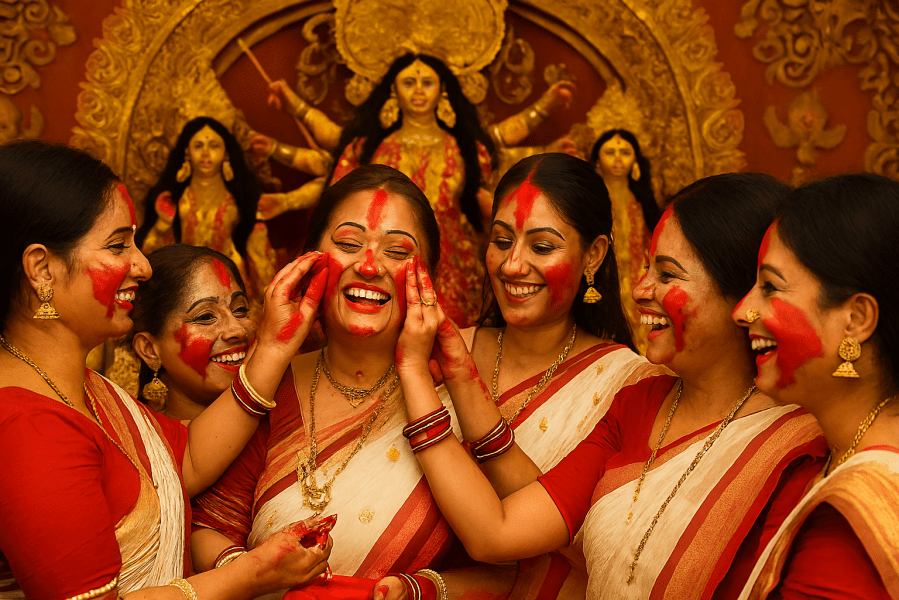
Bengali culture is a living mosaic of traditions, faith, and artistry—woven together across centuries of history. Among its many vibrant rituals, few match the emotional power and visual grandeur of Sindur Khela, the vermillion play that unfolds on Vijayadashami, the final day of Durga Puja.
For Bengalis across the world, Durga Puja is not merely a festival—it is the heartbeat of identity, community, and cultural pride. And within this pulsating celebration, Sindur Khela stands as a glowing affirmation of womanhood, resilience, and sisterhood.
Durga Puja: The Festival of Cultural Pride
Durga Puja, with its five days of devotion, artistry, and revelry, transcends religious boundaries. It is as much a social and cultural extravaganza as it is a spiritual homecoming. Across Bengal—and indeed, across the globe where Bengalis live—elaborate pandals rise as temporary temples, housing the divine presence of Goddess Durga and her children
Each day brings its own rhythm of prayers, music, dance, food, and festivities, creating an almost theatrical celebration of life itself. But Vijayadashami, the final day, carries a bittersweet mood. It marks the Goddess’s departure, as she leaves her parental home to return to her husband Lord Shiva’s abode in Kailash.
It is in this moment of farewell that Sindur Khela emerges, like a burst of crimson joy amidst the tears of parting.
The Ritual of Sindur Khela
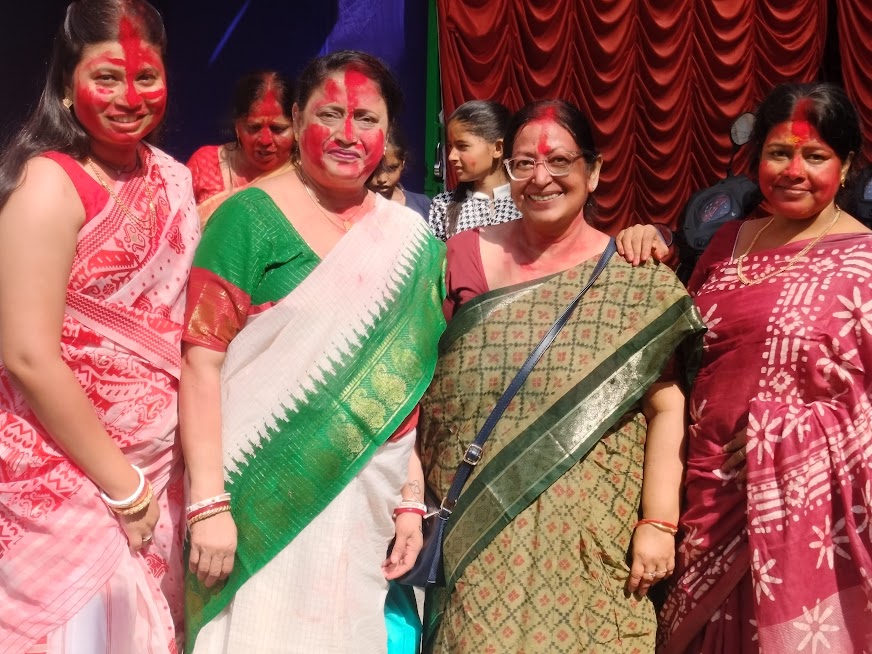
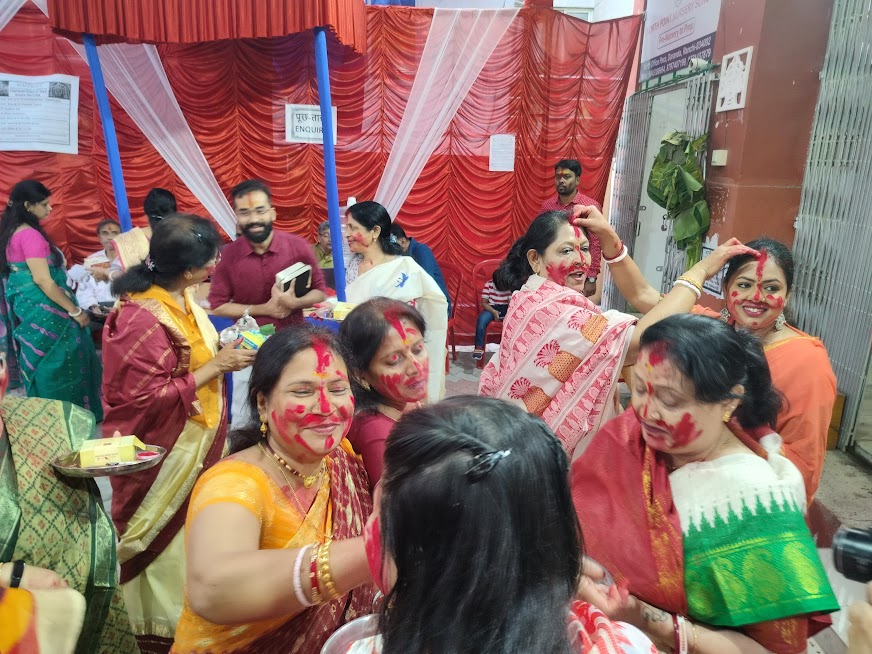
Sindur Khela, literally “the play of vermillion,” is a ritual where married Bengali women first offer sweets, betel leaves, and aarti to Goddess Durga. Dressed traditionally in laal paar sada sarees (white sarees with red borders), adorned with shankha-pala-noa bangles (conch shell, coral, and iron), they apply sindoor to the Goddess’s forehead and feet.
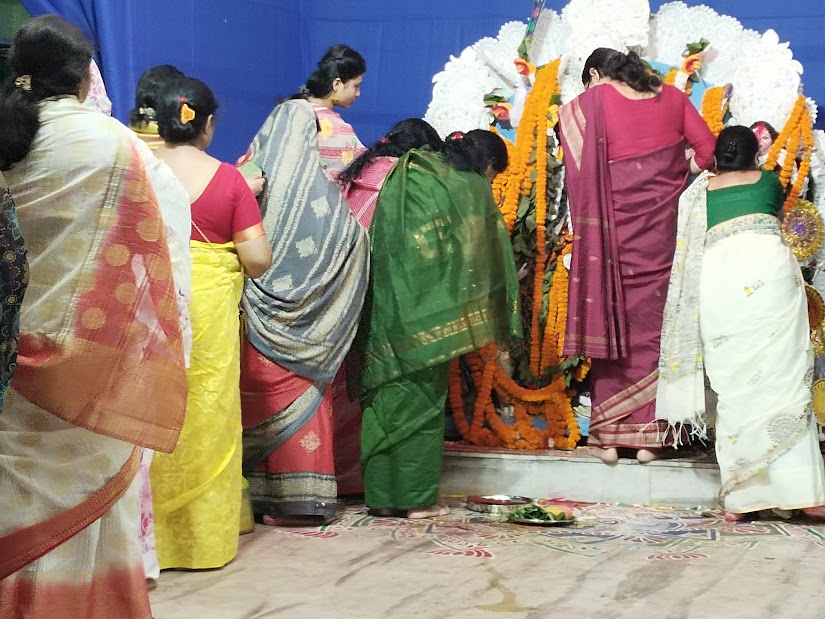
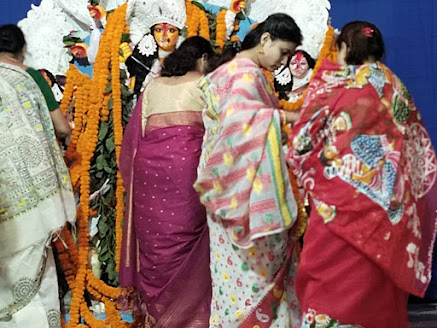
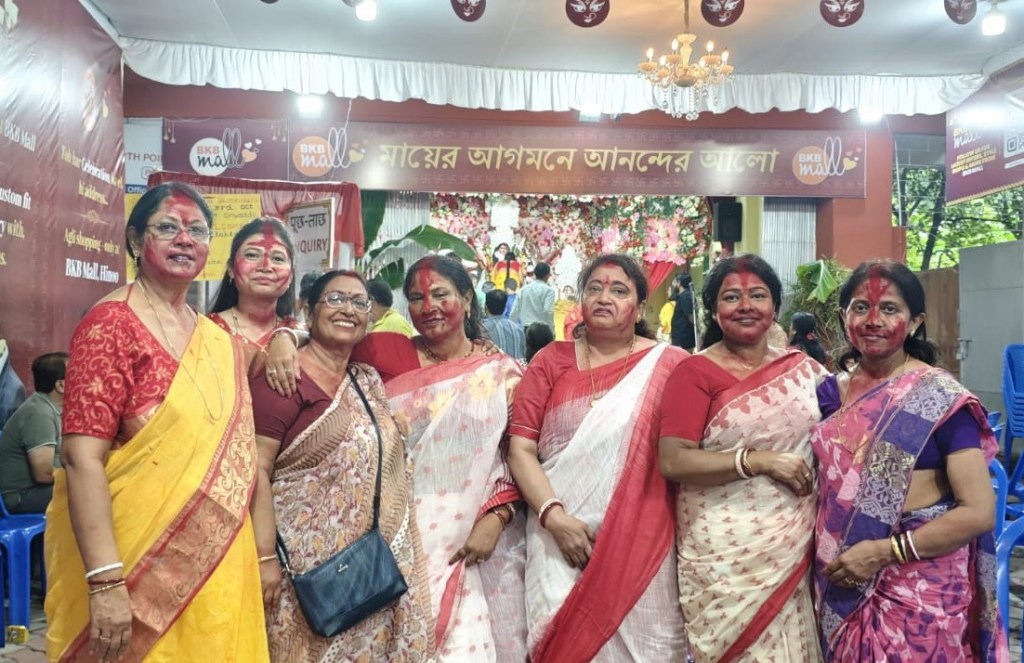
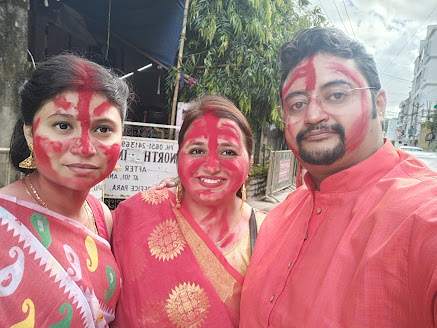
And then the ritual turns festive—women smear the vermillion on each other’s foreheads, cheeks, and chins. Laughter fills the air, dhak drums resound, ululations rise, and the parting moment transforms into a celebration of unity and joy.
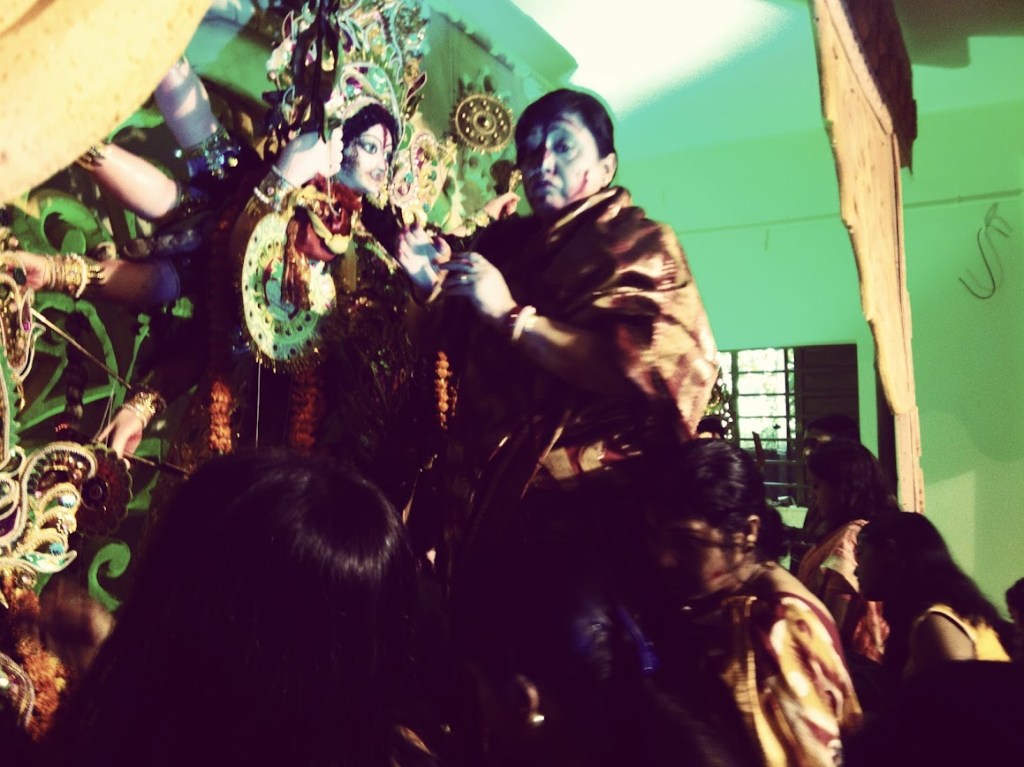
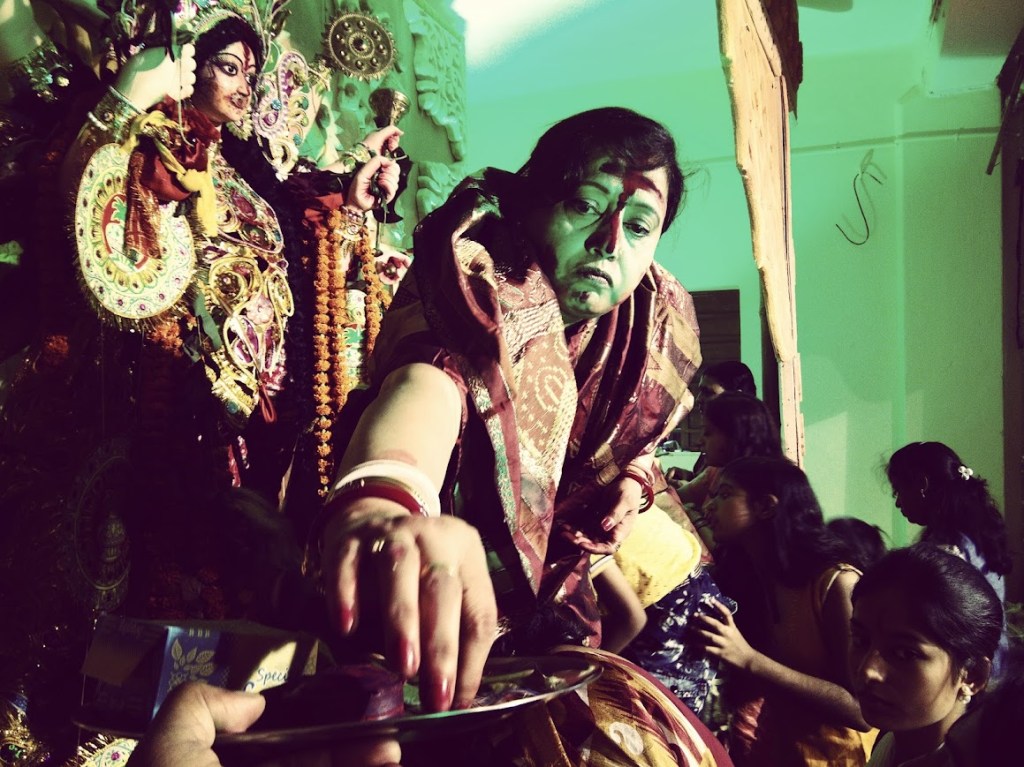
In Hindu tradition, sindoor symbolises auspiciousness, fertility, and marital longevity. Thus, Sindur Khela becomes a collective prayer—a wish for the well-being of families, the strength of marriages, and the prosperity of loved ones. But it is also more than a ritual—it is a vibrant tableau of shared joy.
Origins: Between History & Myth
The beginnings of Sindur Khela are wrapped in layers of history and lore. Some believe the tradition began 200 years ago in the courtyards of zamindar families, where the women of the household celebrated together in playful harmony.
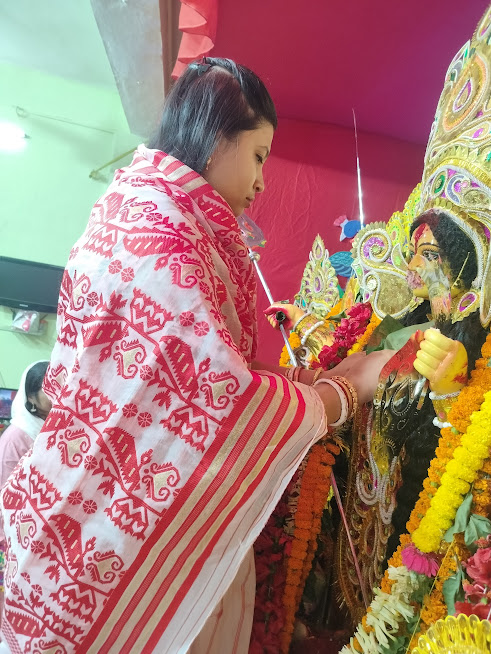
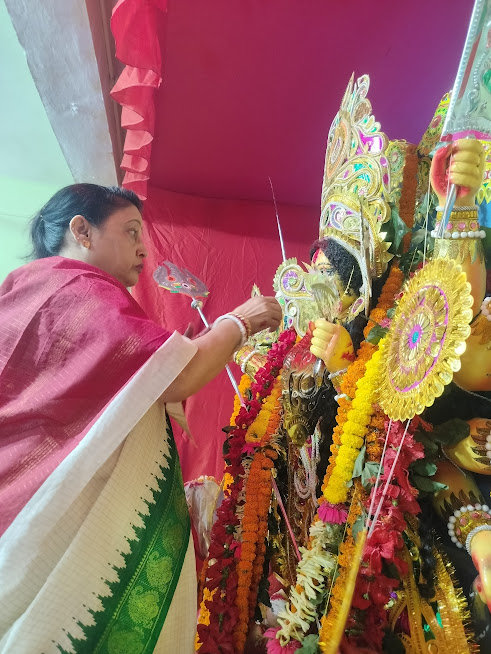
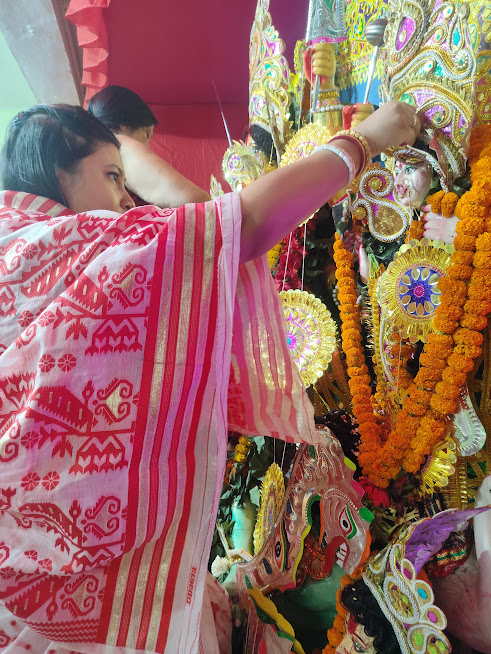
Others argue it is as old as Durga Puja itself, which dates back some 400 years. In this interpretation, the sindoor marks the farewell of the daughter—Durga—returning to her marital home in Kailash. Much like any mother’s send-off of her married daughter, it was infused with affection, auspicious blessings, and emotional solidarity.
Whichever version one accepts, what endures is the cultural resonance—the sense of shared heritage across generations of Bengali women.
A Crimson Canvas of Emotion
The aesthetic beauty of Sindur Khela is unmatched. The contrast of red and white sarees, the shimmering jewellery, the smudges of crimson on smiling faces—it is a sight etched in memory and immortalised in countless photographs.

Beyond the visuals, there is an intangible warmth—women laughing, singing, teasing each other, capturing selfies, and creating bonds that transcend age, class, or background. For a moment, society’s hierarchies dissolve into pure joy.
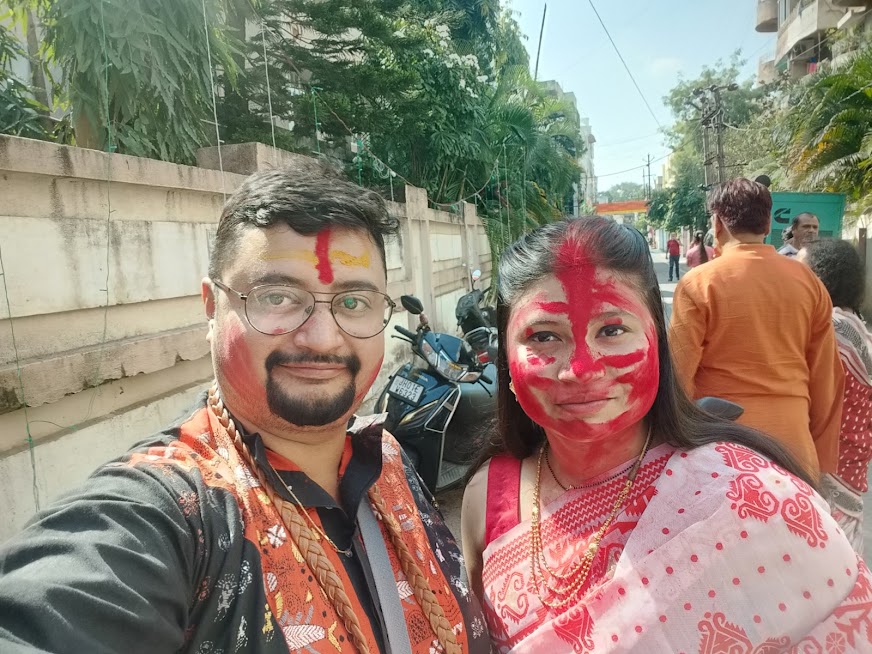
It is playful, mischievous, and deeply emotional all at once.
From Tradition to Inclusivity
Traditionally, Sindur Khela was reserved for married Hindu women, symbolising their marital status and prayers for longevity. Yet, as with many customs, time has brought transformation.
In recent years, community organisers and activists have opened the ritual to widows, unmarried women, women from different communities, and even gender-diverse participants. This inclusivity redefines the ritual—not as a marker of marital status, but as a celebration of collective strength and equality.
This evolution is a powerful reminder: traditions can adapt without losing their essence. They can open their arms wider, embracing more voices, more lives, and more forms of love.
Sindur Khela Across the World
What was once confined to Bengal’s courtyards is now a global celebration. From London to New Jersey, Singapore to Sydney, Bengali communities come together to celebrate Sindur Khela. Even in faraway lands, the ritual recreates the same energy—the same crimson smudges of joy and unity.
It has become not just a religious ritual, but a cultural symbol of Bengali identity, recognised and admired worldwide.
The Spirit of Sindur Khela
At its heart, Sindur Khela is about more than vermillion. It is about womanhood and sisterhood, resilience and solidarity. It is about women celebrating each other’s strength, supporting one another, and reclaiming joy even at the moment of farewell.
It is also a mirror to Bengali culture—a blend of tradition and transformation, emotion and inclusivity. As the festival travels across borders and redefines itself, Sindur Khela becomes a universal reminder: that joy multiplies when shared, and that solidarity is the strongest form of prayer.
Final Reflection
Sindur Khela is not just a ritual of vermillion; it is a ritual of life. A splash of red that speaks of love, resilience, togetherness, and hope.
As the Goddess departs each year, she leaves behind not just memories of grandeur, but also the promise of return. And with that promise, the crimson smudges of Sindur Khela remain on faces and hearts alike—an eternal ode to the indomitable spirit of Bengali women.
Sindur Khela is a game, a prayer, a bond, and a celebration. It is the crimson heartbeat of Durga Puja—the farewell that is never really a goodbye.

Continue to be awed by the Bangla commitment to culture and tradition. Just saw an FB post from a Bengali friend who is in Nairobi, his wife is currently in the UK and son in the US, and they are all celebrating Durga Puja in their local communities.
LikeLiked by 1 person
Yes sir, Bengalis celebrate Durga Puja with great enthusiasm and fervor all around the world.
LikeLike
Very well scripted. I have witnessed Sindur Khela since childhood without understanding the deep meaning of it… To me it was kind of Holi (festival of colour) played with sindur. You have articulated it very nicely.
LikeLiked by 1 person
Thanks, Aro.
LikeLike
Very well written, Indrajit
LikeLiked by 1 person
Thanks, sir.
LikeLike
You have rightly said that Sindur Khela is a unique and beautiful tradition that showcases the culture and spirit of the Bengali people. It has evolved over time to become more inclusive and progressive and to embrace all women as sisters. Sindur Khela is a tradition that we should cherish and preserve for generations to come.
LikeLiked by 1 person
Thanks, Nilanjana.
LikeLike
Nice scripted story behind Sindoor Khela. I used to think it was just a fun game of women!
LikeLiked by 1 person
Thanks, Sanchita.
LikeLike
Thanks 🙏
LikeLike
Durga Puja is the biggest festival for us. We Bengali people wait for it eagerly and sindur khela is another important part of it. Well shared thanks 👌
LikeLiked by 1 person
Thanks, Priti.
LikeLiked by 1 person
I did not know about this until I saw a video of Kriti Kharbanda movie song
Very interesting
LikeLiked by 2 people
Thanks
LikeLike