
In the labyrinthine streets of Madurai, where jasmine-scented breezes carry echoes of ancient chants and temple bells ring like whispers from the divine, there lives a story that defies the boundaries of faith, time, and empire. It is not merely a tale of governance or reform—it is a tale of reverence. Of a man who, though born far from the sacred soil of Tamil Nadu, found his soul tethered to its goddess.
This is the story of Rous Peter, the British Collector of Madurai, who came to be known not by his colonial title, but by a name bestowed with love: Peter Pandian.
A City Where Gods Reigned Beside Kings
Madurai was never just a city. It was a living myth. Once the seat of the Pandyan dynasty, it pulsed with a rhythm that blurred the lines between the earthly and the divine. Here, kings ruled not as sovereigns, but as stewards of the gods. Lord Sundareswarar and Goddess Meenakshi were the true monarchs, and the sceptre of power—literally—passed through the hands of the king only to return to the temple, reaffirming the divine order.
This sacred choreography of devotion and duty formed the heartbeat of Madurai. And into this world stepped Rous Peter in 1812, a man whose legacy would be shaped not by conquest, but by compassion.
The Barefoot Collector
Peter was no ordinary administrator. In an age when colonial arrogance often overshadowed local wisdom, he stood apart. He listened. He learned. He walked barefoot.
Each day, as he passed the Meenakshi Amman Temple on his way to work, Peter would dismount his horse, remove his shoes and hat, and walk with reverence across the temple grounds. Though a Christian, his soul bowed before the goddess. This act of humility did not go unnoticed. The people of Madurai, moved by his devotion, gave him a name that bridged cultures and centuries—Peter Pandian.
The Night of Divine Grace
One stormy night, the River Vaigai roared with fury, threatening to swallow the city whole. As lightning split the sky and thunder shook the earth, Peter was awakened by a sound that seemed to come from another realm—the delicate tinkling of anklets.
He rose to find a young girl, no more than three, adorned in silk and celestial jewels, beckoning him silently. She led him through the rain-soaked streets to the Meenakshi Temple. Moments later, his house collapsed under the weight of the storm.
Peter knew. The girl was no child. She was Meenakshi herself.
In that moment, the veil between the mortal and the divine lifted, and Peter stood in awe of the grace that had spared his life.
Peter Padukam: A Gift of Eternal Gratitude
How does one thank a goddess?
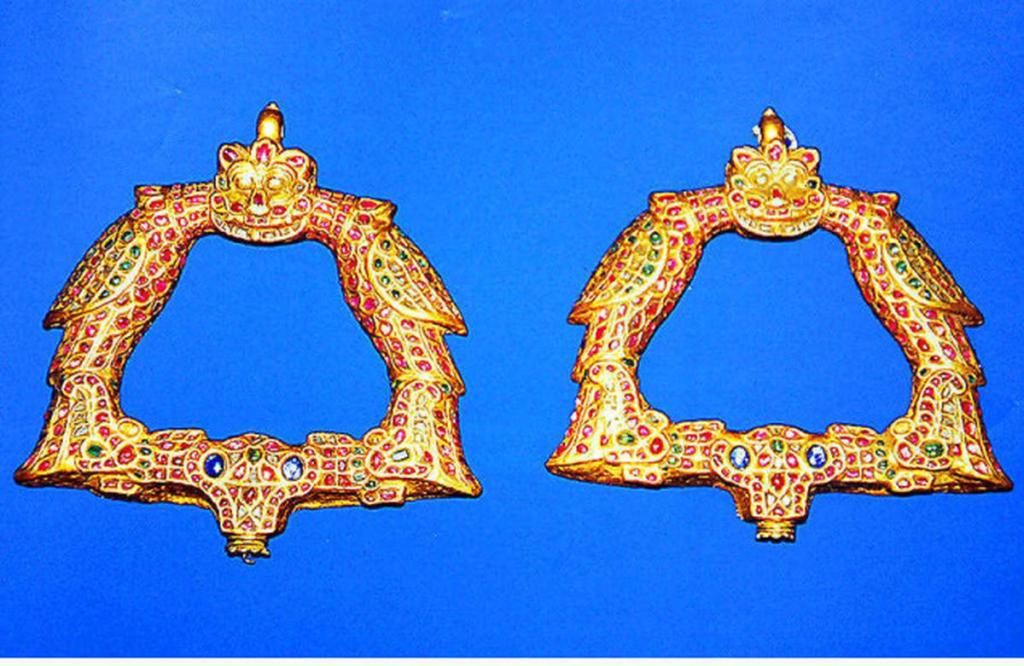
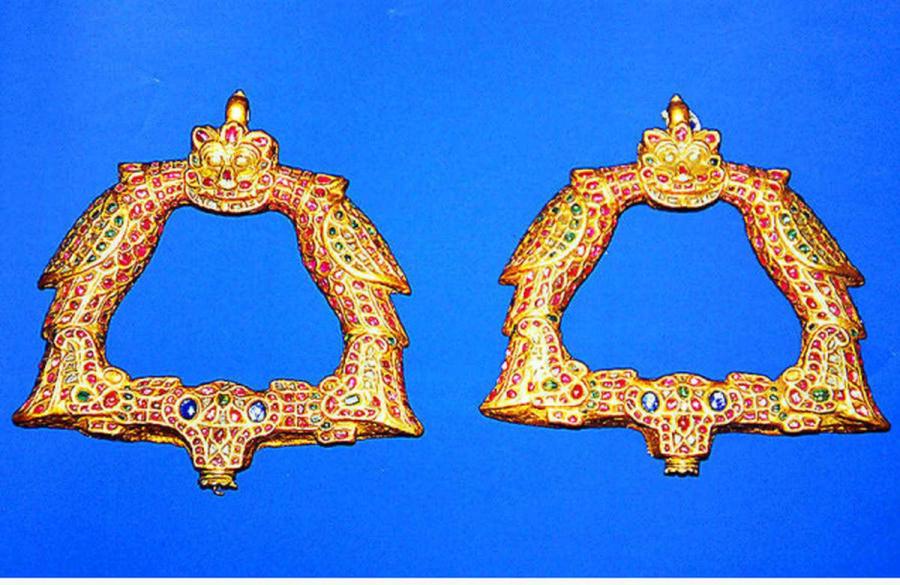
Peter chose to honour her in the language of devotion. He commissioned a pair of golden stirrups—Peter Padukam—adorned with 412 rubies, 72 emeralds, and 80 diamonds. Engraved with his name, these sacred stirrups were placed on the feet of the goddess, a gesture that transcended religion and ritual.
To this day, during the Chithirai festival, on the fifth day of celebration, Goddess Meenakshi mounts her horse wearing the Peter Padukam. It is not just ornamentation—it is a symbol of a bond that defied empire, creed, and time.
Chithirai: A Festival of Union & Unity
Held in the Tamil month of Chithirai (April–May), the festival is a grand celebration of the divine marriage between Meenakshi and Sundareswarar. It is a tapestry of Saivite and Vaishnavite traditions, woven together in vibrant processions, rituals, and music.
And amidst the grandeur, the golden stirrups gleam—a quiet reminder of the barefoot Collector who once walked these streets with reverence.
A Grave Facing the Goddess
Peter never returned to England. His heart belonged to Madurai. In his final days, he expressed one wish: to be buried facing the Meenakshi Temple.
His grave, modest yet resolute, stands with a view of the temple towers. It is not just a resting place—it is a testament. To devotion. To grace. To a man who crossed oceans and found divinity in the anklets of a goddess.
The Legacy of Peter Pandian
In the folk songs of Madurai, his name still lingers. In the temple rituals, his gift still shines. And in the hearts of those who walk barefoot across the temple grounds, his story lives on.
Peter Pandian was not a king. He was not a priest. He was a man who understood that faith is not bound by birth, but by reverence. That the divine does not ask for allegiance, only for love.
And in the sacred halls of the Meenakshi Amman Temple, where devotion echoes through stone and silence, his story continues—etched not in history books, but in the soul of a city that remembers.
Image Credit: The Hindu

Nice post. You are master storyteller, Indrajit.
LikeLiked by 1 person
Thanks, Nilanjana.
LikeLike
Informative!
LikeLiked by 1 person
Thanks 😊
LikeLike
Very informative.
Thanks for sharing.
LikeLiked by 1 person
Thanks, sir.
LikeLike