

Deep within the heart of India, nestled in the verdant forests of the tribal-dominated Bastar region in Chhattisgarh, lies the revered Bhangaram Devi temple., known for its unique traditions, including the jan adalat, a people’s court that meets annually at the Bhangaram Devi temple during the Bhado Jatra festival. This court holds Gods accountable for their actions and imposes punishments.
Tucked away in the lush forests of Bastar, Chhattisgarh lies the revered Bhangaram Devi Temple in Keshkal Nagar. This sacred site is not only a place of worship but also home to a captivating tradition known as the “Trial of the Gods.” I stumbled upon this fascinating practice in an NDTV article, which sparked my curiosity to delve deeper. As I share this story, I invite readers to share their insights and additional information in the comments section below.
An annual Jatra, or festival, is held in her honour during the month of Bhadon. Hundreds of deities, both male and female, have been established in the 55 revenue villages within the Nine Paraganas of the Bhangaram Devi region.
Historical and Cultural Significance of the Bhangaram Devi Temple
The Bhangaram Devi Temple, nestled in the dense forests of Bastar, dates back several centuries and is dedicated to the goddess Bhangaram Devi, revered as a protector of the local indigenous communities, particularly the Gonds, Muria, and Halba tribes. The goddess is believed to safeguard the people and their lands, offering blessings for bountiful harvests and protection against natural disasters.
Bastar, known for its vibrant tribal culture and distinct customs, sees a blend of nature worship and traditional Hindu beliefs, where local deities and spirits coexist with mainstream gods. Bhangaram Devi stands out as a mother figure, worshipped through offerings of fruits, flowers, and sometimes even animal sacrifices, a tradition deeply tied to the tribes’ agrarian way of life. The temple serves not only as a religious centre but also as a communal gathering place, where rituals are performed to ensure harmony between nature, humans, and the gods.
Trial and Punishment
During the three-day festival, the temple’s deity, Bhangaram Devi, oversees trials where Gods are accused and animals, particularly hens, serve as witnesses. Villagers file complaints ranging from crop failures to unresolved illnesses, often attributing them to unanswered prayers. The punishments are severe: guilty Gods are exiled, their wooden idols removed from the temple and banished to its backyard. Some punishments are lifelong, while others are temporary, pending repentance and reinstatement. People from over 240 villages gather to witness these trials and enjoy a communal feast.
The tradition is rooted in the belief that the gods of the forests, rivers, and mountains, like humans, can have varying degrees of power or favour at any given time. If a god or goddess fails to deliver on promises—whether it be rain during a drought, protection from disease, or a successful harvest—the villagers will publicly challenge their authority. This trial is no ordinary ritual but a complex event filled with symbolism and drama.
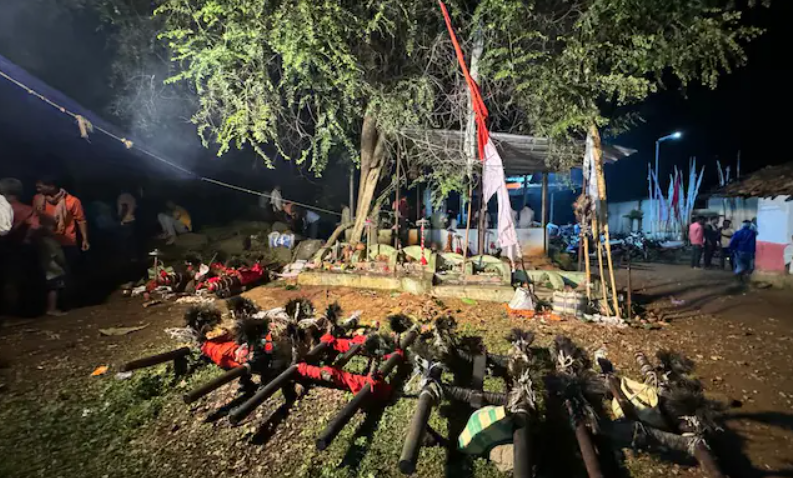
The trial is not a matter of mere accusation and judgment. It is a deeply spiritual experience, where the villagers seek to restore balance and harmony in their relationship with the divine. The verdict is often reached through a combination of divination, dreams, and collective wisdom.
According to belief, Bhangaram Devi possesses the temple priest, enabling her to deliver sentences. The punishment varies depending on the crime, from six-month expulsion to the death penalty. In the death penalty, the idols are dismembered, while in expulsion, they are removed from the temple and placed in an open prison. The deity’s jewels remain in the temple, and any offerings brought by the deity must be left there.
Villagers believe the temple priest is possessed by the Gods and Goddesses. For problems or crimes, they seek advice from the priest. Thousands of devotees come with their concerns, seeking the priest’s help. Devotees also believe that the Gods and Goddesses punish wrongdoers.
This flexible relationship between the community and the divine highlights the pragmatic nature of tribal spirituality in Bastar. The villagers’ deep connection with nature drives this dynamic, as they see themselves as equal partners with the gods in the quest for survival and prosperity.
Historian Ghanshyam Singh Nag explains that this tradition reflects the idea of a reciprocal relationship between Gods and humans. Gods protect and provide for the people, and in return, they are worshipped. If this balance is disrupted, even Gods are judged.
A Chance Of Redemption
Trials at Bhangaram Devi Temple serve not only as punishment but also as an opportunity for redemption. Gods are given a chance to rectify their behaviour and regain their temple seat by answering people’s prayers. If they fail to do so, the exile continues.
If the Gods mend their ways, leading to rain or good fortune, they are welcomed back from exile. Farsu Salam, a member of the Bhangaram Temple Committee, states that villagers who believe the Gods are responsible for solving their problems have failed to bring them to trial, a practice that occurs annually.
The Symbolism Behind the Trial
At its core, the Trial of Gods reflects the democratic nature of Bastar’s tribal beliefs, where even the gods are not beyond scrutiny. It demonstrates that spiritual practices can be fluid, evolving based on the community’s needs and circumstances. In this tradition, deities are seen as partners rather than rulers, and their power is measured by their ability to respond to the people’s calls for help.
This relationship between the divine and the earthly creates a profound sense of agency among the villagers. Unlike rigid religious systems where the will of the god is final and unquestionable, the Trial of Gods allows the people to express dissatisfaction or doubt, keeping their faith dynamic and interactive.
Poetess Poonam Vasam states, “This is a social system. It is believed that just as humans are responsible for fulfilling their duties in society, so too must Gods bear responsibility. If they fail to protect or help their people, they too face punishment.”
The tribes of Bastar have their own Gods and Goddesses. Local folklore suggests that many of these deities were once humans, elevated to divine status for their noble deeds.
Conclusion: A Living Tradition
The Bhangaram Devi temple and the Trial of Gods is more than just a tradition; it is a reflection of the Gond people’s deep connection to their deities and their belief in divine accountability. It is a testament to their cultural richness and their unique way of understanding and interacting with the spiritual world.
This unique tradition offers a glimpse into a world where faith, nature, and community are deeply intertwined, and where divine power is something to be earned and maintained through reciprocal trust. It speaks to the resilience of tribal culture in the face of changing times and the importance of keeping alive traditions that reflect the deep symbiosis between humans and their environment.

Unique and something which is so different.. never heard of such things ever
LikeLiked by 1 person
Yes, I was surprised when I first read about it on NDTV. Curious to learn more, I searched for additional details to verify the ritual. I even confirmed it with a CRPF friend stationed in Bastar district. After gathering information from various sources, I wrote the post.
LikeLiked by 1 person
Indeed different sir . Bloggers like you are so well researched
LikeLiked by 1 person
Thanks a lot! 👍😊
LikeLiked by 1 person
Quite intriguing…
LikeLiked by 1 person
Indeed, it reflects a beautiful tradition where the gods are seen as part of our world, sharing in both responsibility and accountability.
LikeLiked by 1 person
Pingback: Rethinking Kabir – Beyond the Sagun-Nirgun Binary – The Wire