
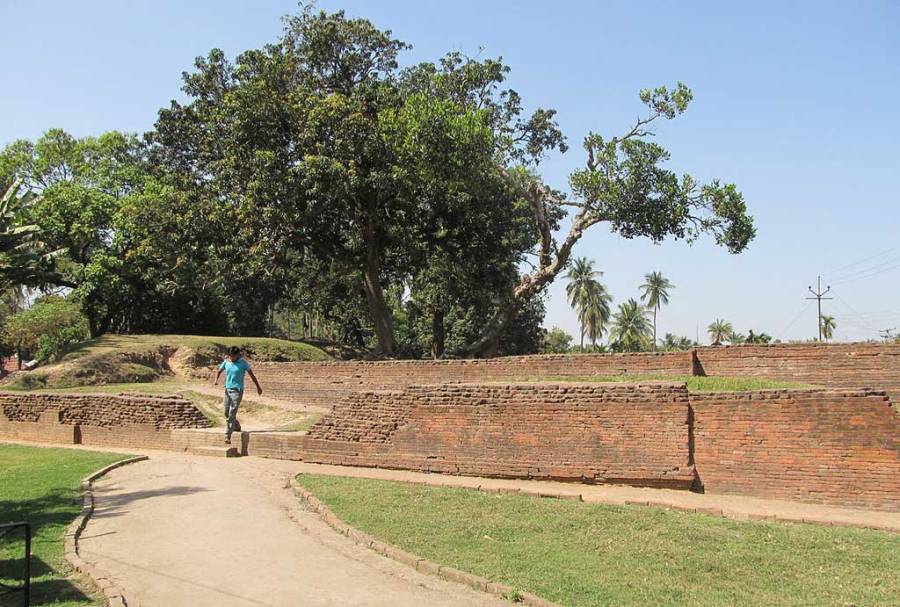
The ancient land of Gangaridai, as described in Greek and Roman texts, holds an air of mystery and grandeur. The region, believed to have been located near the confluence of the Ganges and Brahmaputra rivers in present-day Bengal, emerged as a significant power in ancient India, catching the attention of distant civilizations.
Greek chroniclers depicted a powerful kingdom whose formidable strength dissuaded the era’s greatest conqueror, Alexander the Great. Historical narratives, alongside archaeological findings from sites such as Chandraketugarh, provide an intriguing exploration of history, further enriched by the kingdom’s naval and maritime dominance.
After sharing my story of Chandraketugarh here, my friend Aranjit’s curiosity was piqued. His maternal grandparents’ home in Barasat, being so close, had never introduced him to the ancient city’s allure. The idea of exploring the capital of the Gangaridai empire, a realm that captivated Greek and Roman travellers, ignited a wanderlust among our culturally curious batchmates. Though our trip has been temporarily postponed, I thought it would be worthwhile to delve deeper into this largely overlooked and unexplored civilization.
The Greek Accounts of Gangaridai
Greek writers like Diodorus Siculus and Curtius Rufus mentioned Gangaridai in their descriptions of Alexander’s campaign in India. The military might of Gangaridai was said to be so intimidating that Alexander’s soldiers, already weary from battles with the fierce Indian kingdoms, refused to march further east when they heard of this powerful kingdom. Diodorus Siculus wrote:
“For beyond the river Ganges there live the Gangaridae, a nation which possesses a vast force of elephants; and reports run that there are altogether four thousand of these beasts…Consequently, no foreign king has ever subdued this country, all alien nations being fearful of both the multitude and the strength of the beasts. In fact, even Alexander of Macedon, although he had subdued all Asia, refrained from making war upon the Gandaridae alone of all peoples; for when he had arrived at the Ganges River with his entire army, after his conquest of the rest of the Indians, upon learning that the Gandaridae had four thousand elephants equipped for war he gave up his campaign against them.”
—Diodorus Siculus, Bibliotheca historica.
The Greeks were particularly fascinated by the war elephants of Gangaridai, which were believed to be larger and more powerful than any others they had encountered. These elephants were not merely symbols of royal grandeur but critical components of the army, known for charging through enemy ranks, causing chaos and fear.
The Greek historian Plutarch also echoed this sentiment, explaining why Alexander’s troops hesitated:
“The reports say that Alexander was terrified by the mere prospect of having to face the Gangaridae and their elephants. The men themselves, seeing the numbers and strength of the elephants, were discouraged and compelled him to turn back.”
—Plutarch, Life of Alexander.
Plutarch further mentioned:
“The Battle with Porus depressed the spirits of the Macedonians, and made them very unwilling to advance farther into India… This river [the Ganges], they heard, had a breadth of two and thirty stadia, and a depth of 1000 fathoms, while its farther banks were covered all over with armed men, horses and elephants. For the kings of the Gandaritai and the Prasiai were reported to be waiting for him (Alexander) with an army of 80,000 horse, 200,000 foot, 8,000 war-chariots, and 6,000 fighting elephants.“
The Valour & Naval Power of the Gangaridai Kings
The rulers of Gangaridai governed an extensive domain, with their influence extending well beyond Bengal’s frontiers. Notably, their strategic deployment of war elephants significantly discouraged potential aggressors. Moreover, it wasn’t solely their terrestrial military might that was esteemed; the naval forces of Gangaridai were also highly regarded. Megasthenes, the Greek envoy to the Mauryan Empire, portrayed Gangaridai as an affluent realm possessing a substantial fleet, and he noted their commercial interactions with regions across and beyond India.
Strategically positioned along the Ganges and linked to the Bay of Bengal, Gangaridai utilized its rivers and coastline to build a formidable maritime presence. The kingdom’s navy was pivotal in controlling regional trade routes and safeguarding its domain from maritime threats. The intricate network of rivers and estuaries in the Ganges delta provided natural harbours, establishing Gangaridai as a prominent naval power in the area. Nearchus, the admiral of Alexander the Great’s fleet, encountered Gangaridai during his journey along the Indus River, noting that their ships surpassed those of the local Indian tribes in size and advancement.
Ancient texts refer to the utilisation of sizable vessels adept at navigating both rivers and coasts. The naval prowess of Gangaridai probably expanded its sway over adjacent territories, enabling the dominion over trade pathways spanning the Bay of Bengal to Southeast Asia. Such seafaring dominance also augmented its affluence, positioning the kingdom as a crucial conduit in the trade exchanges connecting India, Southeast Asia, and the Mediterranean.
Chandraketugarh: A Window into Gangaridai’s Grandeur
While literary sources provide glimpses into the might of Gangaridai, it is the archaeological site of Chandraketugarh that truly brings the history of this ancient kingdom to life. Located about 35 kilometres from Kolkata, Chandraketugarh has yielded a treasure trove of artefacts that point to a sophisticated and wealthy urban centre, dating from the 4th century BCE to the early centuries of the Common Era.
The excavations at Chandraketugarh reveal a complex society with advanced craftsmanship. Terracotta plaques, pottery, coins, and jewellery discovered at the site depict a vibrant culture, deeply connected with maritime trade. Some scholars believe that Chandraketugarh might have been one of the key cities of the Gangaridai kingdom, playing a pivotal role in its economic and political life.
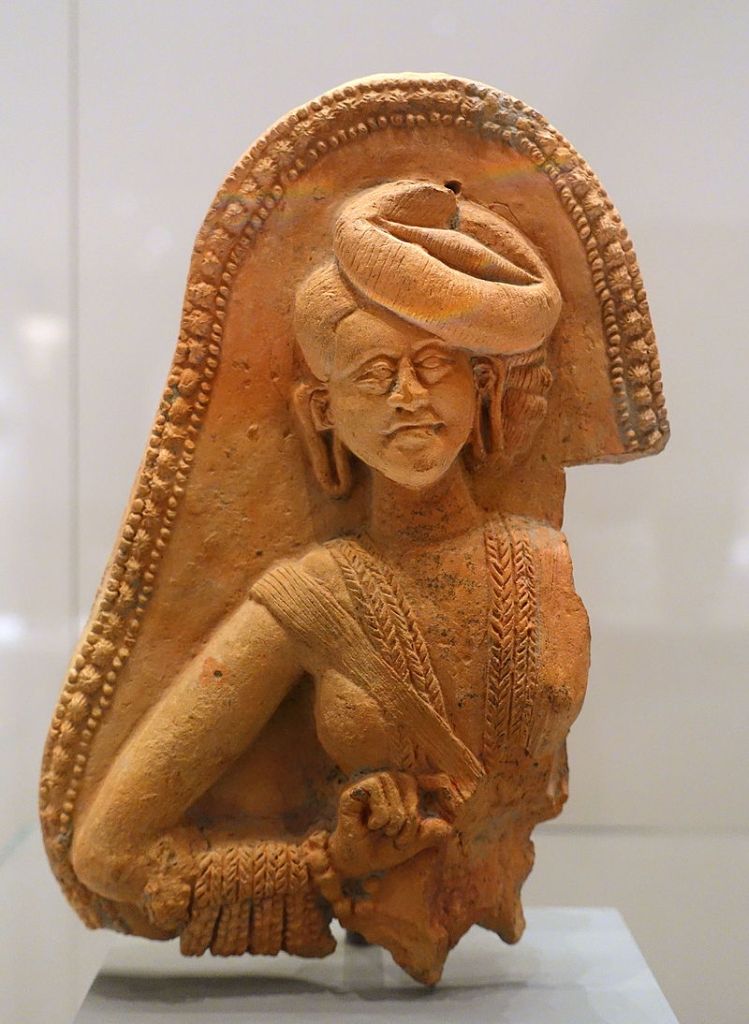
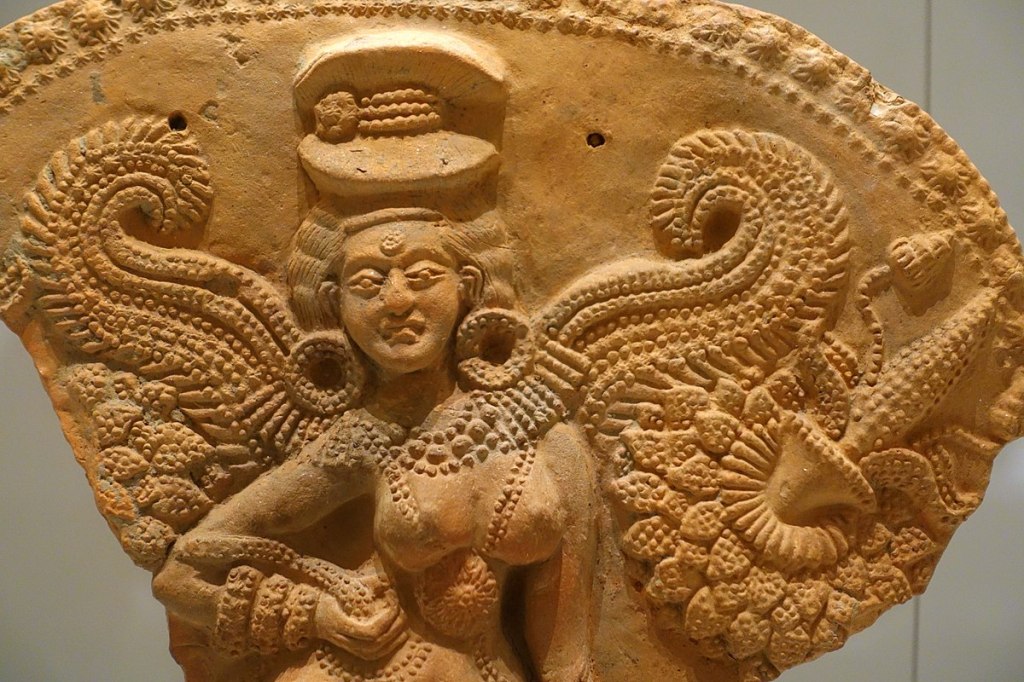
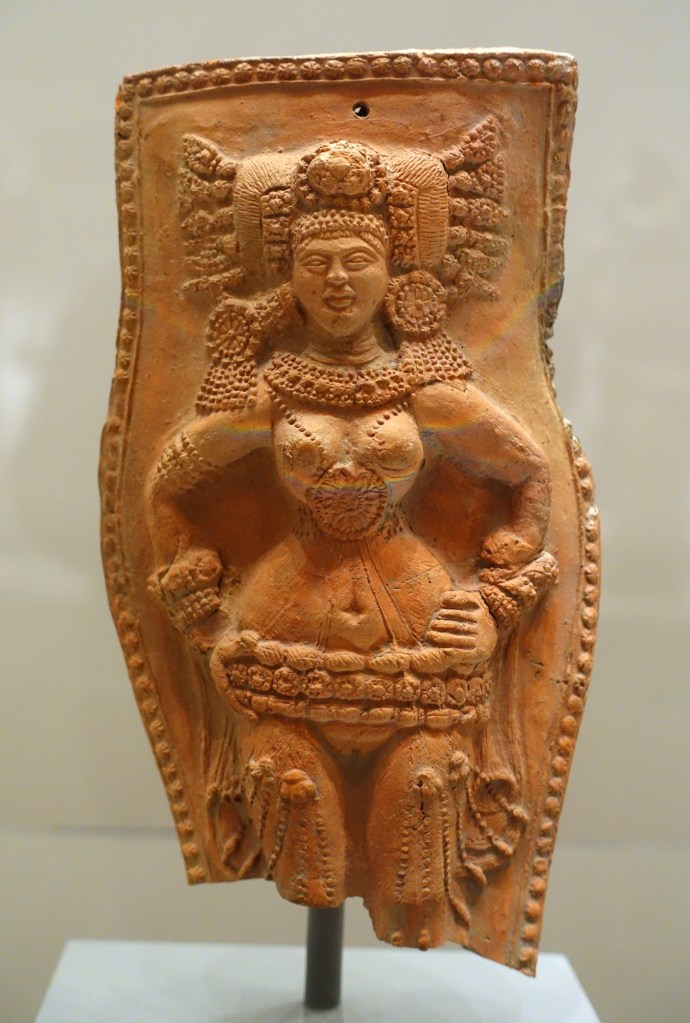
One of the most significant finds from Chandraketugarh is a series of terracotta plaques depicting scenes from daily life, mythology, and religious rituals. The intricate artistry of these plaques suggests a highly skilled artisan class and a population that valued aesthetics and religious devotion. Many of these depictions bear striking similarities to Hellenistic art, which might indicate cultural exchanges between the Gangaridai and the Greek world through trade and diplomacy.

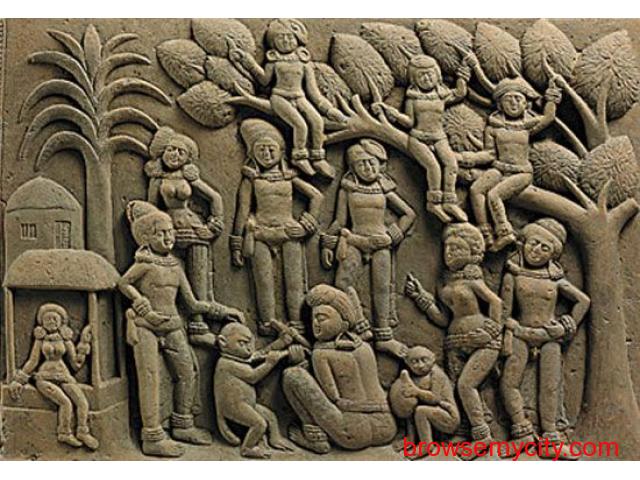
The maritime connections are evident in the artefacts found at Chandraketugarh, including foreign coins and beads, which suggest active trade with distant regions like Rome, Southeast Asia, and the Arabian Peninsula. The city was likely a bustling port, with ships bringing goods such as spices, textiles, and precious metals in exchange for local products. This trade not only enriched the kingdom but also facilitated cultural exchanges that helped shape the unique identity of Gangaridai.
The Spread of Gangaridai’s Influence
Gangaridai’s importance was not limited to military strength and territorial control. The kingdom was an integral part of the wider Indian subcontinent’s commercial networks, with evidence suggesting trade links stretching from Southeast Asia to the Roman Empire. Roman coins and other artefacts found in Bengal testify to these connections, indicating that the kingdom was not an isolated power but an active participant in the global economy of its time.
Gangaridai is commonly associated with the Prasii referenced in ancient Greek and Latin texts, which implies that the kingdom might have belonged to the expansive Nanda or Maurya Empires. The formidable leaders of Gangaridai presumably played a crucial role in thwarting foreign invasions, thus preserving the autonomy of eastern India during an era when numerous other territories were being incorporated into vast empires.
Historian Hem Chandra Raychaudhuri said that the Gangaridai was a significant force during Alexander’s incursion, as per Greek and Latin accounts. They may have had a dual monarchy with the Pasioi or formed a strong alliance to resist the foreign invaders.
The rulers of Gangaridai may have played a role in the ascent of the Maurya Empire. Chandragupta Maurya, the founder of the empire, unified a vast portion of northern India shortly after Gangaridai had reached its zenith. The absorption of Bengal into the Mauryan Empire probably marked the end of Gangaridai’s autonomy. However, its influence continued to be felt in the area’s abundant cultural and political heritage.
Gangaridai’s Lasting Legacy
The history of Gangaridai is marked by power, influence, and endurance. Accounts from Greek historians about its impressive elephants and Alexander the Great’s troops’ reluctance to confront it underscore the kingdom’s military prowess. The ruins of Chandraketugarh offer a window into the sophistication and prosperity of this ancient civilisation. As a prominent kingdom in early India, Gangaridai significantly influenced the subcontinent’s history, and its legacy still fascinates historians and archaeologists today.
The Gangaridai empire has been largely overlooked, possibly due to the scant archaeological exploration of the area. In contrast to ancient civilisations like the Indus Valley or the Mauryan Empire, the Gangaridai has not garnered equivalent scholarly interest. Moreover, the thick vegetation and agricultural development in the Ganges Delta could have concealed potential archaeological sites.
Despite these challenges, the Gangaridai empire remains a fascinating subject of study. Its enigmatic history, coupled with its strategic location along one of the world’s most important rivers, suggests that it played a crucial role in shaping the course of ancient India. As scholars continue to uncover new evidence and explore the region, we are reminded of the enduring allure of this ancient kingdom, whose very name once evoked awe in the hearts of distant conquerors, and whose ships ruled the waters of the Ganges delta and beyond.

Fascinating once again. Never heard this name. Historical accounts are dominated by developments in what I would call the Himalayan shadow region, stretching from present-day Bihar to present-day Pakistan. The Maurya dynasty would probably have been in power around the time of Alexander’s India adventures.
LikeLiked by 1 person
Thank you for your thoughtful response! You’re absolutely right—much of the historical narrative tends to focus on the regions you’re referring to, especially those influenced by the Maurya dynasty after Alexander. However, Gangaridai, located in present-day Bengal, offers a fascinating parallel history that often gets overshadowed. The accounts of Greek travelers like Megasthenes give us glimpses of the region’s significance, particularly its naval power, which reportedly deterred Alexander from advancing eastward. Exploring these lesser-known historical threads adds so much richness to our understanding of the broader subcontinental tapestry!
LikeLike
Fascinating commentary of a long lost empire… I wish the GoI takes initiative to explore the area marked as Chadraketugarh and hope it throws light into the many unanswered questions.
Well done bro 👍
LikeLiked by 1 person
Thank you, buddy. Ideally, it should involve a collaborative effort by scholars from both sides of Bengal to ensure a comprehensive assessment and exploration, leading to a well-documented and thoroughly researched history of Bengal’s rich heritage.
LikeLiked by 1 person
History of subcontinent has always fascinating. You have done a lot of research on the subject. It appears that Gangadirae region is present day Bihar, Jharkhand, Bengal (including Bangladesh) and may be Odisha too and last king of Nanda dynasty was ruling the region when Alexander invaded India.
LikeLiked by 1 person
Thank you, Mano! Yes, the history of the subcontinent is indeed full of fascinating layers, and you’re quite right about the geographic expanse of Gangaridai. Scholars generally place this region as covering parts of present-day Bengal, Jharkhand, Bihar, Odisha, and Bangladesh. It’s intriguing to think about the political dynamics at the time, especially with the Nanda dynasty ruling a significant part of northern India when Alexander invaded.
The Nandas were known for their immense wealth and military strength, and by the time of Alexander’s campaigns, Dhana Nanda was in power. While the Gangaridai region had a distinct identity, there’s evidence of overlapping influence with the Nanda dynasty in certain parts, particularly in terms of military and economic power.
Greek accounts often mention that the fear of facing the combined forces of Gangaridai and their allies, including those possibly under Nanda rule, was a major reason for Alexander halting his advance at the Beas River. It’s a fascinating intersection of history, showing how regional powers played a crucial role in shaping major events like Alexander’s retreat.
LikeLike
Nice information. I love this.
LikeLiked by 1 person
Thanks, sir.
LikeLike
This is not a complete document about Gangaridi. It is just a report on Chandraketugarh.
LikeLiked by 1 person
This is an article on Gangaridae and it is not intended to be a document for academic purpose. Thanks for your understanding,
LikeLike