
Intro
If Udaipur is the romantic heart of Mewar, Chittorgarh is its soul — fierce, tragic, unyielding. As we drove towards the fort that once stood as the largest in India, I felt as though we were approaching not just stone walls, but a living legend of Rajputana.
The Grand Ascent
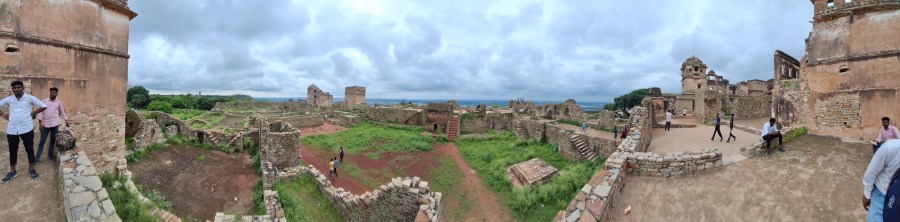
From Nathdwara, our journey to Chittorgarh stretched long across the highways. As the vehicle climbed the final approach, the fort suddenly loomed into view — vast, impregnable, and spread across 700 acres of hilltop.
The road wound upward through seven massive gates, each designed with ingenious military strategy. Tall and arched, with iron spikes to resist war elephants, they bore names that echoed with history: Padal Pol, Ganesh Pol, Hanuman Pol, and finally Ram Pol, the grandest of all. At every turn, one could sense the calculated brilliance of Mewar’s defense — even today, no vehicle can pass straight through without bending and twisting, just as enemy forces once had to.
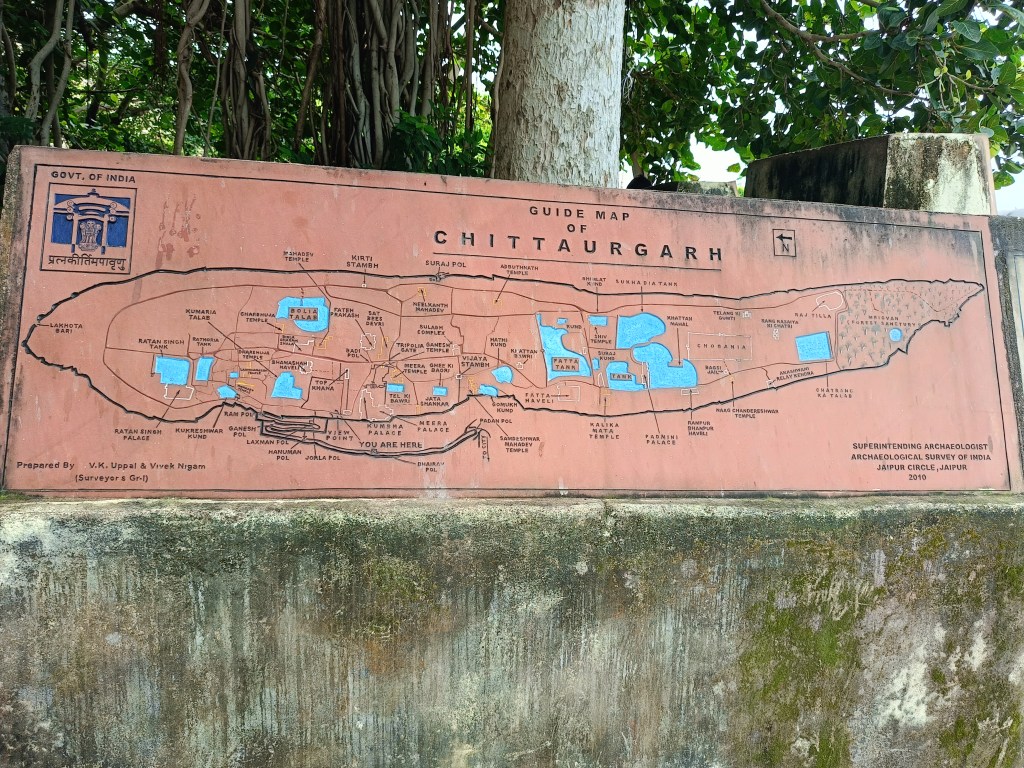
At the entrance, our guide for the day, Vishal ji, joined us. With warmth and pride, he began to unravel Chittorgarh’s long, tumultuous saga as we stepped inside.
Kumbha Palace
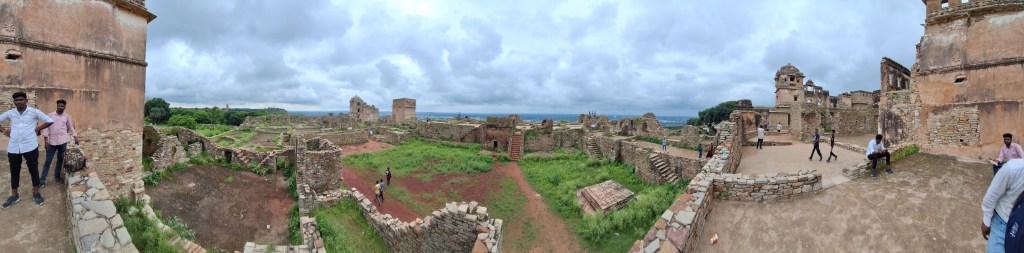


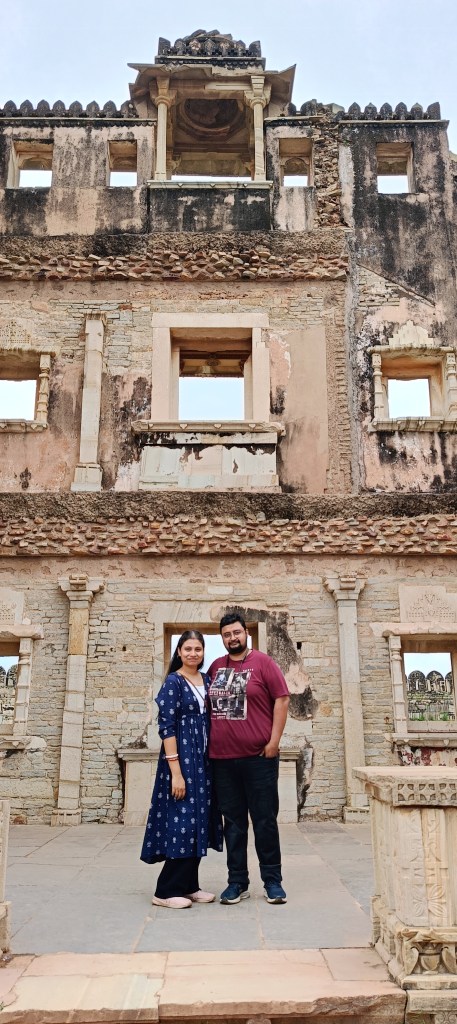
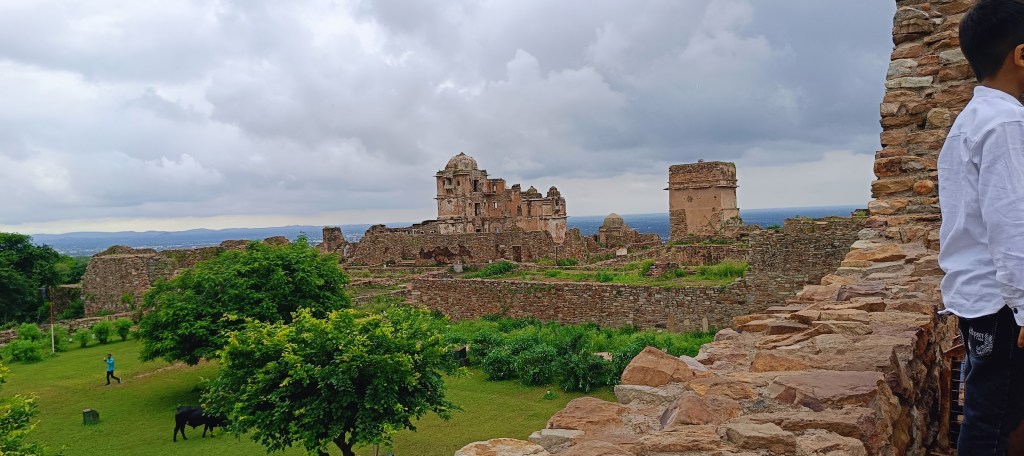
Our first stop was Kumbha Palace, one of the oldest structures within the fort. Though now in ruins, its remains still whisper of grandeur — courtyards, corridors, and the faint outlines of ornate chambers. This was once the seat of Rana Kumbha, the 15th-century ruler who made Chittor a beacon of art, music, and architecture.


But Kumbha Palace also holds one of the most heart-rending tales of sacrifice. Here lived Panna Dai, the nursemaid whose loyalty to the royal family remains unmatched. When court intrigue threatened the young prince Udai Singh (later the founder of Udaipur), assassins sent by his uncle Banbir stormed the palace. To save the child, Panna Dai smuggled him away in a basket — and placed her own infant son in his bed. The assassins, mistaking the boy for the prince, killed him.
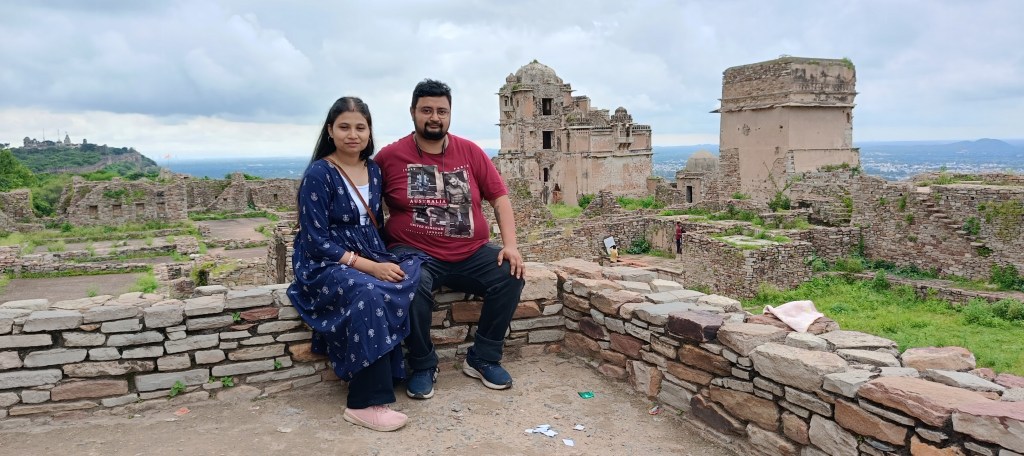

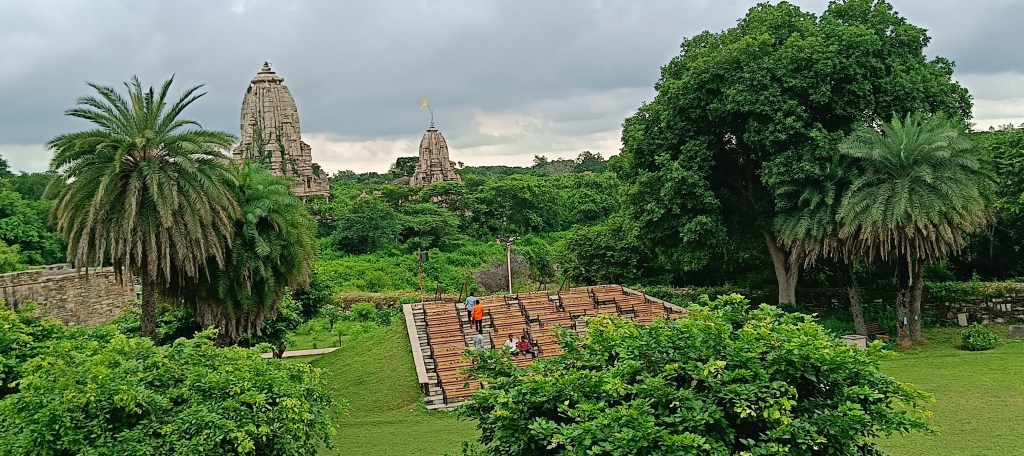
As our guide narrated this, my wife’s eyes welled with tears. Standing amidst the broken walls, it was hard not to feel the weight of her sacrifice. A mother who gave up her own son for the future of Mewar — truly, history remembers Panna Dai not as a nursemaid but as a saint of loyalty.
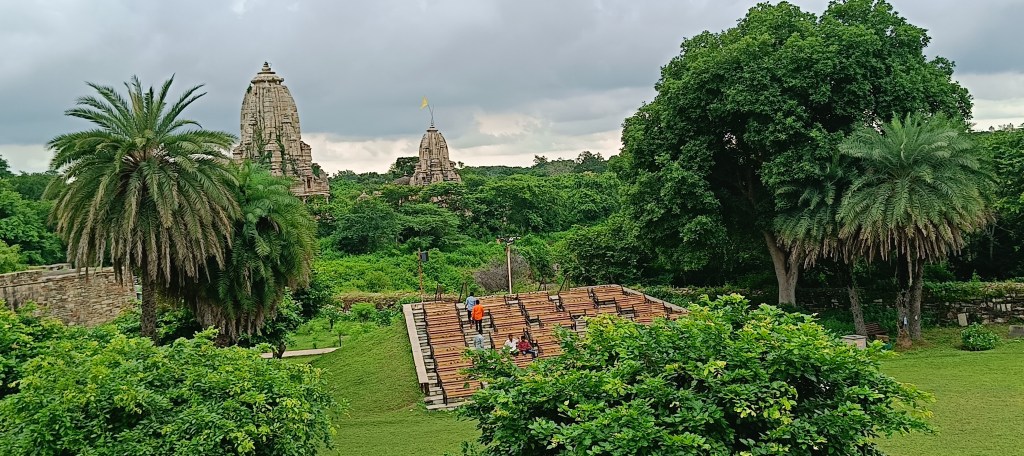

Meera Bai’s Temple
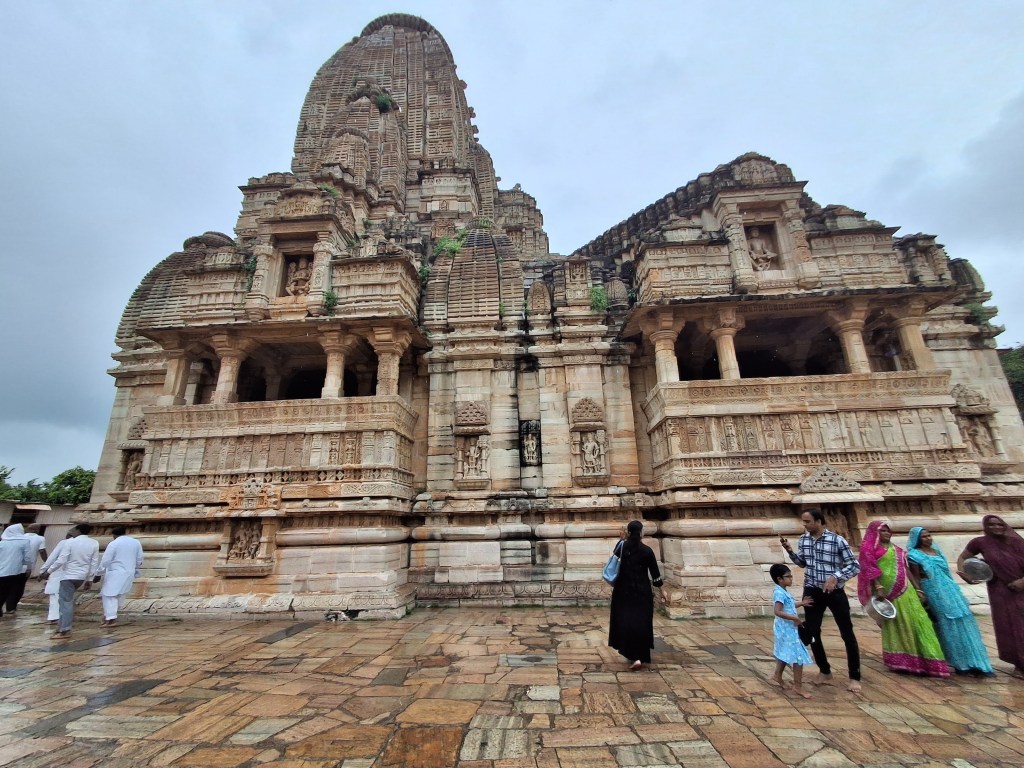

Nearby stood a smaller, yet spiritually luminous structure — the temple of Meera Bai. Here, the saint-poetess of the 16th century once sang her bhajans to Lord Krishna, whom she worshipped as her eternal husband.
Meera’s life was one of defiance and devotion. A Rajput princess married into Mewar’s royal family, she faced hostility for her unwavering love of Krishna, often criticized for neglecting worldly duties. Yet she sang on, composing verses that still resonate across India: songs of surrender, longing, and divine union.
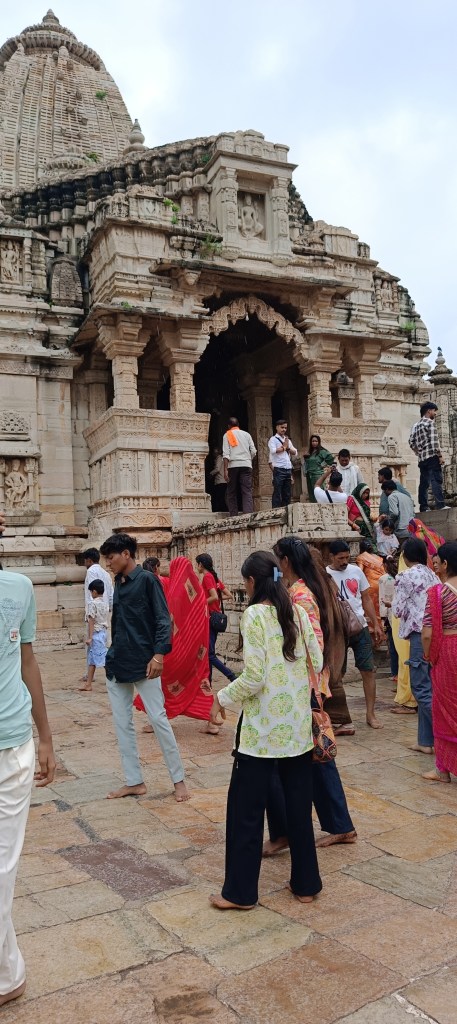

The temple stood simple and serene, adorned with images of Krishna. As we stepped inside, I imagined the sound of her voice filling the air, echoing against the stone walls. Even centuries later, the presence of Meera could still be felt — her bhakti more enduring than any empire.
The Stories Come Alive
Our guide, with a mix of pride and melancholy, explained how Chittorgarh had been attacked thrice by powerful sultans — Alauddin Khilji, Bahadur Shah of Gujarat, and finally by Akbar himself. Each time, the fort’s defenders fought to the last breath, and each time, when defeat was inevitable, the women performed jauhar — self-immolation in sacred fire — choosing death over dishonor.
Those stories would come later in our tour, but already I could sense the spirit of Chittor — not just a fort, but a living epic of valor, poetry, and sacrifice.
Outro / Teaser
The ruins of Kumbha Palace and the songs of Meera Bai had shown us Chittorgarh’s heart. Next awaited the towering Vijay Stambh, the sacred Gaumukh Kund, and the echoes of jauhar that still haunt its stones.

This is a beautifully written post. You’ve managed to bring Chittorgarh alive with vivid descriptions and emotional depth. The way you wove together history, architecture, and human sacrifice makes the narrative both engaging and moving. I especially liked how you highlighted Panna Dai’s unmatched loyalty and Meera Bai’s timeless devotion — it gives us not just facts, but the soul of Chittor. A wonderful blend of travel writing and storytelling.
LikeLiked by 1 person
Thank you dad.
LikeLiked by 1 person
Nice post bringing Chittorgarh to life by blending history, architecture, and human stories, highlighting Panna Dai’s loyalty and Meera Bai’s devotion with engaging and emotional storytelling.
LikeLiked by 1 person
Thank you for your kind words.
LikeLike
Thank you for the tour. 2 years back in Udaipur, we had time for either Chittorgarh or Kumbalgarh. We chose Kumbalgarh. And for a nearly thousand year old fort it was rugged and grand. There is something to be said about rugged forts, especially the ones in India. We missed Chittorgarh but some of that is covered by yr post.
LikeLiked by 1 person
Very ture sir. All the websites and travel bloggers said 1 day is enough for Udaipur. But I found that it is too rushed if you want to achieve evergthing in one day. Udaipur is vast in heritage and so many things to see and do.
We ended up with simillar choice so we chose Chittorgarh.
LikeLiked by 1 person
Jauhar is the most hair raising act of valour and defiance shown by the Rajputana women folk turning the palace into ruins and war victory into utter defeat.
LikeLiked by 2 people
True. It is also to make sure no one is allowed to mishandle them which was common around that time to take the wives of fallen or defeated soldiers to be taken as slave and used as cocubines if they are lucky. Worse they would be sold into prostitution once the enemy soldiers had their fill raping them as prize. We are generally told the valor of men and women on battlefields but what happens to the people who remain, the civilians is never told because its so dark and bloody that people will loose pride in wars. They will forget the valor. But since the people governing us want that they sholud always be prepared for war to give their lives away, they hide the truth of behind the scenes.
Its true till today.
What happens to the families of soldiers who died or worse is handicapped. What is their quality of life? Where is valor when their family memebers have to go through hell to just get compensations or even after that just plain life. Their futures are all but in dark. This is the reality of war.
Jauhar is an example where the women rejected such future and gained their valor.
So they rejected that fate and chose this one.
Sad but I respect their self respect and resilience.
LikeLiked by 2 people