
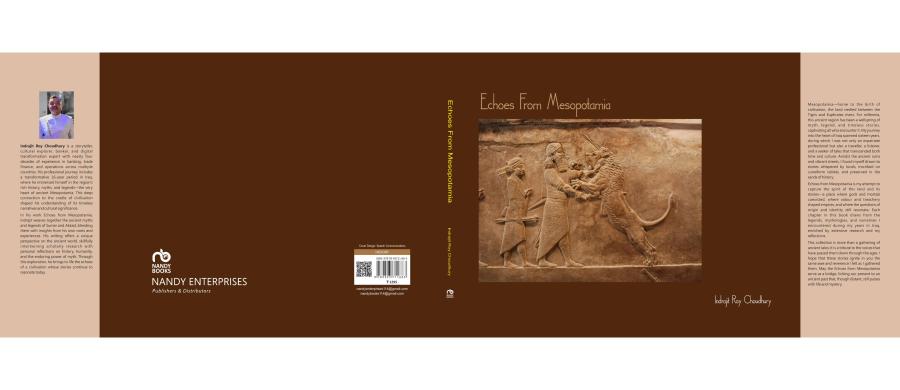
There are moments in life when time gently folds in on itself—when memory, presence, and a long-cherished dream meet in quiet harmony. This January, at the Kolkata Book Fair (Boi Mela), that harmony became a reality. Seeing photographs of my book, Echoes from Mesopotamia, resting on the shelves of the Nandy Enterprises stall was a moment of quiet, profound joy.

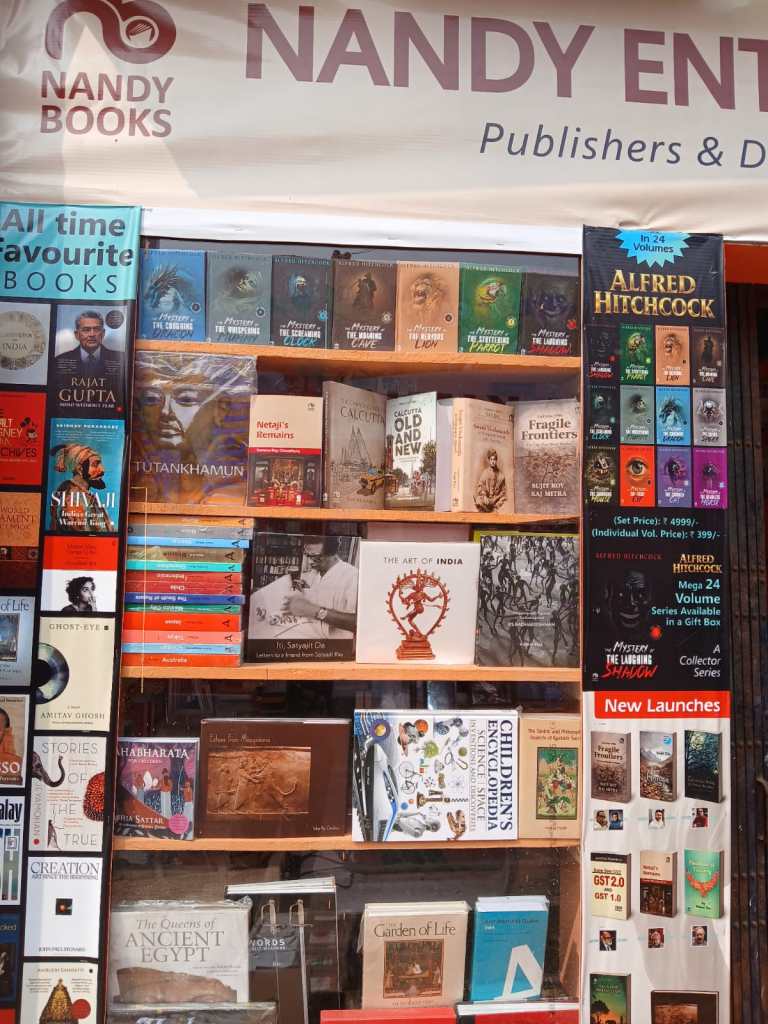
It wasn’t just the birth of a publication; it was the culmination of a sixteen-year communion with a land that shaped the very blueprint of human civilization. Mesopotamia. The land between the rivers—the Tigris and the Euphrates. The cradle from which cities, writing, laws, myths, and memories first flowed.
A Land That Never Leaves You
My journey into Iraq began as a professional assignment. Like many expatriates, I arrived with contracts, deadlines, and responsibilities. But Iraq has a way of refusing to remain merely a workplace. It seeps into you—through its dust-laden winds, its ancient ruins standing stubbornly against time, its tea houses, its call to prayer echoing over millennia of history.
Over sixteen years, I lived not merely in Iraq—the modern face of Mesopotamia—but with it, as a traveller, a listener, and a quiet gatherer of stories. Stories overheard in marketplaces and offices. Stories lingered in conversations over endless cups of tea, surfaced between the walls of Babylon, and waited patiently in clay tablets, ancient artefacts, sculptures, and fractured myths—etched in cuneiform, half-buried in time, resting in the hushed halls of the Iraq Museum in Baghdad.
I realised early on that this land does not merely tell stories—it remembers them.
From Whispers to Words: Distilling the Memory
Echoes from Mesopotamia is my attempt to capture those memories before they fade. The book is a collection of legends from Sumer, Akkad, and Assyria—the cradles of writing, law, and urban life.
However, this is more than a historical retelling. It is a personal bridge. Each chapter explores a world where gods walked among humans and where the timeless questions of identity and destiny first emerged.
What fascinated me most was not just the grandeur of these myths, but their uncanny familiarity.
A Bridge Between Civilisations
Among the narratives explored in the book is a compelling and deeply intriguing theory: that the Sumerians—one of the earliest known civilisations—may share subtle yet striking connections with ancient Indian cultures. Parallels in complexion, symbolism, social structures, and cultural motifs raise questions that are as provocative as they are fascinating.
This is not presented as dogma, but as an invitation—to look again, to question inherited assumptions, and to explore the idea that ancient civilisations may have been far more interconnected than we often acknowledge.
In many ways, Echoes from Mesopotamia became a bridge—between West Asia and the Indian subcontinent, between myth and memory, between scholarly inquiry and lived experience.
More Than a Book: A Tribute to Endurance
This work is not merely a retelling of ancient tales. It is a tribute.
A tribute to the unnamed voices who carried these stories across millennia—through invasions, empires, ruins, and rebirths. A tribute to a land that has suffered much, yet continues to pulse with life, dignity, and cultural depth. And a tribute to the enduring power of storytelling itself—the oldest technology humanity ever invented.
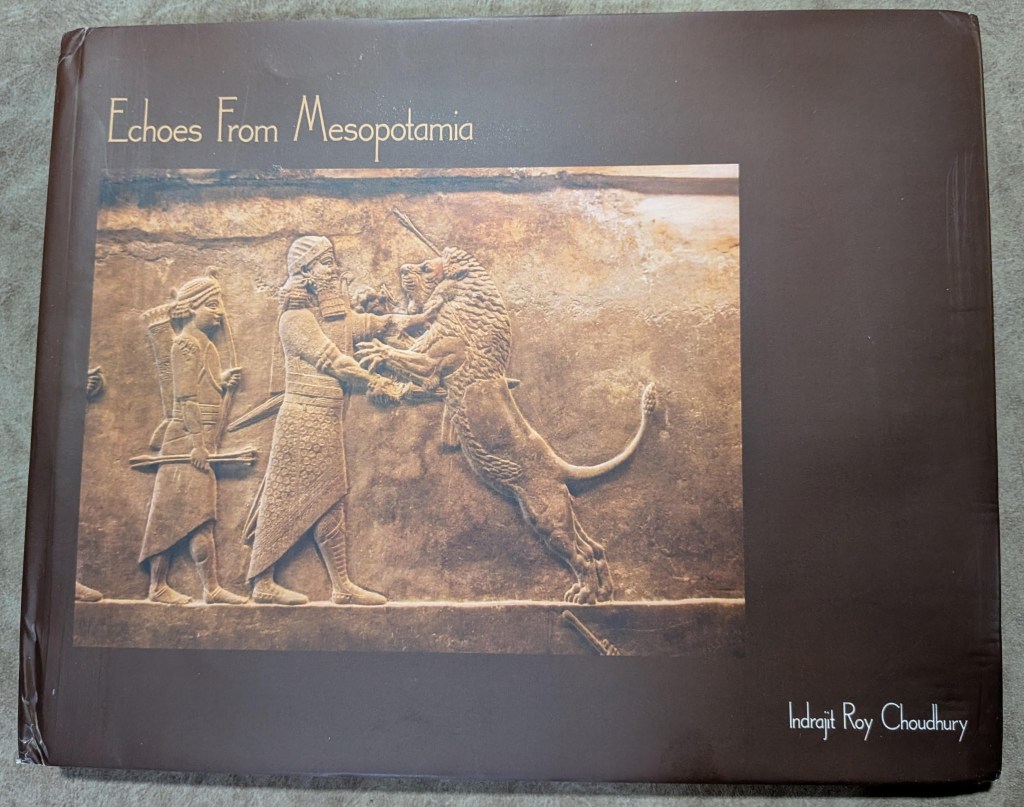
Writing this book often felt like listening more than speaking. Listening to history. Listening to place. Listening to echoes that refused to fade.
A Full-Circle Moment in Kolkata
Launching Echoes from Mesopotamia at the Kolkata Book Fair was profoundly symbolic for me. As a city defined by intellectual ferment and a legendary love for the written word, Boi Mela felt like the rightful home for these ancient echoes.
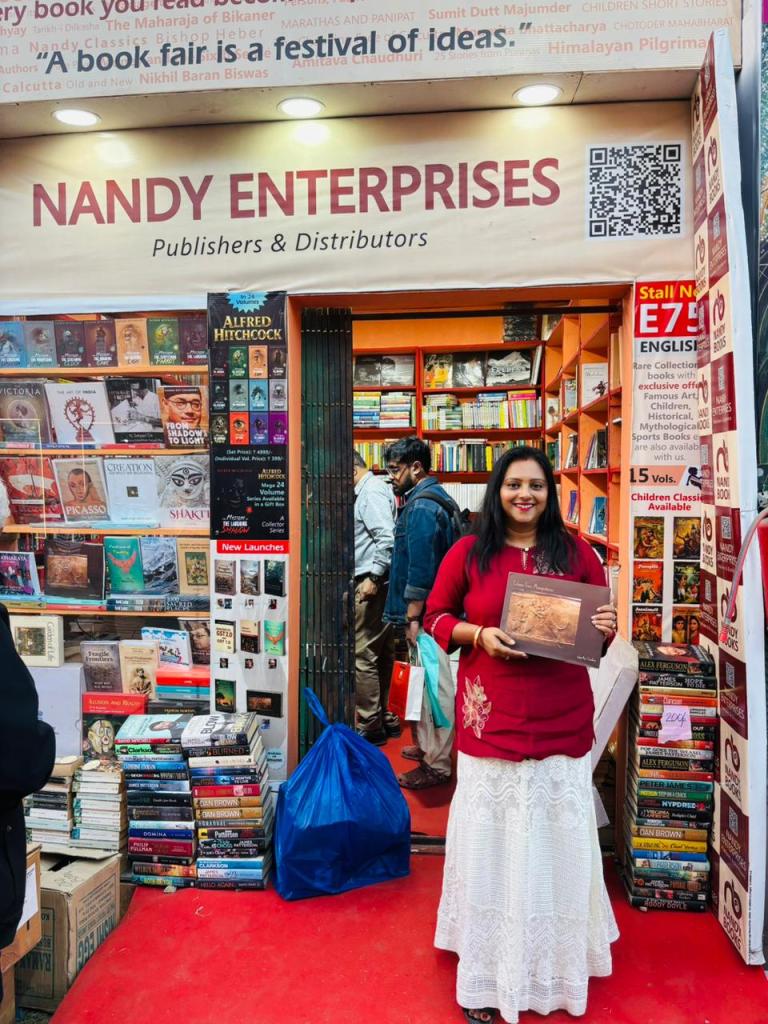
Seeing my niece, Aditi, holding the book amidst the vibrant energy of the fair brought my two worlds together: my roots in India and my professional life in the Middle East. My career has taken me through the worlds of banking and digital transformation, but Mesopotamia gave me a sense of continuity—a reminder that we are all part of a shared human story.
Why These Echoes Matter Today
In an age obsessed with speed and immediacy, ancient myths remind us of something essential: that human hopes, fears, ambitions, and moral dilemmas have changed far less than we imagine. The questions asked in Sumerian temples are not so different from those we ask today.
Who are we? Where did we come from? What binds us together—and what tears us apart?
If Echoes from Mesopotamia succeeds in doing one thing, I hope it is this: to reconnect us, however briefly, with an ancient past that still breathes beneath our modern world.
A Dream Fulfilled, a Conversation Begun
This book is a matter of deep pride for me—not as an endpoint, but as the beginning of a conversation. A conversation across time, across cultures, and across borders. If these stories ignite even a fraction of the wonder and reverence I felt while gathering them, the journey will have been worth it.
To Mr. Debashis Nandy, Mr. Ashish Bannerjee, and all who helped bring this to life—thank you.
May these echoes travel far. May they remind us that civilisation is not a straight line, but a shared memory. And may Mesopotamia—ancient, wounded, eternal—continue to speak.
