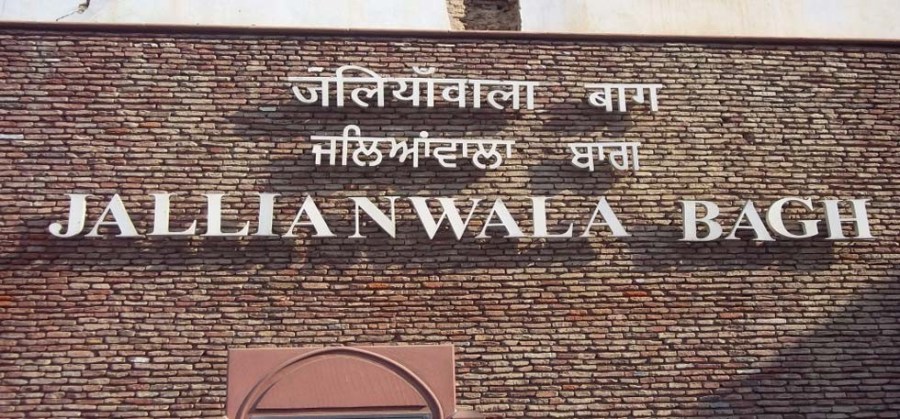
Jallianwala Bagh: The Blood-Soaked Soil That Shaped a Nation

Jallianwala Bagh, a garden in Amritsar, Punjab, symbolizes an incident in India's colonial past when British troops, led by General Dyer, fired upon a peaceful protest in 1919, killing hundreds. The garden, featuring bullet-ridden walls and a well into which people jumped for escape, is a memorial for the victims. The incident catalyzed India's struggle for independence and serves as a reminder of the ongoing fight for justice and equality.
Newroz Piroz Be: The Eternal Flame of Renewal

Nowruz, meaning "New Day" in Persian, is an ancient festival with its origins dating back thousands of years, rooted in Zoroastrianism. It marks the beginning of the Persian New Year and the arrival of spring. The exact origin of Nowruz is not definitively known, but it is believed to have been celebrated for over 3,000 years in the regions of modern-day Iran, Central Asia, and parts of the Middle East.

The Ahwar of Southern Iraq: A Historical & Ecological Marvel

The Ahwar of Southern Iraq, a UNESCO World Heritage site, encompasses the biblical Garden of Eden. Fed by the Tigris and Euphrates rivers, these marshlands support diverse wildlife and house the Marsh Arabs' millennia-old culture. The site includes ancient Sumerian cities and has faced environmental and political challenges. Efforts to restore the marshlands symbolize the harmonious coexistence of nature and human civilization, preserving a vital ecological and cultural treasure.

World’s Oldest Paycheck Paid in Beer — How Ancient Mesopotamians Brewed the First Salary

Archaeology just proved that after a hard day’s work, humanity’s favourite reward hasn’t changed in 5,000 years. The world’s oldest known paycheck — a cuneiform-inscribed clay tablet from ancient Mesopotamia — shows that workers were once paid in beer. From Uruk to today’s taprooms, the story of beer is truly the story of civilisation itself.

Gondal: Cultural Heritage in Gujarat

Gondal, a city in Gujarat, is known for its rich cultural heritage and impressive architecture, most notably majestic palaces and vintage vehicles. A part of the Kathiawar Agency under the Bombay Presidency, the roots of Gondal's history go back to the medieval period. Its most famous ruler, Sir Bhagwat Sinhji (1888-1944), was known for his progressive reforms. Today, the city is appreciated for its splendid palaces like Naulakha Palace, structures like the Huzoor Palace & Orchard Palace, and the Vintage Car Museum, all offering glimpses of the city's regal past.

Sun Temple Konark: A Marvelous Testament to Ancient Indian Architecture

The Sun Temple Konark in Odisha, India, is a 13th-century architectural masterpiece dedicated to the Hindu Sun God, Surya. Known as the Black Pagoda, the temple is notable for its chariot-like design, intricate carvings, and historical significance. Despite some decay and vandalism over time, the temple remains a captivating UNESCO World Heritage Site and a testament to ancient Indian craftsmanship and culture.

Explore Bara Imambara: A Cultural Icon of Lucknow

The Bara Imambara in Lucknow, India, reflects the rich history and diverse culture of the area. Built in 1784 by Nawab Asaf-ud-Daula, it features Mughal architecture and contains a mosque, stepwell, courtyards and a main building with a large wooden roof supported by 260 pillars. Intricate labyrinths were designed for protection, and unique acoustic systems were used for communication. Constructed during a famine, laborers received food grain payments, stored and later distributed during a second famine. Today, it remains a popular tourist spot showcasing India's cultural heritage.