The Calculus of Betrayal: Radhanath Sikdar & the True Story of Mount Everest

In 1852, Radhanath Sikdar, a Bengali mathematician, discovered that Peak XV was the world's highest mountain, later named Mount Everest. His groundbreaking calculations were overshadowed by British imperial bias, as the peak was named after a British official. Sikdar's contributions to the Great Trigonometrical Survey were largely ignored, encapsulating the colonial erasure of non-Western intellectual achievements.

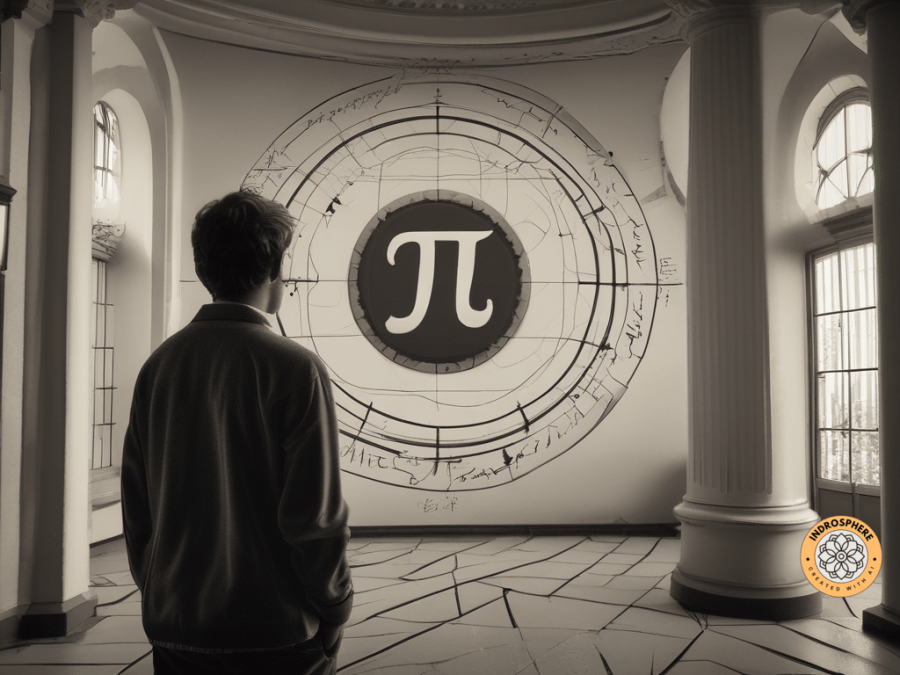
Exploring the Infinite: Celebrating Pi Approximation Day

Pi Approximation Day, celebrated on July 22nd, honors the renowned mathematical constant π. This day pays tribute to the fascinating properties of π, with the fraction 22/7 as a notable approximation. From ancient civilizations to modern times, the pursuit of π's value has shaped the world of mathematics. Its significance spans across various fields, embodying the limitless potential of human curiosity and ingenuity.

Arjuna’s Arrows: A Fusion of Mythology & Algebra

"Arjuna's Arrows," a popular Indian mythological tale, incorporates algebraic equations in warfare strategy. The protagonist, Arjuna, uses mathematical equations to dictate the characteristics and effective use of his multiplying arrows. The narrative exemplifies the practical application of mathematics, emphasizing that it's not merely an abstract concept restricted to textbooks, with a unique blend of historical mathematician Bhaskaracharya and his algebraic principles. However, the algebra used in Arjuna's arrows remains fictional and symbolic, representing the immense potential of mathematics in shaping our world.

Pi Day: Celebrate Mathematics

Today marks the anniversary of Pi Day, celebrated on March 14 (3.14) in honor of the mathematical constant π, the ratio of a circle's circumference to its diameter. Pi is essential in various scientific fields and is known for its irrationality. The concept of pi has ancient roots, with notable contributions from mathematicians like Archimedes and Aryabhatta. Pi Day gained recognition in 2009, with official support from the U.S. Congress.

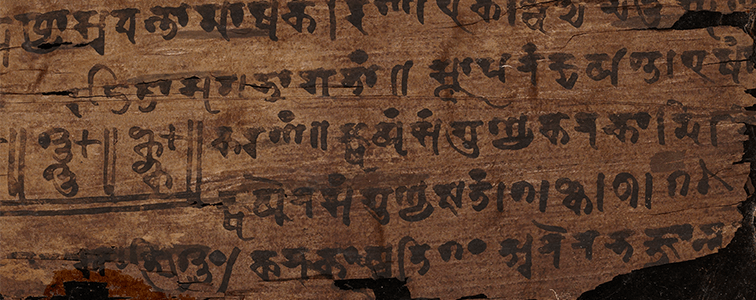
The Bakhshali manuscript

Discovering the Bakhshali Manuscript: Ancient India’s Mathematical Genius

The Bakhshali Manuscript, discovered in 1881 in Pakistan, dates back to the 3rd or 4th century CE, showcasing advanced ancient Indian mathematics. It introduced the decimal place value system and zero as a placeholder, revolutionizing math. The manuscript highlights ancient India's scientific and philosophical traditions, influencing global scholarship and mathematical practices.

Chandrasekhar: He knew how the stars will die

Chandrasekhar became famous for his discoveries about the evolution of the stars. His work was vast, and he began early, developing his theory of stars’ evolution before he had even turned 20. Google is changing its logo globally to a doodle of him and the Chandrasekhar Limit. That refers to his calculation that once a star reaches 1.44 times the size of our own sun, it doesn’t form a white dwarf as expected but collapses, eventually becoming a black hole.