Buddha’s Influence in Ancient Egypt: The Berenice Discovery

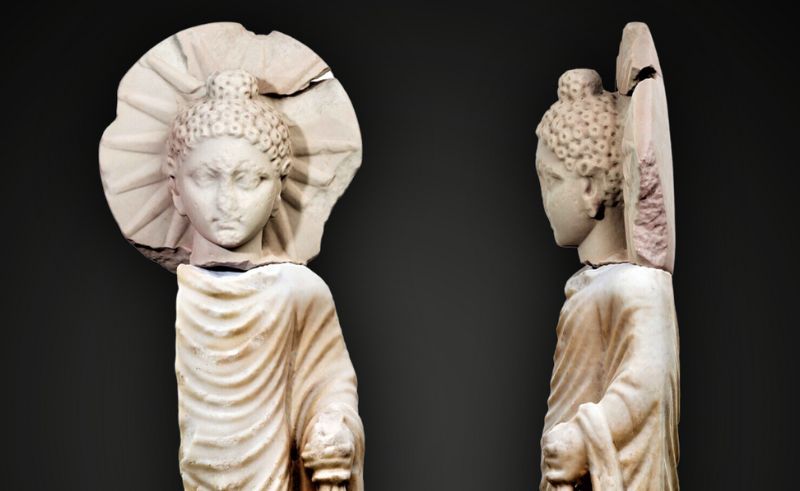
In ancient Egypt, the city of Berenice pivoted as a vibrant hub for diverse cultural exchange along the Silk Road. Archaeologists recently discovered a statue of Buddha from Roman Egypt in the Goddess Isis’ temple at Berenice, highlighting commercial and cultural ties with India. The city, a melting pot of Greek, Roman, and Egyptian civilizations, grappled with Buddhist philosophy along with goods transported from India, creating a unique blend of spirituality and culture before fading into obscurity.

The Mask of Warka: A Timeless Gaze into Mesopotamian Civilisation

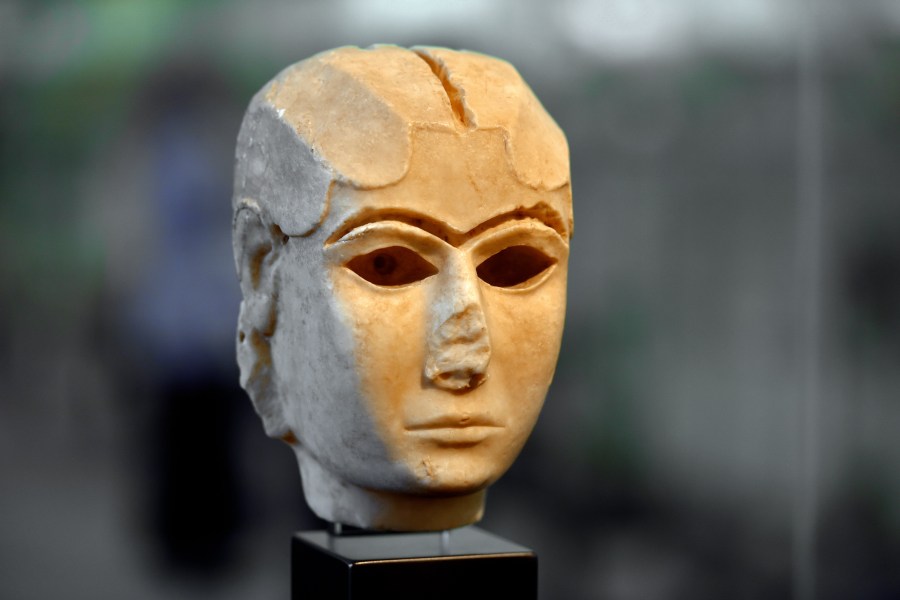
The Mask of Warka, dating to 3100 BCE, is a pivotal archaeological find from Uruk in ancient Mesopotamia. Likely representing the goddess Inanna, its striking naturalism showcases early sculptural artistry and religious symbolism. The mask reflects the civilization’s complex beliefs and artistic evolution, bridging the divine and human realms in ancient culture.

Netaji Bose Statue to Honour 125th Birth Anniversary

Prime Minister Narendra Modi announced the installation of a grand statue of Netaji Subhas Chandra Bose at India Gate, New Delhi, in celebration of the 125th birth anniversary of the revered freedom fighter. Until the statue's completion, a hologram of Netaji will stand in its place, to be unveiled on January 23rd. This gesture pays homage to Bose's pivotal role in India’s struggle for independence and his enduring legacy.

Jeita Grotto: A Journey Into Nature’s Hidden Masterpiece

Jeita Grotto, nestled in Keserwan, Lebanon, is a remarkable limestone cave network featuring spectacular stalactites and stalagmites, and a subterranean river. Home to one of the largest hanging stalactites globally, the 9-kilometre-long system encompasses two main galleries - the upper and lower, which can be explored by foot and boat respectively. Noted for its natural beauty, it's one of Lebanon's leading attractions. Rediscovered in 1836, Jeita Grotto's karstic structures were formed over millions of years due to the dissolution of limestone.

Shaduppum: Forgotten City That Whispered Civilization

The ancient city of Shaduppum, now modern-day Tell Harmal in Iraq, was a significant center during the Bronze Age and Early Iron Age. Known for its rich history, intricate urban layout, and its importance in bureaucracy, commerce, and culture, Shaduppum hosted numerous temples and was a hub for Babylonia's treasury and accounting. Its most notable discoveries include clay tablets inscribed with laws, mathematical equations, and remarkable texts such as The Epic of Gilgamesh, all of which provide valuable insights into the Mesopotamian civilization.

A Journey Through Souq Waqif: Traditions & Tastes

Souk Waqif is a bustling marketplace in Doha, Qatar, that offers an intriguing glimpse into the country's rich history and culture. The souk, which historically served as a trading place for Bedouin, has been redeveloped with elements reminiscent of a 19th-century market, retaining its authentic charm. With a variety of goods from spices, perfumes to antiques and artwork, it offers a unique shopping experience amidst the labyrinthine alleys. Despite modern upgrades, its vibrant ambiance of haggling vendors and diverse cuisines remains unchanged, making it a must-visit cultural haven.

Itkhori: Where Faiths Converge & Time Stands Still

Itkhori in Chatra district of Jharkhand state of India is situated at around 150 km from Ranchi, the capital of Jharkhand, at the confluence of two rivers named ‘Mahane' and 'Baksa'. Bhadrakali temple complex is a symbol of religious tolerance for centuries. It is a wonderful place with abundance of historic reminiscences and archaeological remnants demonstrating a breath-taking saga of religious tolerance and cultural unity.

Walking Through Time: My Journey to Ancient Babylon

Babylon, one of the most influential cities of ancient Mesopotamia, has a history that spans almost two millennia. From its initial foundation as a small Akkadian town in the third millennium BC to its rise as the capital of the Babylonian Empire under Hammurabi's rule, the city has had periods of grandeur and decline. Notable for its significant landmarks like the Hanging Gardens, one of the Seven Wonders of the Ancient World, Babylon also housed notable figures such as Hammurabi, famous for his code of laws. Its ruins are now in Iraq, open to visitors who want to explore its rich heritage.

Cosmos at Doha Airport: A Journey Through Art, Stars, & Stories

Cosmos is a stunning artwork by the renowned French artist Jean-Michel Othoniel, located at the Hamad International Airport in Doha, Qatar. The artwork consists of a large metal sphere covered with gold leaf, resembling a giant astrolabe. The sphere is suspended from the ceiling and rotates slowly, creating a dazzling effect of light and movement. Cosmos is inspired by an ancient Islamic astrolabe from the Museum of Islamic Art in Qatar, which is the oldest surviving one in the world. The astrolabe was a device used by astronomers and navigators to measure the position of celestial bodies. Cosmos symbolizes the journey of travelers around the world and their connection to the stars.

Luxury & Art: A Layover at Hamad International Airport

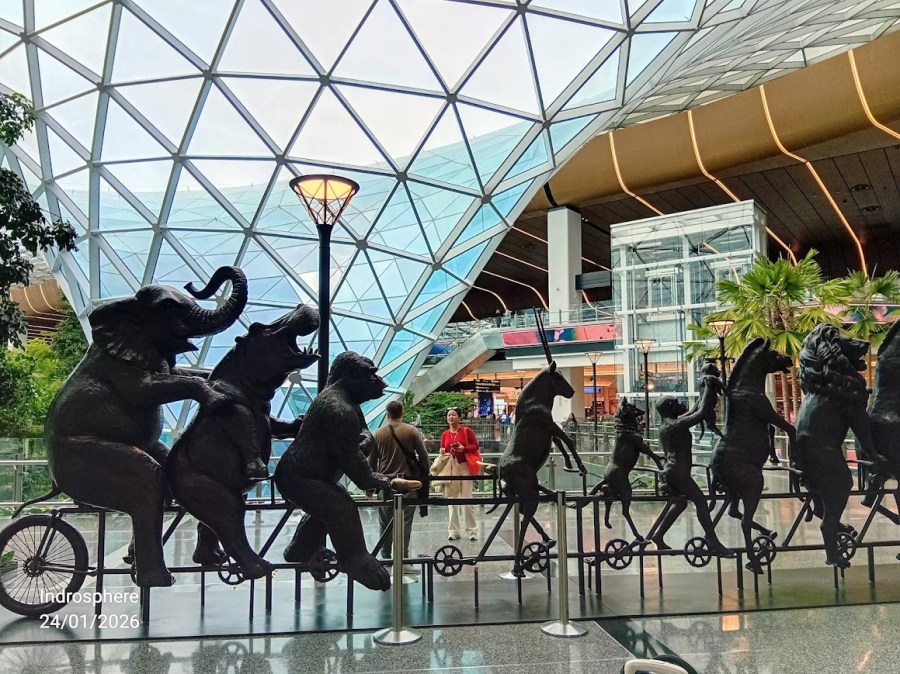
During a six-hour layover at Doha's Hamad International Airport, the author discovered an immersive experience filled with art and comfort. The airport features modern amenities, including art installations that reflect Qatar’s culture. Notable artworks, such as KAWS' "Small Lie" and Urs Fischer's "Lamp Bear," create a whimsical environment. The experience transcends typical airport visits, making it a memorable cultural journey for travelers.