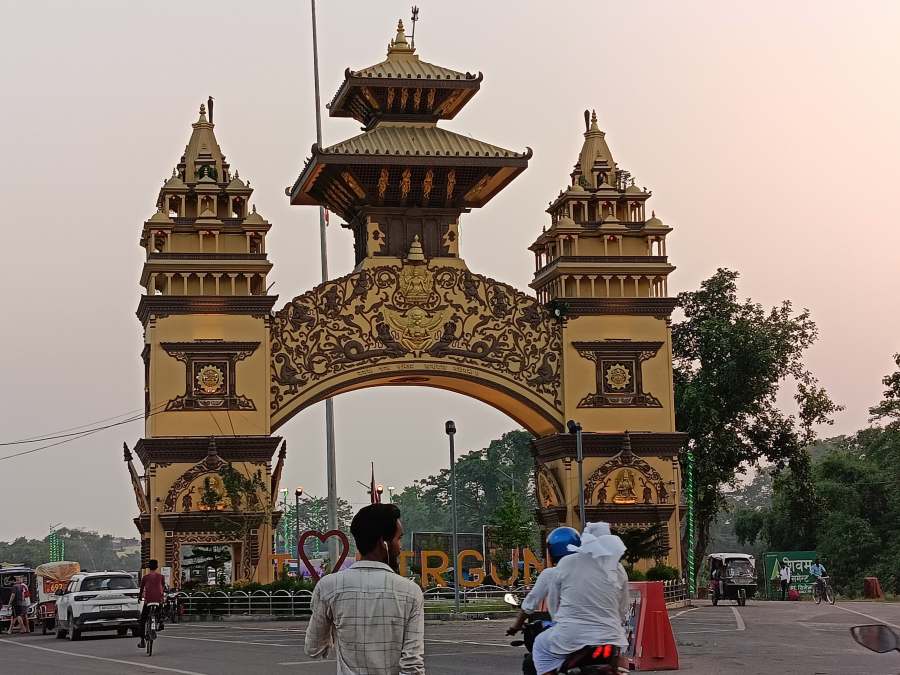
From Ranchi to Birgunj: A Journey Through Borders, Time, & Tangas

Our adventure began in Ranchi as my wife, Tania, and I awaited the delayed Hyderabad-Raxaul Express. After returning home, we finally boarded the train and reached Raxaul just 15 minutes late. We then traveled to Birgunj, Nepal, via a tanga. The Indo-Nepal Gate marked our entry into Nepal. Exhausted but excited, we arrived at the Annapurna Hotel, eager to explore Birgunj and participate in my training.

Walking Through Time: My Journey to Ancient Babylon

Babylon, one of the most influential cities of ancient Mesopotamia, has a history that spans almost two millennia. From its initial foundation as a small Akkadian town in the third millennium BC to its rise as the capital of the Babylonian Empire under Hammurabi's rule, the city has had periods of grandeur and decline. Notable for its significant landmarks like the Hanging Gardens, one of the Seven Wonders of the Ancient World, Babylon also housed notable figures such as Hammurabi, famous for his code of laws. Its ruins are now in Iraq, open to visitors who want to explore its rich heritage.

The House of Heaven: Inanna’s Temple & the Architecture of Divine Power

Inanna, a prominent Mesopotamian goddess, symbolized love, fertility, and war, governing both divine and earthly realms. Her myths illustrate themes of death and rebirth, showcasing her significance in agriculture. Temples dedicated to her served as spiritual and economic centers, influencing later cultures as Ishtar. Her worship declined with the rise of monotheism.

Viceroy’s Arch: Gateway to Goa’s Colonial Past

Goa, known for its beaches and European colonial history, features the Viceroy’s Arch, built in 1599 to honor Vasco da Gama's sea voyage connecting Europe and Asia. The arch holds religious and ceremonial significance, symbolizing colonial power dynamics. Adjacent to it, a palace housed Portuguese viceroys. Despite its dedication to da Gama, the arch bears no name, silently echoing history's early nautical triumph.