
The hum of the fluorescent lights in the basement office was a constant—its steady drone usually faded into the background of my workday. But on Sunday, June 20th, 2010, it became the only familiar thing I could hold on to. Outside the bank’s Head Office, Baghdad pulsed with its usual chaotic energy—a cacophony of honking cars, street vendors shouting over one another, and the occasional echo of gunfire that had become a grim soundtrack of daily life. Within the fortified walls of our office, we lived in a kind of suspended reality, isolated from the world outside. Beyond the 10-foot blast walls, life was volatile, constantly shifting between bursts of normalcy and the sharp, haunting reminders of danger.
Inside, we were shielded from the storm, at least physically. The blast walls surrounding our compound were an attempt at protection, a fragile barrier between the safety of the fortified compound and the unpredictability of the outside world. But even these walls couldn’t protect us from the fear that gripped our hearts every time we stepped outside.
The streets of Baghdad were never truly ours to walk. When we left the fortress-like confines of our office or residential compound, we did so in armoured, bulletproof cars, part of a convoy that commanded the road. Z-class security was the rule, not the exception. No other vehicle dared approach within 100 feet of our motorcade. Our movements were dictated by the ever-present threat that lurked just beyond the safety of our walls.
And then, one Sunday afternoon, it happened. There was no gradual buildup, no warning signs. Just an explosion—sudden and deafening.
It was a sound I will never forget. The kind of blast that shakes the very air around you, the kind that rattles your bones and sends a shockwave of fear straight through your body. The walls trembled, the lights flickered, and a second later, the sickening sound of glass shattering filled the air. My heart pounded in my chest as I instinctively ducked under my desk, my hands clutching at the flimsy particleboard, as if it could somehow shield me from the unimaginable.

“Bomb!” someone screamed, and the word itself was enough to send panic surging through the room. We were no longer colleagues, nor were we consultants. In that moment, we were just human beings, thrust into a reality we had always known was possible but had never truly faced. It was as if the world around us had peeled away, leaving only the raw, visceral terror of the present moment.
And then, the second explosion!
The building shook once more, a deep, guttural groan that seemed to come from the very earth beneath us. The false ceilings cracked and dust poured down, swirling through the air like some sort of grim storm. The neatly arranged tiles on the floor buckled, and debris rained down, covering everything in its path. The air was thick with dust, plaster, and the acrid scent of burning metal. I could taste it—the bitterness of the smoke and the metallic tang of fear that hung in the air.
In that moment, I thought it was over. It felt like the end of everything.

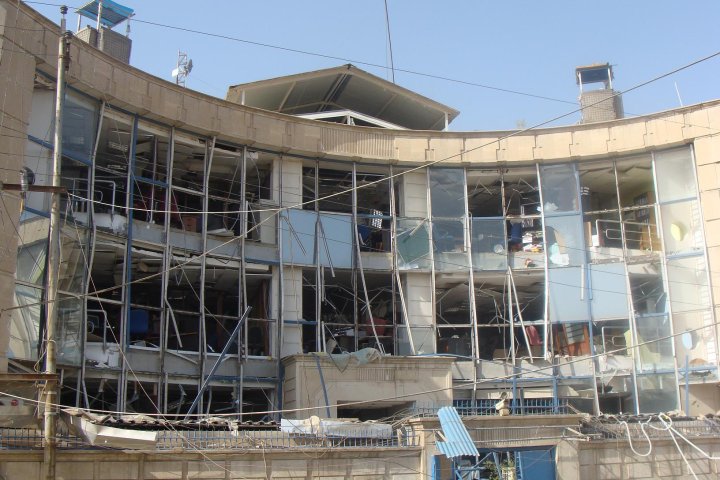
The next few minutes blurred into a haze of panic and adrenaline. The security guards—men I had passed by every day, nodding in acknowledgement—moved with an urgency I had never seen before. Their faces, usually calm and composed, were now set with a grim determination. They were not just employees anymore; they were our lifeline. They were the only thing standing between us and whatever hell lay outside.
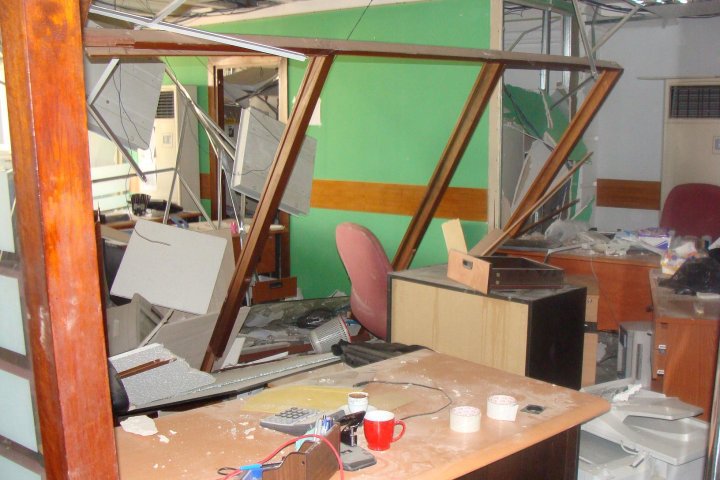
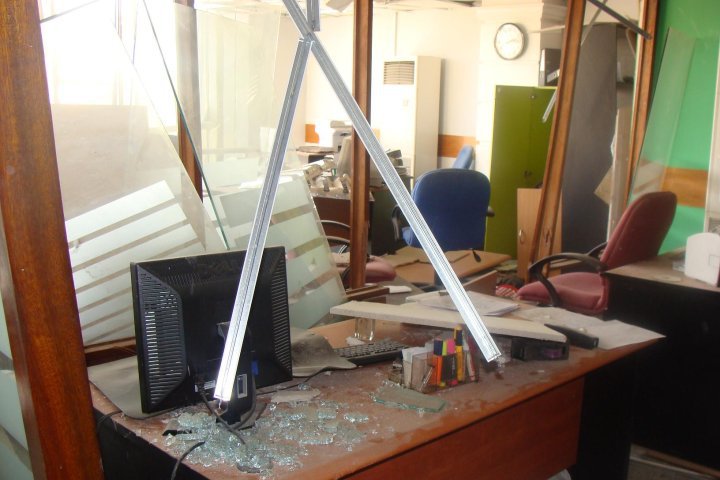
As the minutes dragged on, the sound of sirens wailing in the distance became a grim reminder that this was not a drill. First responders rushed in, their movements swift, decisive. And then, the all-clear came. We emerged from the relative safety of the basement, blinking in the harsh sunlight.
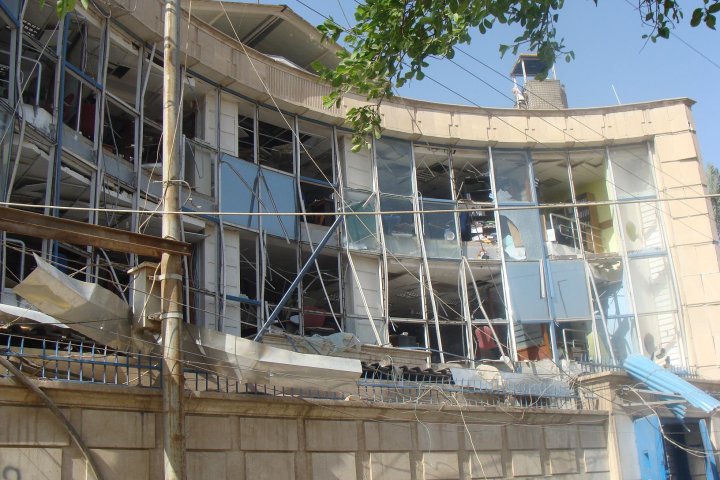
What we found outside was nothing short of devastation. The building, the very one I had walked into every morning, was now marred by gaping holes and twisted metal. The smoke rose in thick, black plumes, suffocating. Shattered glass littered the ground, crunching beneath our feet as we made our way through the wreckage. And then, the bodies.
Familiar faces, men who had stood guard just hours before, now lay motionless, their uniforms soaked in blood. The weight of their sacrifice was almost too much to bear. These weren’t just statistics or names in a casualty report; these were real people—brave men who had risked everything to protect us. They were gone, and the enormity of that loss hit me with a brutal, overwhelming force. The scene before me was a nightmare—bloodied limbs, raw and exposed, hands severed and discarded near the gate. It was a visceral reminder of the fragility of life and the price of courage. The horror of it seared itself into my memory, a painful imprint I would never forget.
The events of that day remain seared into my memory—raw, unrelenting, and impossible to forget. The echoes of the explosions still reverberate in my mind, haunting me long after the dust has settled. But as I lay in bed that night, the city’s chaos still swirling outside, I found myself grappling with questions I knew had no answers. What kind of belief system demands such destruction? What ideology justifies the slaughter of innocent lives?
Amid the overwhelming despair, something unexpected emerged. That evening, we had an urgent meeting at the Chairman’s residence, just next door. Along with other senior executives, we gathered to discuss how to resume banking operations the very next day. Despite the heavy atmosphere and the uncertainty, duty called. We mapped out a plan to relocate staff across several buildings, ensuring we could continue operations.
Banking is a public service, and the public cannot be deprived of essential services, especially during such trying times. We knew that even in the face of tragedy, we had to press on. Trade Bank of Iraq, at that moment, was the only Iraqi institution handling international transactions—everything from food grains to medicine was being imported into the country, and our role was crucial for the stability of the economy.
I was tasked with reaching out to our international correspondent banks to inform them of the situation and to request their patience, as there might be delays in our SWIFT messages. The response from our global counterparts was nothing short of incredible. Every single one of them, from JP Morgan to Citibank, Standard Chartered, Commerzbank, Deutsche Bank, and more, immediately assured us of their full cooperation.
What struck me deeply was how they stood by us in that time of crisis. They not only reassured us, but they processed payments for our Letters of Credit and transferred millions of dollars from our accounts, all based on nothing more than my emails and a simple assurance that official SWIFT messages would follow as soon as we could manage them. Their trust and willingness to support us in such a volatile environment were extraordinary, and I will never forget their solidarity.
In a world often divided by boundaries and interests, those emails and their responses are a reminder that, even in the most uncertain times, there are bridges of compassion and professionalism that rise above all else.
I have seen strangers helping each other sift through rubble, hands reaching out to lift, to console, to rebuild. I have seen grief give way to determination, and loss transform into a quiet, stubborn refusal to be broken. Baghdad has always been a city of contrasts—chaos and beauty, suffering and strength. And in the wake of this tragedy, I see that contrast more starkly than ever.
A month has passed since that day, but the scars remain—on the city, on the people, and on my own psyche. They will never fade, not entirely. But the courage I witnessed in the wake of tragedy stays with me. The courage to stand tall in the face of terror. The courage to rebuild, not just buildings, but hearts and minds. The courage to move forward, even when the path ahead seems uncertain.
Baghdad, in all its contrasts—chaos and beauty, suffering and strength—has become a symbol of survival and resilience. We honour those we lost not by succumbing to fear, but by choosing to rebuild. By choosing to stand together. By choosing hope.
We remember. And we move forward.

Take care. Stay safe.
LikeLiked by 1 person
OMG… You have really seen lot of action that’s quite avoidable. Blessed you are.
LikeLiked by 1 person
Pingback: World Humanitarian Day | 19 August – Indrosphere
Tragic reminder of the challenges financial institutions face in conflict zones and you witness it….Questions would have raised why the hell I opted to come in war zone.
Some might call it a crazy decision, but it seems for you it’s about duty and purpose. Being there in war zone isn’t just about work; it’s about standing where it matters, ensuring people and businesses have access to the financial systems they depend on .For person like you couldn’t just watch from a distance when you knew you could contribute on the ground and make TBI transform for a purpose.
Can I ask you ,experienced such horror what actually made you stay there for 16 years?
LikeLiked by 1 person
That’s a powerful reflection—and a question I’ve often asked myself.
Yes, many did call it a crazy decision. But for me, it was never just about career or adventure. It was about purpose. When I first arrived, Iraq was reeling—its people, its institutions, everything in disarray. And yet, amidst the rubble, I saw extraordinary resilience and hope.
What made me stay 16 years? The belief that rebuilding a nation’s financial backbone could quietly empower its future. That showing up every day—even under threat—meant something. That trust, once earned, must be honored.
It wasn’t easy. But I stayed because I knew I was needed. And because leaving would’ve felt like abandoning more than just a job—it would’ve meant turning away from the very idea of solidarity.
LikeLike
Reading this post isn’t just absorbing a story—it’s stepping into a heartbeat paused by fear and restarted by resolve.
The writing doesn’t flinch. It grabs you with the visceral reality of Baghdad’s chaos, where honking cars and scattered gunfire form a daily symphony of survival. But what truly arrests the reader is the contrast—the sterile hum of a fluorescent light inside, and the thunderous explosions beyond, rupturing that fragile boundary between routine and terror.
Your ability to relive that day with such raw clarity is deeply courageous. Every detail—the trembling ceilings, shattered glass, the metallic tang in the air—transports us to those exact moments. We don’t just observe the blast; we feel its tremors in our chest.
And then, what follows is perhaps more powerful than the horror itself: the instinct to rebuild. The scene where executives gather at the Chairman’s residence, driven not by policy but duty, adds a layer of quiet heroism. Your writing shows us that courage isn’t always loud—it sometimes looks like spreadsheets amidst smoke, emails sent in urgency, and service carried forward while grief still simmers.
The response from global banks—swift, trusting, united—is a poignant reminder that solidarity is not bound by borders. Your reflection beautifully spotlights the quiet humanity often hidden beneath professional alliances.
What elevates this piece even further is how it bridges personal trauma with collective resilience. It doesn’t just document tragedy—it distils meaning. His perspective that the city of Baghdad, with all its contradictions, embodies survival itself, is both poetic and deeply moving.
Friend, you haven’t just shared a narrative; you have gifted us a testimony of terror survived, duty upheld, and hope chosen again and again. This is writing that doesn’t seek applause—it earns respect.
I want to let you know: your words linger, not for shock, but for what they quietly ignite in the reader—the understanding that resilience, when shared, becomes connection.🙏🏽🙏🏽
LikeLiked by 1 person
Thank you, my friend, for your heartfelt reply. Your words carry more significance than I can put into words. I feel honoured that the story connected with you—not merely as a tale of disorder, but as an expression of common humanity and silent bravery. Your understanding, wisdom, and kindness have deeply moved me. I am truly grateful beyond what words can convey. 🙏🏽
LikeLike