
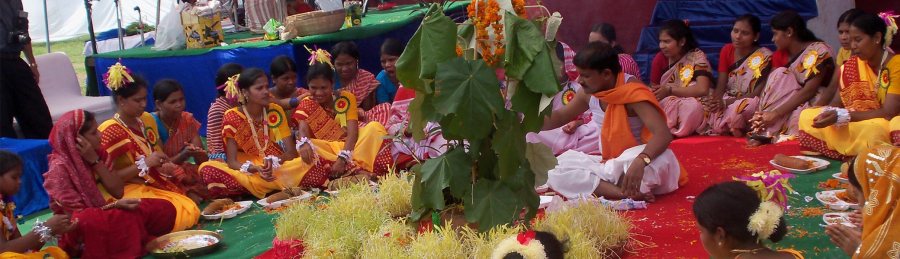
In the heart of India’s lush Jharkhand region, the Sarhul festival bursts forth in a vibrant display of reverence for nature and the celebration of life. This deeply rooted tribal festival, primarily observed in April, marks the arrival of spring and holds immense cultural significance for the indigenous communities of the area. Today, the echoes of traditional drums and the sight of colorful dances fill the air as Jharkhand celebrates Sarhul.
The Essence of Sarhul: Worshiping the Sal Tree
Sarhul, which literally translates to ‘worship of trees,’ usually falls in April, coinciding with the arrival of spring when nature is at its most bountiful. The festival is a time for the tribal communities, including the Munda, Ho, and Oraon tribes, to express their gratitude to Mother Nature and seek blessings for a prosperous future. The word “Sarhul” is derived from “Sar,” which refers to the sal tree, and “hul,” meaning collectively or grove.

At the heart of the Sarhul celebrations is the worship of the sacred Sal tree (Shorea robusta), which is considered a divine entity in tribal culture. The Sal tree represents fertility, prosperity, and spiritual energy. Devotees gather under these trees to offer prayers, perform rituals, and seek divine blessings for their families and communities.
The Celebration: Rituals and Performances
The Sarhul festival is marked by a series of elaborate rituals and cultural performances that reflect the rich tribal heritage of Jharkhand. The day begins with the pahaan (tribal priest) conducting special prayers at the sarna (sacred grove). Sal flowers are brought to the sarna, and the pahaan propitiates tribal deities. The sarna, often featuring at least five Sal trees (“sorjum”), is a place of worship for various occasions.
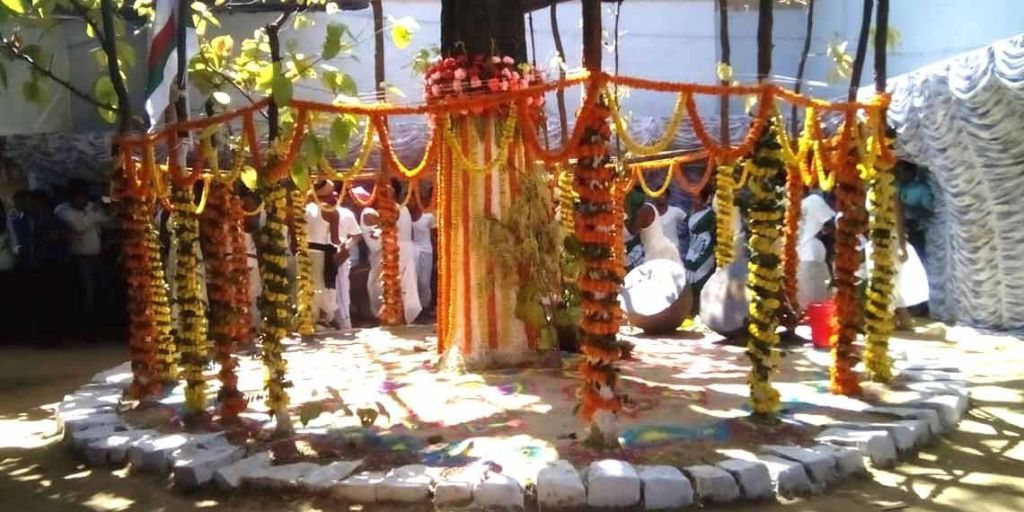


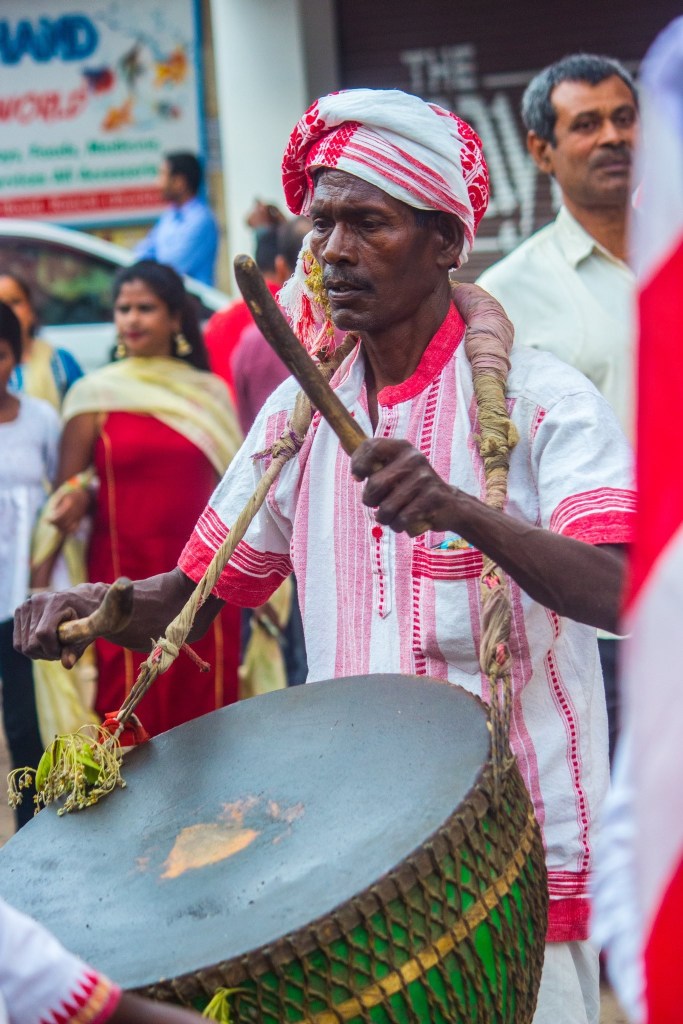
During rituals, villagers encircle the sarna. The pahaan offers three young roosters of different colors to Singbonga/Dharmesh (the Almighty), village deities, and ancestors. Adivasi drummers play traditional instruments like the dhol, nagara, and turhi, while the pahaan chants prayers and predicts rainfall by observing twigs floating in water. They interpret the special chirping of birds to anticipate the monsoon’s arrival and estimate rainfall levels. Even the sounds of snakes serve as clues to the expected intensity of the rains. and predicts rainfall by observing twigs in water.
Music, Dances, and Communal Harmony
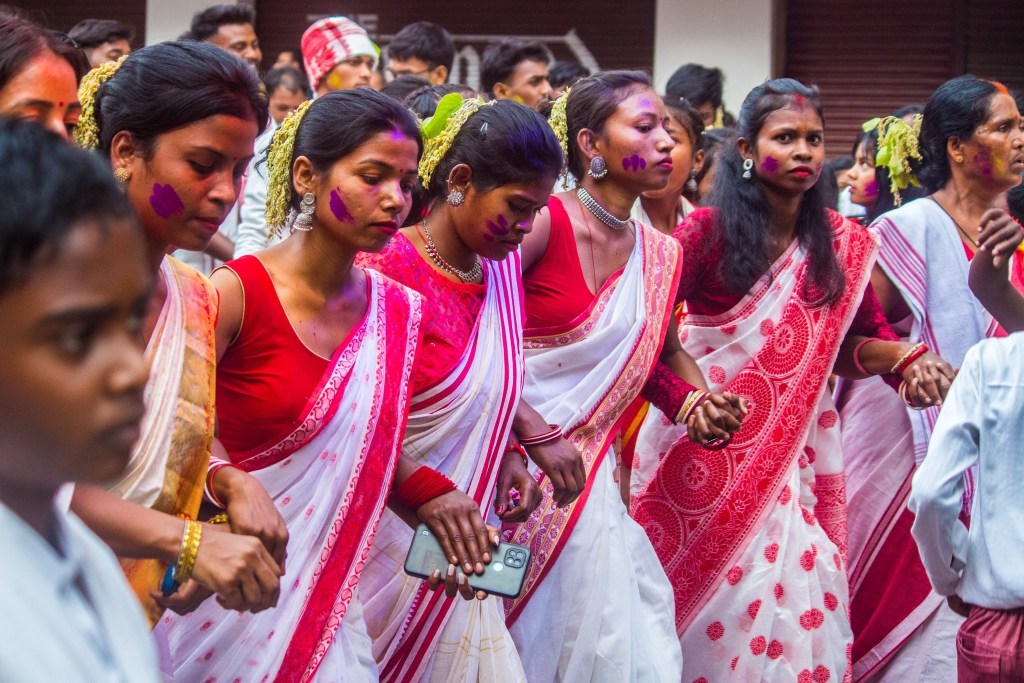
The Sarhul festival is a symphony of rituals and cultural performances that showcase Jharkhand’s rich tribal heritage. A highlight is the “Sarhul Dance,” where men and women, adorned in traditional attire, perform rhythmic dances to the sounds of dhols, flutes, and mandars. This dance is a joyous expression of gratitude to nature, accompanied by songs that praise the beauty of the natural world. Community gatherings in “akharas” (community halls) are central to the festival.
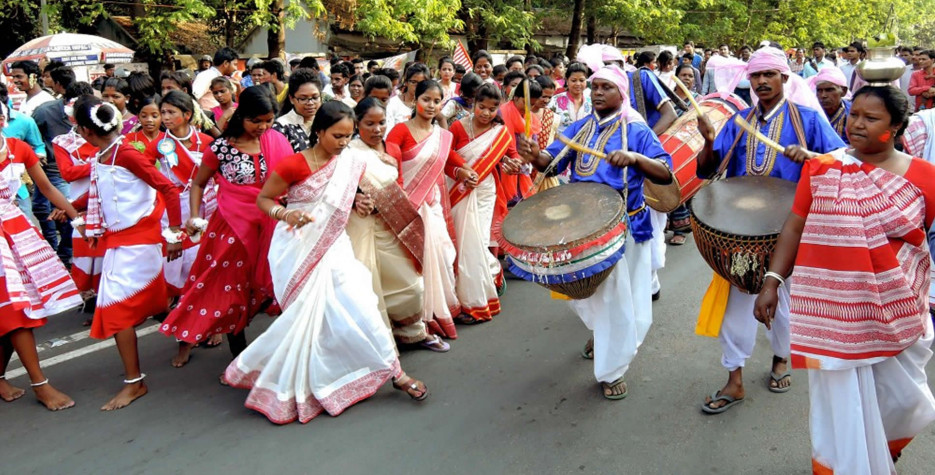

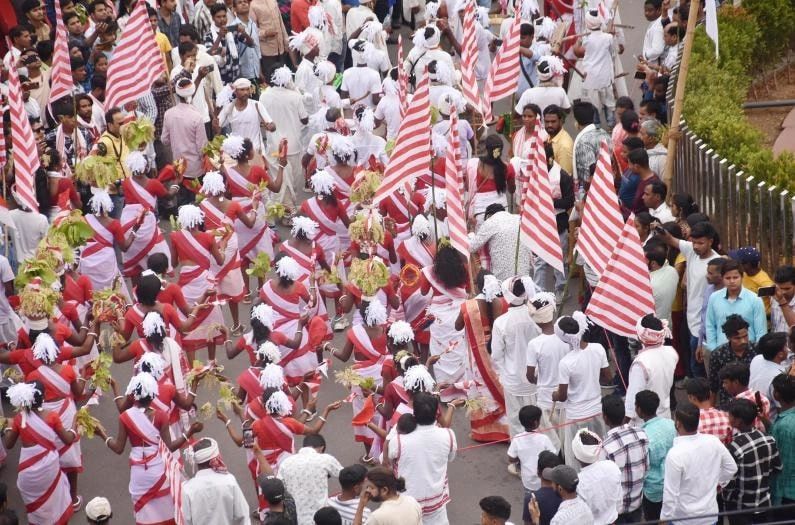

One of the most captivating aspects of Sarhul is the traditional dance and music. Tribal men and women, dressed in vibrant ethnic attire, perform the famous Sarhul Dance. Accompanied by rhythmic beats of traditional instruments like dhols, nagaras, and flutes, the dance is a mesmerizing display of joy and devotion.

Various dance forms such as Jhumair, Paika, and Chhau are performed, each narrating stories of nature, culture, and tribal beliefs. The dancers move in circular formations, representing the cycles of life, while musicians play instruments at the center of the group. This communal celebration fosters unity and a deep connection with nature.
Food and Feasting
No festival is complete without a culinary indulgence, and Sarhul is no exception. The festival is a time for sharing and community bonding, where people exchange homemade delicacies. Traditional dishes like dhuska (fried rice and lentil pancakes), pitha (sweet rice cakes), and malpua (deep-fried sweet pancakes) are prepared with love and served during the celebrations. Handia, a locally brewed rice beer, is also enjoyed during the festivities.
The Sal Tree in Mythology and Folklore
The Sal tree is revered not only in tribal traditions but also in Hindu, Jain, and Buddhist mythology. In Hinduism, the Sal tree is sacred and is associated with Lord Vishnu. Jain and Buddhist traditions link the tree to enlightenment—Mahavira, the 24th Jain Tirthankara, is believed to have attained enlightenment under a Sal tree, while Buddhists believe that Queen Mahamaya gave birth to Lord Buddha while grasping a Sal tree.
Legends and Folklore: The Story of Bindi
Several legends enrich the Sarhul festival. One prominent legend traces back to the Mahabharata period, where Munda tribal warriors, who aided the Kauravas, were honoured by covering their fallen bodies with Sal leaves and branches. This act demonstrated the protective power of the Sal tree.
Another popular folklore tells the story of Bindi, the daughter of Mother Earth. When Bindi disappears, Mother Earth mourns, causing leaves to fall and gloom to spread. Upon finding Bindi in the underworld, the God of Death agrees to a compromise: Bindi will spend half her time on Earth and half in the underworld. Sarhul celebrates Bindi’s return, marking the renewal of nature.
Ecological and Cultural Importance
Beyond its cultural significance, Sarhul promotes environmental conservation and sustainable practices. The reverence for trees and nature highlights the traditional wisdom of living in harmony with the environment.
Preserving Tradition in Modern Times
Efforts are being made to promote Sarhul as a cultural tourism attraction, allowing people to experience Jharkhand’s unique heritage. However, it’s crucial to ensure that the festival’s essence and traditional values are preserved, respecting the cultural sensitivities of tribal communities.

Sarhul serves as a reminder of our deep connection to nature and the importance of preserving cultural heritage. Through rituals, dances, and communal celebrations, Sarhul continues to weave together tradition, spirituality, and environmental consciousness.

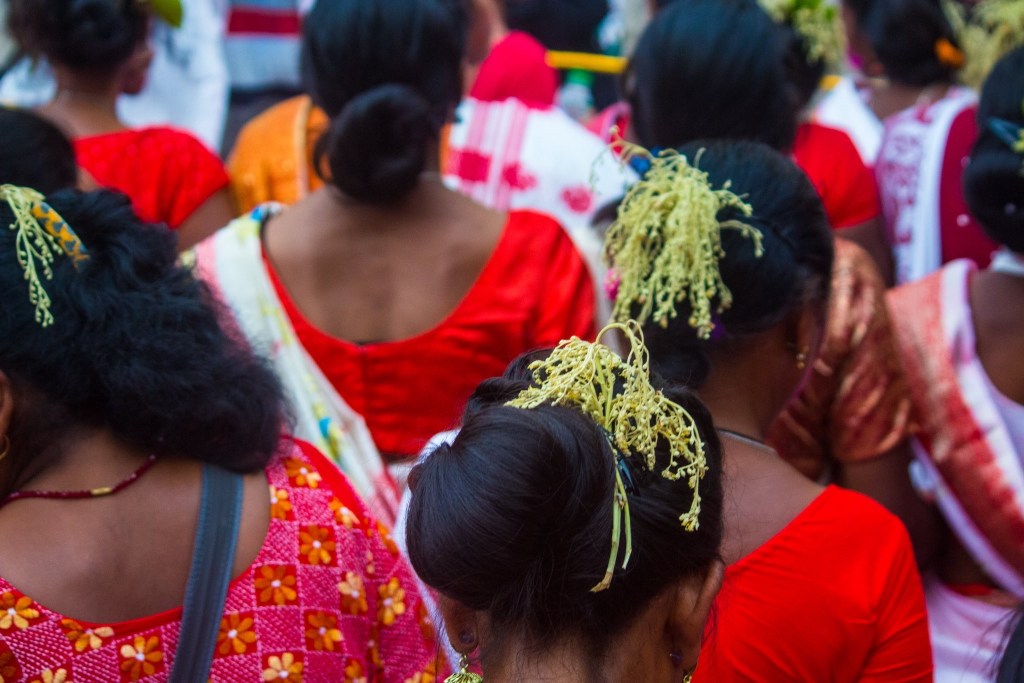



Sarhul is more than just a festival; it is a reminder of our deep-rooted connection with nature and the need for sustainable living. As Jharkhand rejoices in the festivities of Sarhul today, let us embrace the spirit of gratitude, harmony, and reverence for the environment.
Wishing You a Joyous Sarhul!
Happy Sarhul to all celebrating this beautiful festival of nature’s blessings and tribal culture! May this season bring prosperity, happiness, and harmony to all.

jharkhand ORAON tribes are the best tribes in the world because they worship the nature,They worship earth because they are born in earth and is called as DHARTI AAYO
They worship air,trees,water,and every thing which is suited in the earth…..
JAI SARNA MAA
JAI CHALA AAYO
JAI DHARMESH BABA
JAI JHARKHAND……
LikeLiked by 1 person
JAI CHALA AYO
LikeLiked by 1 person
Amar Oraon
SARHUL
Sarhul Festival, Jharkhand Sarhul festival is one of the important festivals of Oraon tribe. The centuries old Sarhul festival is celebrated across Jharkhand, especially in the tribal belt. It showcases various colours of life through flowers just like the nature undergoes various changes throughout the year in different seasons.
The word “Sarhul” holds special significance for the tribe. It is celebrated in the month of March-April months in the Geogian Calender. Oraon tribe primarily consists of practicing agriculturist; the Sarhul marks the beginning of the agriculture season of their month. The word Sarhul means “Sar” as Year and “Hul” as Set to commence.
The small cluster of Sakhua (Sarai) Tree is called Sarna. In Kurukh language of Oraon Tribe, the Sakhua fruit or Shaal fruit is known as Naur and in the local Sadri language; they are known as Sarai. Similarly, Sakhua is popularly called as Sakhu and the Oraons consider it to be a god`s gift and extremely auspicious.
The Oraon Tribes believe that the good yield of Shaal-fruit signifies the bumper agriculture harvest for them. From the special chirping of birds, they could figure out the likely advent of the monsoon season and the expected amount of the rainfall in their region; even the snakes` sound gives them clue about the likely heaviness of rainfall.
In the Sarhul Festival, the Oraon Tribe celebrate the holy matrimony of the Earth and the Nature; depicting the masculine race and the feminine race among the numerous living organism in our planet.
On the day of Sarhul Festival, they remember the Great Lord Dharmesh- the Supreme Being and thank him for the blessings showered on all the living things. The Sarhul festivity is held in the spring season signifying the birth of new-borns all around the planet among many living species.
LikeLiked by 1 person
Thanks Amar for enriching my blog by adding excellent details and information on Sarhul.
LikeLike
can you please tell me particular names of the places to experience sarhul festival
LikeLiked by 1 person
Sarhul is widely celebrated in the state of Jharkhand. You may visit the capital Ranchi if it’s convenient for you during the celebration of the Sarhul festival.
LikeLike
Interesting read. You have actually made this whole topic even more interesting. Only people closely connected to nature can understand the significance of nature’s gifts for humankind.
LikeLiked by 1 person
Thanks Rajat. You have rightly said.
LikeLiked by 1 person
Worshiping the Nature really is a great tribute to show respect and love for all that Mother Nature is providing for us. Great to know about this Oraon festival..thanks for sharing… 🙂
LikeLiked by 1 person
The tribals are traditionally worshiper of nature. In Jharkhand, there’s also another big tribal festival — Karma festival, where they worship Karam tree. You can see my post on Karma festival.
LikeLike
Yes, tribal people have different such festivals…other communities like Mundas and their ilk also have such festivals. They’re said to be the children of earth or “Bhumija” …
Will definitely check out the mentioned post… 🙂
LikeLiked by 1 person
this feast really connected with the nature and the very life of the tribal people of jharkhand but the way of celebration is shallowly changing. so i request please preserve the status of the festival
LikeLiked by 1 person
A nice read. Good amount of detail. I invite to go through the Photographs of Sarhul, clicked by me in my blog.
LikeLiked by 1 person
Nice shots…you captured the mood well.
LikeLike
Very nice culture and Dharm … sarna dharm …
Jai chala aayo.
LikeLiked by 1 person
I was pleasantly surprised to see ‘like’ for my post on sarul. I thought that people cared little about such festivities. But then I visited your blog and found this wonderful description of sarul.enjoyed reading it.Mamta
LikeLiked by 1 person
Thanks Mamta for checking back and your comments.
LikeLike
पढ़ कर मजा आया। बहुत सरल सी कथा , सरल सा रिचुअल उस पर सुंदर सा नाच वाह !
LikeLiked by 1 person
Pingback: Manda festival: Praying for rain – Indrosphere
Very informative Sir, thanks for sharing.
LikeLiked by 1 person
Thanks Rashmi.
LikeLike
Pingback: Blogger Recognition Award – Uniquesus
Worship of various components of nature has been a part of our culture and tradition since ancient times. The tribal communities who live close to nature express their gratitude through celebrations on various occasions. A nice post bringing out the details of the celebration.
LikeLiked by 1 person
Thanks Durga Prasad.
LikeLike
What a beautiful festival – worshipping the trees 🌳- a pure relationship between humans & Nature.
LikeLiked by 1 person
Thanks, Kaustuv!
LikeLike
amazing
It is a wonderful experience to see people carrying out thousands of years old traditions with such enthusiasm even today.
The tradition of worshiping the earth as a mother and worshiping trees is the tradition of our Sanatan Dharma for thousands of years, probably the festivals of land worship and tree worship are popular with different names all over India.
Nice writing on historical events related to sal tree.
LikeLiked by 1 person
Thanks, Nitin. Adivasis are still continuing the age old nature-worshipping rituals. In the name of urbanisation and industrialization, we’re destroying the nature.
LikeLike
Greatt blog I enjoyed reading
LikeLiked by 1 person
Thanks, Roy
LikeLike
Pingback: The role of “Sarna” in forest conservation and wildfire prevention: An indigenous tribal religion of India – News Waves Today
Pingback: The role of "Sarna" in forest conservation and wildfire prevention: An indigenous tribal religion of India | Religion and Global Society
Woww. Wonderfully described . Amar eta jana chilo na. Lovely. Traditional tribal festival surrounding nature 👏🏻👏🏻🙏🙏
LikeLiked by 1 person
Yes, Adivasis still celebrate their traditions and love for nature.
LikeLike
We all shud learn from them. Nature Is supreme. And we all must respect nature. 🙏🙏
LikeLiked by 1 person
Absolutely!
LikeLike
Warmest Sarhul wishes to you and your entire family may this festive season bring joy prosperity and togetherness to all of us
I read your article and I have no words to describe how beautifully you have written it. Wonderful article. Writing on such festivals is not very common these days.
LikeLiked by 1 person
Thanks, Dipen.
LikeLike