

On the eve of Valentine’s Day, as couples worldwide prepare to celebrate their love, there’s a certain charm in looking back at the timeless tradition of handwritten love letters. Valentine’s Day has grown into one of the most prominent dates on the commercial calendar, yet its history is deeply rooted in the ancient world, with origins that reach back to ancient Rome.
From February 13 to 15, Romans celebrated the feast of Lupercalia, a festival of fertility and purification. As part of the festivities, Roman men would sacrifice goats, using their skins to symbolically whip women—a ritual they believed would enhance fertility. By the end of the 5th century, Pope Gelasius I aimed to reclaim this celebration from its pagan roots and christianize it, officially designating February 14 as Valentine’s Day.
The choice of “Valentine” for this day is historically intriguing. There are two possible saints for whom the day may be named, both of whom share the feast day of February 14. Valentine of Terni and Valentine of Rome were both martyred in Rome—one ca. 197 CE and the other in 496 CE—each remembered for their unwavering faith and, perhaps, for their devotion to love and compassion.
In today’s world, where messages are sent with the tap of a screen and travel across continents in seconds, there’s something deeply nostalgic about the lost art of handwritten love letters. These relics of affection, once cherished and carefully preserved, are now slipping into obscurity. Yet, within their delicate pages lies a story of romance that transcends time, preserving raw emotions and heartfelt sentiments that have connected lovers for centuries.
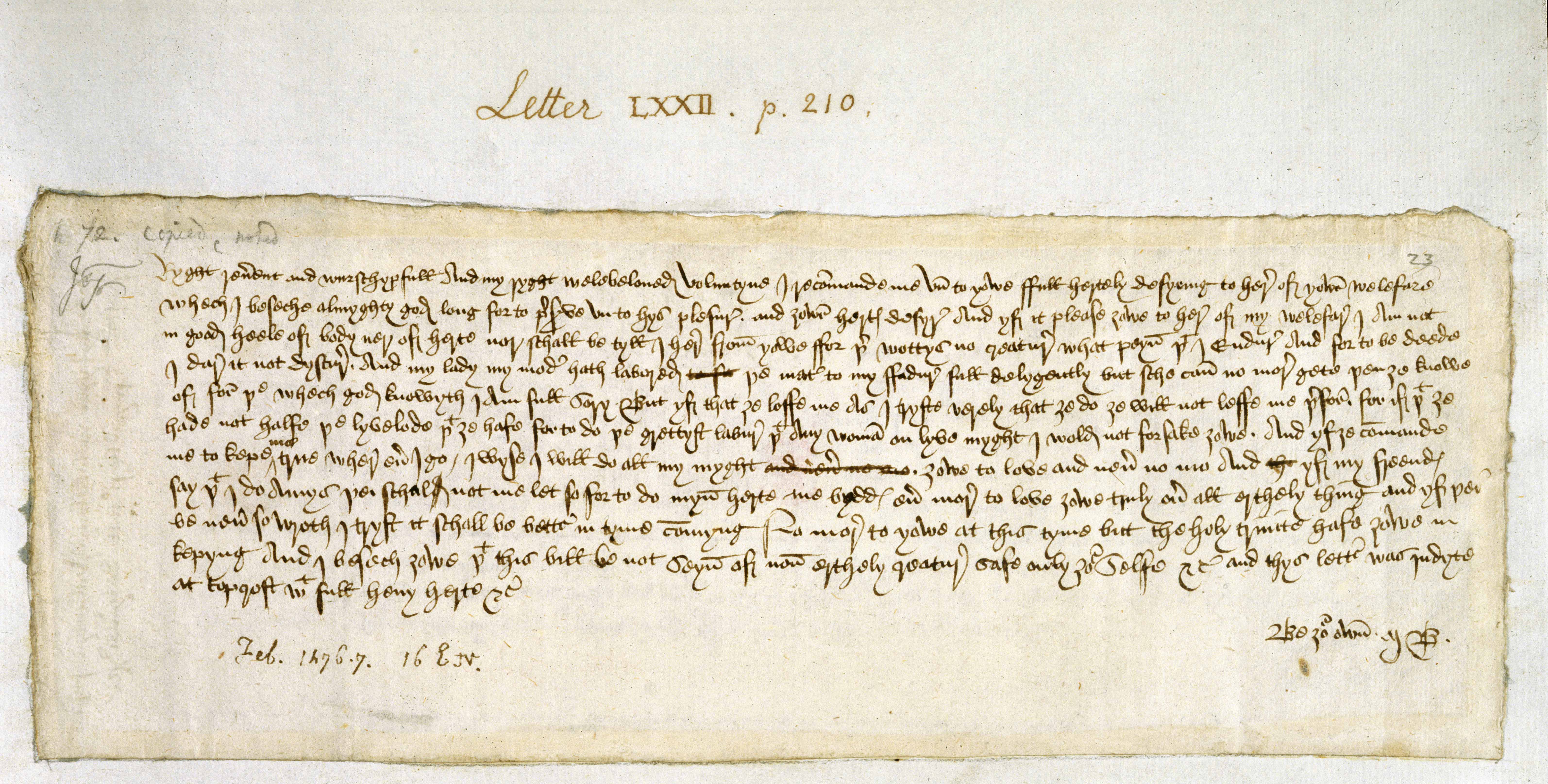
Consider the touching exchange between Margery Brews and John Paston III. Their letters, penned in February 1477, are believed to be among the earliest documented “Valentine” messages in English. Margery’s affectionate greeting, calling John her “right well-beloved Valentine,” has resonated through time, reminding us of the profound emotional weight that written words can carry.
Similarly, the 15th-century French Duke of Orleans, imprisoned in the Tower of London, sent deeply felt letters to his wife, expressing his love even while in captivity. His words, “Je suis desja d’amour tanné, Ma tres doulce Valentinée” (“I am already sick of love, my very gentle Valentine”), reflect the timeless human desire to connect and convey love, even in the most challenging of circumstances.
These remarkable letters, carefully preserved in institutions like the British Library, serve as poignant reminders of a bygone era. Unlike today’s efficient but impersonal digital messages, handwritten letters carry a unique intimacy. Each letter bears the unmistakable imprint of the writer’s hand, from the elegance of cursive strokes to the occasional smudge of ink or faint trace of fragrance. In essence, they are not just words on a page but an experience, a touchable memory crafted by the sender.
The tradition of letter writing extends beyond romantic expressions, encompassing friendships, familial bonds, and cultural exchanges. Many of us fondly recall the joy of receiving letters from pen pals or the excitement of waiting for the postman to deliver news from afar. Before instant messaging, letters were lifelines, bridging physical and emotional distances in a way that modern communication often lacks.
In literature, the theme of written expressions of longing is beautifully captured in Meghdootam, the classic Sanskrit poem by Kalidasa. Written in the 4th or 5th century, this epic tells the tale of a Yaksha, separated from his beloved and yearning for a reunion. Unable to reach her, he entrusts a passing cloud with messages of love and longing. This profound portrayal of love, carried by the clouds across vast distances, symbolizes a time when nature itself was called upon to bridge the distance between separated lovers. Kalidasa’s use of imagery and emotion brings to life the idea that love finds a way, even when the means of communication are out of reach.
As we navigate today’s digital landscape, it’s worth pausing to reflect on what we may have lost in the transition from handwritten letters to digital messages. While technology has made communication faster and more accessible, it has also stripped away some of the intimacy and humanity that defined handwritten correspondence.
Perhaps, in a world where emojis and abbreviations have become stand-ins for deep emotions, we can find space to revive this cherished tradition. A handwritten letter—crafted with thought, patience, and sincerity—captures a moment of connection that the digital age cannot quite replicate. As long as hearts continue to yearn for genuine connection, the art of the handwritten love letter will endure, a testament to the enduring power of words written with passion and love.

Hi,
My company’s blog, Eco 18, has a very relevant article to yours posted. It’s also about how the love letter has changed over time, and it’s been replaced by email and texting.
I believe that you and your readers will find it interesting and informative.
http://eco18.com/2012/02/all-you-need-is-love/
Thank you!
LikeLiked by 1 person
And there also were people, appointed by lovelorn romantic men, to write expressive love letters to win over their love interests.
LikeLiked by 1 person
Thanks, Pratikshya. Yes, quite true. But those days of letter-writing are over now and so are the way of expressions, too.
LikeLiked by 1 person