

Nestled in the heart of India, the state of Jharkhand offers a rich tapestry of cultural experiences. One such captivating celebration is the Karma Puja, a festival deeply rooted in the indigenous tribal traditions of the region. This ancient ritual, dedicated to the worship of the benevolent deity Karma, is a harmonious blend of music, dance, and spiritual devotion.
This day is also important for the brothers and sisters as the sisters pray for the well-being of their brothers. Even couples pray to the deity for a happy conjugal life. Whatever the purpose may be, Karma Puja is an integral part of the tribal communities. It is so popular in Jharkhand that the Government of the state has declared the day a public holiday.
Origins & Significance
Karma Puja traces its origins to the indigenous tribes of Jharkhand, particularly the Ho, Oraon, Munda, and Santhal communities. The festival is dedicated to worshipping the deity of Karma, the benevolent spirit believed to be the protector of the forests, fields, and crops. It symbolises gratitude towards nature and seeks blessings for a bountiful harvest, prosperity, and well-being.
Key Rituals & Celebrations
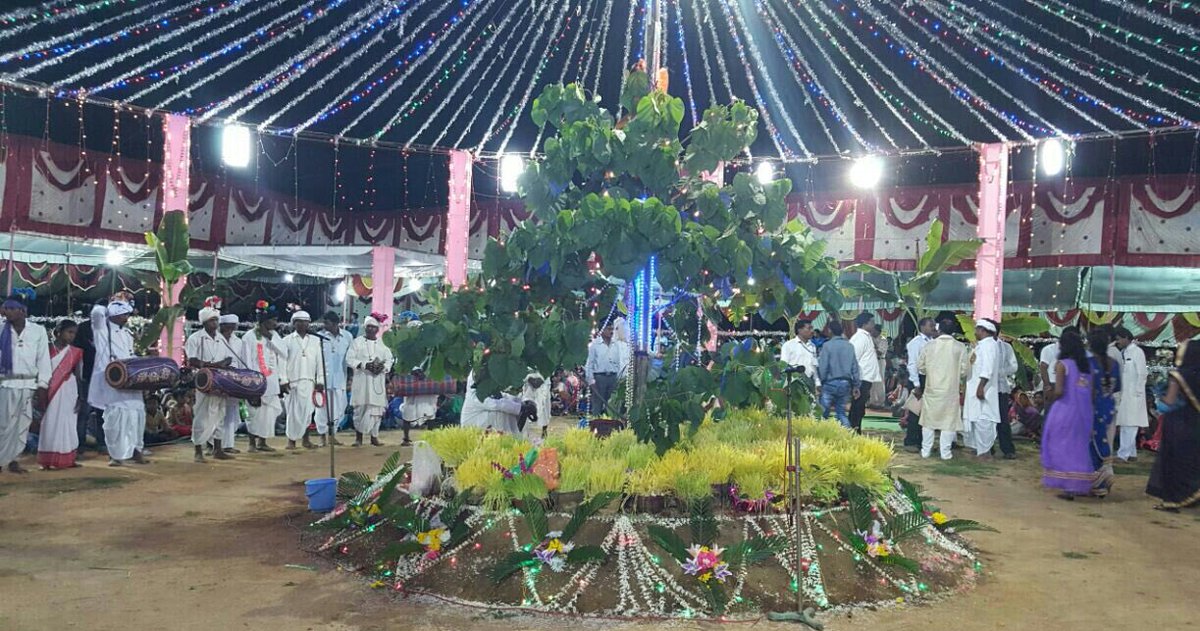
The festivities of Karma Puja typically take place during the autumn season, around August or September. The celebration begins with elaborate rituals performed by village elders and shamans. A special altar is erected under a sacred Karam or Sal tree, where devotees offer prayers, hymns, and sacrifices.
Tree Worship:
The indigenous people worship trees during this festival and pray to Mother Nature to keep their farmlands green and ensure a rich harvest. It is believed that the worship of good germination increases the fertility of grain crops. This tree is the symbol of Karma Devta who is worshipped on the day of the auspicious festival. The name Karma is drawn from the name of a tree “Karam” (Mitragyna parvifolia).
Rituals & Offerings:
The festival involves various rituals, including planting the Karam tree, offering prayers and sacrifices, and dancing around the tree.
During the dance they pass the branch of the tree, the men leap forward to a rapid roll of drums, while women dance with their feet moving in perfect rhythm to and fro. People seek the blessings of Karam Devta as the entire economy of the tribes is highly dependent on nature and the karma tree symbolize nature.
After the dance, a special offering is made to Karma Devta. It typically consists of rice, fruits, flowers, and other traditional delicacies. The priest or a respected elder person conducts the rituals and seeks the deity’s blessings for the well-being of the community.
Karma Dance:
During the puja, devotees dance in circles around the Karam tree or pole, forming a human chain. This dance is known as Karma Naach and is an essential part of the festival. It involved intricate footwork and synchronised movements. The dancers move in sync with the music, swaying to the beats and singing folk songs that narrate tales of Karma Devta’s glory.
Karma Dance is also one of the oldest dance forms in India. Karma dance, also popularly known as Karma Naach, is performed by the indigenous peoples of Jharkhand, Chhattisgarh, Madhya Pradesh, Bihar, Orissa and other regions of the country. The dancers hold each other’s waists and dance to the rhythm of music, welcoming the spring and forming a circle through their movements around a tree that is venerated as Karma.

On the day of Karma Puja, villagers gather in an open space or a designated Karma sthal (place) within the village. The celebrations involve singing traditional folk songs, accompanied by musical instruments like dhols (drums) and mandar (a traditional instrument). The rhythmic beats and melodious tunes create an enchanting atmosphere.
As the night progresses, the celebrations continue with more singing and dancing. The aroma of freshly cooked food fills the air as people share meals with each other. It is heartwarming to see how the festival brings people together and strengthens their sense of community.
Legends
The history of the festival is not much known. But local historians aver that it’s been celebrated since time immemorial. The legend behind the festival, according to anthropologist Harimohan is:
“Once upon a time, there were seven brothers. They were busy with agriculture work. They had no time even for lunch and as such their wives used to carry lunch to the field daily. Once it so happened that their wives did not bring lunch for them. They were hungry. In the evening they returned home without food and found that their wives were dancing and singing near a branch of the Karam tree in the courtyard. This made them angry and one of them lost temper. He snatched the Karam branch and threw it into the river. The Karam deity was thus insulted as a result of which the economic condition of their family deteriorated. They were starving. One day a Brahman (priest) came to them. The seven brothers narrated the whole story. On hearing it, the Brahman told them that the Karam Rani was angry and she must be appeased. If it was not done their condition would further deteriorate, the Brahman told them. The seven brothers then left the village in search of the Karam Rani. They kept on moving from place to place and one day they found the tree. Subsequently, they worshipped it. Thereafter their economic condition started improving.”
There are multiple versions of the story behind the origin of Karam Puja.
“Among the Bhumij, Ho and Oraon the legend is that seven brothers were living together. The six elders used to work in the field and the youngest stayed at home. He was indulging in dance and songs round a Karam tree in the courtyard with his six sisters-in-law. One day, they were so engrossed in dance and song that the morning meal of the brothers was not carried to the field by the wives. When the brothers arrived home, they became agitated and threw the karam tree into a river. The youngest brother left home in anger. Then evil days fell on the remaining brothers. Their house was damaged, the crops failed and they virtually starved. While wandering, the youngest brother found the karam tree floating in the river. Then he propitiated the god, who restored everything. Thereafter he came home, he called his brothers and told them that because they insulted Karam Devta, they fell on evil days. Since then the Karam Devta has been worshipped.”
Another legend prevalent among the Pauri Bhuiyans:
“A merchant returned home after a very prosperous voyage. His vessel was loaded with precious metals and other valuables, which he had brought from distant lands. He waited in the vessel to be ceremoniously received by his wife and relatives, as was the custom. As it was the day of the Karama festival, all the women were engrossed with dancing and the men with playing the drums, so no one went to receive him. The merchant became furious with them. He uprooted the karam tree and threw it away. Then the wrath of Karam Devta fell on him. His vessel immediately sank in the sea. The merchant consulted astrologers who told him to propitiate Karam Devta. He launched another vessel, set out in search of the deity, and found him floating in the sea. He propitiated him with great devotion and was restored with all wealth. From that day on, the annual festival of Karam Puja has been held. After spending the whole night with dance and songs, the people uproot the branches and carry them to nearby rivers or rivulets for immersion.”
Cultural Significance and Impact
Karma Puja serves as a unifying force, bringing together people from diverse backgrounds. It fosters a sense of camaraderie, solidarity, and mutual respect among the villagers. The festival also reflects the deep connection between the indigenous communities and nature, highlighting their reverence for the environment and their dependence on it. The communal feast, known as Karma Bhoj, is a testament to this spirit of togetherness, where everyone shares in the joys of delicious traditional delicacies prepared with love and care.
Over the years, Karma Puja has evolved from being a traditional agrarian festival to a vibrant cultural extravaganza that reflects the ethos of Jharkhand’s tribal heritage. While preserving its age-old customs and rituals, the festival has also adapted to modern times, incorporating elements of music, dance, and art to appeal to younger generations.
Conclusion
As the rhythms of dhols reverberate through the tranquil landscapes of Jharkhand, and the vibrant hues of traditional attire adorn the villagers, Karma Puja stands as a testament to the enduring spirit of cultural heritage and communal harmony. It serves as a reminder of the intimate bond between humanity and nature, urging us to cherish and preserve the rich tapestry of traditions that define our collective identity.
Karma Puja is a testament to the rich cultural heritage of Jharkhand and the enduring spirit of its indigenous people. Through its vibrant rituals, music, and dance, the festival offers a glimpse into the harmonious relationship between humans and nature. It is a celebration of life, unity, and gratitude, inviting us to appreciate the beauty and significance of cultural traditions.

nice
LikeLiked by 2 people
बहुत सुंदर त्यौहार है
LikeLiked by 1 person
Fascinating culture. Enjoyed reading.
LikeLiked by 1 person
Thanks a lot!
LikeLike
सुंदर सादगी भरे किस्से जो आदिवासियों में ही पाए जा सकते हैं. शायद ख़तम भी हो रहे होंगे.
पर सभी rituals कुदरत के बहुत नजदीक हैं.
LikeLike
Very informative Sir as always 🙂
LikeLiked by 1 person
Thanks Rashmi 😊
LikeLike
Pingback: Handia — a desi fermented beverage – Indrosphere
Nice festival for the environment!
LikeLiked by 1 person
Pingback: All Assam Gowala Jati Unity
Nice naration…nice photographs. Karma festival on Vishwakarma day.
LikeLiked by 1 person
Thanks, Mano.
LikeLike
Happy Karma.
Thanks for your beautiful narration and Pic, that reminds me
my old days in Ranchi Agricultural College, kanke where we use to celebrate Karma
with my local friends..
LikeLiked by 1 person
Thanks, sir. Happy Karma!
LikeLiked by 1 person
Pingback: Celebrating the International Day of the World’s Indigenous Peoples: Adivasis of Jharkhand – Indrosphere
I find it fascinating how deeply rooted this celebration is within Jharkhand’s indigenous tribal traditions.
LikeLiked by 1 person
Absolutely! The Karma celebration is a profound reflection of Jharkhand’s rich tribal heritage and deep reverence for nature. This vibrant festival truly showcases the cultural depth and ecological wisdom of the region’s indigenous communities. Thank you.
LikeLike
Happy Karma Puja! 🌿✨ What a beautiful celebration of nature, community, and ancestral wisdom. The post you shis a rich tribute to this vibrant Adivasi festival.
From the sacred worship of the Karam tree (Mitragyna parvifolia) to the rhythmic Karma Naach, the festival pulses with gratitude toward nature and the spirit of togetherness. The legends of the seven brothers and the merchant add layers of folklore that make the ritual even more meaningful
It’s heartwarming to see how this ancient tradition continues to unite communities, honor the environment, and celebrate life with music, dance, and shared meals. Truly, Karma Puja is not just a festival—it’s a living expression of harmony between humans and nature.
May the blessings of Karma Devta bring prosperity, joy, and unity to all!🙏🏽
LikeLiked by 1 person
Beautifully said! 🌿✨ Karma Puja truly radiates the spirit of gratitude and togetherness. Here’s to honoring nature, cherishing community, and keeping these timeless traditions alive. 🙏🏽💚
LikeLike