
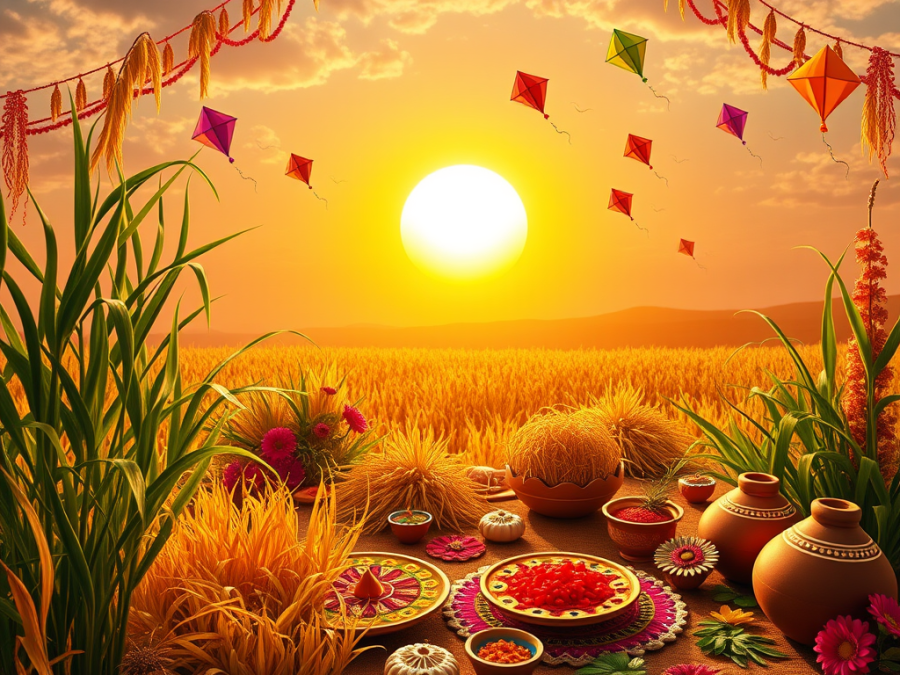
Makar Sankranti celebrated on January 14th, marks a significant astronomical event and holds immense cultural and religious importance in India. It signifies the end of Malmaas, an inauspicious month in the Hindu Panchang (calendar), and the transition of the Sun into the zodiac sign of Makar (Capricorn). This festival heralds a change in season and is observed with different names and customs across various regions of India: Lohri in the North, Bhogali Bihu in Assam, Poush Parbon in Bengal, and Pongal in the South. Despite these regional variations, the core essence of the festival remains the same – celebrating the Sun’s journey and the beginning of the harvest season.
Astronomical Significance
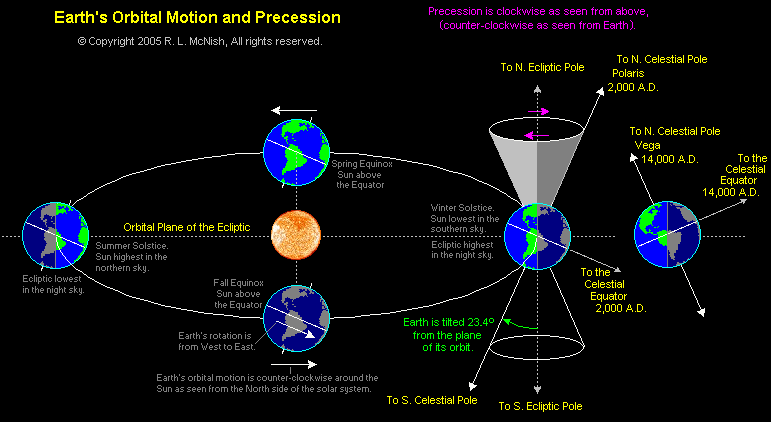
Makar Sankranti is unique among Indian festivals because it is celebrated on a fixed calendric day of the solar calendar, unlike other festivals that follow the lunar calendar. On this day, the Sun transitions from Sagittarius (Dhanu Rashi) to Capricorn (Makara Rashi). This transition is known as Sankranti, which means the transmigration of the Sun from one zodiac sign to the next. Occasionally, Makar Sankranti falls on January 13th or 15th due to the Earth’s axial precession, a gradual shift in the orientation of the Earth’s rotational axis.
Surya: The Deity of Light and Warmth
In Hinduism, Surya (the Sun) is revered as a powerful deity, symbolizing light, warmth, and life. He is believed to control the seasons and the ripening of crops, making his role crucial in an agrarian society. Makar Sankranti marks the end of the northeast monsoon in South India and the beginning of the harvest season. Devotees offer food to Surya to honour and seek blessings for the upcoming agricultural cycle.

Misconceptions and Clarifications
A common misconception is that Makar Sankranti marks Uttarayana, the Sun’s northward journey. In reality, Uttarayana begins with the winter solstice on December 21st, when the Sun reaches its southernmost point. Due to the axial precession of the Earth, the date of Makar Sankranti has shifted over centuries. Historically, around 1500-2000 years ago, the winter solstice did coincide with January 14th, aligning Makar Sankranti with Uttarayana. This historical alignment is why the festival is still celebrated on this date, despite the solstice now occurring earlier.
Cultural and Ritualistic Importance
Makar Sankranti signifies the beginning of auspicious times in the Hindu calendar when various rituals and ceremonies are performed. It symbolizes the father (Sun) visiting his son (Saturn), as Capricorn is ruled by Saturn. This day is believed to bring harmony between the celestial father and son, both of whom hold significant astrological influence. People pray to both the Sun and Saturn, seeking their blessings for success and prosperity.
Legends and Traditions
According to Hindu mythology, King Bhagirath brought the holy river Ganga to Earth on Makar Sankranti, providing moksha (salvation) to the 60,000 sons of King Sagar. This legendary event is commemorated by thousands of devotees taking a holy dip in the Ganga and other sacred rivers. The confluence at Ganga Sagar, where the Ganga meets the Bay of Bengal, is particularly significant for these ritual baths.
Celebrations Across India
The festival is marked by diverse celebrations across India:
- Lohri: In Punjab, people celebrate Lohri on the eve of Makar Sankranti by lighting bonfires, singing, and dancing.
- Bhogali Bihu: In Assam, Bhogali Bihu is a time of feasting and enjoyment, with community bonfires and traditional games.
- Poush Parbon: In Bengal, the Poush Parbon festival features special sweets made from newly harvested paddy and date palm syrup.
- Pongal: In Tamil Nadu, Pongal is a multi-day festival dedicated to the Sun God, with elaborate rituals and preparations of a dish named Pongal.
Conclusion
Makar Sankranti is a celebration of nature, the Sun’s energy, the harvest of new crops, and the progress of mankind. It is a day to reflect on the harmonious balance of cosmic forces and their impact on human life. As we celebrate this auspicious festival, may the Sun’s journey into Capricorn bring you greater knowledge, wisdom, and happiness. Wishing you all a joyous Makar Sankranti!

very nice..
LikeLiked by 1 person
Thanks, Verma ji
LikeLike