
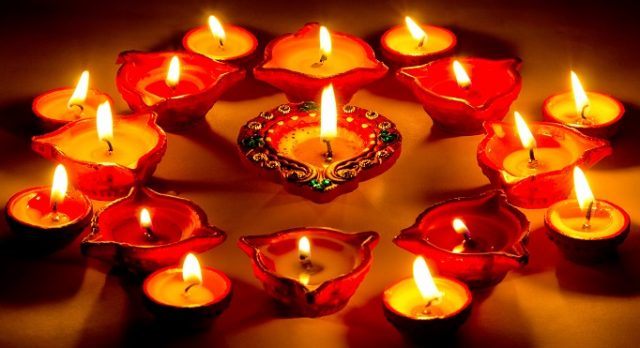
There are moments in life when memory feels warmer than sunlight. For me, Diwali — the festival of lights — is one such reservoir of warmth. Every year, as the season approaches, my mind wanders back to the bylanes of Delhi where I grew up, to a time when life was simpler, rhythms slower, and festivals infused with a deeper sense of anticipation.
The Glow of Simpler Times
In those childhood days, the arrival of Diwali transformed Delhi’s narrow lanes into glowing corridors of celebration. The fragrance of incense blended with the faint smoke from freshly lit firecrackers, creating a sensory symphony that signalled the festival’s approach.
For us children, Diwali was not merely a day — it was a season. Weeks before the festival, we would pool our meagre savings, counting coins again and again, plotting our grand purchase of firecrackers from the neighbourhood stall. Even a humble packet of phooljhadis felt like a princely reward.
And then came the moment that truly marked Diwali — placing the first diya in the verandah. Its gentle flame, trembling yet resolute, felt like an invitation for joy and prosperity to enter the home. Light, in those days, had weight. It had meaning. Today, surrounded by LED strips and sensor-controlled lamps, one almost has to switch off everything to rediscover the quiet splendour of an oil lamp.
The Irony of Abundance
Festivals in our childhood followed a natural rhythm. Firecrackers were reserved for that one special night. Sweets were prepared lovingly in home kitchens or procured fresh from local halwais, carried home in plain cardboard boxes — simple yet magical.
We waited for that first bite of kaju katli or boondi laddoo. Today, these very delicacies sit nonchalantly in refrigerators year-round. In the noise and abundance of modern life — from nonstop TV debates to the relentless buzz of notifications — even the joyous crackle of firecrackers risks becoming just another sound. Scarcity once made festivals special; abundance has made them routine.
The Festival Economy of Yesteryears
There was a time when festivals were not merely cultural celebrations. They were economic engines — lifelines for countless households.
Sweepers cleaned the colonies with renewed dedication, potters shaped mounds of fresh diyas, carpenters repaired old furniture, coppersmiths polished vessels, and tailors worked late into the night stitching festive attire. Diwali was not just a festival of lights — it was a festival of dignity, purpose, and livelihood.
As children, we accompanied our elders to bustling markets where artisans proudly displayed their creations. Bargaining was not an exercise in frugality; it was a gesture of mutual respect, ensuring that everyone — from buyer to artisan — returned home content.
Today, that delicate ecosystem has been disrupted. Factory-made, mass-produced goods dominate. Imported plastic lamps outshine the humble diya. The potter, once central to the festival, now watches from the margins as inexpensive LED alternatives flood the markets. Ironically, even families with limited means stretch themselves to buy smartphones — symbols of aspiration — while the crafts that once sustained our festivals fade into obscurity.
The Fading Warmth of togetherness
One of my fondest Diwali memories is the warmth of human connection. Neighbours stepping in unannounced with plates of sweets. Elders placing their hands on our heads in blessing. Friends greeting us with genuine, heart-warming jadoo ki jhappis.
Today, most greetings arrive as WhatsApp forwards — identical, impersonal, efficient, and forgettable. Technology has made communication easier, but not necessarily warmer. Without careful intention, festivals risk becoming ornate shells — visually impressive but spiritually hollow.
A Blur of Festivities
Children today grow up in a world of malls, global brands, and standardized celebrations. Festive decorations in malls look remarkably similar, whether it is Diwali, Christmas, Eid, or New Year. Packaged gifts, promotional sales, and neon lighting dominate the landscape.
The unique essence that defined each festival — its rituals, symbols, flavours, and textures — slowly dissolves in the homogenizing whirlwind of globalization.
Preserving the Soul of Festivals
Yet, change is inevitable. Traditions evolve, societies transform, and cultures adapt. The challenge before us is not to resist change, but to guide it consciously — preserving the soul even as the form evolves.
Perhaps the answer lies in striking a gentle balance — embracing the conveniences of modern life without letting go of the timeless rituals that give our festivals their soul. So yes, decorate your home with bright LED lights, but also pause to light a single diya shaped by a village potter’s hands. Send your digital greetings, but don’t forget the warmth of walking over to a neighbour’s home with a plate of sweets and a smile. Enjoy the comfort of store-bought delicacies, but make at least one dish at home, sharing with your children the stories and memories that make it special.
Let celebrations be wide and vibrant, but let them also remain rooted in gratitude, intention, and the joy of community — for it is in that blend of old and new that festivals truly come alive.
Festivals are not merely about consumption. They are about connection. They are living heritage — the threads that bind generation to generation.
A Light for the Future
This year, as I place that first diya in my home, its flickering flame will carry with it my childhood memories — those evenings when a single lamp dispelled darkness and filled our hearts with wonder.
And I will hope that the generations that come after us — including my grandchildren — will one day look at that tiny flame and find in it not just light, but a story, a legacy, and an unbroken bond across time.
In embracing both tradition and modernity, we ensure that Diwali remains what it has always been — a celebration of light, love, and the enduring spirit of togetherness.

Truly creative!!!! A very beautiful piece indeed!!!
LikeLiked by 2 people
Thank you.
LikeLiked by 1 person
Well said Bro.
Life has become complex. Nowadays, you need to call up in advance if you want to visit someone, lest you end up at locked doors!!!
LikeLiked by 3 people
Thanks Aranjit. 🖒
LikeLiked by 2 people
On a lighter note, sometimes it may happen that you informed someone in advance, and hence found a locked door 😉
LikeLiked by 1 person
Yes, quite true and you then doubt whether it was deliberately done! 😁😁
LikeLiked by 1 person
Very true indeed …nowadays no exchange of sweets and bonhomie.. but all the same the post Diwali litter of crackers and damage remains the same…collateral.damage.
LikeLiked by 2 people
Quite true. Litter of crackers indicate the celebrations next morning. Everyone forgets ‘Swatch Bharat Abhiyan’.
LikeLiked by 2 people
What a thoughtful message! I agree word by word.
LikeLiked by 1 person
Thanks Asha 😊
LikeLiked by 1 person
Both happy and sad thoughts.
It’s interesting how many religions have their high holy days in the fall. I wonder why that is? Autumn goes well with introspection? The harvest is in, so a good time for introspection?
LikeLiked by 1 person
You’re right Georgia. Throughout history, autumn has been a season of harvest and reflection. Many cultures around the world take time during this cooling season to give thanks for the bountiful yields of their fields and for loved ones they hold dear. These celebrations can be religious in manner or secular, but they all have one thing in common: they are cause for fun festivities and joyous thanksgiving! We shouldn’t miss the fun, joy and the warmth with the increase of use of technology in our life.
LikeLike
Also, nowadays people purchase clothes and other items throughout the year, which was earlier done specially during festival time. That shopping used to bring freshness and excitement especially among children. You may be interested in the discussion on the following article, which I read recently —
LikeLiked by 1 person
Very true & i completely agree! The warmth of a personal wish is totally lost. I used to cherish the clothes shopping but now I guess that is also just a click away!
LikeLiked by 1 person
Thanks Divya. Technology is taking away the warmth but giving us instant satisfaction of getting the job done whenever we want.
LikeLiked by 1 person
A similar post on festivals.
would like you to review it : )
LikeLike
You have a nice blog, Akriti. Liked it.
LikeLiked by 1 person
That is so true! The indians around me were more excited for Halloween than Diwali – guess they hate India after being out of it for even a few years.
LikeLiked by 2 people
Trying to become more American than Americans! 😀
LikeLiked by 2 people
Which we never can, for reasons many!
LikeLiked by 2 people
Fortunately, this time, in Kolkata we have much less sound of crackers (at least in my area). I follow my mother’s footsteps and lit up “pradips” every year…earlier I used to use “sorsher tel” to fill them up, but now readymade wax-filled pradips are available 😀
Though, we use the Chinese lamps on the rooftop…
LikeLiked by 2 people
So very true! Festivals are losing their sheen and the economics is changing too as you have so rightly pointed out.
LikeLiked by 1 person
Thanks Somali.
LikeLiked by 1 person
Yes, the good old days are gone……our children will grow up with a totally different understanding of what festivals mean……https://meredeshkimitti.wordpress.com/2016/11/19/blogging-contest-for-all-bloggers-amazon-vouchers-to-win/
LikeLiked by 1 person