
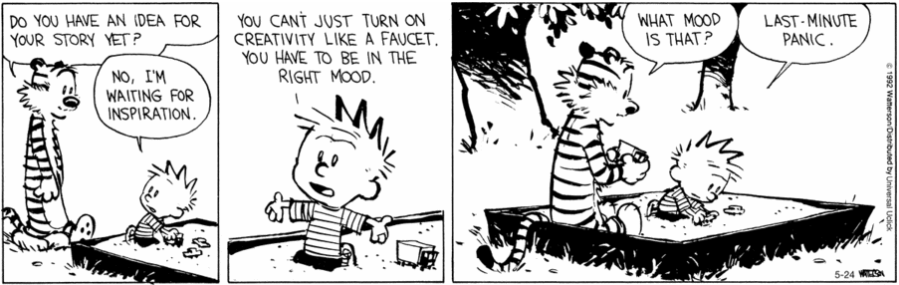
We’ve all been there — staring at a blank screen, waiting for inspiration to strike, but instead, we end up scrolling through social media, organizing our email inbox, or, in my case, cleaning the kitchen sink for the third time that week. Procrastination, that nagging habit we love to hate, is often seen as a roadblock to productivity, keeping us from achieving our goals and meeting deadlines. But what if I told you that procrastination might actually have a hidden superpower — one that fuels creativity?
Sounds counterintuitive, doesn’t it? But bear with me.
The Science of Procrastination
Yes, procrastination might be good for your creativity. I know, it feels like a paradox, but research from the University of San Francisco suggests that procrastinators tend to come up with more creative ideas than their non-procrastinating peers. The study theorizes that when we procrastinate, our brains are still working in the background, making new connections between ideas. So, while we’re putting off a task, our subconscious mind is quietly sorting through the puzzle pieces, often leading us to an innovative solution when we finally sit down to work.
Let’s just say, our brains seem to be a little like a slow-cooking stew — it takes time for all those ingredients to merge into something flavorful.
Mozart & the Art of Last-Minute Genius
I’ll admit, procrastination and I have had a long, complicated relationship. As a teenager, I would always leave my school assignments until the very last minute, only to end up in a panic-fueled scramble to finish them on time. But one day, while I was reading about the life of the great composer Mozart, I stumbled upon an anecdote that made me feel much better about my tendencies.
Imagine this: It’s the night before Mozart’s latest opera, Don Giovanni, is set to premiere in Prague. His friends are getting nervous. Why? Because Mozart had forgotten to write the opera’s introduction — and the performance was the very next day! Now, this is Mozart we’re talking about, the genius who composed some of the most beloved music in history. And yet, here he was, out drinking with friends while his masterpiece was missing a critical piece.
What did he do? After much convincing, he finally sat down to work at midnight, fueled by punch from his wife. He wrote the introduction all night long, completing it just in time for the premiere. Of course, this delay meant the performance was pushed back because there wasn’t enough time for the musicians to rehearse, but in the end, Mozart managed to deliver a performance that would be remembered for centuries.
Now, I’m not saying we should all take Mozart’s approach to deadlines, but it’s fascinating that even someone as accomplished as he was used procrastination as part of his creative process. Maybe there’s more to procrastination than we’ve been led to believe.
Researching Creativity Through Procrastination
There’s more to this procrastination-creativity connection than just a historical anecdote. Adam Grant, an organizational psychologist, has conducted extensive research on procrastination in the workplace and its surprising benefits. According to Grant’s studies, people who procrastinate are more likely to come up with creative ideas than those who immediately dive into tasks. In fact, his research found that delaying a task can help incubate new ideas, allowing your brain the freedom to wander and make unexpected connections.
In one experiment, Grant and his team had participants play computer games like Minesweeper and Solitaire before tackling a creative problem. The result? The procrastinators, who spent time on these “distractions,” were 16% more creative than those who didn’t.
Grant explains that starting a task early but leaving the finish for later gives you time to “incubate” your ideas. It’s like giving your brain time to brew something in the background while you’re busy with other things.
The Magic of “Structured Procrastination”
Of course, procrastination isn’t always helpful. If you’re constantly putting off crucial tasks, it can lead to stress, anxiety, and missed deadlines — not the best recipe for success. But what if you could turn procrastination into a tool? That’s where the concept of “structured procrastination” comes in.
The term was coined by Stanford philosopher John Perry, who argues that procrastination can actually be productive if done strategically. Perry even wrote an essay on the subject titled How to Procrastinate and Still Get Things Done, which won him an Ig Nobel Prize in 2011. According to Perry, procrastination doesn’t have to mean doing nothing — it just means prioritizing tasks in a way that allows your brain to come up with new solutions as you work on other, less urgent things.
Think of it like this: You’re working on a big project, but instead of diving into the main task right away, you work on smaller, less stressful tasks — all while your mind continues to churn on the big one. And when you return to it, you might find that you have a fresh perspective or new ideas.
Procrastination in History
If you’re skeptical, take a look at some of history’s most iconic speeches. Grant points out that Martin Luther King’s famous “I Have a Dream” speech was being rewritten right up until the last minute. Abraham Lincoln’s Gettysburg Address? Also revised in the eleventh hour. Both speeches, delivered with such power and precision, benefited from the flexibility that last-minute changes allowed — creating moments of impromptu brilliance.
I’ve found that when I step away from my work — even for just a little while — and return to it later, I often discover new angles I hadn’t considered before. It’s as if the time spent away from the task allowed my subconscious mind to make connections I couldn’t have forced.
Embracing Procrastination’s Power
So, here’s the takeaway: Procrastination doesn’t have to be the enemy of productivity. In fact, when managed properly, it can become a powerful ally in boosting creativity and problem-solving. The trick is balancing procrastination with focused work time. Instead of feeling guilty for taking a break or letting your mind wander, embrace it. Maybe that extra five minutes of daydreaming or doodling will spark the idea you’ve been waiting for.
Next time you find yourself avoiding a task, remember: Your brain might just be cooking up something genius while you scroll through cat memes. Who knows? The next Don Giovanni might be waiting to emerge from your procrastination.
So, go ahead — take that extra minute to step back and let your mind wander. After all, the best ideas often come when you least expect them.

Amazing theory Indrajit… never thought on these lines….😀😀😀
LikeLiked by 1 person
Thanks Shivangi. 🙂
LikeLiked by 1 person
Well I guess it has two sides.
LikeLiked by 1 person
Love that procrastination has an upside!
LikeLiked by 1 person
Jo aaj kare so kal kar, jo kal kare so kabhi na kar.
Or
Whenever you are given a task, ask if it is absolutely necessary? What will it achieve? Will the task bring any benefit to the society at large?
If any of the answer is negative, you can relax and take sip of your “elixir of life”!! 😉
LikeLiked by 1 person
“Aaj kare so kal kar, kal kare so parso,
Aisi bhi kya jaldi hai jeena hai jab barso” 🙂
But that’s not the theory. If you leave the work unfinished for some time and and when you return to it, you will have some new ideas, most of the time. And creativity is born from new ideas.
LikeLiked by 1 person
So great to hear that procrastination has it’s advantages! This makes me very happy:)
LikeLiked by 1 person
You are on to something here 🙂
LikeLiked by 1 person
Hahahaha!
LikeLike
Interesting! Imagine procrastination in a home…lunch would be served at dinner time 🙂 🙂 I would love to procrastinate to make creative dishes!
LikeLiked by 1 person
Hahaha! I can skip my lunch for an exiotic, delicious dinner. 🙂
LikeLiked by 1 person
I read an article ” The power of positive procrastination” in my school days. I must admit, i have followed that to an extent 🙂
LikeLiked by 1 person
No one can beat me when it comes to procrastination and laziness…the theory is tailor-made for me… 😛
LikeLiked by 1 person
Hahaha! The theory is a confirmation of our faith in procrastination. 🙂
LikeLiked by 1 person
Procrastination helps! I’ve seen the subjects I rush just before the exams, sometimes I score better than the ones I prepared for months! Maybe at the urgency of the moment the brain works faster and better……Bill gates had said that its better to hire lazy people as they get the work done faster through easier methods lol☺
LikeLiked by 1 person
Yes, true. It works with me too! 🙂
LikeLiked by 1 person
Have a great week ahead!☺
LikeLiked by 1 person
What an apt post for me considering that I have been procrastinating on the blogging front for quite some time. Now, I would rather be happy to think and say that this is something called ‘structured procrastination’. 😀
LikeLiked by 1 person
And we will get some stunning, creative posts after this structured procrastination. 🙂
Thanks!
LikeLiked by 1 person
😀 😀
LikeLiked by 1 person
I am a proud procrastinator today😂
LikeLiked by 1 person
😀👍 Thanks.
LikeLiked by 1 person
Dear Indrajit RoyChoudhury,
Would you be interested in contributing an article on business/leadership or any other topic you ‘d like to our emerging website?
https://studentnessblog.wordpress.com/
We really need writers for our platform to raise awareness of it and transform it into an international business writing community!
Best,
StudentNess (Students in Business)
LikeLiked by 1 person
You have a nice blog but your blog says it’s an online platform for sharing student thoughts. I am not a (formal) student although I am a perennial student. 🙂
LikeLike
It would not be a problem at all
LikeLiked by 1 person
Pingback: Procrastination can make us more creative! — Indrosphere | Site Title
Roy, thanks for the interesting article. I’ll read the essay as soon as I get around to it.
I should have creativity out the wazoo. Actually, I am just the opposite, at least when at work. Everything is always well planned with contingencies on top of contingencies leaving little to chance. I’m always proactive and on top of things. I can see the advantages of procrastination, but, unfortunately, engineers are driven by timelines. Drawing out a project towards the end makes sense. There are always difficult issues to resolve and a little time can lead to creative approaches to resolving the issues. Many engineers cheat and sweep stuff under the rug so they can say they finished on time. Invariably, someone is stuck with the problem down the road.
Martin Luther King and creativity might not be the best example as he is largely recognised as a plagiarist. Some are more kind and call it collaboration. But, I get the point.
The article goes hand in hand with the idea of “sleeping on things for a while.”
LikeLiked by 1 person
Yes true, when the project is to be completed within a certain timeframe, you cannot afford the luxury of procrastination. But, then creative work cannot always be time-bound. It’s a theory based on observed correlation between procrastination and creativity but the reverse is not always true. Hence, there is no causality that only procrastination can make us creative. Thanks Leroy for your feedback.
LikeLike