

Beirut. The name itself hummed with vibrant, chaotic energy, a beautiful collision of ancient stories and modern life. But after days spent navigating its bustling streets, I craved a moment of peace, a breath of the sea. And that’s how I found myself drawn to the legendary Pigeon’s Rock and the tranquil embrace of the Corniche.
You know that feeling when a place just clicks? That’s what happened as I stood overlooking the Mediterranean, the twin sentinels of Pigeon’s Rock rising majestically from the azure depths. Locally, they’re called Raouché, a name that echoes the romance of a forgotten era. I learned they were born from the earth’s ancient shudders, these 60-meter giants carved by time and tide. Standing there, I felt a strange sense of timelessness, as if the very rocks held the secrets of millennia.
My first glimpse of the Corniche was equally captivating. It wasn’t just a promenade; it was a living, breathing ribbon of life. Palm trees swayed gently in the sea breeze, the air alive with the chatter of families, the rhythmic thud of joggers’ feet, and the distant calls of seagulls. I inhaled deeply, the salty air filling my lungs—a welcome contrast to the city’s hum. I let myself drift into the rhythm of the place, walking at a leisurely pace, soaking in the sheer vibrancy of it all.
The Raouché, a timeless symbol of the Lebanese capital Beirut is its most famous landmark. Off the coast of Raouché, there is a natural landmark called the Pigeons’ Rock, its Arabic name translates to rock and is believed to be a derivative of the French word rocher. It is also known as the Rock of Raouché.

This 60-meter-high offshore rock couple was formed in the prehistoric era by a geologic movement. These two huge rock formations, made of sedimentary pale soft, porous limestone rock eroded over millions of years, stand like gigantic sentinels on the Mediterranean Sea.

The history whispered through the stones. The Raouché district, home to Pigeon’s Rock, is steeped in history. The ground beneath my feet, the Dalieh of Raouché, has borne witness to human presence for over 7,000 years. It was humbling to think that long before the modern cityscape emerged, people had walked this same path, felt the same sea breeze, and marvelled at the same horizon.
Pigeon’s Rock is located in the Raouché district, which is also home to the Corniche. The Corniche is a seaside promenade that stretches for several kilometres along the coast of Beirut. It is a popular spot for locals and tourists alike, who come here to enjoy a leisurely stroll or a jog while taking in the breathtaking views of the sea. I love having a leisurely stroll here.
Then, there was the Manara—the lighthouse—a silent guardian standing tall over the coastline. Built on a hill above the water, the original lighthouse was erected in 1825 under Ottoman rule, standing 25 meters tall, its beacon fueled by kerosene. I imagined the old lighthouse keeper climbing those stairs in darkness, burdened with gallons of oil, ensuring that the flame burned steady against the vast night sky.
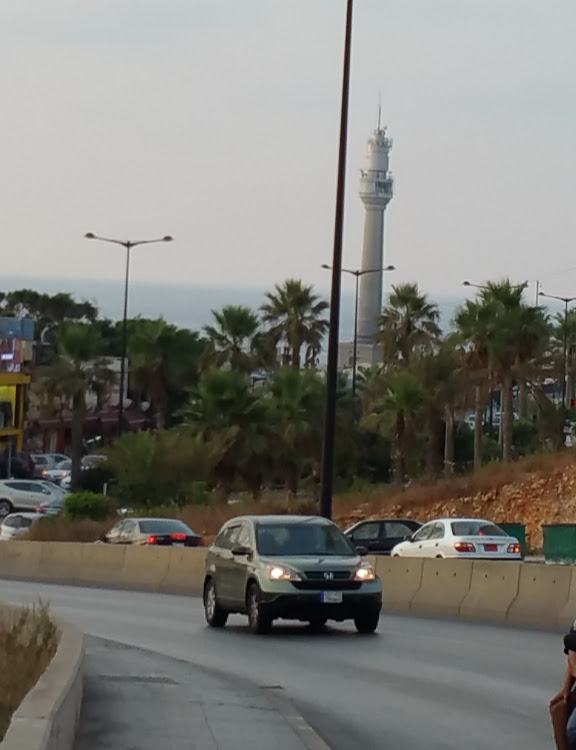
The lighthouse, a witness to wars and peace, had long stood as a beacon of hope and direction in the Mediterranean expanse. Even from a distance, it exuded an air of resilience, a quiet yet powerful presence against the backdrop of a shifting city.

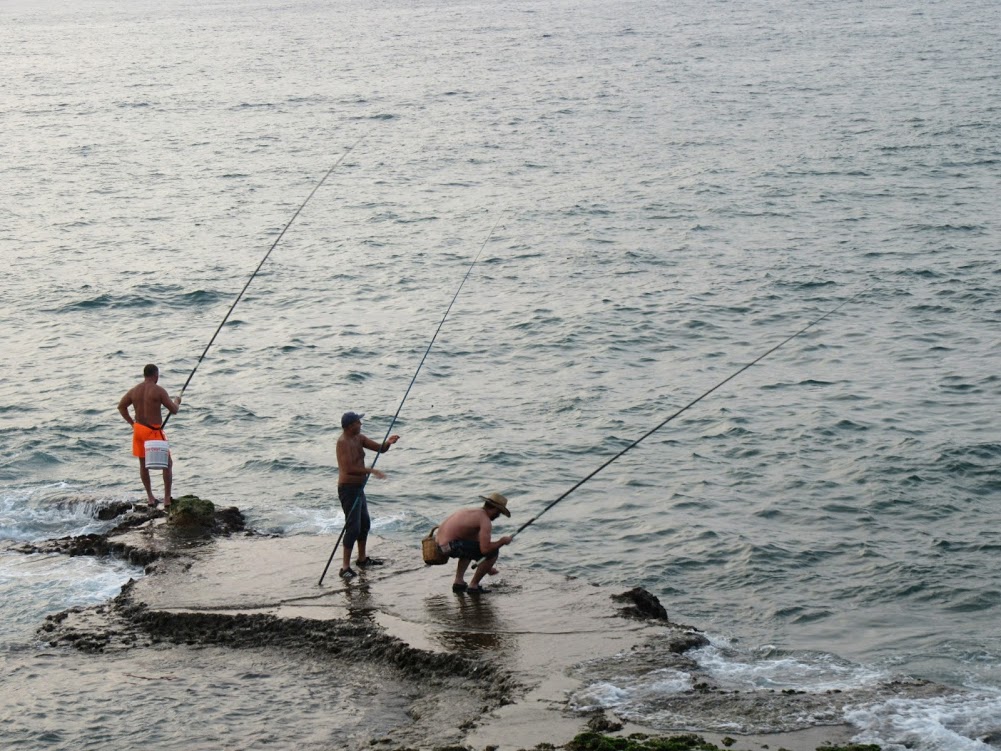
Along the promenade, I watched fishermen casting their lines, their silhouettes stark against the fiery sky. Children chased each other, their laughter mingling with the sounds of the waves. Couples strolled hand-in-hand, their faces illuminated by the golden glow of the setting sun. It was a scene of pure, unadulterated joy—a reminder of life’s simple, precious moments.

But it was the sunset that truly stole my breath away. As the sun dipped below the horizon, the sky exploded in a kaleidoscope of oranges, pinks, and purples. The rocks, bathed in warm, ethereal light, stood proudly as if relishing their moment of glory.

The sea mirrored the sky’s vibrant hues, turning the water into a canvas of breathtaking beauty. I found a quiet spot on the bannister, listening to the waves’ soothing melody, and simply watched, allowing the moment to imprint itself onto my soul.
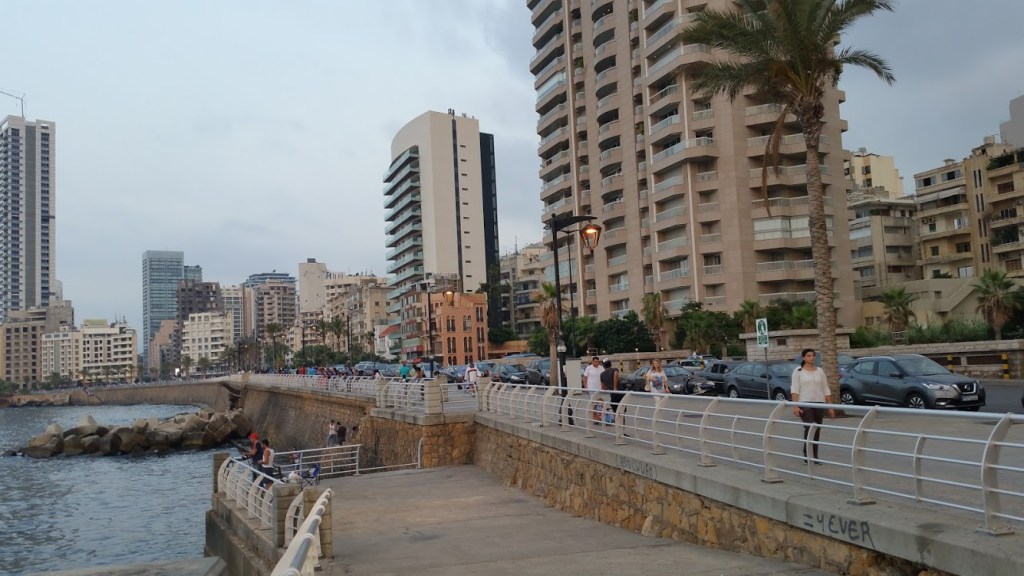
The Corniche wasn’t just a place to see; it was a place to feel. The rhythmic roar of the sea, the comforting warmth of the sun on my skin, the shared contentment of the people around me—it was a sensory symphony, resonating deep within me.

The Corniche wasn’t just a place to see; it was a place to feel. The sea’s gentle roar, the warmth of the setting sun on my skin, the shared joy of the people around me – it was a sensory symphony that resonated deep within me.
With its seaside cafés, restaurants, and hotels, the area is a magnet for locals and tourists alike. While some posed for obligatory photographs, others, well-informed, spoke of the region’s archaeological significance. The shores near Raouché have revealed some of the oldest evidence of human existence in Beirut—flints and stone tools from the Neolithic period, now preserved in the AUB Archaeological Museum.
As the last rays of sunlight faded into twilight, I knew I had found my peaceful retreat. Pigeon’s Rock and the Corniche offered more than just a scenic escape—they gifted me a moment of connection, a reminder of nature’s timeless beauty and the enduring spirit of humanity. It was a sunset I wouldn’t soon forget, a whisper of the sea that would forever echo in my heart. And above all, it was a lesson: that even in the heart of a bustling city, one can always find pockets of serenity, if only they take the time to seek them.

Very informative.
LikeLiked by 1 person
Thanks Aranjit. 😊
LikeLike
Oh, is the Raouché what we see in some of Monet’s paintings? Breathtaking!
LikeLiked by 1 person
Claude Monet’s famous painting shows the natural rock arches of Etretat in France. Etretat is famous for its three natural arches and white chalk cliffs that tower high over the Atlantic Ocean.
LikeLike
Beautiful shots ! And very interesting captions, thanks for the ride 🙂
Btw we have moved to Vietnam and so has our blog. We are now at http://www.frenchtouchinhanoi.wordpress.com See you around X
LikeLiked by 1 person
Thanks Estelea, Vietnam is a beautiful country and looking forward to some nice stories and amazing photos from Vietnam. 🙂
LikeLiked by 1 person
On it ! As soon as we settle down a little bit 😉 Have a great one!
LikeLiked by 1 person
Enjoyed reading this post
LikeLiked by 1 person
Thanks Swapnil.
LikeLike
Those rocks seem to be the perfect sentinels of time, watching the never changing waters, along with the ever-changing face of civilization…merging into the paradox of eras that may have passed by. Their placement is indeed interesting, who knows how much they have corroded and changed shapes! Lovely pics Indra!
Thank you for this informative and interesting post.
LikeLiked by 1 person
They are standing witness to the changing civilisation and landscape. Thanks Balroop!
LikeLiked by 1 person
The rocks look indeed like a couple, standing together enduring a lot and the test of time. Wonderful pictures and narration… 🙂
LikeLiked by 1 person
Hahaha! Well said, rocks are standing like a couple. 🙂
Thanks.
LikeLiked by 1 person