
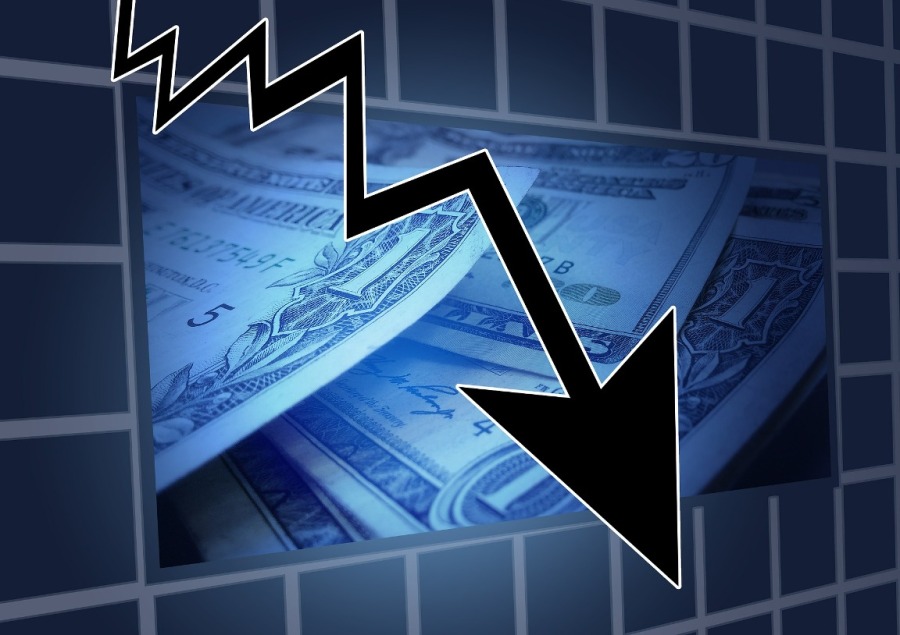
In the heart of Dublin, amidst the lively streets and bustling culture, lies a cautionary tale that resonates far beyond its Irish borders. It’s the story of Mary, a bar proprietor, whose well-intentioned marketing ploy spirals into an economic catastrophe with repercussions echoing through time. As we delve into this narrative, we uncover not just a tale of a local bar, but a microcosm of economic history plagued by cycles of greed, speculation, and amnesia.
Mary’s initial predicament is relatable: faced with a dwindling clientele of unemployed alcoholics, she devises a novel approach – allowing customers to indulge in libations on credit. This seemingly ingenious strategy attracts droves of patrons, swelling her sales and painting a rosy picture of prosperity. But beneath this veneer lies a fundamental flaw – the illusion of wealth built upon unsustainable debt.
Word gets around about Mary’s ‘drink now, pay later’ marketing strategy and, as a result, increasing numbers of customers flood into Mary’s bar. Soon she has the largest sales volume for any bar in Dublin — all are starting to look rosy.
By providing her customers freedom from immediate payment demands Mary gets no resistance when, at regular intervals, she substantially increases her prices for wine and beer, the most consumed beverages. Consequently, Mary’s gross sales volume increases massively.
A young and dynamic vice-president at the local bank recognizes that these customer debts constitute valuable future assets and increase Mary’s borrowing limit. He sees no reason for any undue concern since he has the debts of the unemployed alcoholics as collateral.

At the bank’s corporate headquarters, expert traders figure a way to make huge commissions and transform these customer loans into ‘Drinkbonds’ and ‘Alkibonds’. These securities are then bundled and traded on international security markets.
The new investors don’t really understand that the securities being sold to them as ‘AAA’ secured bonds are really the debts of unemployed alcoholics. They have had a ‘rating house’ certify they are of good quality.
Nevertheless, the bond prices continuously climb, and the securities soon become the hottest-selling items for some of the nation’s leading brokerage houses.
One day, even though the bond prices are still climbing, a risk manager at the original local bank decides that the time has come to demand payment on the debts incurred by the drinkers at Mary’s bar. He so informs Mary.
When the inevitable reckoning arrives, it’s not just Mary’s bar that suffers. The financial fallout reverberates through the banking sector, freezing credit and suffocating economic activity. Pension funds evaporate, family businesses collapse, and communities are left reeling in the wake of reckless speculation.
Mary then demands payment from her alcoholic patrons, but, being unemployed alcoholics, they cannot pay back their drinking debts. Since Mary cannot fulfil her loan obligations she is forced into bankruptcy. So she now is broke. The bar closes and the 11 employees lose their jobs.
Overnight, Drinkbonds and Alkibonds drop in price by 90%. The collapsed bond asset value destroys the bank’s liquidity and prevents it from issuing new loans, thus freezing credit and economic activity in the community.
The suppliers of Mary’s bar had granted her generous payment extensions and had invested their firms’ pension funds in the various Bond securities. They find they are now faced with having to write off her bad debt and with losing over 90% of the presumed value of the bonds.
Her wine supplier also claims bankruptcy, closing the doors on a family business that had endured for three generations. Her beer supplier is taken over by a competitor, who immediately closes the local plant and lays off 150 workers.
Fortunately, though, the bank, the brokerage houses, and their respective executives are saved and bailed out by a multi-billion euro, no-strings-attached cash infusion from their cronies in government.
The funds required for this bailout are obtained by new taxes levied on employed, middle-class, non-drinkers who have never been in Mary’s bar.
Now, do you understand economics?
This cautionary tale mirrors a recurring pattern in economic history – a cycle of boom and bust fueled by greed and shortsightedness. From the tulip mania of 17th-century Holland to the subprime mortgage crisis of the 21st century, humanity has repeatedly fallen victim to the allure of easy wealth and speculative frenzy.
As Jon Henley aptly observes, the link between banking and panic is as old as financial institutions themselves. Yet, with each crisis, we seem to forget the lessons of the past, condemned to repeat our mistakes in an endless cycle of boom and bust.

The start of the Western world’s first identifiable financial crash and subsequent bank run on the moment when some incompetent and unimaginative corporate bean counter in the accounts department of the Holy Roman Empire decided it would be a fun idea to debase its coinage. And that was in 1622.
Then there was Holland’s 1637 tulip bubble, during which a single tulip bulb could briefly fetch six times the average wage or, if you were very lucky, a six-bedroomed piece of prime real estate beside one of Amsterdam’s premier canals. You would have thought, too, that Britain’s South Sea Bubble of 1720 might have taught us all a few lessons about exaggerated claims of future returns and fevered, easy-money speculation, but of course no: after losing a terrifying £20,000 on the venture, even Sir Isaac Newton was induced to observe that he could “calculate the movement of the stars, but not the madness of men.”
The 18th century saw 11 banking and financial crashes and the 19th another 18, including American banking crises in (to keep things brief) 1819, 1837, 1847, 1857, 1873, 1884, 1890 and 1896.
There were a healthy 33 such storms in the 20th century, chief among them the Wall Street Crash of 1929, the OPEC oil price shock of 1973 and the Asian crisis of 1997. All, to varying degrees, have caused considerable distress to investors and savers large and small. The Great Depression of 1929–39 was the worst financial and economic disaster of the 20th century.
The 21st century began with the Argentinian banking crisis in 2001. On April 19, 2002, in a desperate attempt to prevent the collapse of the economy, the Argentine government was forced to order the indefinite closure of all of the country’s banks.
If the rise of the subprime mortgage market is an example of how greed can corrupt, then the rise of the synthetic market shows how greed can make you act like a straight-up fool. Everyone involved in this market knows that they’re just dealing in fake money, but they’re too focused on commission checks to think about long-term consequences.
In the aftermath of such turmoil, the refrain is often heard: “Those who do not remember the past are doomed to repeat it.” Yet, in the realm of economics, collective amnesia persists, allowing greed and speculation to flourish unchecked.
If there’s a silver lining to be found amidst the wreckage, it’s perhaps in the wisdom gleaned from these cautionary tales. As we navigate the turbulent waters of global finance, may we heed the lessons of history and strive for prudence, transparency, and resilience in our economic endeavors.
Mary’s Bar may be a fictional establishment in Dublin, but its story serves as a sobering reminder of the perils that lurk when we forsake prudence for the allure of easy wealth. In the end, understanding economics isn’t just about charts and graphs – it’s about grasping the timeless truths that underpin the ebb and flow of human folly and resilience.

Greed is mother of all problems. That’s a classic case.
LikeLiked by 1 person
Yes, very true. Greed may be creative in a competitive context but it has opposite effects in a cartel.
LikeLiked by 1 person
I think in capitalistic economy, companies always try to create cartel like situation for extra-ordinary profits.
LikeLiked by 1 person
Yes absolutely.
LikeLiked by 1 person
Ultimately, it is the greed that takes us to doomsday carnival.
LikeLiked by 1 person
Yes Aro, You’re right. Modern markets are based on greed. Greed is so powerful on Wall Street and all such places that most people would rather make quick cash than do something of value.
LikeLike
Good post
LikeLiked by 1 person
Thanks Swapnil.
LikeLike
nice…
LikeLiked by 1 person
Thanks Aman.
LikeLiked by 1 person
You are welcome… 🙂
and you can visit my blog too… 😉
LikeLike
You have a nice blog and I have started following you.
LikeLiked by 1 person
Thank you so much… 🙂
LikeLiked by 1 person
The simple story shows how the system works when people decide to close their eyes as long as their motives are satisfied. I had read this story after the US govt bailout of the banks that were deemed as too big to fail. Thanks for sharing.
LikeLiked by 1 person
Thanks for your like, Somali.
LikeLiked by 1 person
A great informative post. Sir would love if you could review my latest post.
LikeLiked by 1 person
Thanks. I saw your blog. I had commented on your last post. Keep blogging…
LikeLike
Thank you so much for your motivation.
LikeLiked by 1 person
Mass memory is very short lived.
There are always victims available in the market, no short of them; they are duped time and again. Hahaha
Good Post Indrajit
Shiva
LikeLiked by 1 person
Thanks Shiva.
LikeLike
Pingback: Are Greed & Stupidity Causes of Recession? – INDROSPHERE