

Recently, my school classmate, Ashish Bannerji, and I found ourselves discussing opium cultivation, which unexpectedly rekindled memories of my time in Budaun, Uttar Pradesh. Between 1989 and 1991, during my rural posting at the bank, those years became far more than just a chapter of my life. They were a deep immersion into a world where the quiet, agricultural rhythm of daily existence was subtly shaped by the undercurrents of the opium trade.
In Budaun, where echoes of empires linger in the fields, I discovered India’s heartland is a tapestry woven with history and mysticism—and a darker thread of struggle. This town, often overlooked by mainstream narratives, revealed a potent truth: the past, from its Sultanate capital days to its Sufi sanctums, breathes in the present, shaping the lives of its people.
Yet, in the early 20th century, around 1911, Budaun was also a ‘dacoit-infested’ zone under British rule. The very fields that now whisper of ancient glory once echoed with the clash of law enforcement and banditry. This stark contrast underscores the complex, layered reality of India’s heartland, where historical grandeur and social challenges coexist, and where stability was gradually achieved through reform and increased vigilance.
A City Forged on the Banks of History
Nestled along the serene banks of the Ganga River, Budaun’s historical roots run deep. The very name “Budaun” is thought to have originated from a Koli prince named Budh. However, some historians propose it might be tied to an ancient Buddhist settlement, Vodamayuta or Buddhmau, established by Emperor Ashoka. Ancient inscriptions reveal that Budaun was once part of the Panchala janapada, a significant region in early Indian history.
Archaeological findings suggest that the city has been inhabited since the Maurya period, with its prominence growing during the medieval era. According to historical records, Budaun was founded around 905 CE. A 12th-century inscription lists twelve Rathore kings who reigned in Budaun, then known as Vodamayuta. After Kanauj fell to Mahmud, the son of the Ghaznavid Sultan, in 1085 CE, the Rashtrakuta chief moved their capital to Vodamayuta, ruling until Qutb-ud-din Aibak’s conquest (1206-1210 CE).
Budaun Under the Delhi Sultanate: A Brief Capital
Budaun’s significance in medieval India is inextricably linked to the rise of the Delhi Sultanate (1206-1526 CE). In 1210 CE, Sultan Iltutmish (1210-1236 CE), a powerful ruler, chose Budaun as his capital, a status it held until 1214 CE. This brief period highlighted Budaun’s strategic importance along the Sultanate’s northern frontier.
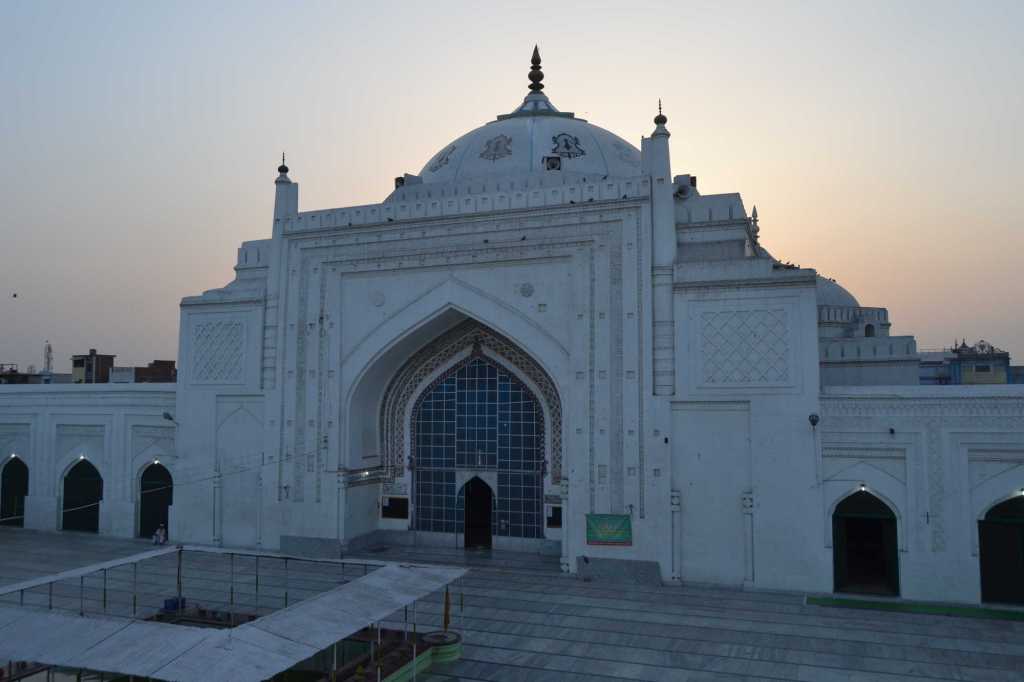
The city also underwent architectural and cultural transformation during this time. The most notable landmark is the Jama Masjid, built by Iltutmish in 1223 CE. It stands as the third oldest mosque in India and was, at the time, the second-largest after Delhi’s Jama Masjid, accommodating over 23,000 worshippers. The mosque’s majestic architecture is a testament to the Sultanate’s grandeur.
The Mughal and Sufi Legacy: A Spiritual Hub
While Budaun was a vital political center under the Delhi Sultanate, it later gained spiritual prominence, especially during the Mughal era. The city became a hub for Sufi mysticism. One of the most revered Sufi saints, Hazrat Nizamuddin Auliya, was born here in 1238 CE. His Dargah in Delhi, a significant pilgrimage site, echoes Budaun’s profound spiritual legacy.
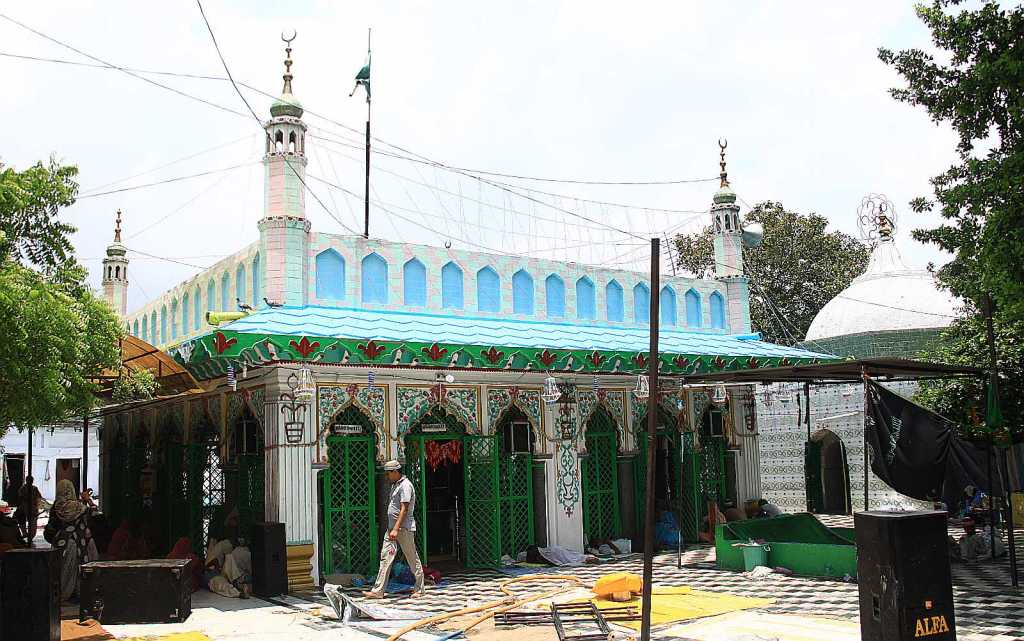
Budaun’s importance as a Sufi center was further cemented by the shrines of Sayyed Hasan (Bade Sarkar) and his brother Sayeed Vilayat Shah (Chhote Sarkar), descendants of Imam Ali ibn Abi Talib. These shrines draw numerous devotees annually. Legend has it that Emperor Akbar visited Chhote Sarkar’s shrine, praying for a male heir. The subsequent birth of Salim (Emperor Jahangir) led Akbar to grant 700 bighas of land to the shrine, highlighting the city’s ties with the Mughal royal family.
Budaun’s Role in Mughal History: Noble Connections
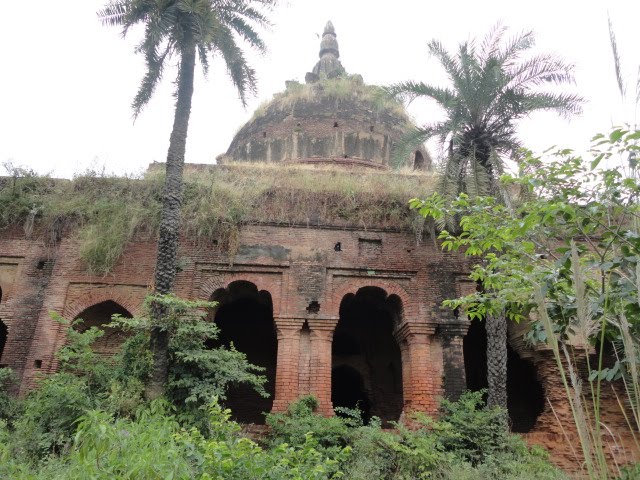
Budaun’s significance extended into the Mughal period through its connections with Mughal nobility. One of the city’s notable landmarks is the Roza Ikhlas Khan, a mausoleum built by the widow of Nawab Ikhlas Khan, a prominent noble. This mausoleum, though much less famous than the Taj Mahal, reflects the grandeur of the Mughal empire through its delicate architecture.

Nearby, in Sheikhupur, lies the tomb of Parwar Khanum, the sister of Mumtaz Mahal, wife of Emperor Shah Jahan (1592-1666 CE). These sisters were nieces of Empress Nur Jahan, wife of Mughal emperor Jahangir (1569-1627 CE). Parwar Khanum was married to Nawab Mohtashim Khan, who was granted a jagir of 4,000 bighas and 22 villages in Budaun by Jahangir. Mohtashim was the son of Nawab Qutubuddin Koka, grandson of the Sufi saint Salim Chisti, and foster brother of Jahangir.
Echoes of Empires: The Fort and Beyond
Budaun’s fort, Qila Budaun, built by the Delhi Sultanate rulers, stands as a reminder of the city’s strategic importance. Though largely in ruins today, its historical significance as a military stronghold is undeniable.
In 1571, the town suffered a devastating fire. Later, Shah Jahan moved the governorship to Sahaspur-Bilari, marking a shift in administrative power. Ultimately, in 1801, the region was transferred to British rule by the Nawab of Oudh, signaling another major change.
Even the city’s name carries layers of history. Historians debate its origins, whether it’s tied to Koli prince Budh, Buddhist influence during Ashoka’s reign, or a transformation from ancient “Vodamayuta.” This multifaceted origin reflects the layers of history embedded in Budaun.
Cultural and Religious Diversity: A Tapestry of Traditions
Budaun’s cultural landscape has long been defined by the coexistence of Hindu and Muslim communities. Festivals like Eid, Diwali, and Holi highlight this harmony. However, the communal riots of 1990, during my time there, reminded me of the fragility of peace. I found myself then stranded in the village where my branch was located for two days, as a curfew was imposed on the city.
The Gauri Shankar Temple in Budaun, dedicated to Lord Shiva, is renowned for its Rasling, a Shivling made from solidified mercury. This particular Rasling is unique in India, as it incorporates gold into the mercury mixture. The Rasling, also known as Rasalingam or Parad Lingam, is revered in Hinduism as a representation of Lord Shiva, and the combination of mercury and gold is considered exceptionally auspicious.
Shakeel Badayuni, a famous Urdu poet and Bollywood lyricist, was born here. Despite his fame, his descendants still live in his ancestral home, which has fallen into disrepair.
A Personal Connection: Memories and Nostalgia
During my rural posting from 1989 to 1991, living in the Civil Lines area, I was deeply impacted by Budaun’s nostalgic charm. The warm local community made me feel connected to the city’s rich history. Back then, Budaun was a quiet, slow-paced town. We had to travel to Bareilly for shopping, and the meter-gauge rail line connected the city. I remember carefree afternoons playing cricket on the platform with my nephew.

Memories of Labela Chowk and Sarrafa Bazar, and the ever-present hum of history, still resonate with me. Though Budaun has evolved, it is a place where history lingers in the air, where the echoes of mighty rulers and mystic saints still seem to whisper through its ancient walls, reminding us that the past is never truly gone.
Conclusion: A Living Legacy
Budaun is not just a city of ancient ruins and historical monuments. It is a place where the past continues to resonate, where the legacy of the Delhi Sultanate, the Mughal empire, and Sufi mysticism is alive in the city’s streets, shrines, and stories. It stands as a living testament to India’s layered history, one that has weathered centuries of change but remains deeply connected to its cultural and historical roots.
For those who venture beyond its rustic exterior, Budaun offers a journey through time. It is a reminder that history is not just in books, but in the places we experience. And Budaun, with its mystic shrines, ancient ruins, and rich history, will always be a reminder of the enduring past that shapes our present.

We have grown up songs penned by Shakeel Badayuni like Chaudhavin ka Chaand ho…, heard his name so many times on Vividh Bharati. I never knew that Badaun is a place with such historical heritage. Thanks for writing a post dedicating to such a non-descript place.
LikeLiked by 1 person
Yes Nilanjana, Shakil Badayuni is best remembered for most of his songs with music director Naushad. Shakiil won three Filmfare Awards in a row from 1961 to 1963 for his songs ‘Kahin Deep Jale Kahin Dil’ (Bees Saal Baad), ‘Husnwale Tera Jawab Nahin’ (Gharana), and ‘Chaudvin Ka Chand Ho’ (Chaudhvin Ka Chand). His best films with Naushad include Baiju Bawra, Mother India, and Mughal-e-Azam. Besides Naushad, he also worked for Hemanta Kumar Mukhopadhyay.
LikeLike
Akele akele. 😦
LikeLiked by 1 person
You also visited Budaun when you were around 3-YO… too young to remember it.
LikeLiked by 1 person
Never heard that Budaun has such a history!
LikeLike
Yes, it’s a hidden gem.
LikeLike