

The familiar ribbon of National Highway No. NH 19 (formerly NH 2) stretched ahead of us, a road I had traversed countless times on my journeys from Ranchi to Prayagraj. Yet this trip was different. Its purpose carried a tender urgency – a visit to my ailing father-in-law – and beside me in the car sat my son, Judhajit, his curiosity mirroring my own.
As we passed Mohania, a town we had often bypassed, it appeared like a silent sentinel on our route. Little did I know that this time, Mohania would serve as a gateway to an extraordinary encounter with history.
A Spontaneous Detour
On our return journey, a spark of spontaneity turned our trip into an adventure. “Let’s visit Mundeshwari,” I suggested to Judhajit. The name carried an aura of antiquity and intrigue. The Mundeshwari Temple, I knew, was no ordinary shrine. Whispers of its age and sanctity had reached me over the years – reputed to be the world’s oldest functional Hindu temple, its origins tracing back to 108 CE according to the Archaeological Survey of India (ASI).

Dedicated to Lord Shiva and Shakti, the temple also enshrines idols of Ganesha, Surya, and Vishnu, making it a site of immense spiritual importance. Its Nagara-style architecture, rare and distinctive, holds a special place in the history of Indian temples.
The Drive Through the Kaimur Hills
Turning off the familiar highway, a different landscape unfolded. The air grew crisper as we ascended towards the Mundeshwari Hills, nestled near the meandering Son River in Bihar’s Kaimur district. Protected under the watchful eye of the ASI since 1915, the temple attracts both pilgrims and history enthusiasts alike. Even the drive felt like a step back in time, with verdant paddy fields flanking the road, painting a picture of timeless rural India.
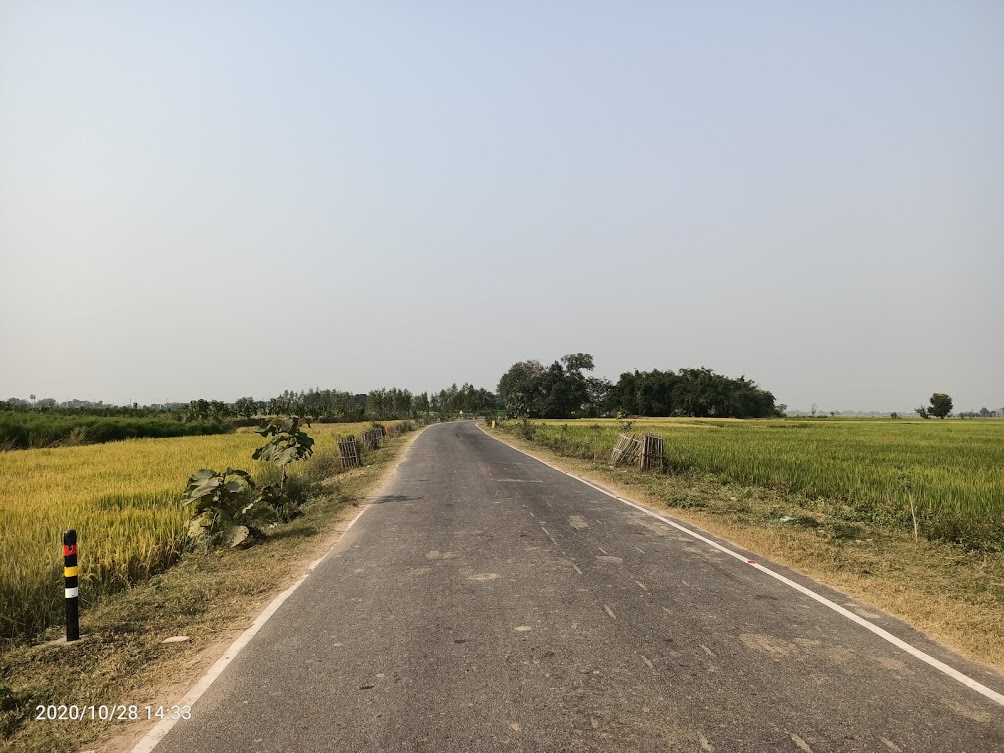
At the foothill, a modest INR 20 toll marked the beginning of our ascent. The road wound through lush greenery, punctuated by hairpin bends that offered fleeting glimpses of the valley below. This journey, unhurried and serene, was a rare blessing – the usual traffic replaced by the rustling of leaves, aided, ironically, by the local polling day keeping the roads unusually deserted.

First Glimpses of History
Reaching the gate of the temple premises, we paused to cleanse ourselves, a customary ritual before approaching the sacred. The air hummed with a quiet reverence. Small stalls lined the path, offering vibrant puja samagri – flowers, incense, and sweets – tokens of devotion. We purchased our offerings and began the climb up the stone steps, each footfall echoing the countless pilgrims who had trod this path before us.


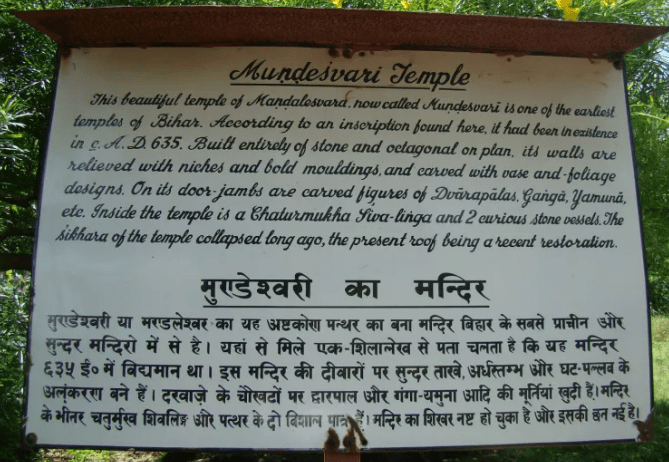
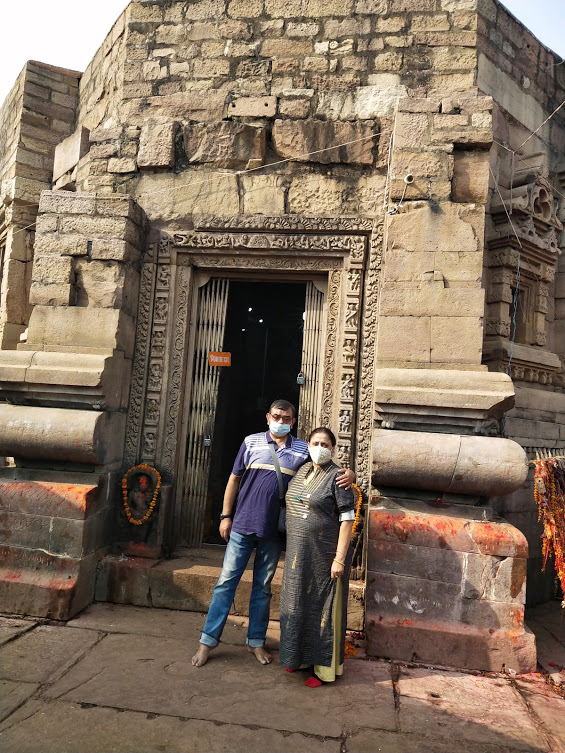
Unlike the towering gopurams of South India or the intricate shikharas of later North Indian temples, Mundeshwari Temple exudes a unique charm. Its octagonal plan is immediately striking, reminiscent of the Shankaracharya temple in Srinagar, suggesting subtle connections across distant sacred spaces. The bold stone walls, adorned with carvings, whispered tales of centuries past.
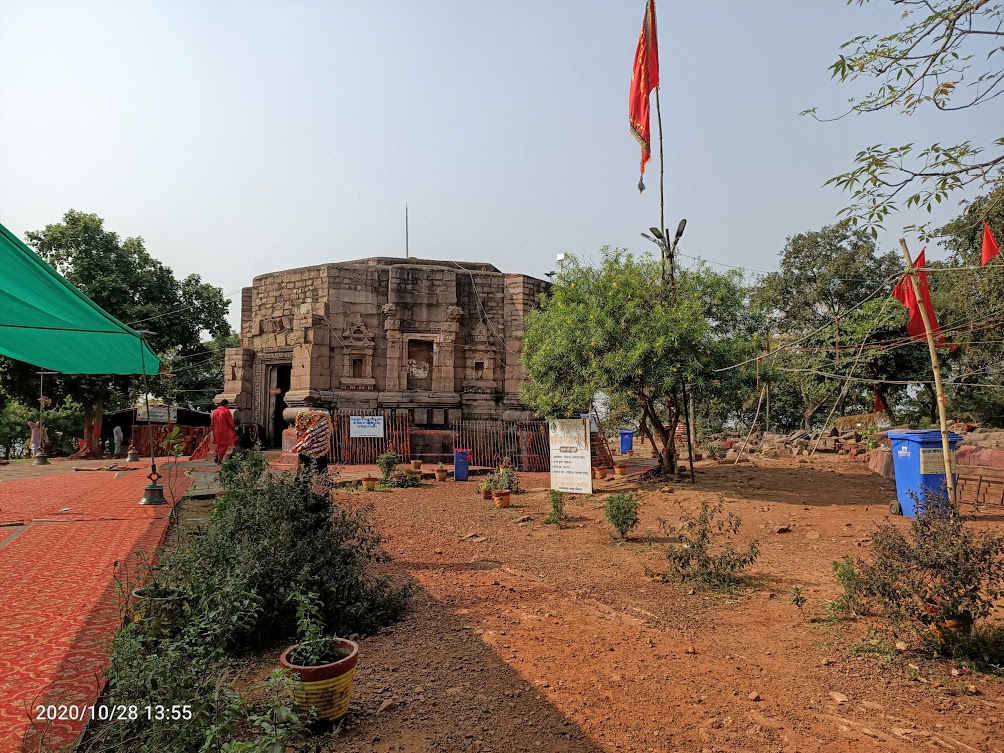
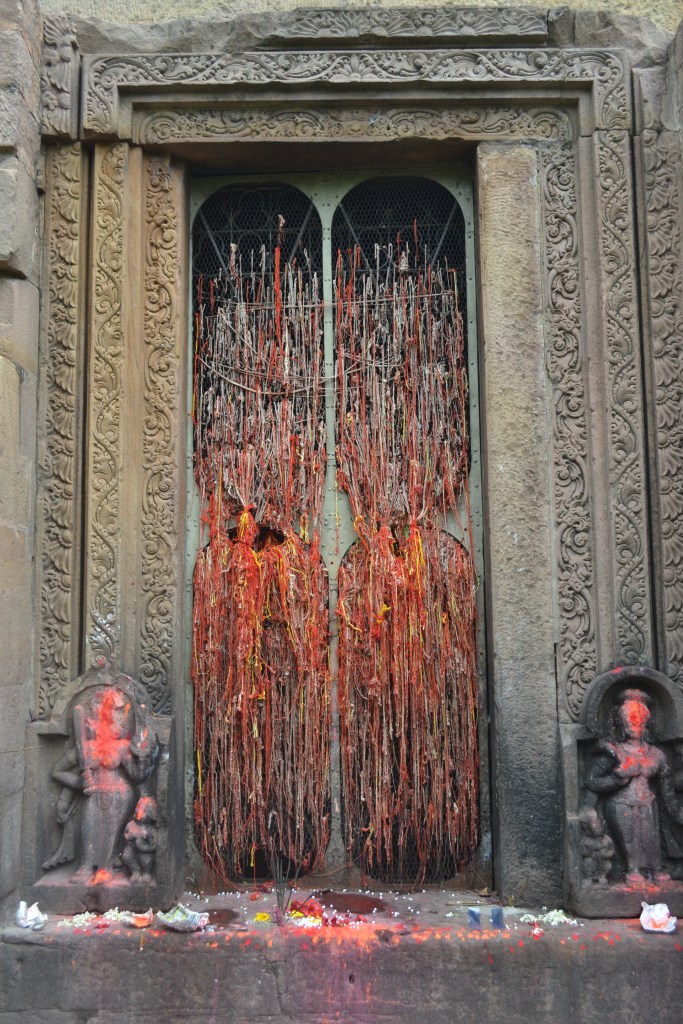
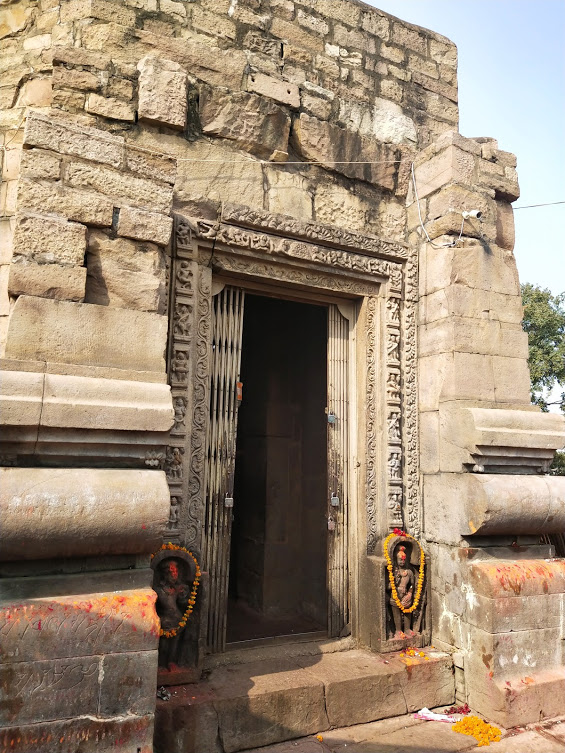
The eight sides of the temple symbolize the eight cardinal and intermediate directions, a cosmic embrace encoded in architecture. The northern window’s delicate latticed stonework and the intricately carved entrance – populated with dancers, musicians, and divine figures – speak of a mastery rarely seen today.
I imagined the temple in its full glory, once graced by four entrances, each with exquisitely carved door frames. The remnants hinted at river goddesses on the east, depictions of Shiva on the west, Durga and a female figure on the north, and the steadfast dwarapalas guarding the south. The original pyramidal roof, likely succumbed to the relentless march of time, had been replaced by a pragmatic flat roof of stone flags. Yet, the carved images of Dwarapalas, Ganga, Yamuna, and other murtis adorning the entrance jambs still stood as silent witnesses to the temple’s rich past.
What truly set the Mundeshwari Temple apart, I pondered, was its intriguing architectural fusion. It wasn’t purely Hindu in its design; whispers of Buddhist influence permeated its structure. The circular sanctum, crowned by a shikhara – a distinct feature in early Indian temples – hinted at this confluence of traditions, a reflection of the region’s diverse cultural and historical tapestry.
Stepping Inside: The Sanctum and Its Deities
Inside, the dimly lit sanctum exuded a profound calm. Photography was prohibited, encouraging a more intimate, contemplative experience. At the heart of the temple stood the Chaturmukhi Shiva Lingam – a four-faced representation of Lord Shiva as Viniteswara. The stone, said to subtly change its hue with the sun’s movement, felt alive, bridging the celestial and the earthly.

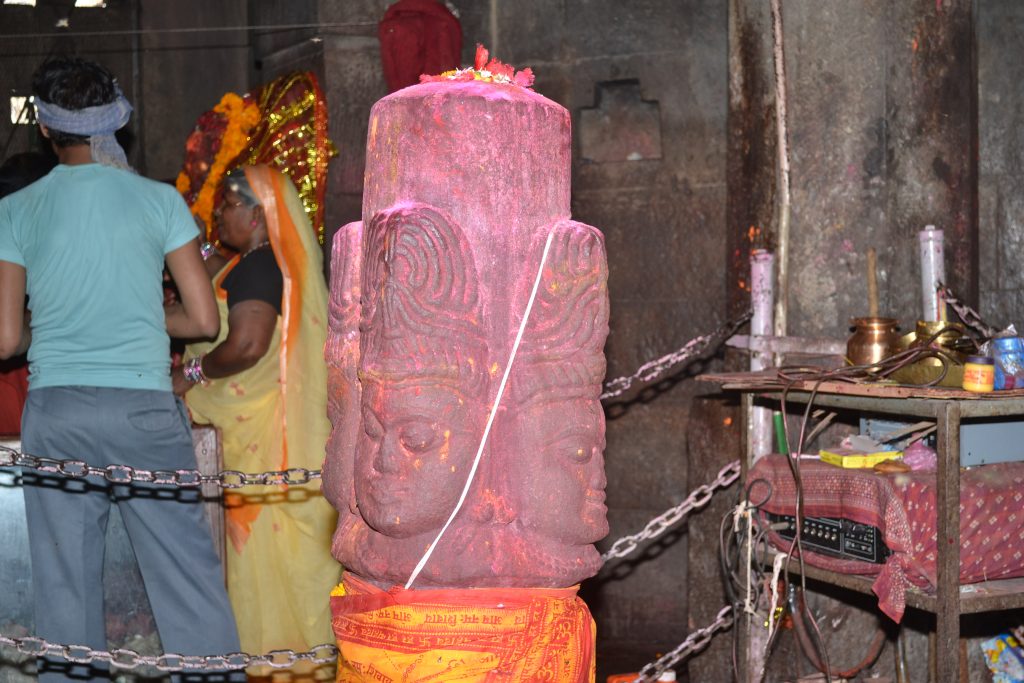
In a niche on one wall resided the idol of Mundeshwari, or Durga. I learned that while Shiva held the central reverence, Mundeshwari was considered the primary deity, a testament to the Shakti tradition that had once flourished here. The idol itself was distinctive, a ten-armed Mahisha Mardini not in the act of slaying the buffalo demon, but riding it, a powerful yet nuanced portrayal of divine feminine energy.

My mind drifted to the significance of the Ashtadal, the “eight-petaled lotus,” so central to Hindu spirituality. Each petal, I recalled, symbolised the Ashtamatrika goddesses – Brahmani, Maheshwari, Kaumari, Vaishnavi, Varahi, Indrani, Chamunda, and Narasimhi – each embodying divine energies linked to the cardinal directions, protectors revered across the land. The circular yoni-pitha within the temple, adorned with eight petals, seemed to echo this profound symbolism.
A Living Museum of Sculptures
Later, exploring the temple premises, I noticed numerous carved pieces and sculptures scattered around, remnants of what must have been a cluster of temples on this sacred hill. Representations of Shiva-Parvati, Ganesha, Mahishasuramardini Durga, Surya, and Kartikeya lay as silent fragments of a vibrant past. A large, half-buried Ganesha idol hinted at the grandeur of what once stood here. On the west side of the main entrance, the imposing statue of Vishal Nandi stood sentinel.

Scattered around the temple were several half-amalaks, segmented stone discs that once crowned the shikhara. Though the spire itself was lost, a fragment of the amalaka lay nearby, a poignant reminder of the temple’s original form, a symbolic lotus seat for the deities below.
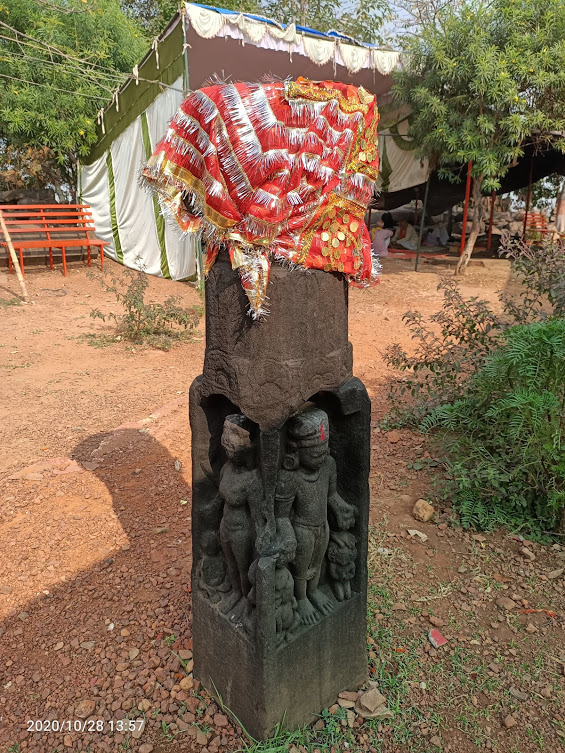


An amalaka is a segmented or notched stone disk, usually with ridges on the rim, that sits on the top of a Hindu temple’s shikhara or main tower. According to one interpretation, the amalaka represents a lotus, and thus the symbolic seat for the deity below.

The Legends
The legends surrounding the Mundeshwari Temple added another layer of intrigue to its already captivating presence. The tale of King Surath of Mithila, guided by a sage to build a temple where he saw a divine light, resonated with the mystical aura of the place. The chakra he placed atop, believed to possess miraculous powers, further deepened the sense of wonder.
The very name “Mundeshwari” held its own mystery, linked to the Daitya Munda, vanquished by Devi Durga, also known as Chamunda. Some whispered that the temple was even built by Parashurama as an act of penance, creating the nearby Parashurama Kund as a testament to his devotion.
The Unique Ritual
But it was the unique ritual of Ahinshak Bali – non-violent sacrifice – that truly captured my imagination. Unlike the traditional shedding of blood, here, the temple priest would gently lay down a sacrificial animal and place a flower upon it while chanting sacred mantras.

As the flower touched the animal, it would fall into a state of unconsciousness, only to awaken unharmed once the flower was removed after the rituals. The mechanics of this phenomenon remained an enigma, a testament to the deep faith and perhaps the inexplicable power of the divine.
Despite the lack of a concrete explanation, devotees who visit the temple attribute this phenomenon to the blessings of Maa Mundeshwari, finding solace and reverence in this extraordinary practice.
A Journey Through Time
The temple’s history, etched in stone and inscriptions, tells of kings and dynasties long past. Broken inscriptions hint at King Udayasena and a time now debated by scholars, while a royal seal of Sri Lankan ruler Maharaja Dutthagamani, dating back to the 2nd century BCE, suggests the region’s historical depth. The Chinese traveler Huen Tsang, in the 7th century CE, recorded a luminous shrine that matches Mundeshwari, further cementing its historical significance.
The presence of Naga (serpent) imagery on the four-faced Shiva lingam and the Ganesha idols, a unique feature not found elsewhere in India, suggested a connection to the Naga dynasty who ruled this region centuries ago, using the serpent as their royal emblem. Modern scholars, based on the inscription and the script, now largely agree with the Archaeological Survey of India’s dating of the temple to 108 CE.
Remarkably, the temple seemed to have been spared the ravages of the Muslim rule under Sher Shah, despite the proximity of his stronghold at Chainpur fort. The damage it had sustained appeared to be the work of time itself, a testament to its enduring resilience.
It is also remarkable that this temple appears to have been left unmolested when Muslim rule under Sher Shah was set up in this area. The neighbouring Chainpur fort was one of the citadels of Sher Shah and the Muslim pockets in the neighbouring villages suggest that a much larger Muslim population had lived in the area when Muslim rule was predominant. The ravages to Mundesvari are not man-made but due to the passage of time.
P.C. Roy Chaudhury, State Editor of the District Gazetteers
Reflections on the Hill
Offering our prayers amidst the calm, almost ethereal atmosphere, I felt the temple’s unique blend of spiritual and historical significance seep into me.
Though the museum on the temple premises remained closed due to the elections, I knew it held further treasures, artefacts and relics that would shed more light on this ancient site. The Mundeshwari Temple, I realised, was more than just a religious edifice; it was a cultural and educational hub, a repository of history and art.

Our detour to Mundeshwari Temple was far more than a break in our journey. It was a journey through time, an encounter with enduring faith, exquisite artistry, and a living testament to India’s rich cultural tapestry.
As we descended Piwara Hill, leaving behind the ancient whispers of stone and spirit, I carried with me a profound sense of awe. The Mundeshwari Temple, the oldest functional Hindu temple in the world, had shared its secrets, and I, a humble traveler, had listened.

Wow… Tere hisse mein bahut anokhi places crops up, across globe… Very informative and well written… Cheers… 👍👍
LikeLiked by 1 person
Thanks, buddy. Bholenath ki kripa hai. 🙏
LikeLike
Nice post. I never knew of such a temple. I, also, never thought of knowing the oldest functional temple. Am glad to know it now and also the rituals of non-violent sacrifice.
LikeLiked by 1 person
Thanks, Nilanjana.
LikeLike
Nice to know about the temple atop a hill and this captured my attention ..Unique Ritual
This temple is known to the world for its mysterious animal sacrifice, called Ahinshak Bali (meaning: non-violent sacrifice! Wish all temples follow suit
LikeLiked by 1 person
Thanks. Yes, non-violent sacrifice should be adopted widely.
LikeLike
I have never heard of this temple before. And certainly, a flat slab roof in a temple is unlikely. This definitely looks like a historic temple.
LikeLiked by 1 person
It’s indeed an old temple and now it’s said to be the oldest functional temple in India.
LikeLike
Very well written. Keep it up. I’ve followed you.😊 Please checkout my blog too. I hope you’ll have a good time reading my posts.
My blog link :- https://wordpress.com/home/jv4society.wordpress.com
LikeLiked by 1 person
Thanks, Jay. I will surely check your blog.
LikeLike
Iam very glad to know about this temple. Based on this and researching other media iam making a video. Thank you very much.
LikeLiked by 1 person
Thanks, Kalyani. Please send me a link to your video.
LikeLike
Thanks for this amazing post!!
LikeLiked by 1 person
Thank you.
LikeLike