

Have you ever had a bad customer service experience? You’re not alone. In fact, people have been complaining about bad service for centuries. People have always been dissatisfied with the quality of goods or services they receive and have always sought ways to express their grievances and demand compensation. But what is the oldest customer service complaint in history? How did people complain before the advent of phones, emails, or social media?
The answer lies in a clay tablet that was discovered in the ancient city of Ur, in what is now southern Iraq. The tablet dates back to around 1750 BCE and contains a complaint from a customer named Nanni to a merchant named Ea-nasir. Written in Akkadian cuneiform, one of the oldest forms of writing, the tablet is considered to be the oldest known written complaint. It is currently kept in the British Museum.
The complaint was written on a clay tablet and addressed to a merchant named Ea-nasir. The customer, a man named Nanni, was unhappy with the quality of copper he had received from Ea-nasir.
Nanni was a customer of Ea-Nasir, a copper trader who belonged to a guild of merchants based in Dilmun, a trading hub in the Persian Gulf. Ea-Nasir would travel to Dilmun to buy copper and then sell it in Mesopotamia. On one occasion, he had agreed to sell copper ingots to Nanni, who sent his servant with the money to complete the transaction.
However, Nanni was not happy with the copper he received. He claimed that it was of poor quality and not what he had ordered. He also complained that his servant had been treated rudely by Ea-Nasir, who refused to take back the copper or refund the money. Nanni also accused Ea-Nasir of delaying and misdirecting another delivery of copper that he had paid for.
In his complaint, Nanni expressed his frustration with Ea-Nasir’s dishonesty and accused him of failing to live up to his obligations as a reputable merchant. Nanni also mentioned that he had traveled a long distance to conduct business with Ea-Nasir, making the subpar product even more disappointing.
The complaint tablet, which is now housed in the British Museum, provides a fascinating glimpse into the commercial practices and customer expectations of that era. It demonstrates that even thousands of years ago, customers had concerns about product quality, fair trade, and the need for responsive and reliable merchants.
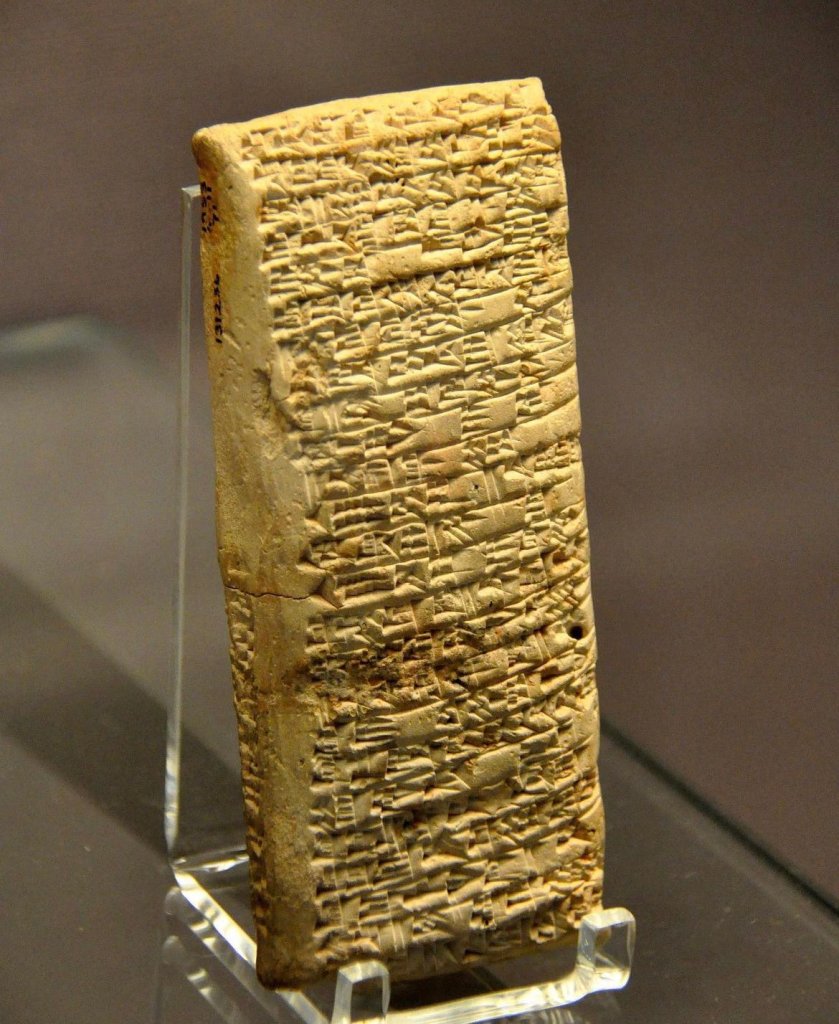
When you came, you said to me as follows: ‘I will give you good copper ingots.’ You left then but you did not do what you promised me. You put ingots which were not good before my messenger (Sit-Sin) and said: ‘If you want to take them, take them; if you do not want to take them, go away!
Nanni
Nanni went on to say that he had already paid for the copper and that he was not going to accept the poor quality ingots. He demanded a refund and threatened to take his complaint to the governor if he did not receive one.
There is no record to know for sure how Ea-Nasir reacted to Nanni’s complaint, or whether he ever replied or resolved the issue. However, we can say that Ea-Nasir was not a very good businessman, and that he received many other complaints from his customers. Curiously, this was not an isolated incident involving Ea-Nasir. Archaeologists discovered over a dozen similar “letters” within Ea-nasir’s residence. It became evident that Ea-Nasir had gained a reputation for failing to deliver products that had been paid for or for mistakenly sending them to the wrong recipients.
For example, one tablet from a man named Arbituram reads:
… you have given the copper… and give the silver and its profit to Nigga-Nanna. I have made you issue a tablet. Why have you not given me the copper? If you do not give it, I will recall your pledges. Good copper, give again and again. Send me a man. Why have you not given me the copper? If you do not give it, I will recall your pledges. Good copper, give again and again. Send me a man.
Another tablet from an unnamed customer says:
You have given bad ingots again and again.
These tablets suggest that Ea-Nasir was either dishonest or incompetent, or both. He may have been trying to cheat his customers by selling them low-quality copper at high prices, or he may have been unable to secure enough good copper from his suppliers in Dilmun. Either way, he did not seem to care much about his reputation or customer satisfaction.
At the beginning of his career, Ea-Nasir was buying and selling for the palace at Ur and was considered a good credit risk. But at one point, he began spending more time in Dilmun, causing his creditors to write him nasty letters asking where their stuff was.
Based on more than a dozen surviving tablets squirreled away in his own house, archaeologists have discovered that Ea-Nasir was a big-shot copper trader, dealing mostly in wholesale ingots, but also in the finished metal products and, on occasion, textiles and foodstuffs.
The discovery of multiple complaint tablets offers a glimpse into the frustrations and grievances faced by customers, emphasising the importance of fair trade and ethical business practices, even in ancient times. It shows us that people have always had expectations and standards for the goods and services they buy, and that they have always sought ways to voice their opinions and seek justice when they feel wronged.
It also shows us that customer service complaints are not just a modern phenomenon, but a universal human experience that transcends time and culture. No matter how much technology changes, people will always want to be treated fairly and respectfully by those they do business with.
The complaint tablet also reminds us of the importance of good customer service and communication skills for any business owner or professional. Ea-Nasir may have been able to avoid many of his problems if he had been more honest, courteous, and responsive to his customers’ needs and concerns. He may have also been able to retain more customers and earn more profits if he had delivered on his promises and provided high-quality products.
The complaint tablet has become an internet meme due to its seemingly anachronistic nature, with Forbes stating that it bore a resemblance to many modern customer complaints for poor service in the modern era. It has been recognised by the Guinness World Records as the “Oldest Written Customer Complaint”.
Thanks to his miserably failed business dealings, Ea-Nasir will go down as one of the worst but also best-known business magnates in history.
People have always expected to receive what they were promised and to be treated fairly. While the methods of communication may have changed over time, the basic principles of good customer service remain the same.
In today’s world, companies have many tools at their disposal to provide good customer service. From social media to email to chatbots, there are countless ways for customers to reach out to companies when they have a problem. However, companies must also be willing to listen and respond to their customers in a timely and effective manner.
So, the next time you have a bad customer service experience, remember that you’re not alone. People have been complaining about bad service for thousands of years. But also remember that good customer service is possible and that companies have a responsibility to provide it.

Wow! Such a long customer complaint almost 3800 years ago! Greed caught up with the traders even in ancient times. Thanks for this share,
LikeLiked by 1 person
Thanks, Sanchita.
LikeLike
Absolutely amazing discovery. Ancient artefacts and objects are often displayed in museums, but person-to-common person communication not so much. Made for a delightful read.
LikeLiked by 1 person
Yes, sir. I am trying to blog as and when I see them. Thank you.
LikeLike
Wow… Almost 4000 years ago humans were not only doing business across long distance but were vocal when short changed.
This instance is contemporary of Mahabharata period but we have no material to prove the existence of Kauravas and Pandavas.
LikeLiked by 1 person
Our ancient past has not been explored the way it was done in Mesopotamia and Egypt. 😦
LikeLiked by 1 person
Wow, wonderful post. So, customer complaints have over 3800 years of history!
LikeLiked by 1 person
Thanks, Nilanjana
LikeLike
Very very informative. Had no idea.
Thanks for such enlightening article.
Looking forward to more such informative and interesting write-ups.
LikeLiked by 1 person
Thanks, Atish.
LikeLike
Historical artefacts such as these really bring home how people in the past were really just the same as people today.
LikeLiked by 1 person
True, Mick. Thanks.
LikeLiked by 1 person
Thanks, for sharing such interesting information. I guess customers have always been taken for granted is what is proven; not to say that everyone does this.
LikeLiked by 1 person
Yes, cheating customers is a 4000 year old practice, as per records available. Thanks, Arvind.
LikeLiked by 1 person
Humans haven’t changed much! Thanks for additional information.
LikeLiked by 1 person
True. 😄
LikeLike
This is really fascinating ~ to know that human nature, and especially business nature, remains relatively unchanged. Thanks for bringing this up, it is amazing to have such an account.
LikeLiked by 1 person
Thank you! 🙏
LikeLike
Truly customer satisfaction is the essence of any Business or dealership. It helps build up the trust between the merchant and the customer.
LikeLiked by 1 person
This shows that greed and dishonesty are human traits since ancient period.
LikeLike
Interesting indeed. The old adage ‘customer is god’ was never followed even by some traders of that period.
LikeLiked by 1 person
Dishonesty is an age-old human characteristic.
LikeLiked by 1 person